

ArdorComm Media Group

Tuesday, May 12, 2026 6:29 PM

Blogs

Empowering Students for the Global Stage: Skills for the 21st-Century Workforce

In a rapidly evolving world shaped by technology and globalization, preparing students for the workforce of the 21st century requires more than traditional education. Schools and educators must focus on cultivating a versatile set of skills that empower students to thrive on the global stage. These skills transcend academic knowledge, emphasizing adaptability, creativity, and collaboration—essential attributes for success in a dynamic workforce. Critical Thinking and Problem-Solving The ability to analyze complex situations and develop innovative solutions is indispensable in today’s workforce. Encouraging students to question assumptions, evaluate information critically, and think independently equips them to tackle challenges in any field. Problem-based learning and real-world scenarios in classrooms can foster these skills effectively. Digital Literacy and Technological Proficiency Technology is the backbone of modern industries, making digital literacy a non-negotiable skill. Students need to master not only basic computer skills but also emerging technologies like artificial intelligence, data analytics, and digital communication tools. Integrating tech-savvy projects and coding workshops into curriculums prepares students for a future driven by innovation. Effective Communication In a globalized world, clear and persuasive communication is vital. Students must learn to articulate ideas confidently, whether through writing, speaking, or digital media. Schools can nurture these abilities through debate clubs, presentation assignments, and collaborative group projects that simulate workplace scenarios. Collaboration and Teamwork Workplace environments demand seamless collaboration across diverse teams. Teaching students to work cohesively with peers from various backgrounds promotes cultural competence and emotional intelligence. Group tasks and international exchange programs can be invaluable in building these skills. Adaptability and Lifelong Learning The only constant in the 21st-century workforce is change. Encouraging students to adopt a growth mindset and embrace continuous learning ensures they remain resilient and relevant. Exposure to multidisciplinary learning and diverse experiences fosters adaptability. Empowering students with these skills not only prepares them for career success but also equips them to be active, responsible global citizens. By prioritizing these competencies, we can create a generation of innovators and leaders ready to navigate the complexities of the global stage with confidence.

Empowering Students for the Global Stage: Skills for the 21st-Century Workforce Read More »

The Future of Lifelong Learning: Upskilling and Reskilling in the Digital Age

The current rapidly evolving world have the concept of education, extended far beyond traditional schooling. The digital age demands that we continuously adapt, evolve, and expand our knowledge base to keep up with technological advancements, industry disruptions, and ever-changing career landscapes. This is where lifelong learning, particularly upskilling and reskilling, becomes not just a choice but a necessity. Why Lifelong Learning Matters Unlike in the past, where a degree or formal education sufficed for decades, the 21st century calls for constant learning. Automation, artificial intelligence, and emerging technologies are reshaping industries at an unprecedented pace, making existing skills obsolete and creating demand for new ones. Lifelong learning ensures that individuals remain competitive in the job market, adapt to change, and seize opportunities. Moreover, it fosters personal growth, adaptability, and resilience—qualities crucial for thriving in a digital-first world. Upskilling vs. Reskilling: What’s the Difference? Upskilling: This involves enhancing existing skills to stay relevant in your current role or industry. For instance, a graphic designer learning advanced 3D design tools to cater to modern client demands. Reskilling: This focuses on acquiring new skills to transition into a different role or industry. For example, a factory worker learning coding to enter the tech sector. Both are vital as they empower individuals to navigate career transitions, overcome automation-driven job displacement, and unlock new potential. The Digital Age: A Catalyst for Lifelong Learning The digital revolution has democratized access to education, offering numerous platforms and tools to facilitate upskilling and reskilling: Online Learning Platforms: Coursera, Udemy, and LinkedIn Learning provide a wide array of courses tailored to industry needs. AI-Powered Learning: Personalized learning experiences through AI-driven platforms ensure targeted and efficient skill development. Micro-Credentials: Certifications and nano-degrees allow professionals to validate skills without committing to lengthy degree programs. Corporate Training: Many organizations now invest in employee upskilling to bridge skills gaps and stay competitive. Industries Leading the Way The IT, healthcare, and green energy sectors are setting examples in reskilling initiatives, addressing global challenges like sustainability and digital transformation. Companies are increasingly adopting innovative training solutions, from virtual reality simulations to gamified learning experiences. The Role of Governments and Organizations Governments worldwide are recognizing the importance of lifelong learning. Initiatives like Singapore’s SkillsFuture and the EU’s Digital Education Action Plan aim to create a culture of continuous education. Organizations, too, are integrating learning into their workplace cultures, offering incentives for employees to upskill. Challenges and Solutions Despite its importance, lifelong learning faces challenges like accessibility, affordability, and time constraints. Solutions include public-private partnerships, flexible learning schedules, and subsidized courses to ensure inclusivity. Lifelong learning in the digital age is more than a career strategy—it’s a mindset. As we embrace continuous growth, upskilling and reskilling become the keys to unlocking not just professional success but also personal fulfillment. In a world where change is the only constant, the future belongs to those who are always learning. Let’s step into this future, armed with curiosity, determination, and a commitment to lifelong learning.  

The Future of Lifelong Learning: Upskilling and Reskilling in the Digital Age Read More »

The NEP and Digitalization: Driving India’s Education Revolution

The National Education Policy (NEP) 2020 represents a significant reform in India’s educational landscape, aiming to transform the system into a more holistic, flexible, and inclusive framework. With the rapid advancement of technology and the increasing importance of digital literacy, NEP 2020 integrates digitalization as a core component of educational reform, setting the stage for an educational revolution in India. Overview of NEP 2020 Approved by the Union Cabinet on July 29, 2020, NEP 2020 replaces the National Policy on Education of 1986. It aims to create an education system that is rooted in Indian ethos while also preparing students for global challenges. The policy is built on five pillars: Access, Equity, Quality, Affordability, and Accountability. These principles are designed to ensure that every child receives a high-quality education, thereby transforming India into a global knowledge superpower. Key Features of NEP 2020 New Academic Structure: The traditional 10+2 schooling system will transition to a new 5+3+3+4 structure, which aligns with the developmental stages of children. Multilingual Education: Emphasis is placed on teaching in the mother tongue until Class 5, promoting linguistic diversity while ensuring quality education. Holistic and Multidisciplinary Learning: NEP encourages students to explore various subjects beyond rigid disciplinary boundaries, fostering critical thinking and creativity. Integration of Technology: The policy highlights the importance of digital literacy and the use of technology in classrooms to enhance learning outcomes. The Role of Digitalization in Education Digitalization is pivotal in achieving the objectives set forth by NEP 2020. The integration of technology into education can enhance accessibility and quality while preparing students for a digital economy. Here are some ways digitalization is driving this transformation: Enhanced Learning Platforms The rise of online learning platforms has made education more accessible to students across various socio-economic backgrounds. During the COVID-19 pandemic, institutions rapidly adopted online teaching methods, which demonstrated the potential for digital platforms to deliver quality education remotely. NEP 2020 advocates for expanding these digital learning resources to ensure continuity in education. Teacher Training and Professional Development NEP emphasizes continuous professional development for teachers through digital means. Online training modules can equip educators with modern teaching strategies and technological tools necessary for effective instruction. This approach not only enhances teacher capabilities but also directly impacts student learning outcomes. Data-Driven Decision Making Digitalization enables educational institutions to collect and analyze data effectively. By leveraging data analytics, schools can identify learning gaps, monitor student progress, and tailor interventions accordingly. This evidence-based approach supports personalized learning experiences and improves overall educational quality. Challenges in Implementation While NEP 2020 presents a robust framework for educational reform, its success hinges on effective implementation. Some challenges include: Infrastructure Gaps: Many rural areas still lack reliable internet access and technological infrastructure, hindering the full realization of digital education. Resistance to Change: Traditional mindsets among educators and institutions may pose barriers to adopting new teaching methodologies and technologies. Equity Concerns: Ensuring equitable access to digital resources remains a significant challenge, especially for marginalized communities. Future Prospects The successful integration of digitalization within the framework of NEP 2020 could lead to transformative changes in India’s education system. By focusing on inclusivity and accessibility, India can harness technology to create a more equitable educational landscape. Goals for 2030 NEP aims to achieve a Gross Enrollment Ratio (GER) of 100% from preschool to secondary level by 2030 and increase GER in higher education from 26.3% (2018) to 50% by 2035. Achieving these goals will require concerted efforts from government bodies, educational institutions, and communities. The National Education Policy 2020, coupled with the power of digitalization, holds immense potential to revolutionize India’s educational framework. By embracing technology and fostering an inclusive approach, India can pave the way for a brighter future where quality education is accessible to all, ultimately contributing to national development and global competitiveness.In summary, NEP 2020 is not just an educational reform; it is a comprehensive strategy aimed at transforming India’s youth into skilled professionals ready to meet the demands of a rapidly changing world. As we move forward, embracing digitalization will be crucial in realizing this vision.

The NEP and Digitalization: Driving India’s Education Revolution Read More »

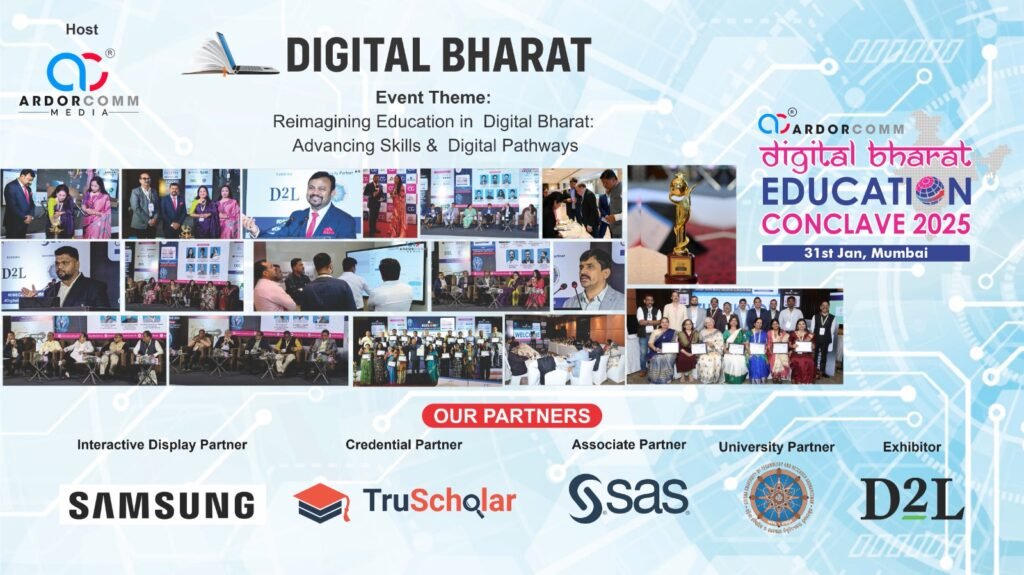
ArdorComm – Digital Bharat Education Conclave 2025 to be held on 31st January 2025 in Mumbai

As the world continues to undergo rapid technological transformation, education remains at the core of societal progress. The ArdorComm – Digital Bharat Education Conclave 2025, hosted by ArdorComm Media Group, seeks to explore, address, and celebrate the evolving landscape of education in India. Scheduled for 31st January 2025 in Mumbai, this groundbreaking event will bring together educators, policymakers, innovators, and industry leaders to discuss the future of education in India and beyond. The theme of the ArdorComm – Digital Bharat Education Conclave 2025, “Reimagining Education in Digital Bharat: Advancing Skills & Digital Pathways,” reflects the transformative journey of India’s education system in the digital era. It emphasizes leveraging technology to bridge gaps in accessibility, adaptability, and quality, enabling students across the nation to compete globally. This theme highlights the integration of emerging technologies like AI, VR/AR, and advanced data analytics in reshaping pedagogy and curricula while fostering critical 21st-century skills. It also addresses the ethical considerations of digital education, ensuring inclusivity, safety, and fairness as the foundation for a sustainable and forward-looking education ecosystem. Why Digital Bharat Matters In 2025 and beyond, we anticipate transformative shifts in curricula and pedagogy across the education spectrum—from K-12 to Higher Education. The rise of a “Digital Bharat” is poised to redefine accessibility and adaptability in education, enabling seamless integration with regional, national, and transnational education systems. By leveraging advancements in AI, personalized learning, virtual/augmented reality (VR/AR), smart content creation, and advanced data analytics, Digital Bharat will not only enhance the way students learn and teachers instruct but also democratize access to quality education. These innovations promise to bridge the digital divide, empowering Indian students to compete on the global stage. However, this rapid digitalization also raises important ethical questions regarding fairness, inclusivity, and safety—issues that must be addressed to ensure sustainable progress. What to Expect at ArdorComm – Digital Bharat Education Conclave 2025 This year’s conclave will feature a diverse and dynamic mix of academicians, educators, HR professionals, startups, EdTech innovators, and industry experts from across India. Together, these stakeholders will share insights, experiences, and best practices, contributing to the sustainable growth of the education ecosystem. Key Highlights: One Day of Engaging Sessions 50+ Expert Speakers 75+ Schools Represented 150+ Higher Education Institutions Participating 10+ Government Dignitaries 15+ Corporate Representatives 15+ EdTech Startups Showcasing Innovations Participation Sectors: Government Academia (Universities, Engineering Institutes, B-Schools, K-12, Preschools) Startups HR Leaders EdTech Enterprises Key Discussion Points The NEP and Digitalization: Driving India’s Education Revolution Explore how the National Education Policy (NEP) 2020 is fostering digital transformation in Indian education, enabling innovation and accessibility at unprecedented scales. The Future of Lifelong Learning: Upskilling and Reskilling in the Digital Age Delve into strategies to equip learners with the skills required to thrive in an ever-evolving workforce. Empowering Students for the Global Stage: Skills for 21st Century Workforce Address the critical competencies required for success in a globalized, tech-driven world. The Rise of AI, Metaverse & Immersive Technologies in Education Discover how cutting-edge technologies like AI and the metaverse are transforming traditional teaching and learning paradigms. Digital Infrastructure & Smart Campus: Building a Future-Ready EdTech Ecosystem Discuss the role of robust infrastructure in shaping next-generation learning environments. Entrepreneurship in Education Highlight the growing intersection of education and entrepreneurship, focusing on innovative startups driving change. Celebrating Excellence: ArdorComm Education Leadership Awards 2025 The ArdorComm Education Leadership Awards 2025 will honor exceptional individuals, institutions, and organizations that have significantly contributed to advancing education. These awards celebrate those who have not only adapted to the challenges of a rapidly changing educational landscape but have also set new benchmarks through innovation, leadership, and dedication. From driving digital transformation to fostering inclusivity and empowering students with 21st-century skills, these changemakers have redefined excellence in education, inspiring others to follow their lead. Recognizing achievements across six key segments—Preschools, School Education, Higher Education, Skills & Training, EdTech Startups, and EdTech Corporate—the awards highlight the transformative impact of educators and institutions on learners and the broader community. Whether it’s through innovative pedagogy, cutting-edge technologies, or impactful leadership, the honorees of the ArdorComm Education Leadership Awards 2025 are shaping the future of education and setting the stage for sustainable growth in a Digital Bharat. Join us in celebrating their achievements and be part of the movement driving meaningful change in education. Award Categories: Preschool Awards Recognizing excellence in early childhood education. School Education Awards Celebrating innovation and quality in K-12 education. Higher Education Awards Honoring institutions fostering academic and research excellence. Skills & Training Awards Highlighting impactful skill-building initiatives. EdTech Startup Awards Acknowledging groundbreaking work by emerging startups. EdTech Corporate Awards Celebrating established organizations driving digital transformation in education. Why You Should Attend The Digital Bharat Education Conclave 2025 is not just an event—it’s a platform for collaboration, innovation, and inspiration. Attendees will: Gain Insights: Learn from thought leaders and experts about the latest trends and challenges in education. Network: Connect with policymakers, educators, innovators, and industry leaders from across India. Celebrate Achievements: Join us in recognizing the trailblazers shaping the future of education. Shape the Future: Be part of critical conversations that will drive change in the education sector. Conclusion As India strides into the digital age, education stands at the forefront of this transformation, redefining how knowledge is imparted, skills are developed, and innovation is fostered. The ArdorComm – Digital Bharat Education Conclave 2025 is more than just an event—it’s a platform to ignite ideas, exchange insights, and drive impactful change across the education sector. This is your chance to connect with thought leaders, celebrate trailblazers, and contribute to shaping the future of learning in India and beyond. Be a part of this transformative journey on 31st January 2025 in Mumbai. Let’s collaborate to bridge the digital divide, unlock new opportunities, and empower the next generation with the tools and skills they need to thrive in a globalized world. Together, we can reimagine education in Digital Bharat and chart a course toward a brighter, more inclusive future. Secure your spot now! Visit: https://ardorcomm-media.com/digitalbharat/

ArdorComm – Digital Bharat Education Conclave 2025 to be held on 31st January 2025 in Mumbai Read More »

Sports Regulatory Board Aims to Ensure Governance, Not Interference: Mansukh Mandaviya

Sports Minister Mansukh Mandaviya emphasized the government’s intent to enhance governance in sports while maintaining the autonomy of national federations and the Indian Olympic Association (IOA). His remarks come as the Union Government plans to introduce the draft National Sports Governance Bill in Parliament, with the establishment of a Sports Regulatory Board as a key feature. Key Features of the Draft Bill: Regulatory Authority: The Board will oversee the granting, renewal, and suspension of affiliations for the IOA and national sports federations. Composition: A five-member body comprising one Khel Ratna and one Dronacharya awardee, chaired by the Secretary (Sports), and including the Director-General of the Sports Authority of India as an ex-officio member. Mandatory Disclosures: Annual public disclosures by the national Olympic committee, national sports federations, and the national paralympic committee. Concerns Over Autonomy: IOA president P.T. Usha expressed reservations, warning that the Board’s overarching powers might be perceived as government interference, potentially inviting suspension by the International Olympic Committee (IOC). Minister Mandaviya acknowledged Usha’s concerns but clarified: “We don’t want to interfere but cannot leave things unattended. It is our responsibility to ensure transparency and adherence to international regulations.” He further stressed the need for consensus and alignment with IOC guidelines to avoid suspension risks. Recent Interventions: Highlighting the necessity of governmental involvement, Mandaviya cited his intervention to ensure Indian wrestlers’ participation in a world championship. This was after the Wrestling Federation of India (WFI) withdrew entries due to legal disputes. “If we hadn’t stepped in, our wrestlers would have missed a global opportunity. Such situations require responsible oversight,” he noted. Next Steps: While Mandaviya refrained from providing a specific timeline for the Bill’s introduction, he assured that it would be a “mature and balanced” legislation aimed at fostering transparency and excellence in Indian sports. As the debate continues, the proposed Sports Regulatory Board stands as a pivotal step in reshaping the governance framework for Indian sports while safeguarding its global standing. Source: The Hindu Photo Credit: The Hindu

Sports Regulatory Board Aims to Ensure Governance, Not Interference: Mansukh Mandaviya Read More »

Delhi Schools to Enforce NCPCR Guidelines for Enhanced Student Safety and Security

In a decisive move to reinforce the safety and security of students, the Directorate of Education (DoE) in Delhi has issued a comprehensive directive to all schools in the capital. This directive mandates the strict implementation of guidelines formulated by the National Commission for Protection of Child Rights (NCPCR), aiming to provide a safe and secure learning environment for all students across government, government-aided, and private institutions. The NCPCR guidelines outline critical safety measures and emphasize the accountability of school management to prevent and address risks that could jeopardize the safety of students. In its recent circular, the DoE specifically directed heads of all schools to rigorously follow a checklist for safety inspections. This checklist encompasses a range of safety protocols that cover not only the physical infrastructure of schools but also address child protection measures, emergency preparedness, and comprehensive security policies. A senior DoE official highlighted that this initiative is part of a larger, national effort to bring school safety practices in line with the ‘Guidelines on School Safety and Security 2021,’ which was issued by the Ministry of Education in response to a Supreme Court mandate and in alignment with the goals of the National Education Policy (NEP) 2020. The NEP places an unprecedented emphasis on child safety and wellbeing, viewing a secure school environment as essential to the overall mission of educational reform in India. The DoE’s circular further underscores that school heads are to ensure the readiness of their institutions as per the NCPCR’s guidelines. This includes verifying the school infrastructure, conducting regular fire and safety drills, and implementing robust monitoring systems. Additionally, school authorities are encouraged to enhance the awareness and preparedness of both students and staff regarding safety protocols, which involves training teachers and non-teaching staff in emergency response and first aid. Furthermore, to strengthen hostel safety, all school heads have been instructed to comply with the guidelines provided by the National Disaster Management Authority (NDMA) for hostels within educational institutions. These NDMA guidelines cover a spectrum of risk management practices, from structural safety checks to provisions for timely evacuations during emergencies, thereby ensuring that students residing in school hostels are equally protected. Creating a Culture of Safety and Accountability This initiative reflects a paradigm shift toward embedding a culture of accountability in the management of student welfare. By mandating regular safety audits, the DoE is aiming to institutionalize child safety as a core responsibility within school administration. School principals, teachers, and staff members are now accountable for actively monitoring school premises and reporting any safety hazards. Parents and guardians are also urged to play a proactive role by familiarizing themselves with the safety protocols implemented in schools and by communicating openly with school authorities about any concerns regarding their child’s safety. The DoE emphasizes that fostering a secure environment for students is a shared responsibility, and cooperation between school management and families is pivotal for successful implementation. Impact of NEP 2020 and Future Prospects The emphasis on student safety aligns with the broader educational reforms proposed under NEP 2020, which advocates for holistic student welfare, including mental and physical safety. The NEP’s comprehensive approach highlights the necessity of safety in achieving quality education outcomes, suggesting that a secure environment enhances students’ capacity to focus and excel academically. The DoE has reiterated its commitment to maintaining a rigorous review and monitoring process to ensure that all schools in Delhi remain compliant with these enhanced safety guidelines. Schools that fail to adhere to these standards may face stringent consequences, including administrative penalties, suspension of school activities, or withdrawal of affiliation in severe cases. Through these initiatives, the Delhi DoE and NCPCR aim to transform schools into spaces where students not only learn but also feel protected and secure. As the guidelines take effect, stakeholders in Delhi’s education ecosystem – from school leaders to teachers and parents – are collectively working toward establishing a resilient foundation for student safety and setting a benchmark for other states to follow. This enhanced focus on school safety is expected to usher in a new era of child welfare that prioritizes preventive measures and proactive vigilance, ultimately fostering a more supportive and trustworthy educational environment across the city. Source : India Today Photo Credit : India Today

Delhi Schools to Enforce NCPCR Guidelines for Enhanced Student Safety and Security Read More »

VTU Revolutionizes Engineering Education with Liquid Instruments’ Reconfigurable Technology

ArdorComm news

Visvesvaraya Technological University (VTU), one of India’s largest and most prestigious technological universities, is set to transform engineering education in Karnataka by integrating reconfigurable instrumentation from Liquid Instruments. This move will impact more than 150 affiliated colleges, equipping thousands of engineering students with hands-on experience in modern technology, starting this fall. Liquid Instruments’ innovative Moku platform, originally developed using technology from NASA’s space-based gravitational wave detection projects, offers a suite of 14 test and measurement instruments in one compact device. Powered by a field-programmable gate array (FPGA), the platform delivers everything from basic tools like an oscilloscope to advanced instruments like a lock-in amplifier. This all-in-one solution allows students to perform real-time experiments in diverse fields, such as digital signal processing and control systems. Dr. R. Sundaraguru, head of the electronics and communication engineering department at Sir M. Visveshwaraiah College of Engineering in Bengaluru, hailed the Moku platform for its flexibility and usefulness. “It is excellent in all functions,” he said. “It will be easy to operate and very much useful to students.” Traditionally, such advanced tools have only been available in high-end research labs due to cost and space constraints, leaving undergraduate students reliant on simulations. Liquid Instruments’ Moku platform changes that by providing affordable, real-time experimentation capabilities. With API support and the ability to configure multi-instrument test setups, the platform bridges the gap between theoretical knowledge and practical application, making it an invaluable addition to the curriculum. Daniel Shaddock, co-founder and CEO of Liquid Instruments, is excited about the partnership. “We’re thrilled to equip Indian students with state-of-the-art tools to accelerate their education. This approach allows students to explore how signals evolve and interact with the physical world, giving them practical skills essential to today’s workforce,” he said, highlighting the importance of hands-on experience in preparing students for careers in India’s rapidly expanding tech industry. To ensure the successful rollout of this new technology, Liquid Instruments, along with regional partners Tessolve and Spruha Solutions, will offer training sessions for faculty members and help establish learning labs at each institution. This initiative ensures that professors are well-equipped to guide students, helping them gain the skills needed for internships and future employment opportunities in the modern workforce. By integrating such advanced technology into the curriculum, VTU is not only enhancing the academic experience but also setting the stage for a new generation of engineers who will shape the future of India’s booming tech landscape.

VTU Revolutionizes Engineering Education with Liquid Instruments’ Reconfigurable Technology Read More »

13th ArdorComm – ‘New Normal – Education Leadership Summit & Awards 2024’ to be held in Visakhapatnam, Andhra Pradesh, on 15th November 2024

blog

As the world navigates through rapid shifts in the education landscape, driven by technological advancements and global challenges, it becomes crucial to cultivate future-ready skills and mindsets. In line with this evolving narrative, the 13th ArdorComm ‘New Normal – Education Leadership Summit & Awards 2024’ is set to take place in the vibrant city of Visakhapatnam, Andhra Pradesh, on 15th November  2024. Organized by ArdorComm Media Group, this landmark event brings together some of the brightest minds from education, government, and industry, all dedicated to shaping a better future for learners. With the overarching theme, Future-Forward Education: Cultivating Skills and Mindsets in the 21st Century Workplace, the summit will spark critical discussions and explore how education can adapt to meet the demands of a rapidly changing world. Why Andhra Pradesh? As a rising star in India’s educational ecosystem, Andhra Pradesh is rapidly transforming into a hub for innovation in education and skilling. Cities like Visakhapatnam, Amaravati, Vijayawada, and Tirupati host prestigious institutions known for their national and global recognition. The state’s Education Department, in collaboration with forward-thinking leaders, has rolled out initiatives like “Mana Badi Nadu-Nedu,” which pushes digital classrooms, smart learning technologies, and other transformative reforms. Programs like Jagananna Amma Vodi, Vidya Kanuka, and Gorumudda showcase the state’s mission-driven approach to reshaping education, focusing on nurturing global citizens of the future. What to Expect at the Summit? Event Highlights: Date: 18th October 2024 Location: Visakhapatnam, Andhra Pradesh Sessions: 6+ Speakers: 50+ Schools Represented: 75+ Higher Education Institutions: 150+ Government Dignitaries: 10+ Corporate Representatives: 15+ EdTech Startups: 15+ This prestigious summit will provide a space for Academicians, Educators, Edupreneurs, HR professionals, Startups, EdTech pioneers, and Industry leaders to come together, share insights, and engage in transformative discussions. The event’s focus is on creating an ecosystem that not only embraces technological advancements but also addresses the critical need for emotional resilience, career preparedness, and data-driven decision-making in educational institutions. Key Discussion Points Attendees can look forward to discussions on pivotal topics such as: Leveraging AI and EdTech: Enhancing Student Engagement and Personalized Learning Future-Forward Education: Cultivating Skills and Mindsets in 21st Century Workplace Building Emotional Resilience: Integrating Social-Emotional Learning into the Curriculum Data-Driven Decision Making: How Analytics Can Transform Educational Strategies and Outcomes Harnessing Digital Tools:Transforming Traditional Classrooms into Dynamic Learning Environments Preparing Students for Future Careers: Aligning Education with Emerging Industry Trends and Skills ArdorComm Education Leadership Awards 2024 In addition to the summit, ArdorComm Media will celebrate the remarkable achievements of individuals and institutions that have been instrumental in transforming the education sector. From adapting to the “New Normal” to spearheading innovative teaching, learning, and skilling practices, awardees have demonstrated unparalleled dedication to educational excellence. The ArdorComm Education Leadership Awards 2024 will recognize: Preschools Schools Higher Education Institutions Skills & Training Organizations Corporates Startups By honoring these trailblazers, ArdorComm aims to bring recognition and visibility to those shaping the future of education through their commitment to re-skilling, innovation, and global adaptability. Award Nominations and Selection Process The nomination process for the awards is designed to ensure fairness and recognize contributions across various educational segments. Categories include: Preschool Award School Education Award Higher Education Award Skills & Training Awards Corporate Award Startup Award This year’s selection process will highlight innovative initiatives, exceptional leadership, and ground-breaking transformations in teaching and learning practices. For more details visit https://ardorcomm-media.com/elsavisakhapatnam/#awards Join Us in Celebrating Education’s Future The 13th ArdorComm ‘New Normal – Education Leadership Summit & Awards 2024’ promises to be an inspiring event, bringing together thought leaders and visionaries from across the education sector. The event will serve as a platform for dialogue, innovation, and recognition, aimed at setting the stage for a brighter, more sustainable future in education. Whether you’re an educator, policymaker, industry expert, or EdTech innovator, this summit is an unmissable opportunity to engage with peers, share knowledge, and drive impactful change. We look forward to seeing you at this momentous occasion in Visakhapatnam, Andhra Pradesh, as we work together to forge a path toward the future of education. Be part of the conversation. Be part of the change. Register Now! #ELSAAndhraPradesh #ELSAVizag #ELSAVisakhapatnam #ArdorComm #NewNormal

13th ArdorComm – ‘New Normal – Education Leadership Summit & Awards 2024’ to be held in Visakhapatnam, Andhra Pradesh, on 15th November 2024 Read More »

Indoor Air Pollution: A Bigger Health Threat than Outdoor Pollution in India

Blog

Indoor air pollution is an often overlooked but significant health risk in India, surpassing even outdoor air pollution. While outdoor air quality in major cities like Delhi garners much attention, the air inside homes, especially in rural areas, remains dangerously polluted. Experts at the India Clean Air Summit (ICAS) 2024 highlighted this pressing issue, calling for expanded efforts to address indoor air quality, which impacts millions of people daily. The Invisible Threat Indoors According to Soumya Swaminathan, Principal Advisor at the Ministry of Health and Family Welfare, studies conducted in Delhi reveal that women who spend most of their time indoors are exposed to high levels of black carbon comparable to those faced by auto-rickshaw passengers in the city. Black carbon, a harmful particulate matter, is released from various sources, including traditional cooking stoves, open fires, and poorly ventilated spaces. This indoor exposure contributes significantly to health problems such as high blood pressure, chronic respiratory diseases, and heart ailments. Swaminathan noted that cities contribute less than 20% to overall state emissions, whereas household emissions range between 20% and 40%. Surprisingly, rural areas and villages often experience worse air quality than nearby cities due to the prevalence of biomass burning for cooking and heating. This challenges the common perception that urban areas are the primary hotspots of air pollution. Expanding the National Clean Air Programme (NCAP) The current focus of India’s National Clean Air Programme (NCAP) is on non-attainment cities—those that fail to meet air quality standards. However, Swaminathan’s observations underscore the need to broaden the scope of the NCAP to include rural areas and household emissions, which are often overlooked. By expanding the programme, policymakers can address the root causes of indoor air pollution that affect a vast portion of the population. Health and Economic Costs of Indoor Air Pollution Indoor air pollution not only poses severe health risks but also exacts a heavy economic toll. The World Bank recently reported that air pollution cost the global economy approximately USD 8.1 trillion in 2019, equivalent to 6.1% of the global GDP. In India, the health impacts of pollutants like PM2.5 contribute significantly to reduced life expectancy and increased healthcare costs. Swaminathan pointed out that PM2.5 pollution is almost as detrimental as tobacco use, yet it receives far less regulatory attention. Moreover, air pollution affects agriculture by reducing sunlight penetration, which impacts crop yields and, in turn, the economy. The cascading effects of poor air quality on public health, agriculture, and overall economic well-being make a compelling case for immediate action. Barriers to Clean Cooking Solutions Kalpana Balakrishnan, Director of the WHO Collaborating Center for Occupational and Environmental Health, highlighted the financial barriers preventing widespread adoption of clean cooking fuels. Initiatives like the Pradhan Mantri Ujjwala Yojana (PMUY), launched in 2016, aimed to provide free LPG connections to millions of households. However, many beneficiaries did not refill their cylinders due to cost concerns, reverting to traditional biomass fuels. Data shows that despite the government’s claims of 99.8% LPG coverage, 41% of India’s population still relies on biomass for cooking. This reliance on traditional cooking methods significantly contributes to household air pollution, leading to respiratory illnesses, cardiovascular diseases, and other severe health conditions. The Way Forward The findings discussed at the India Clean Air Summit underscore the urgent need to address indoor air pollution through a multi-faceted approach. Expanding the NCAP to cover household emissions, increasing financial incentives for clean cooking fuels, and improving public awareness about the health impacts of indoor pollutants are critical steps. Promoting clean air goes beyond safeguarding public health; it is also an economic imperative. Cleaner air will not only reduce healthcare costs but also improve agricultural productivity and attract investments by making cities and rural areas more livable. As experts advocate for stronger policies and financial support, it’s clear that tackling indoor air pollution requires collective action from governments, communities, and individuals. Investing in cleaner indoor air is an investment in the nation’s health, economy, and future.  

Indoor Air Pollution: A Bigger Health Threat than Outdoor Pollution in India Read More »

Impact of the Paris 2024 Summer Olympics on Internet Traffic

Blog

The Paris 2024 Summer Olympics, themed “Games Wide Open” (“Ouvrons grand les Jeux”), began on July 26, 2024, and will continue until August 11. The event features 10,714 athletes from 204 nations, competing in 329 events across 32 sports. The Olympics have notably influenced Internet traffic, especially in France, with variations in online activity driven by key moments in the games, website engagement, and cybersecurity challenges. Significant Impact on Internet Traffic For the first time in Olympic history, the opening ceremony was held outside a stadium, significantly affecting Internet traffic in France. During the nearly four-hour ceremony, internet usage dropped by 15% to 20% in the country compared to the previous week. Key moments, such as the lighting of the Olympic cauldron by Celine Dion, saw the largest traffic dip at 21:15 UTC, with a 20% decrease. This trend mirrors previous patterns observed during major televised events like Euro 2024, where national engagement leads to drops in Internet traffic. Mobile traffic also spiked, with mobile device usage reaching 61% during the ceremony, up from 57% the previous week. Parisians Leaving the City The influx of tourists for the Olympics prompted many Parisians to leave the city, resulting in traffic drops in Île-de-France and Grand Est regions. In Île-de-France, traffic fell by 15% during the first week of July and by 8% the week before the Olympics began. However, there was no significant change during the Olympics week itself, indicating that the city had reached a balance between departures and arrivals. Global Impact Outside of France, the global Internet traffic saw less dramatic but still notable fluctuations during the opening ceremony. Countries like Italy, Japan, and New Zealand experienced drops in traffic, with decreases of up to 12%. The United States saw a 4% dip during key performances, reflecting the worldwide attention on the event. Rising Interest in Olympic Websites Interest in official Olympic websites surged with the start of the games. On July 27, the United States led with 16% of all DNS request traffic to these sites, followed by Germany and France. This marked a shift from the pre-Olympics period when France dominated DNS traffic. Global daily traffic to Olympic sites peaked on July 28, with a 509% increase from the previous week, reflecting heightened engagement as the competitions progressed. Cybersecurity Concerns The Olympics also saw a rise in cybersecurity threats, with a 304% increase in Olympics-related emails during the first week of the games compared to the previous week. While most of these were spam, a small percentage were classified as malicious, highlighting the ongoing risks associated with large-scale global events. Conclusion The Paris 2024 Olympics have had a substantial impact on Internet traffic, especially in France, as key moments during the games led to significant fluctuations in online activity. The rise in engagement with official Olympic websites and the surge in related cybersecurity threats underscore the event’s global reach and influence on the digital world. Cloudflare continues to monitor these trends, providing insights and protection to users as the games progress.

Impact of the Paris 2024 Summer Olympics on Internet Traffic Read More »