ArdorComm Media Group

Tuesday, May 12, 2026 7:58 PM

Blogs

Princess Kate Announces Cancer Diagnosis: A Story of Courage and Resilience

Blog on Health

In a poignant and courageous announcement, Catherine, the Princess of Wales, revealed in a heartfelt video message the discovery of cancer following her recent abdominal surgery. Facing widespread speculation about her health and controversy over doctored images, the 42-year-old princess shared that she is now undergoing preventative chemotherapy on the advice of her medical team. The news, which came after months of public scrutiny and silence from Kensington Palace, shed light on the princess’s journey towards healing and resilience. With her characteristic grace and strength, Kate expressed gratitude for the outpouring of support from well-wishers worldwide, while emphasizing the importance of privacy and family during this challenging time. In her message, Kate underscored the shock of her diagnosis and the subsequent efforts to process and manage the news for the sake of her young family. With unwavering support from her husband, Prince William, and the love of her children, George, Charlotte, and Louis, she navigates the complexities of treatment and recovery with courage and determination. The announcement also sparked conversations about cancer awareness and early detection, as medical experts weighed in on the significance of preventative chemotherapy in Kate’s case. Despite the uncertainty surrounding her diagnosis, the princess’s resilience and optimism serve as a beacon of hope for those facing similar challenges. As messages of support pour in from across the globe, the royal family rallies around Kate, offering words of encouragement and solidarity. With her strength and grace, she reminds us all of the power of resilience and the importance of facing adversity with courage and determination. Her story serves as a testament to the indomitable spirit of the human heart and the enduring power of hope in the face of adversity. In the midst of uncertainty, Kate’s unwavering courage and resilience shine brightly, inspiring us all to embrace each day with hope, gratitude, and unwavering determination.

Princess Kate Announces Cancer Diagnosis: A Story of Courage and Resilience Read More »

Pioneering Education in Coimbatore Tamil Nadu: ArdorComm Media Presents the 11th New Normal Education Leadership Summit & Awards 2024

send pre blog

As the world navigates through unprecedented times, the landscape of education has been transformed dramatically. Now, more than ever, the need for innovation, adaptability, and collaboration in the education sector is paramount. In the heart of South India, the vibrant city of Coimbatore is set to host the 11th New Normal Education Leadership Summit & Awards 2024, organized by ArdorComm Media Group. Scheduled for the 3rd of May, this event promises to be a beacon of inspiration, bringing together the brightest minds in academia, industry, and technology to explore the theme: “New Normal Tamil Nadu: Pioneering Education, Skilling, and Employability in the 21st Century Workplace.” Embracing the New Normal in Education Tamil Nadu stands tall as a premier hub for education and skilling initiatives in India. With its progressive policies and diverse array of academic institutions, the state has fostered a culture of innovation and critical thinking. Coimbatore, known for its premier educational institutions and excellent quality of education, serves as the perfect backdrop for this prestigious event. Knowledge Forum: A Platform for Growth The Knowledge Forum at the summit will serve as a melting pot of ideas, insights, and experiences. Academicians, educators, edupreneurs, innovators, and industry experts will converge to share their expertise and accomplishments, all with the aim of driving sustainable growth for the education community. With over 50 speakers, representing a diverse range of perspectives, the forum promises to be intellectually stimulating and enriching. Key Discussion Points The summit will delve into critical topics shaping the future of education, including: Innovation in Teaching and Learning: Leveraging technology and innovative teaching methods to enhance student engagement and outcomes. Skills for the Future Workforce: Strategies for integrating employability skills and career readiness into educational programs. Sustainable Education Practices: Integrating sustainability education into the curriculum to foster responsible citizenship. Digital Literacy and Cybersecurity in Education: Building digital literacy skills among educators and students to navigate the digital landscape safely and responsibly. Global Collaboration and Partnerships in Education: Harnessing the power of international collaboration and partnerships to enrich teaching and learning experiences. ArdorComm Education Leadership Awards 2024 The summit will also shine a spotlight on exemplary contributions and innovative initiatives in the education sector through the ArdorComm Education Leadership Awards 2024. This prestigious accolade will honor educators, institutions, edtech pioneers, and startups that have demonstrated exceptional dedication and innovation in advancing education. The awards aim to recognize those who have tirelessly worked towards enhancing teaching, learning, and employability outcomes, shaping a brighter future for learners worldwide. Nominations and Selection Process ArdorComm invites nominations across six segments, including Higher Education, School Education, Preschools, Skills & Training, Corporate, and Startup. The selection process will adhere to strict terms and conditions to ensure fairness and transparency, with each category aiming to celebrate excellence and outstanding accomplishment in the education sector. Join Us in Shaping the Future of Education The 11th New Normal Education Leadership Summit & Awards 2024 is not just an event; it’s a call to action. It’s an opportunity for educators, innovators, and industry leaders to come together, share their insights, and inspire change. By collaborating and innovating, we can pioneer a new era of education in Tamil Nadu and beyond. Mark your calendars for the 3rd of May and join us in Coimbatore as we embark on a journey to shape the future of education—one idea, one innovation at a time. Together, let’s pave the way for a brighter tomorrow, where every learner has the opportunity to thrive and succeed in the dynamic 21st-century landscape. For more information and registration details, visit https://ardorcomm-media.com/elsacoimbatore/. Let’s make history together at the 11th New Normal Education Leadership Summit & Awards 2024.

Pioneering Education in Coimbatore Tamil Nadu: ArdorComm Media Presents the 11th New Normal Education Leadership Summit & Awards 2024 Read More »

Decoding Lok Sabha Election Dates 2024: A Comprehensive Guide

Blog on government

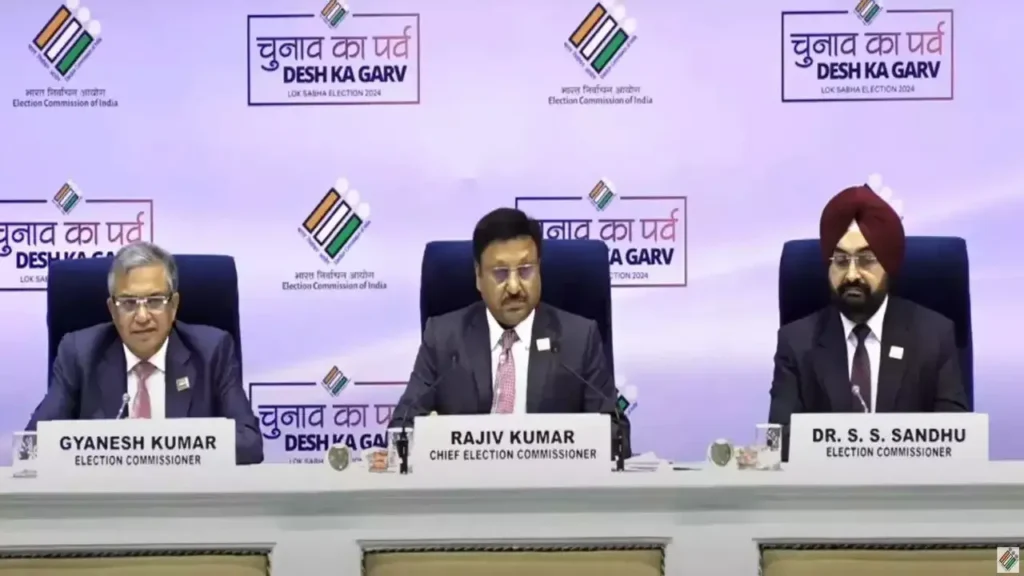
The Lok Sabha elections in 2024 are not just a democratic exercise but a reflection of the nation’s aspirations and values. As the Election Commission of India (ECI) unveils the detailed schedule for the electoral process, the entire country gears up for a momentous event that will shape the course of governance for the coming years. With each phase of polling, voters will exercise their fundamental right to choose their representatives, contributing to the vibrant tapestry of Indian democracy. Understanding the Electoral Schedule: The Lok Sabha elections in 2024 are scheduled to commence on April 19 and will be conducted in seven phases, culminating in the announcement of results on June 4. The phased approach ensures efficient management and widespread participation across the diverse regions of the country. The Lok Sabha Election 2024 schedule unfolds in seven meticulously planned phases, each covering a diverse array of states and union territories, with their unique political landscapes and demographic compositions. In Phase I, slated for April 19, voters from 21 states and union territories will cast their ballots across 102 Lok Sabha constituencies. From the northeastern states of Arunachal Pradesh, Assam, and Manipur to the heartland states of Bihar, Madhya Pradesh, and Rajasthan, this phase encompasses a wide geographic spread, reflecting the nation’s rich diversity. Moving on to Phase II, scheduled for April 26, the electoral process extends to 13 states, with 89 parliamentary constituencies up for grabs. States like Karnataka, Maharashtra, and Uttar Pradesh witness significant polling activity during this phase, underscoring their political significance in shaping the national narrative. Phase III, set for May 7, sees polling across 12 states and union territories, covering 94 Lok Sabha constituencies. From the vibrant landscapes of Gujarat and Karnataka to the politically crucial battlegrounds of Uttar Pradesh and West Bengal, this phase captures the essence of India’s democratic ethos. May 13 marks Phase IV, with polling spanning 10 states and union territories, encompassing 96 parliamentary constituencies. From the coastal regions of Andhra Pradesh and Odisha to the hinterlands of Jharkhand and Madhya Pradesh, this phase witnesses a diverse array of electoral dynamics at play. Phase V, slated for May 20, focuses on 49 Lok Sabha constituencies across 8 states, including Bihar, Maharashtra, and Uttar Pradesh. With each phase, the electoral process gains momentum, drawing closer to the culmination of results on June 4. Phase VI, scheduled for May 25, extends to 7 states, covering 57 parliamentary constituencies. From the national capital territory of Delhi to the agrarian landscapes of Uttar Pradesh and West Bengal, this phase underscores the democratic fervor resonating across the country. Finally, Phase VII, held on June 1, witnesses polling in 57 Lok Sabha constituencies across 8 states and union territories. From the picturesque landscapes of Himachal Pradesh to the bustling streets of Punjab and Uttar Pradesh, this phase brings the curtain down on a monumental electoral exercise, paving the way for the announcement of results and the dawn of a new political era on June 4. Key Phases and Constituencies: Each phase of the elections covers specific states and union territories, with varying numbers of constituencies. From April 19 to June 1, voters will cast their ballots in different regions, shaping the political landscape for the next term of governance. Notably, states like Uttar Pradesh, Maharashtra, and West Bengal witness multi-phase polling due to their large electorate and diverse demographics. Importance of Model Code of Conduct: The announcement of election dates triggers the enforcement of the Model Code of Conduct (MCC), which guides the conduct of political parties and candidates during the electoral process. The MCC ensures a level playing field and prohibits the ruling government from making policy decisions that could influence voters. Political Dynamics and Party Strategies: The Lok Sabha elections serve as a battleground for various political parties, with the incumbent NDA government aiming for a rare third term. Conversely, opposition parties, united under the INDIA bloc, view the elections as an opportunity to challenge the ruling coalition’s dominance and advocate for democratic values. Voter Outreach and Participation: With approximately 97 crore eligible voters, voter outreach and participation are crucial aspects of the electoral process. The ECI, along with political parties and civil society organizations, endeavors to ensure maximum voter turnout by providing essential facilities and promoting awareness campaigns. Looking Ahead: As the nation gears up for the Lok Sabha elections, the political landscape undergoes dynamic shifts, reflecting the aspirations and concerns of diverse communities. The electoral process serves as a cornerstone of democracy, empowering citizens to exercise their right to choose their representatives and shape the future of the country. The Lok Sabha elections in 2024 represent a significant milestone in India’s democratic journey, marked by extensive preparations, spirited campaigns, and the collective voice of millions of voters. Through active engagement and informed decision-making, citizens contribute to the vibrant tapestry of Indian democracy, ensuring a brighter and inclusive future for generations to come.

Decoding Lok Sabha Election Dates 2024: A Comprehensive Guide Read More »

Path to Good Governance and Security: The Role of Inclusive Welfare Programs

Blog on Governance

In India’s journey towards 2047, the symbiotic relationship between good governance, security, and inclusive welfare programs emerges as a critical pathway to address multifaceted challenges and foster societal well-being. A recent survey conducted by Primus Partners underscores the pivotal role of inclusive welfare initiatives in realizing the objectives of good governance and security, offering insights into India’s evolving landscape and aspirations. Challenges and Needs: The survey highlights that a significant portion of the population, approximately 58 percent, continues to grapple with fundamental needs such as education, shelter, healthcare, and employment. Despite past efforts, existing welfare programs face uncertainty in effectively addressing these challenges, necessitating a paradigm shift towards holistic solutions that bridge past achievements with future aspirations. Importance of Good Governance: Kautilya’s ancient wisdom resonates with contemporary notions of good governance, emphasizing the centrality of people’s happiness to the ruler’s well-being. Good governance, characterized by transparency, accountability, and participatory decision-making, serves as the bedrock for progress and security. It fosters social cohesion, economic growth, and stability, laying the groundwork for inclusive development. Inclusivity and Social Welfare: The concept of inclusivity emerges as a cornerstone of India’s progress, with 21 percent of survey respondents underscoring its significance. Inclusive policies, women empowerment, gender equality, and wealth disparity reduction are identified as critical factors contributing to social well-being. Drawing inspiration from nations like Sweden and Norway, India seeks to emulate the transformative impact of robust welfare programs on societal cohesion and security. Success Stories and Learnings: Initiatives like the National Rural Employment Guarantee Act (NREGA) and Pradhan Mantri Jan Dhan Yojana (PMJDY) exemplify India’s strides towards inclusive governance and poverty alleviation. By leveraging technology and innovative financing mechanisms, India aims to streamline welfare delivery, mitigate corruption, and enhance transparency. The cooperative federalism model and participative decision-making are pivotal for effective implementation and citizen-centric governance. Future Directions: As India navigates its path towards Viksit Bharat, strengthening last-mile delivery mechanisms, data privacy safeguards, and capacity-building initiatives remain imperative. The establishment of robust frameworks to combat corruption, coupled with transparent public institutions, will shape India’s inclusive growth trajectory. By fostering a culture of innovation, education, and civic engagement, India endeavors to realize the aspirations of all its citizens on the road to 2047. Inclusive welfare programs serve as catalysts for good governance and security, offering a holistic framework to address socio-economic disparities and enhance societal resilience. Through strategic investments, policy reforms, and collaborative efforts, India charts a course towards a prosperous and equitable future, anchored in the principles of inclusivity, transparency, and citizen-centric governance. With a steadfast commitment to Kautilya’s vision of the ruler’s happiness intertwined with the people’s welfare, India embarks on a transformative journey towards 2047, where inclusive welfare programs serve as the cornerstone of a vibrant and secure society. As the nation embraces the challenges and opportunities of the 21st century, the convergence of good governance, security, and inclusive welfare promises to unlock the full potential of India’s diverse and dynamic populace, paving the way for a brighter tomorrow for generations to come.  

Path to Good Governance and Security: The Role of Inclusive Welfare Programs Read More »

Revolutionizing HR Processes: The Success Story of Keka

In the realm of human resources management, automation has become a critical tool for businesses, particularly in the wake of the Covid-19 pandemic. Enter Keka, a SaaS startup revolutionizing HR processes for over 10,000 businesses in India and beyond. Let’s delve into how Keka is reshaping the HR landscape: Meeting the Need for Automation: Manual HR operations are time-consuming and resource-intensive, especially for growing organizations. Keka identified this pain point and introduced a cloud-based HR and payroll management platform, offering a comprehensive suite of services. From recruitment to payroll processing, Keka automates core HR functions, freeing up valuable resources for strategic initiatives. Addressing Market Gaps: Founder Vijay Yalamanchili observed the struggles of lean HR teams in small and mid-sized companies and identified a gap in the market. While industry giants catered to big enterprises, there was a lack of understanding of HR professionals’ pain points in the mid-market segment. Keka stepped in to fill this void, targeting SMEs and startups with its user-friendly and feature-rich platform. Comprehensive Solution Suite: Unlike many HRtech companies, Keka offers a comprehensive range of services, including recruitment, onboarding, attendance tracking, payroll management, and employee performance evaluation. Its cloud-based platform ensures easy accessibility and scalability for businesses of all sizes. Strategic Design for Recruitment: Recognizing the importance of efficient recruitment processes, Keka’s application tracking system (ATS) streamlines hiring procedures, minimizing time-to-hire and ensuring companies don’t miss out on top talent. Customer-Centric Approach: Keka prioritizes customer satisfaction, offering personalized product demos and robust customer support. Its sales team engages directly with potential customers, demonstrating the platform’s value proposition. Additionally, a dedicated customer support team ensures prompt assistance and resolves queries effectively. Navigating Challenges: Breaking into the competitive HRMS space was no easy feat for Keka. Despite facing established players in the market, the startup differentiated itself through personalized sales approaches and superior customer support. However, the Covid-19 pandemic posed significant challenges, disrupting customer acquisitions and revenue streams. Future Outlook: Despite the hurdles, Keka remains poised for growth, with a strong presence in 150 countries and a diverse clientele spanning various industries. The startup’s innovative approach to HR automation continues to drive efficiency and productivity for businesses worldwide. In summary, Keka’s journey exemplifies the transformative power of technology in reshaping traditional business processes, paving the way for a more efficient and agile workforce management ecosystem.  

Revolutionizing HR Processes: The Success Story of Keka Read More »

The Present and Future of AI in Healthcare

Blog on health

As technology advances at an unprecedented rate, its impact on various aspects of our lives becomes increasingly significant. In the realm of healthcare, artificial intelligence (AI) stands out as a transformative force with immense potential. However, to truly appreciate its importance and potential, it’s essential to delve into what AI has achieved and how it continues to shape the present and future of healthcare. The numbers paint a compelling picture of AI’s growing influence in healthcare. With over 500 AI algorithms approved by the U.S. FDA, and digital health startups receiving billions in investments, it’s evident that AI is not just a theoretical concept but a tangible reality in the healthcare landscape. Projections indicate that the global market for AI-based healthcare solutions will exceed $208 billion by 2030, underscoring the significant investments and expectations surrounding AI in healthcare. The promise of AI in healthcare is multifaceted, ranging from early disease detection to optimizing treatment plans and enhancing patient outcomes. For instance, AI algorithms have the potential to revolutionize cancer screening by analyzing vast amounts of data, including family history, imaging results, and genetic markers, to identify individuals at higher risk of developing the disease. Additionally, AI-powered interventions can monitor patients in real-time, enabling early detection of deteriorating health conditions such as sepsis, and facilitating timely medical interventions. Despite the immense potential, the full-scale implementation of AI in healthcare presents numerous challenges. From regulatory hurdles to the need for extensive clinical trials and the integration of AI into existing healthcare workflows, realizing the promise of AI requires concerted efforts from various stakeholders. Moreover, it’s crucial to recognize that AI is not a replacement for human expertise but rather a powerful tool that complements clinical decision-making. Human clinicians bring invaluable insights and intuition to the table, which AI augments by processing vast amounts of data and identifying patterns that might elude human observation alone. Currently, AI is being utilized in various medical applications, including screening tests for complex illnesses, monitoring patient vitals for signs of deterioration, and enhancing patient safety through early warning systems. Institutions are also leveraging AI to optimize resource allocation, improve operational efficiency, and streamline administrative tasks such as billing and coding. As AI continues to mature, its role in healthcare is expected to expand beyond individual applications to encompass organization-wide workflows, clinical decision support, patient engagement, and revenue cycle management. Looking ahead, the future of AI in healthcare holds even more transformative possibilities. Medical assistants powered by AI are undergoing trials in medical facilities, with the potential to streamline scheduling, access relevant patient information, and assist healthcare providers in delivering personalized care. Moreover, AI-driven algorithms are expected to play a crucial role in organizing and analyzing vast amounts of medical data, leading to more precise diagnoses, personalized treatment plans, and better patient outcomes. However, as AI becomes more integrated into healthcare systems, concerns about privacy, data security, and algorithmic bias must be addressed. Robust measures must be implemented to ensure that patient data is protected, and AI algorithms are trained on diverse and representative datasets to avoid perpetuating biases or disparities in healthcare delivery. AI holds immense promise as a transformative force in healthcare, revolutionizing patient care, clinical decision-making, and operational efficiency. While challenges remain, the collaborative efforts of researchers, clinicians, policymakers, and technology developers are paving the way for a future where AI augments human expertise to deliver better healthcare outcomes for all. As we embark on this journey, it’s essential to recognize that AI is not a replacement for human judgment but a powerful tool that, when wielded responsibly, has the potential to revolutionize the practice of medicine.  

The Present and Future of AI in Healthcare Read More »

Reflecting on the 10th New Normal – Education Leadership Summit & Awards 2024 held in Ahmedabad, Gujarat on 10th Feb 2024

blog image

As the curtains drew on the 10th New Normal – Education Leadership Summit & Awards 2024 in Gujarat, it left behind a trail of enlightening discussions, innovative ideas, and a renewed sense of purpose in redefining education for the 21st century workplace. Hosted by ArdorComm Media Group, a prominent media organization in India, this summit brought together visionaries, educators, innovators, and industry experts to explore the theme of “New Normal Gujarat: Re-imagining Education, Skilling, and Employability in the 21st Century Workplace.” Gujarat, known for its robust educational infrastructure and pioneering initiatives in skill development, provided the perfect backdrop for this transformative event. With esteemed academicians, edupreneurs, and policymakers converging in Ahmedabad on the 10th of February 2024, the summit served as a platform to delve into the evolving dynamics of education and its intersection with the demands of the contemporary workforce. Throughout the summit, attendees were immersed in a rich tapestry of discussions, presentations, and panels, each offering valuable insights into navigating the challenges and opportunities presented by the ‘new normal’ in education. From leveraging emerging technologies to fostering innovation in pedagogy, the conversations encapsulated the essence of adaptability and resilience required in today’s educational landscape. At the heart of the summit stood the esteemed ‘ArdorComm Education Leadership Awards 2024’, a beacon illuminating the outstanding achievements of individuals and institutions in the realm of education, skill development, and employability. With unwavering dedication and relentless pursuit of excellence, these pioneers have reshaped the educational landscape, embodying the spirit of innovation and progress. The Education Leadership Awards 2024, spanning across various categories such as Higher Education, School Education, Preschool Education, Skills and Training, Start-ups & EdTech, not only celebrated accomplishments but also served as a testament to the collective commitment towards fostering a brighter future through education. Through their remarkable endeavors, the awardees have set a shining example for the entire education community, inspiring others to aspire, innovate, and transform for the betterment of society. Kumar Chandan Anand, Founder, CEO & Group Editor of ArdorComm Media Group, expressed his enthusiasm about the success of the summit, stating, “The 10th New Normal – Education Leadership Summit & Awards 2024 surpassed our expectations, serving as a beacon of innovation and collaboration in the education sector. We are thrilled to witness the meaningful exchanges and impactful insights shared by our esteemed speakers and participants. This summit reaffirms our commitment to driving positive change and fostering excellence in education. We look forward to building on this momentum and continuing to empower the education community.” He also mentioned that, “The people of Vibrant Gujarat have chosen us once again as the host for this summit, inspired by the resounding success of our previous year gathering in this very state. Leadership from the Gujarat government, including the Honourable Chief Minister Shri Bhupendrabhai Patel and his esteemed cabinet ministers; Shri Rushikesh Ganeshbhai Patel, Minister of Health, Medical, Higher & Technical education, Law & Parliamentary affairs; Shri Balvantsinh Rajput, Minister of Industries, Skill development & Employment; Shri Praful Chhaganbhai Pansheriya, Minister of State for Parliamentary affairs, Primary, Secondary & Higher Education have appreciated the efforts and expressed their valuable support to us. We are also honoured to have good wishes of Shri Banchhanidhi Pani, IAS Commissioner, Technical Education. These leaders have expressed their support & good wishes to ArdorComm Media Group for the success of this summit and an embarking bright future ahead. Their support has given more strength to our mission & vision. We are deeply honoured and we express our gratitude to these dynamic leaders of Vibrant Gujarat.” We are proud to announce the esteemed partners and collaborators who contributed to the success of the 10th New Normal – Education Leadership Summit & Awards 2024. Along with our supporting partner AOPS, presenting partner, LinkedIn, powered by partner NobelQ SAP Gold Partner, EdTech partner D2L, and online learning partner Coursera for Campus, brought invaluable expertise and resources to the event. Technology was seamlessly integrated with our technology partner, ACER, and display solution partner, SAMSUNG. We also extend our gratitude to associate partners SAS and Nursery Story, university partner JG University, and school partners Anand Niketan Group of Schools and Florescent Public School for their unwavering support, academic partner Little Millennium. Additionally, exhibitors Canon and MAPPLS MapMyIndia added further depth to our discussions and initiatives. Together, their collective commitment and collaboration have enriched the educational landscape and propelled us towards a brighter future. The eminent speakers in the summit were a diverse array of leaders, educators, and innovators, each bringing their unique perspectives and insights to the forefront of discussions. The curtain was raised and the lamp lighting ceremony begin in the august presence of our Guest Speakers of the Summit Rohit Mehta, State Project Advisor, School Education Department, Government of Gujarat; Dr. CA Achyut Dani, Director General & Provost, JG University; Prahar Anjaria, Founder & Chairman, RANGOLI Group of Institutes & Secretary, AOPS; Anup Menon, Regional Head (West) – Academics & Government business, LinkedIn. They gave the welcome keynote remarks on the summit’s theme – ‘New Normal Gujarat: Re-imagining Education, Skilling and Employability in 21st Century Workplace’. The Eminent Panel Speakers for the 1st Panel Topic – ‘NEP Implementation: Focus on Education to be Inclusive, Equitable and Holistic’ were Dr. CA Achyut Dani, Director General & Provost, JG University (Session Moderator), Prof. (Dr.) S N Gupta, Vice Chancellor, Maganbhai Adenwala Mahagujarat University, Nadiad; Abhay Ghosh, Director, Shanti Asiatic School, Ahmedabad; Arun Sutaria, (Retd IAS), Director, Siddharth Public School, Himatnagar; Dr. Geetika Saluja, CEO Projects, Anand Niketan Schools, Ahmedabad; Sabina Sawhney, Principal, Delhi Public School, Bopal, Ahmedabad; Minal Desai, Director, Gems International School, Ahmedabad; Prof. Sandeep Vasant, Registrar, Navrachana University, Vadodara; Dr. A K Sinha, Principal Director, Delhi Public School, Vadodara; Archit Bhatt, Managing Director, Tripada Group of Schools & President, AOPS, Ahmedabad. The Eminent Panel Speakers for the 2nd Panel Topic – ‘Creating a Seamless Digital Experience and Skill Development in School Education’  were Prahar Anjaria, Founder & Chairman, RANGOLI Group of Institutes, Gandhinagar (Session Moderator); Kamal Mangal,

Reflecting on the 10th New Normal – Education Leadership Summit & Awards 2024 held in Ahmedabad, Gujarat on 10th Feb 2024 Read More »

Industry Leaders share their reaction to the Union Interim Budget 2024

The Interim Budget for 2024, presented by the Hon’ble Finance Minister, reflects a dynamic blend of pragmatism and vision. The choice of a paperless presentation, echoing the hybrid education model adopted by schools during the pandemic, symbolizes the adaptability and resilience of the education sector. Moreover, The Union Budget 2024-25 reflects a visionary approach towards healthcare, recognizing its pivotal role in the nation’s well-being. Prominent figures in the healthcare industry share their insights on the budget’s strategic vision, applauding measures for universal health coverage, preventive healthcare, and technology integration Kanak Gupta, Group Director- Seth M.R. Jaipuria Schools, expresses excitement about the budget, particularly the focus on quantitatively strengthening schools and higher education. The commitment to upskilling, evident in the 1.8 Crore youth trained under the Skills Mission, aligns with the evolving demands of the job market. Suneel Galgotia, Chancellor of Galgotias University, praises the budget’s focus on education, recognizing its pivotal role in national development. He applauds allocations for infrastructure, digital learning, and skill-based programs, emphasizing the government’s dedication to upskilling youths. The budget outlines a visionary and comprehensive strategy for transforming and strengthening the education sector. Dr. Madhu Chitkara, Pro-Chancellor, Chitkara University, recognizes the transformative potential of the budget in empowering the younger generation. “The interim budget for 2024 has reflected the increased aspirations of the younger generation, the provision of opportunities for skill development, and the accessibility of funding for start-up ventures—factors that will fundamentally transform the growth journey to make India a Viksit Bharat by 2047.” Dr. Manjula Pooja Shroff – Founder & MD, Kalorex Group, commends the budget’s focus on empowering people, especially women and youth, through holistic welfare and growth opportunities. “The budget’s focus is on empowering people, especially women and youth, through holistic welfare and growth opportunities. It is heartening to note that girls constitute 43% of students enrolled in STEM courses, one of the highest in the world.” Vivek Kapasi, Managing Trustee of Shree Vidhyanagar School, describes the budget as a comprehensive roadmap, balancing diverse sectors. “The Indian budget, a financial blueprint, intricately balances diverse sectors. It allocates funds for education, healthcare, and infrastructure, fostering economic growth.” Cdr Dr. Bhushan Dewan, Advisor- University of Technology, Jaipur, appreciates its focus on long-term economic growth, reduced budget deficit targets, and incentives for technology innovation. “India’s Interim Budget announced by Finance Minister Nirmala Sitharaman in the Parliament on 01 Feb 2024 is mainly a Vote-on-account budget because the full budget for the year 2024-2025, normally due February every year would be delayed to July 2024 on account of Parliamentary Elections likely in April-May 2024.” Prof. Amit Jain, President / Vice-Chancellor, Amity University Rajasthan, Jaipur, appreciates the inclusive budget with a focus on sustainability, rural development, higher education, and defense. “An inclusive budget with a focus on sustainability and rural development. Special provisions for higher education will help improve the quality of education.” Prof. S N Gupta, Vice-Chancellor, Maganbhai Adenwala Mahagujarat University, Nadiad, views the budget as non-political, uninfluenced by upcoming elections. She said “In my opinion, this is a non-political budget uninfluenced by the upcoming election. Short term outcomes were not in focus but long term impacts were kept in view. It is a progressive and inclusive budget.” Prof.Dr.B.Sendilkumar, Dean-AHS, VMRF-DU, highlights the significant increase in the allocation of the budget to the education sector by saying “The Interim Budget 2024 was focused on youth and women empowerment, while maintaining fiscal consolidation and continuing capex. The whopping 6.8% increase in allocation of budget compared to the previous year to the education sector is a futuristic move.” Dr. Achyut Dani, Director General & Provost of JG University, underscores the budget’s role in capacity building through investments in physical and digital infrastructure. “Overall, being an interim budget, it can’t have much to offer due to election code, but it definitely reflects the success of policies due to which the fiscal deficit is low and it is expected to be so in the future also.” Dr. Vikas Singh, Vice Chancellor, Geeta University, praises the budget’s electoral confidence and fiscal prudence, focusing on the downward fiscal deficit path. Supporting startups and infrastructure spending align with the dream of Viksit Bharat, aiming for a deficit below 4.5% by 2026. Amol Arora, MD of Shemrock & Shemford Group of Schools, applauds the budget for optimistic educational growth. Increased investment and a focus on girls in higher education and STEM fields align with fostering quality education environments. The commitment to educational infrastructure strengthens their dedication to nurturing innovation and inspiration in Indian schools. Dr. Aloke Mullick, Group CEO of Omni Hospitals, sees the budget as an umbrella for the healthcare field. He applauds the focus on vaccination, healthcare worker skill upliftment, and infrastructure development. “In short, it’s aiming to serve all from pediatric to geriatric level with a focus on skill updation of healthcare workers.” Neha Lal, Adani Healthcare, highlights the commendable focus on healthcare infrastructure development, especially in increasing medical and nursing colleges. She emphasizes that research and innovation are key to developing the sector. “In India, cervical cancer contributes to approximately 6–29% of all cancers in women and hence vaccine for age 9-15 is a welcomed initiative.” Dr. Shuchin Bajaj, Founder Director of Ujala Cygnus Hospitals, commends the budget’s forward-thinking strategy, preventive healthcare measures, and comprehensive maternal-child health programs. He appreciates initiatives like U-WIN platform and Ayushman Bharat extension to health workers. However, concerns are raised by Niranjan Ramakrishnan, CEO of MyLabConnect, who hoped for a more proactive approach towards reducing duty or tax burdens on life-saving drugs and addressing regulatory challenges in the diagnostics industry. “It’s important to note that these are just potential impacts based on current information. The final budget and its specific provisions will determine the actual impact on the healthcare sector.” Mr. Joy Chakraborty, COO of P. D. Hinduja Hospital, commends the budget’s strategic vision for universal health coverage. He praises proactive measures, especially for women’s health, emphasizing Anganwadi center enhancement, nutrition, and cervical cancer prevention. The UWin platform and a new vaccination app promise a

Industry Leaders share their reaction to the Union Interim Budget 2024 Read More »

Closing the Women’s Health Gap: A $1 Trillion Opportunity for Global Well-being

Blog on Health

In a study by the McKinsey Health Institute in collaboration with the World Economic Forum (WEF), the report titled “Closing the women’s health gap: A $1 trillion opportunity to improve lives and economies” sheds light on the profound impact of gender disparities in healthcare on both individual well-being and global economic prosperity. The study, focused on addressing the health gap between men and women, reveals startling statistics that demand urgent attention and action. Key Findings: Unraveling the Women’s Health Gap The report brings to light the alarming fact that while women tend to live longer than men, they spend 25 percent more of their lives grappling with poor health. This health disparity translates into a staggering 75 million years of life lost annually due to illnesses or premature death among women. The study identifies key areas contributing to the women’s health gap: Health Conditions Affecting Both Genders: 95 percent of the health burden on women is attributed to conditions affecting both men and women, such as sexual and reproductive health, maternal and child health, and endometriosis. Prevalence of Conditions in Women: 56 percent of the health burden on women arises from conditions that are either more prevalent or manifest differently in women. The Case of India: A $22 Billion Opportunity In the context of India, the study highlights that closing the gender gap in healthcare could lead to a substantial economic boost. The report estimates that India’s GDP could rise by at least $22 billion by addressing the health disparities between men and women. The top health conditions contributing to this potential GDP impact include premenstrual syndrome, gynecological diseases, migraine, depressive disorders, and anxiety disorders. Global Root Causes: Science, Care Delivery, Investment, and Data The report identifies four primary global root causes contributing to the women’s health gap: Science: Historically, the study of human biology has predominantly focused on the male body, leading to less effective treatments for women. Over 50 percent of interventions with sex-disaggregated research are found to be less effective for women than men. Care Delivery: Women often face barriers to care, diagnostic delays, and suboptimal treatment due to healthcare systems designed and run predominantly by men. Investment: There has been lower investment in women’s health conditions relative to their prevalence, perpetuating limited scientific understanding and data on women’s bodies. Data: Health burdens for women are systematically underestimated, with incomplete datasets that exclude or undervalue crucial conditions affecting women. Closing the Gap: A Trillion-Dollar Opportunity The report emphasizes the potential economic and societal benefits of addressing the women’s health gap: Economic Growth: For every $1 invested in women’s health, the projection is nearly $3 in economic growth. Global Impact: Closing the health gap could add 7 more days of healthy living for each woman annually, contribute at least $1 trillion to the global economy by 2040, and generate an impact equivalent to 137 million women accessing full-time positions. Reduced Health Burden: Addressing the gaps in women’s health could reduce the time women spend in poor health by almost two-thirds, positively impacting 3.9 billion women. Strategies for Change To achieve health equity and foster economic growth, the report suggests a comprehensive strategy involving various stakeholders: Invest in Research: Prioritize women-centric research to fill knowledge and data gaps in women-specific conditions. Data Collection: Systematically collect and analyze sex-, ethnicity-, and gender-specific data for accurate representation of women’s health burden. Enhance Access: Improve access to gender-specific care, from prevention to diagnosis and treatment. Financing Models: Incentivize new financing models to support women’s health initiatives. Business Policies: Establish business policies that actively support women’s health. Raise Awareness: Promote awareness and advocacy to draw attention to the women’s health gap. By prioritizing women’s health in research, care, and investment, societies can unlock immense economic potential while ensuring a healthier

Closing the Women’s Health Gap: A $1 Trillion Opportunity for Global Well-being Read More »

Interim Budget 2024: The Lingering Debate on Education’s 6% GDP Share

Blog on Education

As the nation eagerly anticipates the presentation of the Interim Budget 2024 on February 1, the age-old debate on allocating 6% of Gross Domestic Product (GDP) to the public education system has once again taken center stage. This longstanding discussion traces its roots back to the Kothari Commission’s recommendation in 1964-66, underscoring the need to prioritize education and allocate a significant portion of the Gross National Product (GNP) towards it. The Kothari Commission set the ambitious 6% target after studying other nations, including the United States, Japan, and the then Soviet Union (now Russia), all of which invested more than 6% of their GNP in education. Despite being a recurring theme in every budget announcement and election manifesto for the past 60 years, India has struggled to achieve this target. The National Education Policy 2020 echoes this sentiment, emphasizing the collaborative effort of the central and state governments to reach the 6% GDP mark at the earliest. However, recent years have witnessed a decline in the allocation to the public education system. Protiva Kundu, from the Centre for Budget and Governance Accountability, highlighted the consistent decrease or stagnation in the union government’s spending on education, currently standing at 4.41% of the GDP, with only one-fourth coming from the central government and the remaining three-fourths from state governments. Anjela Taneja of Oxfam International pointed out that education is not a top priority for the government, evident in their budget allocations. With the 2024 general elections approaching, the question arises: will the 6% allocation debate remain relevant amidst the political posturing? The historical context of the 6% GDP target reveals its genesis in the Kothari Commission’s recommendation. Subsequent committees, including the Tapas Majumdar committee in 1998-99, reiterated the importance of additional resources to achieve universal school education. However, the fixation on 6% as a benchmark for investment in education has persisted globally, emphasizing its significance. Subir Shukla, from Ignus ERG Education Resource Pvt Ltd, cautioned against the challenges of policy implementation, citing the gap between theoretical discussions and practical contingencies. Avani Kapoor, of the Centre for Policy Research, stressed the need to reevaluate the basis for education budget calculations, focusing on the teaching-learning process rather than infrastructure. Funding challenges persist, with Shukla highlighting ineffective utilization of released funds and delays in disbursement. Anil Swarup, former secretary of the department of school education and literacy, suggested innovative funding methods, such as taxing private schools to support public education. However, Kundu emphasized the need for a level playing field before exploring innovative solutions. Looking ahead to the Interim Budget 2024, expectations are mixed. Kundu predicts an implementation budget with a potential redistribution of resources across different education sectors. Kapoor believes the government’s focus will likely center on flagship schemes such as housing and Jal Jeevan Mission, as past data indicates a prioritization of these areas over education. Taneja remains cautiously optimistic, hoping for increased investment and progress towards the envisioned allocation in the National Education Policy. Despite international obligations, the government’s commitment to the NEP could pave the way for necessary financial allocations to realize its vision. The above data is taken from the recent report published by career 360.

Interim Budget 2024: The Lingering Debate on Education’s 6% GDP Share Read More »