ArdorComm Media Group

Monday, February 16, 2026 12:42 PM

Interviews

Exploring the Role of AI in Education: Insights from an Engaging Forum

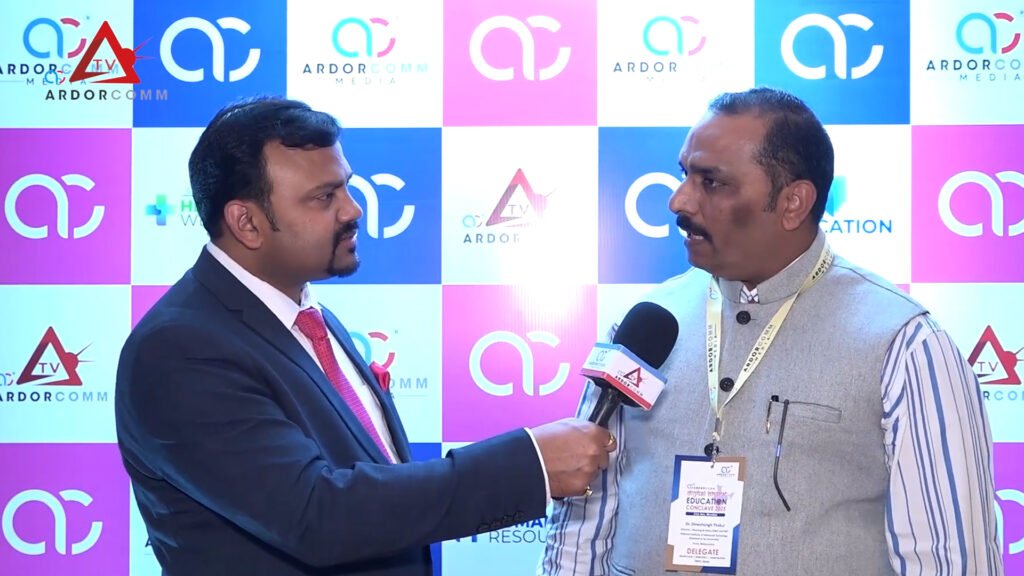
Ashok Varma, Managing Director, Fort City School, Vizianagram emphasised on “AI makes teaching easier and more effective. It helps students by providing real-time results in a graphical format, showing where they need improvement”  What is your overall impression of the forum? I’m very pleased to be here. It’s a very nice forum, and I appreciate the opportunity to come together and explore how AI can be used in schools and colleges. I’ve learned a lot of new things, and this experience will help me ensure that I pass on this knowledge to my subordinates and train the teachers well.  How do you think AI can be incorporated into education? The key is to focus on the basic ethics that children should learn. Some people are concerned that AI might cause the loss of human interaction, but I believe by engaging more with parents and involving them in small projects with their kids, it fosters communication. Additionally, working in groups teaches students how to interact, depend on each other, and help their peers.  How can teachers support ethical learning in students? Teachers play a crucial role by demonstrating good body language, communication skills, and treating children with respect. They can also encourage students to treat one another well. This way, ethics can be taught through the actions of the teacher and the classroom environment.  How does AI assist in teaching and assessing students? AI makes teaching easier and more effective. It helps students by providing real-time results in a graphical format, showing where they need improvement. Teachers can see which students are struggling and adjust their approach accordingly. AI helps both teachers and students track progress efficiently.  What are your thoughts on the growth and impact of ArdorComm third year? ArdorComm is doing great. I encourage more initiatives like this that inspire people to communicate and do good for society. I appreciate the hard work put into organizing this forum, and I look forward to seeing more of these events in the future. Keep up the great work!

Exploring the Role of AI in Education: Insights from an Engaging Forum Read More »

“Insights on Happy Learning and AI Integration in Education: An Interview with Miss DS Diva, Principal of DPS NAD”

DS Divya, Principal, Delhi Public School NAD said “AI is essential, but it should complement, not replace, human intelligence” What is the focus of your institution, DPS NAD? Our school, which started in 2023-24, is a budding branch. We strive for happy learning where children can learn joyfully without stress. We focus on value-based education, ensuring children not only acquire knowledge but also maintain strong ethical values. Can you explain more about the core values of your school? Happy learning is a core value of our school. We don’t support stressful or rote learning methods. Our belief in value-based education ensures that while our children explore modern learning tools like AI, they also uphold strong ethical principles. How do forums like today’s event help your institution and the community? Forums like today help by providing insights into the latest educational trends like AI integration, while also emphasizing the importance of human intelligence. It helps us learn how to effectively incorporate new technologies without letting them overshadow the role of teachers. What is your perspective on AI in education? AI is essential, but it should complement, not replace, human intelligence. It’s crucial that AI is used correctly, without dominating the role of teachers. We use visual learning tools in our school, but we believe that the teacher should remain at the center of the learning process. How does LinkedIn help in the educational sector? LinkedIn is an important platform for connecting globally. It allows educators and institutions to easily approach and interact with one another, sharing insights and building relationships across borders, which is crucial in today’s globalized world. What message would you like to give to ArdorComm Media on their anniversary? I would like to congratulate ArdorComm Media on their third anniversary. They’ve helped educate us through various platforms, and we look forward to attending more of their programs to continue learning and growing.  

“Insights on Happy Learning and AI Integration in Education: An Interview with Miss DS Diva, Principal of DPS NAD” Read More »

“Embracing the New Normal in Education: Insights from Roja Ma’am, Principal of Meridian School”

Roja Paul K, Principal, Meridian School Uppal, Secunderabad emphasised “Teachers love being called the “proprietors of knowledge.”” What does the word “new normal” stand for you? The New Normal is not new; it is quite normal to me. It’s quite normal in such forums where policymakers, bureaucrats, e-tech people, and academicians come together to discuss the larger scale of community impacts. How does such a forum help you? This forum helps by creating awareness about what’s happening around the world. When we get caught up in school activities, we often lose sight of global developments. This opportunity gives us a chance to understand and learn how to deal with them since we are part of the world. Have any special initiatives been taken under your leadership for hygiene, safety, and security? Every school takes such measures, but we focus on ensuring that children are protected from the negative impacts of technology. I stay updated by attending forums like these and share the knowledge with my school staff and students. How easy is it to adopt new technology, and how do you train your teachers on it? COVID was the best example for teachers to understand the need to move with the times. If they hadn’t adapted, teaching would have completely stopped. The teaching profession is resilient, and teachers always rise to meet expectations, including embracing new technology. What measures have you taken to keep your teachers motivated? Teachers love being called the “proprietors of knowledge.” Shifting their focus from being a proprietor to a facilitator takes time and training. Initially, there’s resistance, but when teachers see how it benefits the students and engages them, they embrace it. What new technologies have been adopted in your school? My school is fully digitally enabled. All classrooms are connected to the internet, but we limit student access to devices to ensure they are supervised. Teachers control the use of technology, ensuring it’s beneficial for students. Can you briefly describe your institution? Our branch is only 3 years old, having opened during the COVID-19 pandemic in March 2020. The school survived thanks to technology. As we move forward, we focus on making students ready for future challenges while ensuring environmental sustainability for a better tomorrow. Would you like to give any advice to ArdorComm Media Group? Keep doing the good work. Organizations like yours help us stay connected with global developments and understand the changes happening around the world.  

“Embracing the New Normal in Education: Insights from Roja Ma’am, Principal of Meridian School” Read More »

“Empowering Education: Dr. Archana on Skilling, Innovation, and the New Normal”

Dr. Archana, Director, CMT Business School, Visakhapatnam expressed “New Normal” refers to the need for students to adapt to new specializations and courses offered by institutions.” Q: Any special initiatives in skilling that are helping employability and entrepreneurship? A: We are a pioneering institution in South India offering specialized courses in FinTech and Retail Management. These programs are unique in the region, providing students with opportunities that were previously only available in the North. This helps equip students with relevant skills for the future. Q: Have you implemented any new digital transformation or technologies in your institution? A: Yes, we continually upgrade our curriculum to stay relevant. For example, we recently incorporated Artificial Intelligence into our BBA program, something we didn’t have two years ago. This keeps our offerings updated and aligned with industry needs. Q: How is your alumni network? A: Our alumni network is strong, with over 2,000 alumni since the institution’s establishment. Every year, we invite them to share their experiences, which benefits both current students and graduates. Q: Do you organize programs for your alumni? A: Yes, we organize an annual Alumni Network event, where alumni share their career experiences, helping to inspire and guide our current students. Q: What does “New Normal” mean to you in the context of education? A: “New Normal” refers to the need for students to adapt to new specializations and courses offered by institutions. While opportunities in fields like FinTech and Retail Management are vast, students need to be more open-minded and willing to opt for these modern courses rather than sticking to traditional ones. Q: How does a forum with policymakers, government officials, academics, and tech players help the community? A: Such forums provide great networking opportunities for heads of institutions like myself. They allow us to exchange ideas and learn from different perspectives, which we can then pass on to our students. This collaboration helps us enhance the opportunities and resources available to our students. Q: What is the outcome and learning from such forums? A: Forums like these allow for networking and idea exchange, helping institutions like ours adapt and grow. They provide insights that we can use to better prepare our students for the challenges and opportunities in the job market. Q: How did you feel being part of this event? A: It was a pleasure to be part of this important event. I look forward to future opportunities to engage and contribute to such discussions.  

“Empowering Education: Dr. Archana on Skilling, Innovation, and the New Normal” Read More »

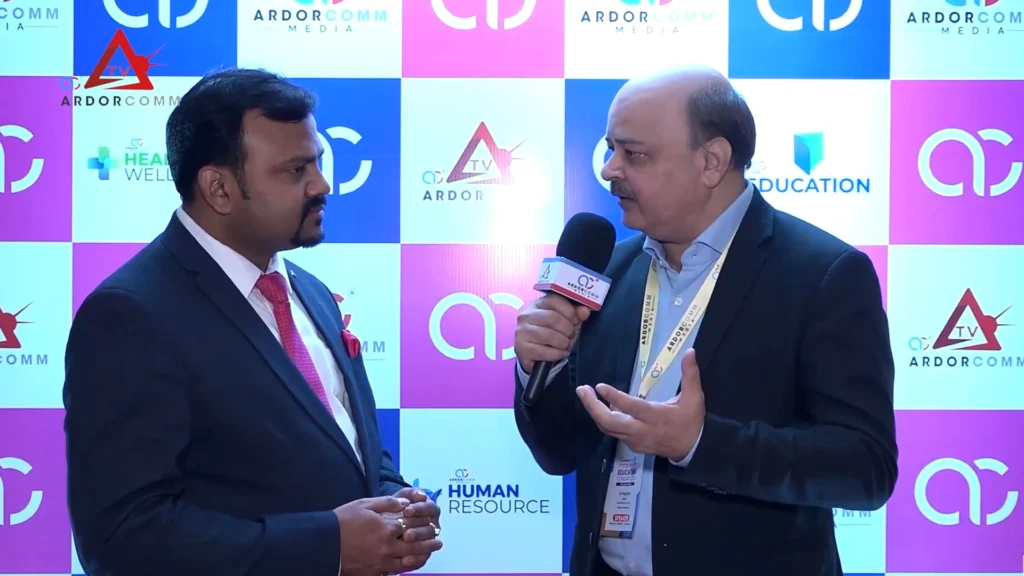
Dr. M.V.V. Prasada Rao, Educationist & Advisor, Schools, Retd Director, CBSE said “The issue isn’t that unemployment exists; in fact, there are many job opportunities”

“Bridging the Gap: The Importance of Industry and Skill Integration in Education” Q1: How does a forum like this help us at a larger and broader scale? A1: This platform is an excellent opportunity for society, educationists, and students. It brings together people from various fields, including policymakers, e-tech players, educators, and industry representatives. Such a forum is rare, allowing for the exchange of ideas that can help meet the needs of society. Industry participation, in particular, is vital as it connects education to the skills required in the workforce, promoting practical learning that goes beyond classroom knowledge. Q2: Why is industry participation crucial in these forums? A2: Industry participation ensures that the skills students are taught align with the needs of the job market. The skills students acquire must be directly relevant to what industries need, ensuring that they are employable when they graduate. When industries share their requirements, educators can tailor their training programs to meet these needs, leading to better job readiness for students and helping reduce the skill gap. Q3: How does the mismatch between education and industry needs contribute to unemployment? A3: The issue isn’t that unemployment exists; in fact, there are many job opportunities. The problem is that graduates often lack the skills required by industries. This disconnect happens when education focuses primarily on theoretical knowledge, neglecting practical, industry-relevant skills. For example, the need for skilled labor in industries like construction and technology often goes unmet because education systems do not prioritize or teach these practical skills. Q4: Can you explain how skill-based education could help reduce unemployment? A4: If students are equipped with relevant skills during their education, they can directly contribute to the industries’ needs, reducing the unemployment rate. Industries today are looking for specific skill sets, not just academic qualifications. For example, skilled labor such as electricians or plumbers is in high demand but often overlooked by traditional education systems. If students learn these skills, they can be employed immediately and even start earning at a young age. Q5: What is the issue with how vocational skills are viewed in society? A5: In India, vocational skills like carpentry, plumbing, or masonry are often undervalued. Professions that require these skills are seen as less prestigious, and parents often discourage their children from pursuing them. However, these skills are essential for daily life and can lead to significant earnings. For example, a plumber may earn more than an MBA graduate. Society needs to respect the dignity of labor and understand the value of skilled trades. Q6: Why are countries like Japan and China progressing faster than India? A6: Japan and China are progressing faster because they respect and value skilled labor. In these countries, skills like welding, plumbing, and electrical work are taught from an early age and are highly respected. In India, however, there is a cultural taboo around manual labor, and many people believe these jobs are beneath their children. This mindset hinders progress and innovation, as it leads to a lack of skilled workers in essential fields.

Dr. M.V.V. Prasada Rao, Educationist & Advisor, Schools, Retd Director, CBSE said “The issue isn’t that unemployment exists; in fact, there are many job opportunities” Read More »

Dr. Heera Lal, Greater Sharda Sahayak Command Area Development Authority, Govt. of UP emphasised on students interest in choosing career pathway

ArdorComm Interview

“Relying 100% on digital methods is not ideal. There needs to be a balance between digital and physical education” said Dr Heera Lal, Greater Sharda Sahayak Command Area Development Authority, Govt. of UP What does “New Normal” means to you? Thank you for inviting me. The term “New Normal” in education, in my opinion, should mean that when a student enters an institution and eventually graduates, they should leave not only with a certificate but also with a profession. The old system of education, where students just leave with a certificate, is not sufficient in today’s world. We need to identify a student’s passion from the moment they enter our institution, help them grow that passion, and turn it into a profession by the time they graduate. This will ensure that they are not only employable but will also enjoy their profession. How should we address the digital divide between urban and rural areas, and what initiatives should be taken to bridge this gap? The digital divide is a significant issue. However, in my opinion, relying 100% on digital methods is not ideal. There needs to be a balance between digital and physical education. Based on my personal experience, the effectiveness of physical education is much higher than that of digital education. Therefore, I believe the ratio should be 70% physical and 30% digital to ensure that students receive a well-rounded education. How should education balance between skills and employability? As I mentioned earlier, if you impose something on a student that they do not enjoy, they will not take an interest in it, and you will not achieve the desired objectives. Every subject, every action, every activity is equally valuable today. The focus should be on developing a student’s passion so that when they graduate, they have a profession that aligns with their interests. This will make them not only employable but also fulfilled in their careers. Which department or position has been the most inspiring and provided the most learning experience for you? Every department and position I’ve held has been inspiring and challenging in its own way. For instance, the position of District Magistrate (DM) is highly regarded, but I have enjoyed and learned a lot from every position I’ve held, even those considered less desirable. Whether in the cultural department or any other, I have embraced each role and found immense joy and learning in it. The key is to have the ability to govern effectively, no matter where you are, and turn every position into a meaningful experience. In events like this, where government dignitaries, policymakers, corporate leaders, and academics come together, what do you learn, and what is the experience like? Such events are crucial because society is like a bouquet that requires a variety of flowers. By bringing together people from different fields—bureaucracy, academia, technology—you create a complete and impactful product. This initiative is commendable and beneficial for our society. We are celebrating the third anniversary of our media company, AdCo Media. Do you have any message or good wishes for our company? I wish that your company continues to grow and thrive, at least 30 times more in the coming years. Keep evolving and adapting to the needs of the time. My good wishes are with you as you continue doing the great work you are doing. Thank you for being a part of this forum.

Dr. Heera Lal, Greater Sharda Sahayak Command Area Development Authority, Govt. of UP emphasised on students interest in choosing career pathway Read More »

Shri Yogendra Upadhyay, Hon’ble Minister of Higher Education, Govt. of Uttar Pradesh emphasised the contribution of new government in Uttar Pradesh.

ArdorComm Interview

“Approximately 15 private universities have been established, and around 10 more have received Letters of Intent” said Shri Yogendra Upadhyay, Hon’ble Minister of Higher Education, Govt. of Uttar Pradesh Highlight some of the major achievements or policies that your department has drafted? In Uttar Pradesh, particularly in higher education, significant progress has been made. There were six regions in the state where there was no government university, and the education system was not up to the mark. However, since the Yogi government came into power, the education system has developed based on the National Education Policy (NEP). There has been a focus on both the quality of education and its expansion. Today, approximately 15 private universities have been established, and around 10 more have received Letters of Intent (LOI). In the six regions that previously had no government universities, either universities are already operational or are under construction within two years. This is a significant achievement, and the quality of education has improved, with several universities receiving high grades, both government and private. What is Uttar Pradesh’s contribution to urban and rural education, and how is it progressing? Urban education is advancing everywhere, but under the guidance of Yogi Ji, a new education policy is being prepared to expand rural education. The goal is to establish a university in every district, ensuring that even the most remote areas have access to higher education. Incentives and facilities will be provided to support the establishment of new universities in these regions. What provisions are there in government universities for employment or employability? The NEP clearly states that all courses and programs will connect education with values, employment, and technology. When education is linked with technology and employment, and when it provides skills, it will not only create job opportunities but also generate employers. The establishment of new universities also brings employment opportunities, from peons to chancellors. Therefore, education that fosters employment will be provided. What does the term “New Normal” mean to you? The “New Normal” refers to how we can introduce innovation in a regular environment, enabling future generations to compete in the global race. What outcomes do you expect from such an amalgamation, and how has your experience been? This event is a confluence where people from various sectors have gathered. When such a brainstorming session occurs, it produces valuable insights that can benefit society. Would you like to say something special about us on the third anniversary of our organization? I wish you all the best for completing three years of this initiative. I hope your organization continues to thrive and serve society and the nation in the coming years. This should be our collective purpose.

Shri Yogendra Upadhyay, Hon’ble Minister of Higher Education, Govt. of Uttar Pradesh emphasised the contribution of new government in Uttar Pradesh. Read More »

Dr. S. K. Rathor, Chairman & MD, Sanfort Group of Schools shared insights on Franchise model of education

ArdorComm Interview

“The first question I always ask is, “Why do you want to take our franchise? What is your vision?”” Said Dr. S. K. Rathor, Chairman & MD, Sanfort Group of Schools What are your thoughts on institutions offering pre-school education, especially with the implementation of the National Education Policy 2020? I don’t have a problem with such institutions, but my submission is that if anyone is opening a pre-school, they should be very serious about their profession. Now that pre-school education is part of the formal school education setup, especially after the National Education Policy 2020 has come into effect, everyone must comply with state norms for opening pre-schools. Quality pre-school education is now mandatory. What would be the foundational steps and guidelines for someone wanting to enter this serious business? When anyone plans to start a new venture, like how we started 24 years ago, the key question is, “Why should we enter this particular profession?” For instance, when we decided to start a pre-school, we thought about the purpose behind it. Back then, not many people knew about pre-school education. But we knew that teaching 2-3-year-old kids would make them smarter and prepare them better for their educational journey. So, if someone is entering this business out of fascination or because they see it as profitable, that shouldn’t be the purpose. The goal should be to deliver quality pre-school education. What are the key points you would guide someone with if they want to take a franchise of your brand? The first question I always ask is, “Why do you want to take our franchise? What is your vision?” It’s important that their thought process aligns with our philosophy. We are very selective in franchising; we don’t chase numbers. Our focus is on ensuring that whoever takes our franchise fully embraces our philosophy in both word and action, delivering quality early childhood education. How important are health, discipline, and hygiene in this industry? What’s the secret behind your physical and mental health well? There’s no secret. People often ask me how many hours I work, and I say I work for about 8 hours a day, but I work sincerely. After 6 PM, no one is at the office. I give the same environment to my team as well—focus on fitness in the morning, work during the day, and spend time with family in the evening. If anyone follows this routine, they’ll find that their profession, business, or job performs well, their body stays fit, and their family remains happy. What do you think is the outcome of forums like this one where government, education, and corporate sectors come together? I’m very happy to hear from the Minister of Higher Education for Uttar Pradesh. The kind of change I’ve seen in the state, especially in education, is tremendous. When ministers and bureaucrats start talking about outcomes, society will automatically see change. I’ve witnessed a remarkable environment in UP since Yogi Ji came into power, especially in education. It’s crucial that the educational infrastructure in a state as big as UP is strong, and when the focus is on outcome-based education, the results will follow. We are celebrating our third anniversary, do you have any message for ArdorComm Media Group? I’ve been a witness to your journey from the start, and though I can’t attend all your events, I’m always impressed by your work. You’re doing fantastic work, especially in smaller towns where big media houses don’t usually go. This creates opportunities for people in those areas. Keep this momentum going, don’t lose yourself in the crowd. Even if profits from smaller towns aren’t as high, remember you’re also doing social work. It’s an honor and pleasure to be associated with your events, and I wish you all the best. Keep up the good work!

Dr. S. K. Rathor, Chairman & MD, Sanfort Group of Schools shared insights on Franchise model of education Read More »

Mr. Piyush Singh Chauhan, Vice Chairman of SR Group of Institutions shared his growth journey over 15 years

ArdorComm Interview

“We started our educational institution in 2009 with 240 students, and now we have more than 19,000 students.” Said Mr. Piyush Singh Chauhan, Vice Chairman of SR Group of Institutions Welcome Mr. Piyush Singh Chauhan, Vice Chairman of SR Group of Institutions in today’s event Thank you so much, Chandan Ji. This event is truly blessed by God, and the discussions we’ve had so far have been very fruitful. The talks about the New Education Policy, IQAC, and holistic development are especially important. We are trying to address the gaps in our current education system that have been lacking in the last few decades, and with your help and presentations, we hope to bring these improvements to the students. Can you tell us a bit about your educational institutions? We started our educational institution in 2009 with 240 students, and now we have more than 19,000 students. Over the last 15 years, we have been aggressively working with students from rural backgrounds, as this is an area that often gets overlooked. We also have higher education facilities, including a nursing institute, a B.Sc. board school, and ICSE board schools. We cater to students from kindergarten to postgraduate levels, and we strive to help them achieve their potential. Many of our students come from army backgrounds, or have parents who are doctors or IIT graduates. We aim to fulfill the gaps that have existed until now. As we move from traditional education to digital education, what initiatives have been taken by your institutions in this direction? We are currently planning to build an AI, VR, and AR lab in our institution. The reason behind this is that what we read often isn’t retained for long, but what we visualize stays with us much longer. AI is both the best and the worst tool, depending on how it’s used. We’re setting up this lab to make the best possible use of AI. We already have an Atal Tinkering Lab, among other facilities, where we provide education to students. As the event’s name is “New Normal Education Leadership Summit and Awards,” what is your definition of “New Normal”? For me, the definition of “New Normal” should be about focusing on making students good citizens and good human beings. While education, grades, and knowledge are important, the “New Normal” should also focus on emotional intelligence. Today, many children struggle with anger, depression, and rejection, leading to drastic steps. If we can handle children emotionally well, they will grow into balanced citizens who contribute positively to society. We are pleased to share that this is the third anniversary of our company. Do you have any wishes or messages for the ArdorComm Group? My heartfelt congratulations to the ArdorComm Group for your hard work and the growing team that you’ve built. I wish that you don’t just celebrate 30 years, but also 200 years of anniversaries in the future. I hope you continue organizing such excellent events, bringing together many educationists and education leaders, and I extend my best wishes to you.

Mr. Piyush Singh Chauhan, Vice Chairman of SR Group of Institutions shared his growth journey over 15 years Read More »

Prof N M P Verma, Vice Chancellor, Babasaheb Bhimrao Ambedkar University emphasised on the foundation of startups

ArdorComm Interview

“The current economic philosophy emphasizes disinvestment, market growth, CSR, and the hiring of technologists and professionals by corporate sectors.” Said Prof N M P Verma, Vice Chancellor, Babasaheb Bhimrao Ambedkar University We would like to know more about your university. Under your leadership, how has the university expanded and flourished, and what is your vision for the coming years? This university was established by the Parliament of our country in 1997, and over the last 25 years, it has established itself in various disciplines such as social sciences, technology, engineering, science, environmental science, mass communication and journalism, law, and many more. We have two centers here, one of which was previously occupied by IIIT, and we are now developing that campus. We have around 800 students, 400 teachers, and 1,000 non-teaching staff, along with approximately 1,000 PhD scholars. Our campus spans about 250 acres, equipped with full infrastructure, and is located in the heart of the city near the airport, with easy access via the highway. The university is a NAAC A++ accredited institution, and we recently organized a NAAC workshop for the North Zone. We have also advocated for changes in the NAAC rating policy to ensure that only truly deserving universities receive the highest ratings. In the 21st century, how important are skills and employability, and how is your university progressing in this direction? Education is intrinsically linked to employability, knowledge generation, peace of mind, pleasure, and even entertainment. But fundamentally, education provides livelihood. We all work for our livelihood, seeking wealth, assets, and luxury. In this century, especially in a country with a rapidly growing population like ours, employability is crucial. If more and more educated people remain unemployed, it indicates that the country is not progressing, which could lead to violence, political instability, and social issues. My humble suggestion is to link education with ethics to prevent moral erosion in society. Character building is essential, just as it was during our national struggle for freedom. We must ensure that education is free from unethical practices like question leaks and delays in result declarations. The big challenges today are in imparting education, evaluation, and enhancing employability. If around 80% of IIT graduates are not finding employment, we must question the purpose of their education. We need to increase employability to ensure that the income level rises, and as income increases, the population size may decrease due to the inverse correlation between the two. This will lead to overall improvement. In forums like this, where the government, policymakers, corporate representatives, and academicians come together, what do you think is the takeaway or outcome of such gatherings? Corporate sectors play a significant role in the development of the country. The current economic philosophy emphasizes disinvestment, market growth, CSR, and the hiring of technologists and professionals by corporate sectors. These professionals are, in turn, driving startups and investments both in India and globally. However, the best talents from our country often migrate abroad due to the substandard ease of doing business here. This issue needs to be addressed to attract and retain our best talents, who are currently moving to capitalist or developed nations. This is the third anniversary of ArdorComm Media, and we are celebrating our third year. Do you have any message or good wishes for the ArdorComm Media Group? Yes, you are doing very well in terms of social transformation and business development. My advice would be to focus on managing quality over quantity, as there is a lot of competition in your field. If you maintain quality, your success will naturally follow, and your growth will be substantial. My best wishes to you.

Prof N M P Verma, Vice Chancellor, Babasaheb Bhimrao Ambedkar University emphasised on the foundation of startups Read More »