






ArdorComm Media Bureau
February 24, 2026
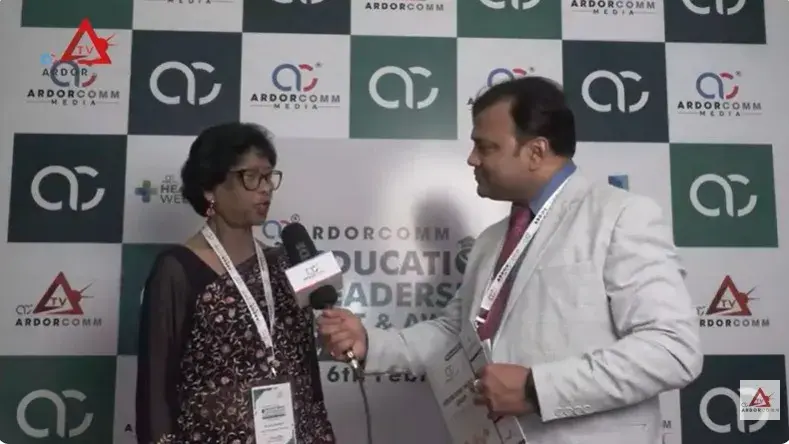
We would like to know more about your organisation. What are the different streams in your university, and how are students engaging with them?
We are a university that is part of a larger group of institutions. The group has 11 universities across India, and The ICFAI University Meghalaya is one of them.
Of course, we are based in Tura, with a constituent unit here in Shillong as well. At this point in time, as you know, ICFAI is well known for management. So, we offer management programmes in business as well as tourism. We also offer Computer Science and Humanities.
These are mainly the streams we are offering as of now.
From which parts of the country do you see admissions and traction for your institution?
Mostly, we have students from our own state. However, in our Shillong unit, we do have students from outside the state — not only from other Northeastern sister states but also from other parts of the country.
We also have some international students. For example, we have had quite a number from Myanmar. We have had graduating students from Thailand and Bangladesh as well. However, this year, students from Bangladesh who had shown interest could not join due to a hiccup in the paperwork.
So yes, that is mainly the demographic of our students.
We would like to know your key highlights or pointers on reimagining higher education in the digital era.
If you talk about reimagining higher education in the digital era, it is a transformation — a transformation from the traditional model to a digital model.
This transformation had already started even before we formally acknowledged it. It took place during the COVID period, when it was thrust upon us and everybody rushed to digitise course content. Some used WhatsApp, some used other platforms, because not everyone — particularly students in rural areas — was familiar with emails and other digital tools.
Yes, economically we went through a very bad patch, but if you look at it educationally, we did make a leap. That was the time when we jumped from a purely offline mode of teaching to a blended mode of teaching. And we are now moving towards that digital era.
When we imagine the digital era, what do we see? It may look as though the four walls of our classrooms will disappear. But I do not think they should.
Today, we hear about robots as teachers. Yes, they will deliver what you feed them. But what about the academic connectivity between the teacher and the thought process? A robot may deliver content, but what about the human aspect — the analysis that a teacher brings?
A teacher knows students inside and out, as we say. A teacher can understand the student. But will a robot or a humanoid be able to do that? It will only deliver what it is fed.
So, what I feel is that AI tools and data should be used as tools — not as masters. I do not agree that they should become masters. They should remain tools. Otherwise, where do we go as human beings?
If we move into a digital era in higher education, we must also talk about ethics. Robots cannot teach ethics — only human beings can.
AI is important, but it should remain a tool. Higher education must not become merely a place for the consumption of knowledge. Universities now have to become places for the creation of knowledge.
What are your takeaways from today’s event? We have been witnessing this event since morning. Please share your experience.
The takeaway is that we learn from each other. Everyone has a different approach. We came to know what one university is doing and what another is not doing.
Collaborations can happen — among universities as well as with other organisations present here. I had discussions with several of them.
The takeaway is that we are moving into an era — in the near future — of collaboration and working together. This brings us together as human beings, irrespective of religion, caste, location, or place of stay. We come together as one united human mankind.
That is my takeaway today.