


ArdorComm Media Group

Monday, November 23, 2026 6:35 AM

ADA

DRDO successfully conducts high-speed rocket-sledge test for fighter jet escape system
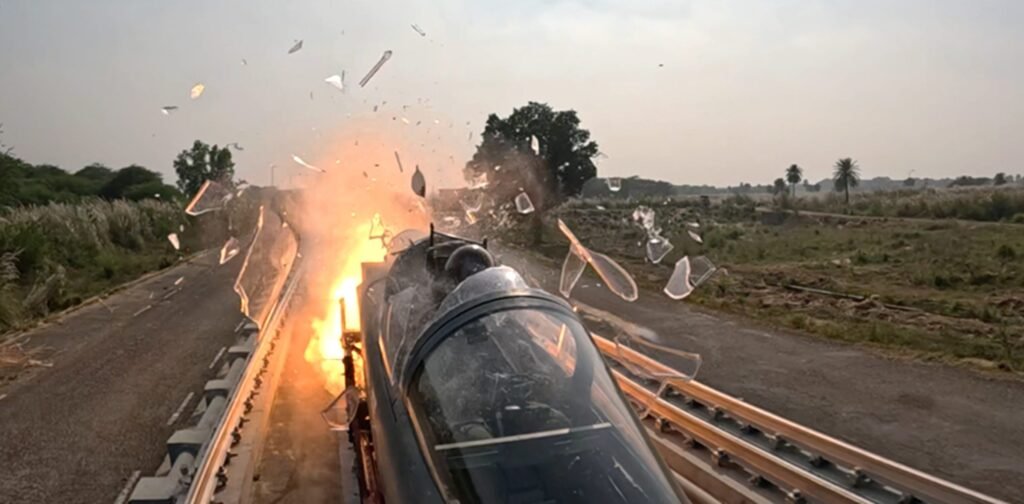
The Defence Research and Development Organisation (DRDO) has successfully carried out a high-speed rocket-sledge test of an indigenous fighter aircraft escape system, marking a major leap in India’s in-house dynamic testing capabilities. With this achievement, India has entered the select group of nations capable of performing advanced escape-system trials at controlled high velocities. The test was jointly executed with the Aeronautical Development Agency (ADA) and Hindustan Aeronautics Limited (HAL) at the Rail Track Rocket Sledge (RTRS) facility of the Terminal Ballistics Research Laboratory in Chandigarh. Officials from the Indian Air Force (IAF) and the Institute of Aerospace Medicine were present during the evaluation. Defence Minister Rajnath Singh congratulated DRDO, IAF, ADA, HAL and industry partners, calling the milestone a “significant boost to India’s defence self-reliance.” Dynamic ejection trials such as this are far more challenging than standard tests like Net or Zero-Zero trials. They offer a realistic assessment of ejection seat reliability and the canopy severance mechanism’s efficiency. For this test, a dual-sledge system carrying the forebody of an LCA aircraft was accelerated to an exact velocity through sequential firing of multiple solid-fuel rocket motors. Key performance indicators — including canopy break pattern, ejection timing, and full aircrew recovery — were assessed using a fully instrumented Anthropomorphic Test Dummy, designed to replicate the physiological responses of a human pilot. The test captured detailed data on forces, acceleration, and motion loads that an ejected aircrew member would endure. The entire sequence was recorded through onboard sensors and ground-based imaging systems. Source: newsonair

DRDO successfully conducts high-speed rocket-sledge test for fighter jet escape system Read More »
India Clears Indigenous Fifth-Generation Fighter Jet Project AMCA, DRDO to Spearhead Development

Ardorcomm news

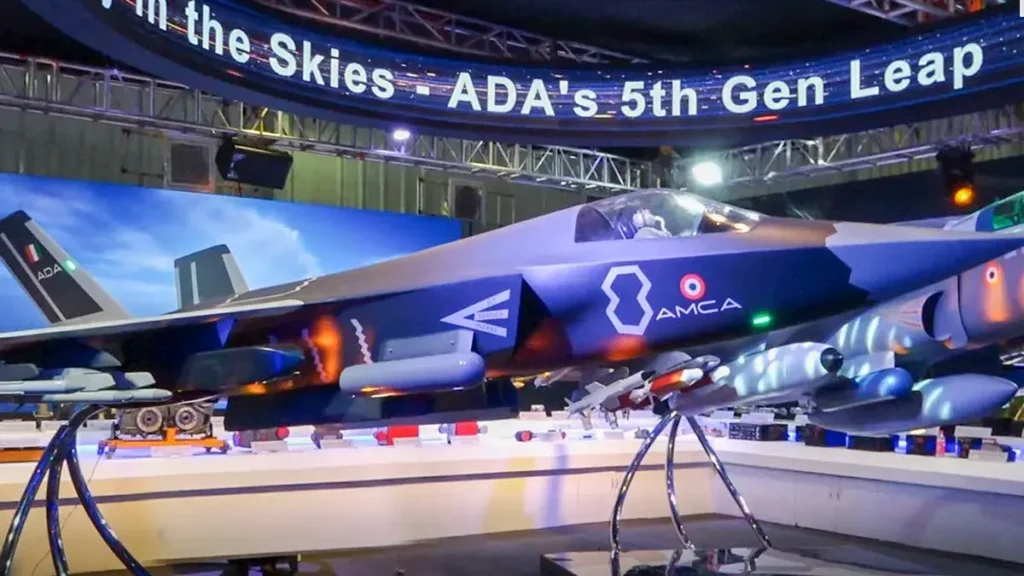
India has formally given the green light to its ambitious fifth-generation fighter aircraft programme—the Advanced Medium Combat Aircraft (AMCA). This move marks a major stride in strengthening the country’s self-reliance in defence manufacturing and aerospace innovation. The Ministry of Defence (MoD) announced on Tuesday that Defence Minister Rajnath Singh has approved the execution model for the AMCA programme, which will be led by the Aeronautical Development Agency (ADA), a key arm of the Defence Research and Development Organisation (DRDO). The decision follows the Cabinet Committee on Security’s (CCS) prior approval of the project in March 2024. “In a significant push towards enhancing India’s indigenous defence capabilities and fostering a robust domestic aerospace industrial ecosystem, Raksha Mantri Shri Rajnath Singh has approved the Advanced Medium Combat Aircraft (AMCA) Programme Execution Model. The Aeronautical Development Agency (ADA) is set to execute the programme through Industry partnership,” the MoD said in a statement. The ministry also confirmed that the ADA is expected to soon release an Expression of Interest (EoI) to kick-start the development phase of the AMCA. This step will pave the way for creating the aircraft’s prototype. While no official timeline has been specified in the recent announcement, earlier reports suggested a prototype might be ready within three years of the go-ahead, with a maiden flight potentially occurring within a year to 18 months after that. The AMCA is expected to feature advanced stealth technology, positioning India among an elite group of nations—such as the United States, Russia, and China—that have developed fifth-generation fighter jets. However, past delays and budgetary constraints have raised concerns about the project’s viability and timelines. The green signal for AMCA comes at a crucial moment for the Indian Air Force (IAF), which is grappling with a significant shortfall in its fighter squadron strength. The IAF currently operates around 29 squadrons—well below the sanctioned strength of 41. This shortfall has raised alarms, particularly given India’s increasingly tense security environment, with mounting threats from both Pakistan and China. The slow pace of aircraft procurement and challenges in domestic defence development have further exacerbated these concerns among military planners. The AMCA project is seen as a key initiative to not only bolster the IAF’s capabilities but also to catalyse the growth of India’s aerospace sector through industry partnerships and indigenous innovation. Source: Firstpost  

India Clears Indigenous Fifth-Generation Fighter Jet Project AMCA, DRDO to Spearhead Development Read More »