ArdorComm Media Group

Monday, November 23, 2026 11:44 AM

ArdorComm Media Group

ArdorComm Education Leadership Summit & Awards 2026, held on 30th October 2026 in Pune, Maharashtra
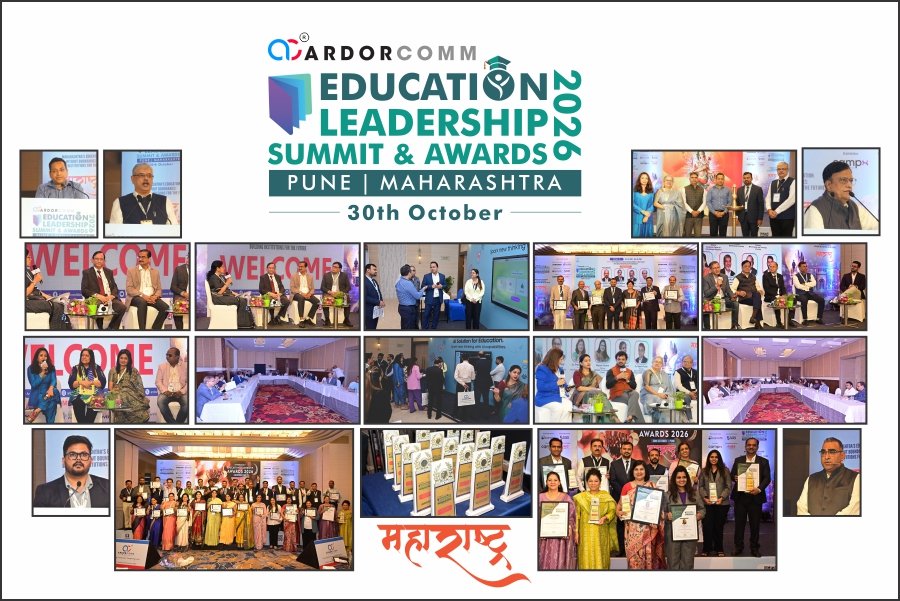
Bringing together some of the brightest minds and influential voices from India’s education ecosystem, the ArdorComm Education Leadership Summit & Awards 2026 successfully concluded in Pune, Maharashtra, on 30 October 2026. Organised by ArdorComm Media Group, the flagship event revolved around the theme “Maharashtra’s Education Without Boundaries: Building Institutions for the Future.” The summit served as a vibrant platform for academicians, educationists, institutional leaders, policymakers, technology experts, HR professionals, entrepreneurs, and EdTech innovators to deliberate on the evolving landscape of education and explore pathways towards building future-ready institutions. With Maharashtra continuing to strengthen its position as a leading destination for education, research, technology, and innovation, Pune provided an ideal setting for conversations around the future of learning, institutional transformation, and the growing intersection of education and industry. Exploring the Changing Landscape of Education As artificial intelligence, digital technologies, evolving industry requirements, and emerging skill demands reshape the education ecosystem, the summit brought important conversations to the forefront. Discussions highlighted the need for educational institutions to move beyond conventional approaches and embrace innovation, technology integration, experiential learning, and industry collaboration. The event emphasised the importance of building an education ecosystem that is inclusive, accessible, technology-enabled, and aligned with the aspirations of a rapidly changing workforce. Through insightful discussions and knowledge-sharing sessions, participants explored how institutions can strengthen their academic frameworks, encourage research and entrepreneurship, adopt emerging technologies, and equip learners with the competencies required to thrive in the future. Industry Leaders and Keynote Speakers The inaugural session, themed “Maharashtra’s Education Without Boundaries: Building Institutions for the Future,” commenced with a welcome address by Kumar Chandan Anand, Founder, CEO & Group Editor, ArdorComm Media Group. The session was graced by Deepak Singla (I.A.S.), Commissioner, Sports and Youth Services, Maharashtra State, as the Guest of Honour, and Dr. Suresh A. Patil, Joint Director, Directorate of Technical Education, Pune Region, Govt. of Maharashtra, as the Special Guest. The session also featured guest speakers Dr. Parag Kalkar, Pro Vice-Chancellor, Savitribai Phule Pune University, Pune, and Dr. Shankar S Mantha, President, Ramdeobaba University, Nagpur and Former Chairman, AICTE. The first panel discussion, titled “Who Owns the Future of Learning – Institutions, Industry or Technology?”, was moderated by Dr. Harshita Sharma, Founder – Director, Brainstorm International, Pune. The panel featured Dr. Rasika Panicker, Principal & Director, Rosary High School, Badlapur, Mumbai; Dr. Gaurav Tiwari, Founder Principal, P.P. Gagangiri Maharaj International School & Junior College, Khopoli; Debika Chatterji, Director – Principal, JBCN International School, Mumbai; and Dr. Rajesh Prasad, Principal, Bharati Vidyapeeth Deemed University College of Engineering, Pune. The second panel discussion, titled “Smart School Campuses: Are Schools Ready for the Intelligent, Connected Campus?”, was moderated by Dr. Seema Negi, Director Principal, Sanjeevani World School, Mumbai. The panel featured Swati Popat Vats, President, Podar Education Network, Mumbai; Ramesh Tupe, Chairman, SGT International School & Junior College, Mumbai; and Renu Nair, Regional Head, Kidzonia International School, Pune. The third panel discussion, titled “Building the Knowledge Economy: Can Universities Become Engines of Innovation, Entrepreneurship and Job Creation?”, was moderated by Dr. Manoj Apte, Professor & Director, Symbiosis Institute of Computer Studies and Research, Pune. The panel featured Dr. Shankar S Mantha, President, Ramdeobaba University, Nagpur and Former Chairman, AICTE; Prof. (Dr.) Sudarshan Sanap, Dean, Faculty of Engineering & Sciences, MIT Art Design and Technology University, Pune; Dr. Geetali Tilak, Vice-Chancellor, Tilak Maharashtra Vidyapeeth, Pune; Prof. (Dr.) Raviraja N. Seetharam, Vice Chancellor, Dr. Vishwanath Karad MIT World Peace University, Pune; and Sohom Dutta, Senior Vice President, Elevate Campuses Ltd. The fourth panel discussion, titled “The Human Advantage: What Skills Will Remain Irreplaceable in an AI-Driven World?”, was moderated by Dr. Madhavi Dhole, Director, SIES College of Management Studies, Navi Mumbai. The panel featured Dr. Vilas Sapkal, Vice Chancellor, MGM University, Chh. Sambhajinagar; Dr. Sohan Chitlange, Vice Chancellor, Alard University, Pune; and Prof. (Dr.) Manish Bhalla, Vice Chancellor, D Y Patil International University, Akurdi, Pune. The fifth panel discussion, titled “From Degrees to Demonstrable Skills: Is the Future of Employability Beyond Credentials?”, was moderated by Dr. Jaywant V. Shelar, Vice Chancellor, ITM Skills University, Navi Mumbai, Maharashtra. The panel featured Dr. Sunil Kumar, Vice Chancellor, Dr. P. A. Inamdar University, Pune, Maharashtra; Dr. Shashank D. Dalvi, Vice Chancellor, MGM Institute of Health Sciences, Navi Mumbai, Maharashtra; Dr. Ganesh Rao, Director – Pune Business School and Vice President (West) – AIMS, Maharashtra; Prof. (Dr.) Rajesh Madhukar Jalnekar, Director, Vishwakarma Institute of Technology, Pune, Maharashtra; and Dr. Manimala Puri, Group Director, ASM Group of Institutes, Pune, Maharashtra. Roundtable Discussion The summit also featured a special roundtable discussion titled “From Smart Classrooms to Intelligent Campuses: Powering Education Transformation Through AI & Innovation,” moderated by Saurabh Karemore, General Manager – West, D.Sol Biz, Samsung, and Niraj Kumar, Chief Manager, D.Sol Biz, Samsung. The roundtable brought together Pradeep Nayar, Chief Manager – Marketing, Samsung; Dr. Raj Salunke, Chairman, Sharada Group of Education, Solapur; Suresh Marutrav Kote, Chairman, Hind English Medium School, Gurukool, Pune; Dr. Harshita Sharma, Founder – Director, Brainstorm International, Pune; Ashok Sachdev, Founder & CEO, Chitrakoot International School, Ahilyanagar; Dr. Yasmin Pirzada, Founder & Trustee, Belvedere Spring School International, Mumbai; Mehjabeen Nadaf Khan, Founder & Director, BlueBird School, Hadaspur; Monal Dugad, Managing Director, Pushpa International School, Pune; Theo Hiwale, Managing Director, Royal International School, Pune; Dr. Nicholas Correa, Academic Director & Principal, Coral Bells International School, Navi Mumbai; Dr. Manisha Shewale, Director, Vikas Pratishthan’s CBSE & ICSE Schools & Maharashtra State Advisor (AIPA) & Core Member (WASP), Pune; Namrata Majhail, Director-Principal, The Orchid School, Pune; Gunjan Srivastava, Director Principal, The Orbis Schools, Pune; Jyotsna Mishra, Director, Alard Public School, Hinjawadi, Pune; Prof. (Dr.) Nilesh R. Berad, Director, MET’s Institute of Management, Nasik; Dr. Anamika Singh, Director, Modern Institute of Business Management, Pune; Nirmal Waddan, Director-Principal, The Kalyani School, Manjri, BK, Pune; Ashwini Kumar, Director-Principal, Pune Global School, Pune; Dr. Monika Gupta, Founder Principal & Director, Pushpa International School, Pune; Prof. Dr. K. P. Moholkar, Dean Academics, JSPM’S Rajarshi Shahu College of Engineering, Pune; Dr. Shalini Sinha, Director, Chetana’s RK Institute of Management and Research,

ArdorComm Education Leadership Summit & Awards 2026, held on 30th October 2026 in Pune, Maharashtra Read More »

The Intelligent Campus Revolution: Are Schools and Universities Ready for the Future?

Education is undergoing a significant transformation as artificial intelligence (AI), connected devices, data analytics and digital infrastructure reshape how institutions teach, learn and operate. From smart classrooms and digital learning platforms to automated administrative systems and intelligent campus management, technology is becoming an increasingly important part of the education ecosystem. However, the shift towards intelligent campuses is about more than adopting new technologies. It involves rethinking how educational institutions deliver learning experiences, manage resources, support educators and prepare students for a rapidly changing world. As Maharashtra continues to strengthen its education ecosystem, an important question emerges: Are schools and universities ready to embrace the intelligent campus revolution? Beyond Smart Classrooms: Understanding the Intelligent Campus A smart classroom equipped with digital boards and online learning tools is only one part of a larger transformation. An intelligent campus connects various aspects of institutional operations through technology, enabling better coordination, informed decision-making and more responsive learning environments. AI-powered learning platforms can help educators identify students who may need additional academic support. Connected infrastructure can improve energy management, campus security and resource utilisation, while digital administrative systems can simplify admissions, attendance tracking and communication with parents and students. For universities, intelligent campuses can also support research collaboration, digital libraries, virtual laboratories and industry-linked learning opportunities. In schools, these technologies can make classroom experiences more interactive and help teachers adapt their approaches to different learning needs. The real value of an intelligent campus, therefore, lies not in the number of devices installed but in how effectively technology improves educational outcomes. The Role of AI in Transforming Teaching and Learning Artificial intelligence is emerging as a powerful enabler of personalised and adaptive learning. AI-supported platforms can analyse learning patterns, recommend relevant educational resources and provide timely feedback, helping students progress at their own pace. For teachers and faculty members, technology can reduce repetitive administrative work, assist in preparing learning materials and support the assessment process. This can create more opportunities for educators to focus on mentoring, critical thinking, creativity and meaningful student engagement. Nevertheless, technology cannot replace the human relationships at the heart of education. Teachers remain essential for developing values, encouraging curiosity, understanding individual circumstances and helping students navigate complex social and ethical questions. The challenge for institutions is to integrate AI responsibly, ensuring that technological tools complement educators rather than diminish their role. Building the Digital Infrastructure for Tomorrow An intelligent campus requires a strong and reliable technological foundation. High-speed internet connectivity, secure digital platforms, cloud-based systems, interoperable data infrastructure and appropriate cybersecurity measures are essential to support technology-enabled education. Institutions must also consider whether their existing infrastructure can accommodate emerging technologies without creating fragmented systems or unnecessary costs. Investing in digital tools without a clear implementation strategy can result in underused resources and limited educational benefits. Equally important is ensuring that technology remains accessible to all students. Differences in internet connectivity, access to devices, language proficiency and digital literacy can affect how effectively learners benefit from digital education. Schools and universities must therefore adopt inclusive strategies that combine infrastructure development with digital skills training, accessible learning resources and appropriate student support. From Technology Adoption to Institutional Transformation One of the biggest challenges in building intelligent campuses is moving beyond isolated technology projects towards institution-wide transformation. Successful implementation requires a clear vision, leadership commitment and collaboration among educators, administrators, technology providers and students. Institutions need to identify their priorities, establish measurable objectives and evaluate whether investments are improving teaching quality, student engagement, operational efficiency or employability. Professional development is equally important. Teachers and administrators need the knowledge and confidence to use digital tools effectively. Without adequate training and institutional support, even sophisticated technology may fail to deliver its intended benefits. Data governance and cybersecurity must also remain central to the transformation process. Educational institutions handle sensitive information relating to students, faculty members and institutional operations. Clear policies on data collection, access, privacy and responsible AI use are essential to maintaining trust. Universities as Engines of Innovation For higher education institutions, the intelligent campus offers opportunities that extend beyond classroom learning. Digital research infrastructure, collaborative innovation spaces and industry partnerships can help universities strengthen their contribution to research, entrepreneurship and economic development. By connecting academic programmes with emerging industry requirements, universities can create more opportunities for experiential learning, interdisciplinary research and skills development. Intelligent systems can also support institutional planning by helping leaders understand student needs, allocate resources and identify areas requiring improvement. However, technological advancement must be accompanied by academic freedom, ethical oversight and a commitment to producing socially responsible graduates. The objective should be to use technology to expand the possibilities of higher education while preserving its broader intellectual and social purpose. Preparing Students for an AI-Driven World As workplaces evolve, students will need more than technical knowledge to succeed. Critical thinking, communication, creativity, adaptability, collaboration and ethical decision-making will remain essential alongside digital and AI literacy. Educational institutions must create learning environments where students can apply knowledge to real-world challenges, work across disciplines and develop practical competencies. Project-based learning, industry engagement, internships and entrepreneurship initiatives can help bridge the gap between academic learning and professional expectations. An intelligent campus should ultimately prepare students not merely to use technology but to understand its implications, question its limitations and apply it responsibly. Are Schools and Universities Ready? Readiness for the intelligent campus revolution will differ across institutions. While some schools and universities may already have advanced digital infrastructure and established technology strategies, others may still be addressing fundamental challenges relating to connectivity, funding, training and access. There is no single model that every institution must follow. The way forward depends on institutional needs, available resources, student demographics and long-term educational priorities. What matters is a strategic approach that places learning outcomes at the centre of technological investment. Institutions must assess their current capabilities, identify practical priorities and introduce solutions that can evolve with changing educational requirements. The intelligent campus is not simply a destination defined by technology. It is an ongoing process of

The Intelligent Campus Revolution: Are Schools and Universities Ready for the Future? Read More »

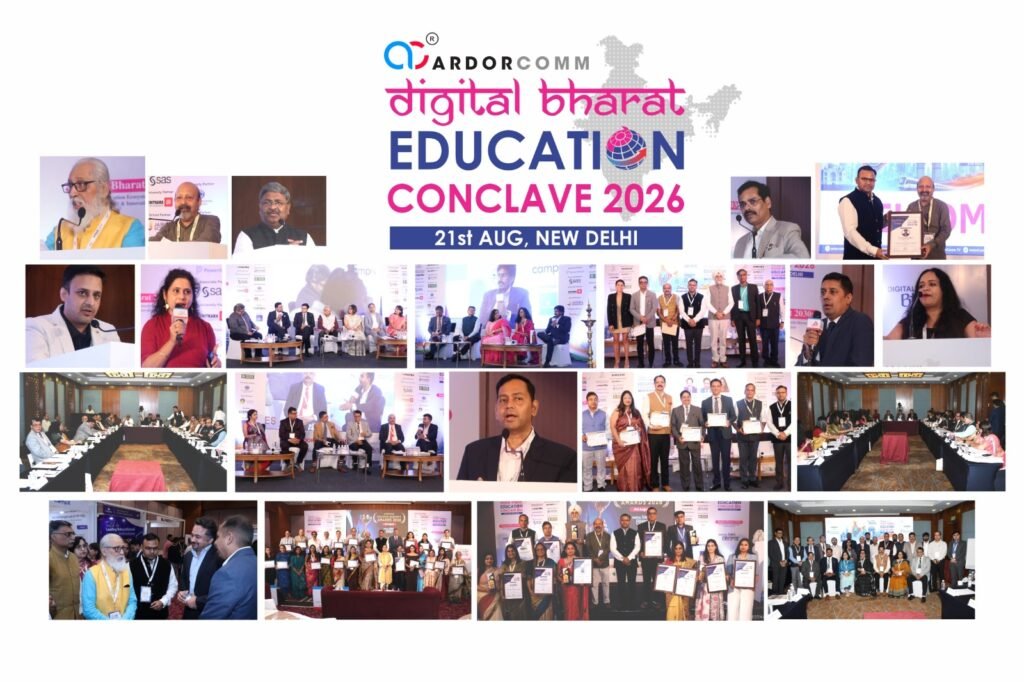
ArdorComm Digital Bharat Education Conclave 2026 held on 21st August 2026 in New Delhi

The ArdorComm Digital Bharat Education Conclave 2026, organised by ArdorComm Media Group, brought together leading educators, academicians, policymakers, government dignitaries, EdTech innovators, startups and industry experts to deliberate on the future of India’s education ecosystem in the age of artificial intelligence, digital transformation and emerging skills. Held under the theme “Digital Bharat 2030: Powering Education Ecosystem through AI, Skill & Innovation,” the conclave provided a platform for education leaders from across the country to exchange ideas, share successful practices and explore how technology and innovation can accelerate the transformation of Indian education. The event featured 5+ engaging panel discussions and 60+ speakers, with participation from leaders representing school education, higher education, government, EdTech, startups and the broader education ecosystem. With 150+ school education leaders and 150+ higher education leaders in attendance, the conclave created meaningful conversations around the opportunities and challenges shaping the next decade of learning. Reimagining Education for Digital Bharat 2030 The discussions at the conclave highlighted how India’s education system is moving beyond conventional technology adoption towards a more intelligent, personalised and outcome-driven ecosystem. Artificial Intelligence emerged as one of the central themes across conversations, with speakers examining its potential to transform teaching, learning, assessment, student engagement and institutional decision-making. At the same time, participants emphasised that technological advancement must be accompanied by responsible implementation, transparency, inclusivity and strong digital literacy. The conclave also explored the importance of developing future-ready skills as education increasingly intersects with rapidly evolving industry requirements. From employability and career readiness to curriculum transformation, the discussions underscored the need for stronger collaboration between educational institutions, policymakers and industry. Industry Leaders and Keynote Speakers The summit commenced with an inspiring Inaugural Session centered around the theme “Digital Bharat 2030: Powering Education Ecosystem through AI, Skill & Innovation.” The session featured a warm Welcome Address by Kumar Chandan Anand, Founder, CEO & Group Editor, ArdorComm Media Group, followed by insights from Guest of Honour Prof. Anil D. Sahasrabudhe, Chairman, National Educational Technology Forum (NETF) and National Board of Accreditation (NBA). The session also featured Guest Speakers Kunwar Shekhar Vijendra, Co-founder & Chancellor, Shobhit University and Chairman, ASSOCHAM National Council on Education, and Dr. S. K. Rathor, Founder, Chairman & MD, Sanfort Group of Schools, who shared their perspectives on the evolving education landscape and the role of technology, skills and innovation in shaping a future-ready India. The first panel discussion focused on “NEP2020 for Viksit Bharat: The Blueprint Aligning Policy, Process & Innovation for National Growth,” bringing together education leaders to deliberate on the implementation of NEP 2020 and its role in shaping a future-ready education ecosystem. The session was moderated by Dr. Sujeet Eric Masih, Principal, Apeejay School, Saket, New Delhi. The panel featured Prof. Basuthkar Jagadeeshwar Rao, Pro Chancellor & Vice-Chancellor, SGT University, Gurugram; Prof. (Dr.) Ajay Rana, Director General, AMITY University, Greater Noida, Uttar Pradesh; Tijay Gupta, Co-founder & COO, Bachpan & AHPS Group of Schools; Prof. Ankur Gill, Director of Operations, Swami Vivekanand Group of Institutions, Chandigarh; Mary Mahendri, Principal, GEMS Millennium School, Gurugram, Haryana; and Tripti Tiwari, Principal, Lawrence Academy, Gulaothi, Bulandshahr. The second panel discussion explored “Building Future-Ready Schools: From Smart Campuses to Intelligent Education Ecosystem,” bringing together school education leaders to discuss how technology, innovation and intelligent infrastructure can transform learning environments and prepare schools for the future. The session was moderated by Amol Arora, MD, Shemrock & Shemford Group of Schools. The panel featured Manish Rastogi, Group CEO & Director, Zee Learn Limited; Abhishek Rathor, COO, Sanfort Group of Schools; Bindu Sangwan, Founder Principal, The Gurukulam School, Jaipur; and Neha Singh, Director, St. Kabir’s School & Siddharth International School, Hisar. The third panel discussion focused on “Reshaping HEIs Beyond Degrees: Reimagining Employability, Skills & Career Readiness in the AI Age,” bringing together eminent higher education leaders to explore how institutions can move beyond traditional degrees and equip learners with the skills, competencies and adaptability required for an evolving world of work. The session was moderated by Dr. Amit Gupta, Chairman, Jagannath International Management School (JIMS), New Delhi. The panel featured Dr. Picheswar Gadde, Chancellor, Lingaya’s Vidyapeeth (Deemed to be University), Faridabad; Prof. (Dr.) Tankeshwar Kumar, Vice Chancellor, Central University of Haryana, Mahendergarh; Vinita Rohera, Managing Trustee, Gandhinagar University, Gandhinagar; Prof. (Dr.) VR Raghuveer, Vice-Chancellor, SRM University Delhi-NCR, Sonepat; and Prof. Buta Singh Sidhu, Vice Chancellor, Shobhit University, Gangoh. The fourth panel discussion addressed “Responsible AI for Student Enrollment: Balancing Innovation, Transparency and Trust in Higher Education,” examining how artificial intelligence can transform student enrollment and engagement while ensuring transparency, accountability and trust across higher education. The session was moderated by Abhay Gupta, Founder & Chairman, Luxury Connect Business School, Gurugram. The panel featured Prof. (Dr.) Shalya Raj, CEO, Swami Vivekanand Subharti University, Meerut; Dr. R. D. Patidar, Vice Chancellor, O. P. Jindal University, Raigarh; Siddhartth Singh, Director – Sales, Meritto; Dr. Manoj Manuja, Vice Chancellor, Geeta University, Panipat; and Prof. (Dr.) Arun Garg, Vice Chancellor, MVN University, Palwal. The fifth panel discussion focused on “Digital Divide Challenge: Ensuring Inclusive, Accessible & Equitable Education for Every Learner,” bringing together higher education leaders to examine the challenges of unequal access to digital infrastructure, technology and quality learning opportunities. The session was moderated by Prof. (Dr.) Satish Chander Sharma, Pro Vice Chancellor, Babu Banarasi Das University, Lucknow. The panel featured Prof. (Dr.) P.N. Hrisheekesha, Vice Chancellor, Dr. K. N. Modi University, Ghaziabad; Dr. Manju Gupta, Vice Chancellor, Glocal University, Saharanpur; Dr. Parma Nand, Vice Chancellor, Sharda University, Agra; Prof. (Dr.) Jayanand, Pro Vice Chancellor, Shobhit University, Meerut; and Prof. (Dr.) Pankaj Kumar Mishra, Pro Vice Chancellor, IIMT University, Greater Noida. The summit concluded with a thoughtful Valedictory Session, featuring Special Guest Dr. Anup Kumar Rajput, Department of Elementary Education, NCERT, Ministry of Education, Government of India. The session reflected on the key insights and discussions from across the conclave, highlighting the collective vision for a more inclusive, innovative and future-ready education ecosystem. The event concluded with a Thank You Note by Kumar Chandan Anand, Founder, CEO & Group Editor,

ArdorComm Digital Bharat Education Conclave 2026 held on 21st August 2026 in New Delhi Read More »

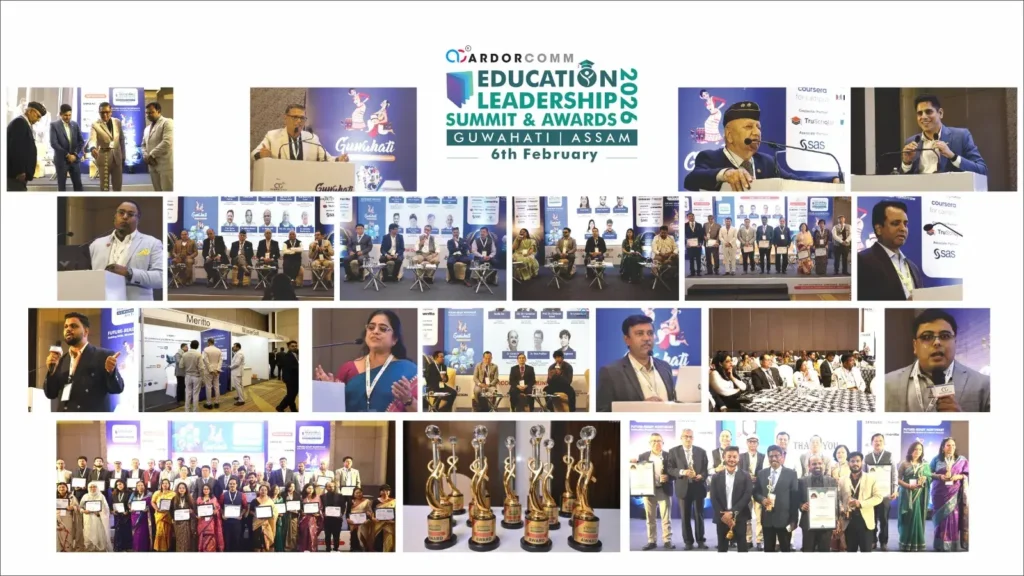
ArdorComm Education Leadership Summit & Awards 2026 held in Guwahati, Assam on 6th February 2026

The ArdorComm – Education Leadership Summit & Awards 2026, held on 6th February 2026 in Guwahati, Assam, emerged as a powerful confluence of ideas, inspiration and action, spotlighting the North East as a fast-evolving education and skills hub of India. Centred on the theme “Future-Ready Northeast: Building Skills, Mindsets for a Smarter Tomorrow”, the summit brought together senior education leaders, policymakers, academicians, EdTech innovators and industry experts from across the region and beyond. Organised by ArdorComm Media Group, the flagship summit reaffirmed the organisation’s commitment to fostering dialogue, collaboration and recognition across India’s education ecosystem—this time with a sharp focus on the immense potential and progress of the North Eastern states. Showcasing the Northeast’s Education Transformation The summit highlighted how Northeast India is undergoing a quiet but powerful transformation in education, driven by improved literacy rates, enhanced digital infrastructure, policy-led reforms and growing private participation. Discussions underscored the region’s journey from access-led education to outcome-oriented, future-ready learning models. Speakers extensively explored the opportunities unlocked by NEP 2020, particularly its emphasis on regional languages, multidisciplinary learning, skill integration and alignment with local economic and employment needs. The role of education in nurturing entrepreneurship, employability and innovation within the region was a recurring theme across sessions. With growing investments in universities, private unaided schools, vocational training centres and EdTech-enabled classrooms, the Northeast is increasingly positioning itself as a model region for inclusive and tech-driven education. Support from Esteemed Government Leaders The ArdorComm – Education Leadership Summit & Awards 2026 – Guwahati received strong encouragement and goodwill from distinguished leaders of the Government of Assam, underscoring the importance of collaborative efforts in advancing education, skills and youth development in the region. Smti. Nandita Garlosa, Hon’ble Minister of Sports & Youth Welfare, Government of Assam, extended her warm wishes to the summit, appreciating initiatives that focus on empowering youth through education, skill development and holistic growth. Dr. Ranoj Pegu, Hon’ble Minister of Education, Welfare of Plain Tribe & Backward Classes, Government of Assam, conveyed his best wishes for the event and acknowledged the role of such platforms in strengthening education systems, promoting inclusivity and aligning learning with the aspirations of the future workforce. Shri Prasanta Phukan, Hon’ble Minister for Power, Skill, Employment & Entrepreneurship, Medical Education & Research, Government of Assam, also shared his warm regards for the summit, recognising the significance of industry–academia collaboration in building a skilled, employable and future-ready talent pool for the state and the region. Their encouragement and goodwill added immense value to the summit and reaffirmed the collective commitment towards nurturing a future-ready Northeast through education, skills and innovation. Industry Leaders and Keynote Speakers The summit opened with an impactful Inaugural Session on “Future-Ready Northeast: Building Skills & Mindsets for a Better Tomorrow”, setting the tone for a day of forward-looking discussions. Kumar Chandan Anand, Founder, CEO & Group Editor, ArdorComm Media Group, delivered the Welcome Address, highlighting ArdorComm’s commitment to fostering collaborative platforms that drive inclusive, future-ready education. The Guest of Honour, Shri R. C. Jain, IAS (Retd.), Chairman, Assam State School Education Board (ASSEB), Government of Assam, shared insights on strengthening school education and aligning learning outcomes with the vision of NEP 2020. The session was further enriched by Maj. Gen. B. D. Wadhwa, AVSM, Pro Chancellor (Emeritus), IILM University, Greater Noida, who emphasised leadership and values-based education, and Aaditya Razdan, Senior Enterprise Director, Coursera, who spoke on the growing role of digital platforms and industry-aligned learning in building future-ready skills for the Northeast. Panel 1, titled “NEP and Tech Advantage for KG to PG: Building a Future-Ready Generation”, brought together education leaders from school and higher education to discuss how NEP 2020 and technology can collectively transform learning across the entire academic continuum. Moderated by Sandip Sen, Principal, SERS Public School, Guwahati, the panel featured Cdr. (Dr.) Gurdaman Sharma, Vice Chancellor, SRM University, Gangtok; Prof. (Dr.) Ginlianlal Buhril, Vice Chancellor, ICFAI University, Mizoram; Dr. Nitai Pradhan, Principal, Good Shepherd’s Home English Medium High School, Nagaon; and Mohan Raghavan, Director, Mind Matters Educational Group, Guwahati. The discussion highlighted curriculum flexibility, experiential learning, digital integration and teacher preparedness as critical enablers for nurturing future-ready skills and mindsets from early childhood education to higher education. Panel 2, titled “Digital Pathways to Lifelong Learning: Balancing Innovation, Inclusion & Ethics”, focused on how digital transformation can enable continuous learning while remaining equitable and responsible. Moderated by Gariasi Dutta, Chairperson, The down town Group Schools, Guwahati, the panel featured Diwan Siraj Munir, Executive Director & CEO, Sublime Academy, Barpeta; Dr. Durlav Sarkar, Founder & Director, Gurukul Group of Educational Wing, Mangaldai; Mallika Das Singh, Founder & Director, Lakshya International School, Tezpur; and Anuraag Saraf, Founder & Director, Mind Matters Educational Group, Guwahati. The discussion emphasised ethical use of technology, inclusive digital access, blended learning models and the importance of fostering critical thinking and digital citizenship across all stages of education. Panel 3, titled “Bridging Education and Employability: Skills for the 21st Century Workforce”, brought the spotlight on aligning academic frameworks with evolving industry demands and employability outcomes. Moderated by Prof. Himanshu Panchal, Vice Chancellor, EdTech Skills University, Tinsukia, the panel featured Kuldip Sarma, Co-Founder & Pro-Chancellor, Medhavi Skills University, Singtam; Manik Kathuria, Regional Account Director, Coursera; Maj. Gen. B. D. Wadhwa, AVSM, Pro Chancellor (Emeritus), IILM University, Greater Noida; Prof. (Dr.) K. V. S. Sarma, Vice Chancellor, National Law University and Judicial Academy, Guwahati; Dr. Bibhas Deb, Vice Chancellor, Maharaja Bir Bikram University, Agartala; Prof. (Dr.) Ajeya Jha, Vice Chancellor, Arunachal University of Studies, Namsai; and Dr. Debmalya Bhattacharya, Pro Vice Chancellor, MIT University of Meghalaya. The discussion underscored the importance of industry-aligned curricula, experiential learning, micro-credentials, leadership development and strong academia–industry partnerships in preparing a future-ready workforce for the Northeast and beyond. Panel 4, titled “Reimagining Higher Education in the Digital Era: Transformation, Trends & Pathways”, explored how universities are navigating digital disruption while rethinking academic delivery, governance and student engagement. Moderated by Prof. (Dr.) Prakash Divakaran, Vice Chancellor, Himalayan University, Itanagar, the panel featured Subrato Ganguly, Senior Manager

ArdorComm Education Leadership Summit & Awards 2026 held in Guwahati, Assam on 6th February 2026 Read More »

Empowering Digital India through Education: Countdown to ArdorComm – Digital Bharat Education Conclave 2025 in Bengaluru

As India accelerates its journey toward becoming a digitally empowered knowledge economy, education remains the linchpin of this transformation. Against this backdrop, ArdorComm Media Group, one of India’s fastest-growing media organisations, is set to host its National Flagship Event – Digital Bharat Education Conclave 2025 in Bengaluru, Karnataka on 19th September 2025. With a future-forward theme – Digital India Rising: Transforming Education, Skilling & Employability – the conclave promises to be a high-impact gathering of education stakeholders, tech innovators, government dignitaries, and institutional leaders from across the nation. Why Does This Conclave Matters? India’s Digital Bharat initiatives have dramatically reshaped the way learning is delivered, accessed, and consumed. From remote tribal belts to bustling urban centres, digital technologies are now at the heart of educational outreach. The conclave arrives at a time when the country is witnessing a surge in Education 5.0—an ecosystem where Artificial Intelligence (AI), Machine Learning (ML), immersive AR/VR experiences, Learning Management Systems (LMS), and data-driven insights are redefining education models. Bengaluru, Karnataka—India’s tech capital—provides the perfect setting for this exchange of ideas. The state’s forward-thinking policies, robust digital infrastructure, and dynamic education ecosystem make it a prime example of how technology can be leveraged to uplift learning outcomes, boost employability, and ensure inclusive education. What to Expect: Key Highlights This one-day conclave is designed as an interactive platform to celebrate, discuss, and design the next leap in Indian education. Here’s what the day entails: Panel Discussions: 6+ engaging sessions featuring experts from academia, government, and industry. 50+ Esteemed Speakers sharing best practices and innovative approaches. Participation from 150+ Higher Education Institutions, 100+ K-12 Schools, 20+ EdTech Corporates. 2+ RoundTable Discussions to deep-dive into policy, technology, and leadership challenges. ArdorComm Education Leadership Awards 2025 to honour institutions and individuals driving change. Who Will Be There? Expect participation from a wide spectrum of stakeholders, including: Government Officials & Policy Makers University Leaders & College Principals EdTech Innovators & Startups HR Professionals from Skill & Employability Sectors K-12 & Preschool Management Bodies Training & Certification Bodies The conclave is a dynamic networking opportunity for changemakers committed to uplifting the Indian education ecosystem. Key Discussion Themes The event will revolve around the following futuristic and inclusive themes: Empowering Students for the Global Stage: Skills for 21st Century Workforce Inclusive Campus in Digital Era: Addressing Digital Divides, Diversifying Curricula Degrees to Skills: Rethinking Higher Education Outcomes for the Future Workforce Education 5.0: Redefining Education by Integrating Immersive & Advanced Technologies Public-Private Partnerships in Education: Institutional Perspectives for Scalable Impact These themes reflect the urgency to not just adapt to change, but lead it. ArdorComm Education Leadership Awards 2025: Honouring the Trailblazers One of the marquee segments of the conclave is the Education Leadership Awards 2025, a prestigious initiative to honour excellence, innovation, and impact in the education and skilling ecosystem. From preschools to universities, from startups to corporate giants—six award segments will celebrate those who’ve truly made a difference: Award Segments: Preschool Awards School Education Awards Higher Education Awards Skills & Training Awards EdTech Startup Awards EdTech Corporate Awards If you or your institution has led by example in advancing education, nominate now: Submit Nomination Why You Should Attend This is not just another event—it’s a collaborative movement towards building an inclusive, tech-driven, and skill-oriented education system for India. Whether you’re a policymaker, educator, institution head, EdTech entrepreneur, or HR professional, DBEC 2025 will help you: Stay ahead of policy and tech trends Connect with India’s top education influencers Showcase your innovations and gain visibility Collaborate for strategic partnerships and investments Celebrate and learn from the best in the sector Conclusion: The Future Is Now The Digital Bharat Education Conclave 2025 is more than just a confluence of thought leaders—it’s a platform to redefine the trajectory of Indian education. In the heart of India’s tech capital, this conclave will set the stage for meaningful dialogues, pathbreaking innovations, and actionable collaborations that push the boundaries of what’s possible. Mark your calendar – 19th September 2025 Location – Bengaluru, Karnataka Theme – Digital India Rising: Transforming Education, Skilling & Employability Let’s come together to celebrate changemakers and shape a digitally empowered future for India’s learners. Stay tuned for updates, speaker announcements, and more. Follow us with hashtags: #DBEC2025 #DBECBengaluru #DigitalBharatEducationConclave

Empowering Digital India through Education: Countdown to ArdorComm – Digital Bharat Education Conclave 2025 in Bengaluru Read More »

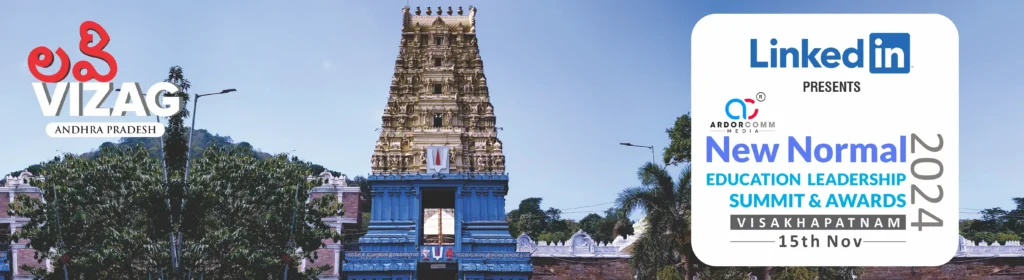
13th ArdorComm – ‘New Normal – Education Leadership Summit & Awards 2024’ to be held in Visakhapatnam, Andhra Pradesh, on 15th November 2024

blog

As the world navigates through rapid shifts in the education landscape, driven by technological advancements and global challenges, it becomes crucial to cultivate future-ready skills and mindsets. In line with this evolving narrative, the 13th ArdorComm ‘New Normal – Education Leadership Summit & Awards 2024’ is set to take place in the vibrant city of Visakhapatnam, Andhra Pradesh, on 15th November  2024. Organized by ArdorComm Media Group, this landmark event brings together some of the brightest minds from education, government, and industry, all dedicated to shaping a better future for learners. With the overarching theme, Future-Forward Education: Cultivating Skills and Mindsets in the 21st Century Workplace, the summit will spark critical discussions and explore how education can adapt to meet the demands of a rapidly changing world. Why Andhra Pradesh? As a rising star in India’s educational ecosystem, Andhra Pradesh is rapidly transforming into a hub for innovation in education and skilling. Cities like Visakhapatnam, Amaravati, Vijayawada, and Tirupati host prestigious institutions known for their national and global recognition. The state’s Education Department, in collaboration with forward-thinking leaders, has rolled out initiatives like “Mana Badi Nadu-Nedu,” which pushes digital classrooms, smart learning technologies, and other transformative reforms. Programs like Jagananna Amma Vodi, Vidya Kanuka, and Gorumudda showcase the state’s mission-driven approach to reshaping education, focusing on nurturing global citizens of the future. What to Expect at the Summit? Event Highlights: Date: 18th October 2024 Location: Visakhapatnam, Andhra Pradesh Sessions: 6+ Speakers: 50+ Schools Represented: 75+ Higher Education Institutions: 150+ Government Dignitaries: 10+ Corporate Representatives: 15+ EdTech Startups: 15+ This prestigious summit will provide a space for Academicians, Educators, Edupreneurs, HR professionals, Startups, EdTech pioneers, and Industry leaders to come together, share insights, and engage in transformative discussions. The event’s focus is on creating an ecosystem that not only embraces technological advancements but also addresses the critical need for emotional resilience, career preparedness, and data-driven decision-making in educational institutions. Key Discussion Points Attendees can look forward to discussions on pivotal topics such as: Leveraging AI and EdTech: Enhancing Student Engagement and Personalized Learning Future-Forward Education: Cultivating Skills and Mindsets in 21st Century Workplace Building Emotional Resilience: Integrating Social-Emotional Learning into the Curriculum Data-Driven Decision Making: How Analytics Can Transform Educational Strategies and Outcomes Harnessing Digital Tools:Transforming Traditional Classrooms into Dynamic Learning Environments Preparing Students for Future Careers: Aligning Education with Emerging Industry Trends and Skills ArdorComm Education Leadership Awards 2024 In addition to the summit, ArdorComm Media will celebrate the remarkable achievements of individuals and institutions that have been instrumental in transforming the education sector. From adapting to the “New Normal” to spearheading innovative teaching, learning, and skilling practices, awardees have demonstrated unparalleled dedication to educational excellence. The ArdorComm Education Leadership Awards 2024 will recognize: Preschools Schools Higher Education Institutions Skills & Training Organizations Corporates Startups By honoring these trailblazers, ArdorComm aims to bring recognition and visibility to those shaping the future of education through their commitment to re-skilling, innovation, and global adaptability. Award Nominations and Selection Process The nomination process for the awards is designed to ensure fairness and recognize contributions across various educational segments. Categories include: Preschool Award School Education Award Higher Education Award Skills & Training Awards Corporate Award Startup Award This year’s selection process will highlight innovative initiatives, exceptional leadership, and ground-breaking transformations in teaching and learning practices. For more details visit https://ardorcomm-media.com/elsavisakhapatnam/#awards Join Us in Celebrating Education’s Future The 13th ArdorComm ‘New Normal – Education Leadership Summit & Awards 2024’ promises to be an inspiring event, bringing together thought leaders and visionaries from across the education sector. The event will serve as a platform for dialogue, innovation, and recognition, aimed at setting the stage for a brighter, more sustainable future in education. Whether you’re an educator, policymaker, industry expert, or EdTech innovator, this summit is an unmissable opportunity to engage with peers, share knowledge, and drive impactful change. We look forward to seeing you at this momentous occasion in Visakhapatnam, Andhra Pradesh, as we work together to forge a path toward the future of education. Be part of the conversation. Be part of the change. Register Now! #ELSAAndhraPradesh #ELSAVizag #ELSAVisakhapatnam #ArdorComm #NewNormal

13th ArdorComm – ‘New Normal – Education Leadership Summit & Awards 2024’ to be held in Visakhapatnam, Andhra Pradesh, on 15th November 2024 Read More »

13th ArdorComm – ‘New Normal – Education Leadership Summit & Awards 2024’

13th ArdorComm – ‘New Normal – Education Leadership Summit & Awards 2024’ #ELSAAndhraPradesh #ELSAVizag #ArdorComm #NewNormal#EducationLeadershipSummit Theme : Future-Forward Education: Cultivating Skills and Mindsets in 21st Century Workplace ArdorComm Media Group, a growing media organisation in India, is hosting 13th New Normal- Education Leadership Summit & Awards 2024, in Visakhapatnam, Andhra Pradesh on 15th November 2024 ‘Andhra Pradesh’ is continuously progressing towards being a desired destination of education and skilling initiatives in India. Along with Visakhapatnam (Vizag) there are more beautiful cities like Amaravati, Anantapur, Vizianagaram, Tirupati, Vijayawada, Mangalagiri, Kurnool, Sri City, Guntur, comprising of many prestigious higher education, technical institutions & schools with improved national assessment and accreditation grades. Government is rolling out the long-term objective of grooming the students as global citizens with a bright future. Education Department has launched a series of initiatives as part of reforms, in mission mode like “Mana Badi Nadu-Nedu”, utilisation of IFPs, Smart TVs, Tabs which gave a big-push to digital transformation from the conventional classrooms, Innovative schemes like Jagananna Amma Vodi, Vidya Kanuka and Gorumudda and comprehensive academic, administrative reforms and many skill reforms. Academicians, Educators, Edupreneurs, HRs, Startups, Edtech & Industry leaders will converge to share their insights, experiences, and accomplishments, all in pursuit of sustainable growth for the education community. ArdorComm media will recognise and honour individuals – institutions whose contribution have tirelessly worked towards the betterment of education, shaping a brighter future for learners worldwide. Join us to experience this moment of celebration & knowledge sharing!! Day 0 SESSIONS 0 + SPEAKERS 0 + SCHOOLS 0 + HIGHER EDUCATION 0 + GOVERNMENT DIGNITARIES 0 + CORPORATE 0 + EDTECH STARTUPS 0 + KEY DISCUSSION POINTS Leveraging AI and EdTech: Enhancing Student Engagement and Personalized Learning Future-Forward Education: Cultivating Skills and Mindsets in 21st Century Workplace Building Emotional Resilience: Integrating Social-Emotional Learning into the Curriculum Data-Driven Decision Making: How Analytics Can Transform Educational Strategies and Outcomes Harnessing Digital Tools:Transforming Traditional Classrooms into Dynamic Learning Environments Preparing Students for Future Careers: Aligning Education with Emerging Industry Trends and Skills PARTICIPATION FROM Government Academia Universities Engineering Inst B-Schools K-12 Preschools Startups HRs EdTech OUR SPEAKERS OUR PARTNERS Host PRESENTING PARTNER Gold Partner EdTech Partner Online Learning Partner Display Solution Partner OUR COMMUNITY PARTNERS EDUCATION HEALTH & WELLNESS HUMAN RESOURCE GOVERNANCE MEDIA ENTERTAINMENT & ART PAST PARTNERS ARDORCOMM EDUCATION LEADERSHIP AWARDS 2024 Indian Educators, Academicians, Institutions, EdTech companies & Startups have set an incredible example of excellence in front of the whole world during this unprecedented times, by adapting changes, transforming, re-skilling & re-inventing, ArdorComm Media, a growing media company in India has announced “New Normal- Education Leadership Summit & Awards 2024” to recognize & felicitate the exemplary contributions and innovative initiatives taken by the Preschools, Schools, Higher educational institutions, Corporate and EdTech Startups associated with the education sector. ArdorComm Media would like to honor the Trendsetters, Innovators, Education Leaders, Institutions and Organizations that have been providing excellence and outstanding accomplishment in the education sector. Ardorcomm Education Leadership Awards 2024 aims to acknowledge those individuals, educational institutions, and EdTech companies that have played a key role in transforming the teaching, learning and employability outcomes. The prestigious award will bring recognition and visibility for an institution/ organization across the sector. This summit will bring together the top notch industry leaders and key decision makers from the education sector, to enrich the community by sharing their insights and knowledge with the stakeholders, which will eventually bring a paradigm shift in the education sphere within various parts of the country. Past Glimpses AGENDA Time Topic 9:00 AM – 9:45 AM Panel 1 -: Leveraging AI and EdTech: Enhancing Student Engagement and Personalized Learning 9:45 AM – 10:40 AM Inaugural Session:- Future-Forward Education: Cultivating Skills and Mindsets in 21st Century Workplace 10: 40 AM – 11:00 AM Fireside Chat 11:00 AM – 11:15 AM Networking Tea 11:15 AM – 12:15 PM Panel 2 :- Building Emotional Resilience: Integrating Social-Emotional Learning into the Curriculum 12:15 PM- 12:25 PM Industry Speech 1 12:25 PM – 12:45 PM Industry Speech 2 12:45 PM -1:45 PM Panel 3 :- Data-Driven Decision Making: How Analytics Can Transform Educational Strategies and Outcomes 1:45 PM – 2:20 PM Networking Lunch 2:20 PM – 3:30 PM Panel 4 – HE :- Harnessing Digital Tools: Transforming Traditional Classrooms into Dynamic Learning Environments 3:30 PM – 3:40 PM Industry Speech 3 3:40 PM – 04:30 PM Panel 5 – HE :- Preparing Students for Future Careers:Aligning Education with Emerging Industry Trends and Skills 4:30 PM – 04:45 PM Networking Tea 04:45 PM – 6:00 PM Valedictory Session: Felicitation & Award Ceremony Time Topic 9:30 AM – 11:00 AM Inaugural Session :- INDIA’s Vision 2030: A Move to Improve Education & Skills in 21st Century Workplace 11:00 AM – 11:15 AM Networking Tea 11:15 AM – 12:15 PM Panel 1 :- Disruptive Technologies Transforming Education in the 21st Century 12:15 PM – 12:25 PM Industry Speech 1 12:25 PM- 12:35 PM Industry Speech 2 12:35 PM – 1:35 PM Panel 2 :- Need of an Effective Early Childhood (ECE) Curriculum for a Sustainable Development Goal. 1:35 PM – 2:15 PM Networking Lunch 2:15 PM – 3:15 PM Panel 3 :- STEM-based learning and skill-based education, most progressive education trends 3:15 PM – 3:25 PM Industry Speech 3 3:25 PM – 3:35 PM Industry Speech 4 3:35 PM – 4:25 PM Panel 4 :- How NEP 2020 Policy Aims to make Education More Inclusive, Equitable, and Holistic? 4:25 PM – 4:40 PM Networking Tea 4:40 PM – 4:50 PM Industry Speech 5 4:50 PM – 6:00 PM Valedictory, Felicitation & Award Ceremony Venue Fairfield by Marriott Visakhapatnam, Andhra Pradesh Ksr Prime R&B Junction, Andhra Pradesh, 530018 

13th ArdorComm – ‘New Normal – Education Leadership Summit & Awards 2024’ Read More »

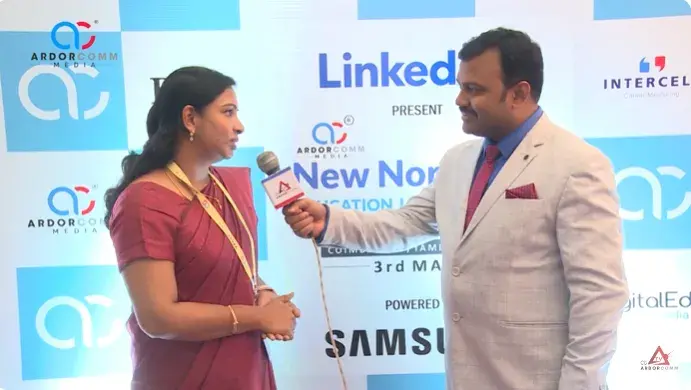
Pradeepa Thinakaran, Founder & MD, Zing International Preschool, Chennai expressed on Child safety

“When parents trust us with their children, safety is paramount. We prioritize safety measures, such as eliminating plastic, maintaining cleanliness, and providing a safe play area.” Said Pradeepa Thinakaran Can you tell us more about your organization? I’m passionate about kindergarten education, so I founded Zing International Preschool. In the first year, we admitted nearly 200 children, and the second year saw a similar intake. Our school is eco-friendly, focusing on greenery and avoiding the use of plastics. We prioritize helping children learn to read and write using phonetic sounds. Importantly, we allow children to learn at their own pace through free play, which sets us apart from other schools. What are the primary concerns for educators regarding safety and implementation of education? When parents trust us with their children, safety is paramount. We prioritize safety measures, such as eliminating plastic, maintaining cleanliness, and providing a safe play area. Safety, discipline, and education are the top concerns for us. How do you view the growth of the preschool segment, especially with the implementation of the National Education Policy? Preschools have seen significant growth as parents appreciate the focus on early childhood education. Unlike K-12 schools, preschools concentrate solely on the kindergarten years (ages 2-6). This specialization is attracting parents, leading to the booming growth of preschools. What factors should parents consider regarding hygiene when selecting a preschool? Parents should prioritize hygiene during preschool visits. They should inspect restroom cleanliness and inquire about restroom maintenance schedules. Regular cleaning intervals, cleanliness of play areas, and sanitation practices for furniture are crucial factors to consider. What were your key learnings from today’s session? Today’s session provided valuable insights, especially regarding childcare, parenting, and environmental utilization. Learning from panelists about water conservation and parenting strategies was particularly enlightening. The event was a great source of information. How do forums like this benefit participants? Events like this provide a platform for networking and accessing technology partners. Digital tools showcased at stalls are beneficial for students from grade 8 to 12, aiding in their learning outside the classroom. Such forums facilitate the adoption of digital platforms for enhanced learning experiences. Any message for ArdorComm Media Group? Congratulations on your journey of 2.5 to 3 years. The event organization and follow-up have been commendable. Keep up the good work, and I wish you continued success. Any final thoughts? It was a pleasure attending this event. Thank you for the invitation, and I wish you all the best.  

Pradeepa Thinakaran, Founder & MD, Zing International Preschool, Chennai expressed on Child safety Read More »

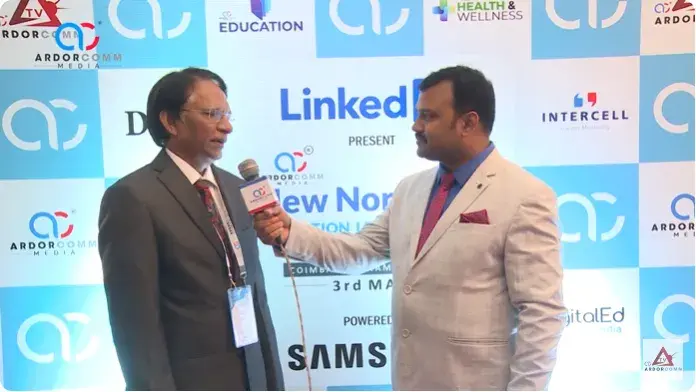
Dr. T. V. Christy, Vice Chancellor, Ponnaiyah Ramajayam Institute of Sc. & Tech. Vallam talked about four pillars of the New Education Policy (NEP)

“The New Normal is about being student-centric. Education should focus on where graduates go after graduation, anticipating their future needs. ” said  Dr. T. V. Christy Could you tell us more about your group of institutions? I am from The Ponnaiyah Ramajayam Institute of Science and Technology, famously known as PRIST deemed to be University, recognized by the University Grants Commission. It is located in Thanjavur, and we run programs in various disciplines, including engineering, arts and science, agriculture, pharmacy, and law. When we talk about sustainability in education, what special initiatives have been taken by your institution? We have empowered our students by first making them aware of the 17 Sustainable Development Goals (SDGs). We conduct various sessions to ensure that our students and faculty members understand the importance and significance of these SDGs. Our management is very particular about integrating these goals into our educational practices. Regarding education policy implementations, what initiatives or developments have you undertaken? The four pillars of the New Education Policy (NEP) can be summarized as AE AQ: Accessibility, Equity, Accountability, and Quality. We ensure that these principles form the basis of our NEP implementation in our campuses. If the first three (Accessibility, Equity, Accountability) are in place, Quality naturally follows. What are the leading roles of your institution in terms of the incubation center and industry engagement? One of our best practices is ensuring that every faculty member is in touch with a minimum of two industries. For example, in a department with 15 faculty members, we have connections with 30 industries. Faculty members develop relationships with industry professionals, bring them to address students, and ultimately establish memorandums of understanding. This approach brings industry-oriented skills meaningfully into our university. What does the term ‘New Normal’ mean to you in the context of education? The New Normal is about being student-centric. Education should focus on where graduates go after graduation, anticipating their future needs. The goal is to foresee the skills and knowledge they will require three to four years after graduating and adapt our educational practices accordingly. This forward-thinking approach is what I consider the New Normal. How do forums like this, which bring together representatives from schools, higher education, skill education, technical education, and tech companies, benefit the society at large? I’m really touched by the name “ARCOM.” It stands for Community, Aspiration, Reimagination, Digitalization, Opportunity, and Readiness. These are exactly what we need in today’s educational scenario. Such forums motivate students and ensure they serve the community. Bringing industry leaders and educational leaders together provides a platform for sharing best practices and learning from each other. It’s an excellent initiative that should continue. Any message for ArdorComm Media Group? Continue your efforts and gather feedback from participants. Learn from any challenges or difficulties faced in conducting this program and strive to improve in future events. Bringing together industry and educational institutions on one platform is a mammoth task, and you are doing an exceptional job. Congratulations! Any final thoughts? Thank you so much for inviting me to this forum. It was a pleasure and honor to participate. Your efforts in connecting different stakeholders in education are commendable. Thank you.

Dr. T. V. Christy, Vice Chancellor, Ponnaiyah Ramajayam Institute of Sc. & Tech. Vallam talked about four pillars of the New Education Policy (NEP) Read More »