ArdorComm Media Group

Wednesday, April 15, 2026 11:13 AM

green energy

Maharashtra’s Record-Breaking Solar Pump Rollout Earns Guinness Recognition
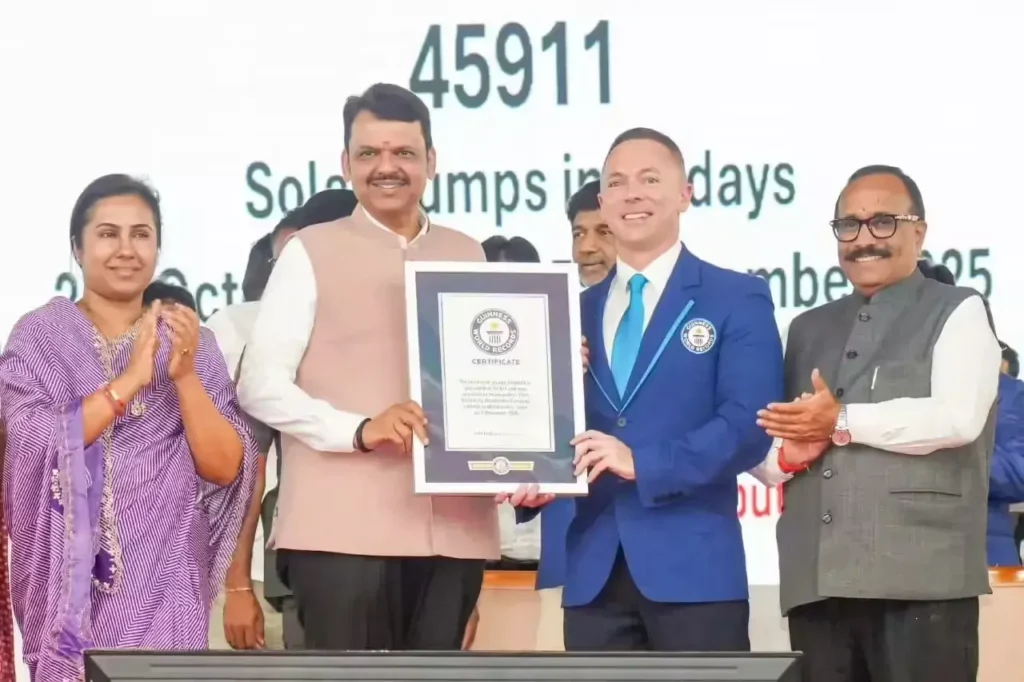
Maharashtra has entered the Guinness World Records after installing 45,911 off-grid solar agricultural pumps within just one month — one of the fastest large-scale renewable irrigation deployments worldwide, second only to China. The rapid rollout, executed under the PM-KUSUM scheme and the Magel Tyala Saur Krushi Pump Yojana, was completed in 30 days and formally certified by Guinness. A special ceremony in Chhatrapati Sambhajinagar marked the achievement, attended by Chief Minister Devendra Fadnavis, New and Renewable Energy Minister Atul Save, and senior officials. Fadnavis said the milestone represents a transformative shift in agricultural energy access, promising improved irrigation security, higher farm incomes, and reduced dependence on traditional power sources. He also directed officials to target 10 lakh solar pump installations by next year, building on the 7.5 lakh pumps already deployed. The massive rollout was enabled by pre-planned inventory, digital monitoring, multiple parallel installation teams, and a structured execution model that prioritised drought-prone areas. Strict service-level agreements ensured farmer grievances were addressed within three days, with automatic escalation for delays. Pump allocation followed land-based criteria: 3 HP for up to 2.5 acres, 5 HP for up to 5 acres, and 7 HP for larger farms. MSEDCL CMD Lokesh Chandra said the achievement stems from systematic planning, transparent vendor processes, and rigorous compliance. Maharashtra has now installed over 7.47 lakh solar pumps and is targeting 10.45 lakh units, making it one of India’s largest renewable irrigation transitions. The model — combining PM-KUSUM (Component B) and the state scheme — is being projected as scalable for other Indian states and Global South nations aiming for energy-secure, climate-friendly agriculture. The state plans to continue the accelerated rollout, gradually shifting all new agricultural power connections to off-grid solar systems, supporting long-term decarbonisation and reducing the load on the conventional grid. Source: Economic Times

Maharashtra’s Record-Breaking Solar Pump Rollout Earns Guinness Recognition Read More »
India Unveils New Strategies to Future-Proof Coal Sector Amid Green Transition

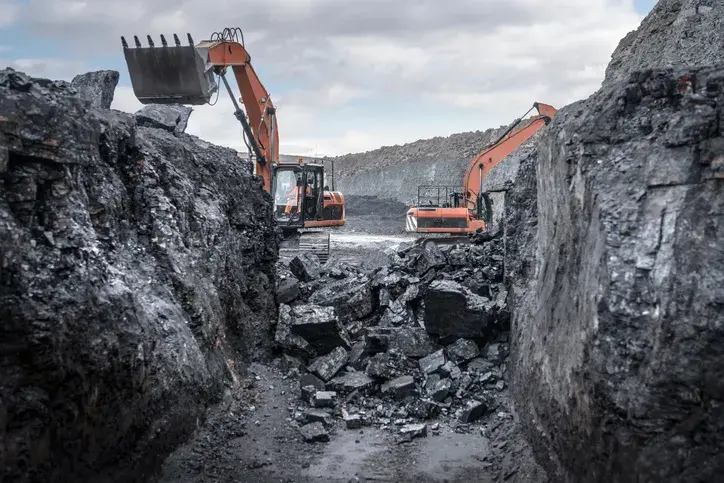
The Government of India has introduced a comprehensive set of initiatives aimed at enhancing the sustainability and competitiveness of the coal sector, even as the nation steadily increases its reliance on renewable energy sources. With coal still meeting around 55% of India’s energy demand and the country holding the fifth-largest coal reserves globally, the government is striking a balance between energy security and climate commitments. Focus on Greener Mining Practices Public Sector Undertakings (PSUs) in the coal and lignite space are implementing widespread environmental and efficiency upgrades. These include large-scale afforestation and bio-reclamation efforts around operational mines to reduce ecological damage. Energy-saving initiatives have also been scaled up, such as switching to LED lighting, incorporating energy-efficient appliances, deploying electric vehicles, and using smart technologies like auto timers and super fans in mine sites and street lighting systems. Additionally, treated mine water is being repurposed for community needs — from irrigation and firefighting to fish farming and domestic supply. Several MoUs with state governments aim to expand this supply to nearby villages and towns. In a move to reduce dependence on river sand and protect ecosystems, coal PSUs are now extracting usable sand from overburden (OB) waste. Nine processing units — including M-Sand and OB-to-sand plants — are now operational, promoting sustainable construction and groundwater recharge. Embracing Cleaner and Smarter Technologies Under the First Mile Connectivity (FMC) initiative, the coal sector is modernizing its logistics by shifting to mechanized transport systems. This helps reduce fuel usage and lower carbon emissions. To minimize environmental disruption, companies are increasingly deploying blast-free technologies such as Surface Miners and Continuous Miners, which significantly cut down on air and noise pollution. There’s also a growing push towards clean energy and green technologies within the sector. Coal companies are investing in renewable energy projects, coal gasification, and coal bed methane (CBM) extraction. Participation in the Green Credit Programme by the Ministry of Environment, Forest and Climate Change signals the sector’s proactive stance toward environmental responsibility. Reducing Imports and Enhancing Domestic Supply India is steadily reducing its reliance on imported coal. According to Union Coal and Mines Minister G. Kishan Reddy, coal imports dropped from 264.5 million tonnes in FY 2023–24 to 243.6 million tonnes in FY 2024–25. This shift is driven by measures such as faster coal block allocations, greater private sector involvement, digital adoption in mining operations, and faster clearances for mining projects. An Inter-Ministerial Committee (IMC) has been established to promote import substitution and is working directly with power plants to align their needs with domestic coal supplies. Infrastructure developments, including new railway lines and expanded FMC corridors, are also improving coal evacuation and logistics, ensuring faster and more reliable deliveries across regions. Through these integrated steps, the Indian government is ensuring coal remains a stable and competitive component of the country’s energy mix — while simultaneously advancing toward a greener, more sustainable future. Source: DD News  

India Unveils New Strategies to Future-Proof Coal Sector Amid Green Transition Read More »

PM Modi and Cyprus President Hold Strategic Bilateral Talks in Nicosia, Pledge Deeper India-Cyprus Ties

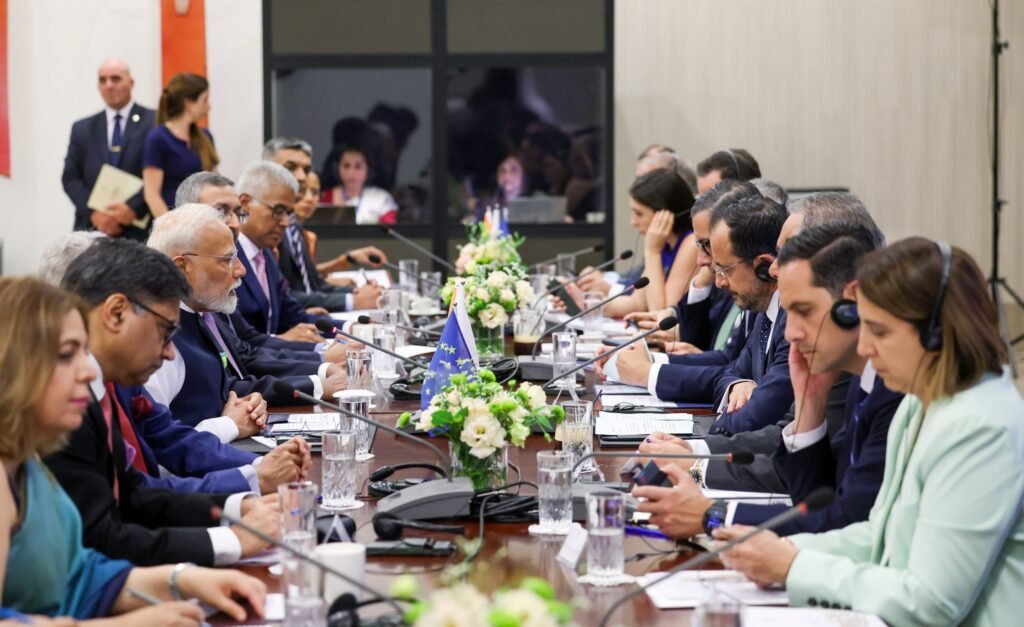
On his official visit to Cyprus, Prime Minister Narendra Modi held extensive bilateral talks with President Nikos Christodoulides at the Presidential Palace in Nicosia on Monday. The meeting, marked by a ceremonial welcome, focused on strengthening ties across multiple domains and underlined both countries’ shared commitment to peace, security, and global cooperation. Expressing gratitude, Prime Minister Modi thanked Cyprus for its firm condemnation of the recent terrorist attack in Pahalgam (April 2025), highlighting the strong solidarity between the two nations in the fight against terrorism. “Cyprus’s unwavering support reflects our mutual commitment to counter-terrorism efforts,” he noted. The leaders reaffirmed their respect for each other’s sovereignty and territorial integrity. PM Modi reiterated India’s continued backing of a unified Cyprus and called for a peaceful resolution of the Cyprus issue in accordance with UN Security Council resolutions, international law, and European Union principles. The talks covered a wide spectrum of bilateral cooperation — from trade and cultural exchange to defence and digital innovation. New areas such as fintech, artificial intelligence, start-ups, and mobility were identified as future avenues for collaboration. Significantly, both sides agreed to formulate a five-year roadmap aimed at boosting strategic cooperation. Key priorities include launching maritime and cyber security dialogues and enhancing intelligence-sharing mechanisms to jointly combat terrorism, arms smuggling, and narcotics trafficking. As Cyprus prepares for its Presidency of the Council of the European Union in early 2026, the leaders committed to further advancing the India–EU relationship. They reviewed progress on the India–EU Strategic Dialogue and stressed the urgency of concluding the long-delayed Free Trade Agreement by the end of 2025. President Christodoulides assured India that Cyprus would champion the EU–India strategic partnership during its presidency, particularly in areas like green energy, defence, maritime security, and space collaboration. Both sides acknowledged the signing of the Bilateral Defence Cooperation Programme earlier in January 2025 as a key step toward deeper defence ties. They also welcomed the formation of the India-Greece-Cyprus Business and Investment Council, seen as a vital mechanism for expanding trilateral engagement. Discussions also touched on the need for improved air connectivity to boost business, tourism, and educational exchange. Prime Minister Modi emphasized the strategic significance of the India-Middle East-Europe Economic Corridor (IMEC), calling it a transformative initiative for long-term regional prosperity. On the global stage, India and Cyprus reaffirmed their shared commitment to reforming international governance institutions. PM Modi appreciated Cyprus’s support for India’s bid for permanent membership in a restructured United Nations Security Council, noting, “The global order must evolve to reflect current realities.” The leaders also exchanged views on international developments, including ongoing conflicts in West Asia and Europe. To bolster cultural ties, both countries signed an MoU to set up an India Studies Chair at the University of Nicosia under the Indian Council for Cultural Relations (ICCR). The meeting underscored a growing convergence of strategic interests between India and Cyprus, setting the tone for a more robust partnership in the years ahead. Source: DD News

PM Modi and Cyprus President Hold Strategic Bilateral Talks in Nicosia, Pledge Deeper India-Cyprus Ties Read More »