


ArdorComm Media Group

Wednesday, August 26, 2026 6:23 PM

Infrastructure Projects

PM Modi Pushes Faster Execution of Swachh Bharat Mission 2.0, Reviews Key Infrastructure Projects at PRAGATI Meeting
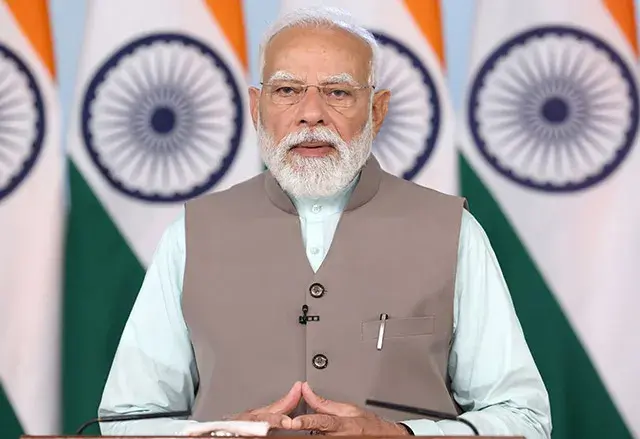
Prime Minister Narendra Modi on Thursday stressed the importance of effective implementation of Swachh Bharat Mission 2.0, urging States to focus not only on infrastructure creation but also on measurable outcomes through continuous monitoring, citizen participation, and better coordination among stakeholders. Chairing the 51st PRAGATI meeting in New Delhi, the Prime Minister reviewed seven major infrastructure projects spanning the Railways, Power, and Road sectors across nine States, with a combined value of nearly ₹30,000 crore. During the review of Swachh Bharat Mission initiatives, Modi directed States to speed up the completion of solid waste management infrastructure, including waste processing units and GOBARdhan plants. He highlighted the need for stronger implementation mechanisms to ensure long-term impact and improved sanitation outcomes. Reviewing power sector projects, the Prime Minister called for rapid expansion of rooftop solar systems in urban areas, residential societies, and public institutions. He said rooftop solar adoption should be pursued in mission mode to lower electricity costs, strengthen energy security, and boost clean energy generation at the community level. On road and port connectivity projects, Modi emphasised that the Vadhavan Port project should evolve into a model for integrated multi-modal infrastructure development. He said the port must function as a national logistics gateway connected through coastal shipping, inland waterways, dedicated freight corridors, high-speed rail, highways, and airport networks. While assessing the Ken-Betwa River Inter-linking Project, the Prime Minister said the initiative should become a benchmark for resolving inter-state water issues through cooperation, timely approvals, technology-driven monitoring, and mission-oriented execution. He encouraged States to explore similar integrated projects focusing on river-linking, water conservation, groundwater recharge, and efficient irrigation systems to enhance long-term water security. The Prime Minister also warned that delays in public infrastructure projects lead to rising costs and deprive citizens of timely access to essential services and development benefits. He stressed that Ministries, Departments, and State governments must adopt a proactive and time-bound approach to resolve bottlenecks and accelerate implementation. Modi further suggested innovative use of canal infrastructure, including installing solar panels along and above canals. He noted that such projects could optimise land use, reduce water evaporation, generate renewable energy, and create additional economic value from water resources. At the beginning of the meeting, the Cabinet Secretary informed that a monthly review mechanism for social sector schemes has now been operationalised at the State level following the Prime Minister’s directions. The system is aimed at ensuring regular monitoring, quicker resolution of implementation challenges, and greater accountability at State and district levels. Swachh Bharat Mission has been selected as the first scheme for review under this mechanism. Source: News on AIR

PM Modi Pushes Faster Execution of Swachh Bharat Mission 2.0, Reviews Key Infrastructure Projects at PRAGATI Meeting Read More »

PM Modi Praises CM Nitish Kumar’s Governance, Inaugurates AIIMS and Key Projects in Bihar

Prime Minister Narendra Modi, on Wednesday, praised Bihar Chief Minister Nitish Kumar for his contributions to Bihar’s development, describing his governance as a shift from the “Jungle Raj” era to a model of “sushashan” (good governance). Modi’s remarks came during an event in Darbhanga, Bihar, where he laid the foundation stone for an All India Institute of Medical Sciences (AIIMS) and inaugurated infrastructure projects totaling over ₹12,000 crore. “Nitish Babu has established a governance model that has pulled Bihar out of the shadows of Jungle Raj,” Modi stated, highlighting the transformation under Kumar’s leadership. With Nitish Kumar on stage, Modi noted the progress achieved under the NDA’s “double engine” government, driving Bihar towards all-around growth. Modi also acknowledged Nitish Kumar’s persistent efforts to bring AIIMS to Darbhanga, crediting the Chief Minister’s initial request alongside late BJP leader Arun Jaitley. In his speech, Modi emphasized the importance of improving medical facilities across smaller towns and noted that, under his government, the number of AIIMS hospitals has expanded from just one since independence to nearly 24. Additionally, the PM highlighted the increase in medical colleges, which has doubled in the last decade, resulting in more doctors and medical seats nationwide. Darbhanga AIIMS, he noted, would help address Bihar’s healthcare needs and produce skilled doctors for the state and the country. In line with promoting education in regional languages, Modi reaffirmed his government’s commitment to offering medical education in Hindi and other languages—a tribute to Bharat Ratna Karpoori Thakur’s vision. Modi also addressed Bihar’s annual flood challenges in the Kosi-Mithila region, revealing plans to collaborate with Nepal and allocate ₹11,000 crore towards flood mitigation. He concluded by announcing new healthcare initiatives, including a cancer center in Muzaffarpur and an eye hospital in collaboration with Kanchi Kamakoti Peeth. Present at the event were Bihar Governor Rajendra Vishwanath Arlekar, Union ministers Chirag Paswan and Nityanand Rai, and Deputy Chief Ministers Samrat Choudhary and Vijay Kumar Sinha. Source: Times of India Photo Credit: Times of India

PM Modi Praises CM Nitish Kumar’s Governance, Inaugurates AIIMS and Key Projects in Bihar Read More »

UP Government’s Rs 28,760.67 Crore Supplementary Budget Prioritizes Election Promises and Key Sectors

The state government of Uttar Pradesh unveiled a supplementary budget of Rs 28,760.67 crore, with a focus on keeping the promises made by the ruling BJP during the Assembly elections two years ago. This comes as the state gets ready for the upcoming Lok Sabha elections. To show that the government is committed to helping farmers, a sizeable portion of the budget—Rs 900 crore—has been set aside to provide free electricity to private tubewell connections. The UP Cooperative Sugar Mill Association has been given Rs 400 crore as a vital next step to settle the outstanding debts of cane growers. In addition, Rs 50 crore has been set aside for the season of 2022–2023 sugarcane procurement, and Rs 100 crore for the season of 2023–2024. Presenting the supplemental budget, State Finance Minister Suresh Khanna noted that expenditures from the revenue account totaled Rs 19,046 crore, while those from the capital account were Rs 9,714 crore. Notably, the Power sector was allotted the largest amount—more than Rs 6,000 crore—with funds designated for particular projects like Ghatampur and Jawaharpur Thermal Power. Infrastructure projects were also given top priority; funds were set aside for the Ganga Expressway, the Lucknow and Kanpur Metro Rail projects, and programs like the Deen Dayal Upadhaya Gram Jyoti Yojana and smart metering. The budget also covers road projects, the development and renovation of places of worship, and the preservation of stray cattle. Important social welfare initiatives include the provision of Rs 51 crore in prize money to medal winners at the 19th Asian and Para Asian Games, Rs 27 crore for the welfare of fishermen, and Rs 250 crore for the care of stray cattle. With large funding for the Home Department, the Special Task Force (STF), and initiatives to combat cybercrime and naxalism-related activities, security and law and order have not been neglected. The government’s strategic approach to fulfilling electoral promises, addressing important sectors, and guaranteeing comprehensive development across various facets of the state is emphasized by the supplemental budget. The budget, which combines targeted funding with populist measures, creates the conditions for heated discussions and debates in the run-up to the elections.

UP Government’s Rs 28,760.67 Crore Supplementary Budget Prioritizes Election Promises and Key Sectors Read More »