ArdorComm Media Group

Saturday, November 14, 2026 2:46 PM

International Cooperation

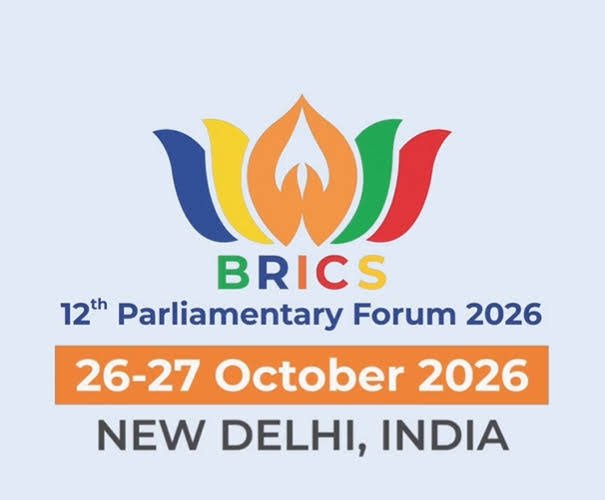
12th BRICS Parliamentary Forum Underway in New Delhi

The 12th BRICS Parliamentary Forum is being held at Samvidhan Sadan in New Delhi, with Lok Sabha Speaker and forum chairperson Om Birla and parliamentary leaders from BRICS member and partner countries attending the event. The two-day forum is centred on the theme, “Fostering Parliaments for People-Centric Development.” Prime Minister Narendra Modi is scheduled to participate in the event and interact with leaders of the visiting delegations. Eleven BRICS member countries and 10 partner countries have been invited to participate in the forum. The discussions aim to strengthen consensus-based dialogue through four high-level sessions focusing on resilience, innovation, cooperation and sustainability. The deliberations will also address issues related to terrorism. In addition, a dedicated meeting of the chairs of international affairs committees from the parliaments of BRICS member and partner countries will focus on parliamentary diplomacy, capacity-building and the exchange of best practices. The forum seeks to build on previous parliamentary engagements among BRICS nations and strengthen cooperation between legislatures on shared development priorities and global challenges. Source: News on AIR  

12th BRICS Parliamentary Forum Underway in New Delhi Read More »

BRICS Summit 2026: India’s Governance Moment and the Search for a More Inclusive Global Order

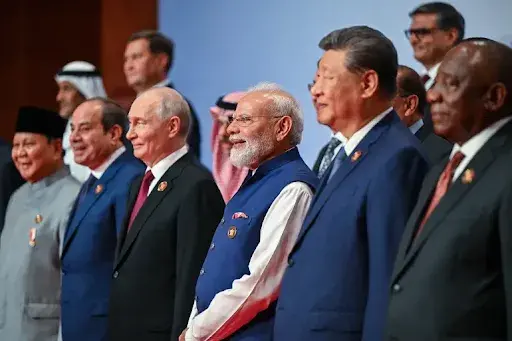
The 18th BRICS Summit in New Delhi has offered more than another chapter in the expanding story of emerging economies. It has also provided a window into a fundamental question confronting the international system: who gets to shape the rules of global governance, and how can those rules remain relevant in a world that is increasingly multipolar? Hosted by India on September 12-13 under the theme “Building for Resilience, Innovation, Cooperation and Sustainability”, the summit came at a time of geopolitical tensions, trade disruptions, conflicts and growing dissatisfaction with the ability of traditional multilateral institutions to respond effectively to contemporary challenges. India’s stated approach was to make BRICS more practical, responsive and people-centric, with equality, openness and consensus at the centre of its working style.  The resulting New Delhi Declaration reflects this ambition. But its larger significance lies not simply in the number of commitments made. The real test will be whether BRICS can convert political consensus among a highly diverse group of countries into institutional mechanisms and measurable outcomes. From representation to participation For years, developing countries have argued that the architecture of global governance does not adequately reflect the economic and demographic realities of the 21st century. Institutions such as the United Nations Security Council, International Monetary Fund and World Bank continue to operate within structures shaped largely by an earlier international order. At the summit, Prime Minister Narendra Modi called for reforms in global governance and argued that countries of the Global South should not merely follow international rules but have a greater role in shaping them. He described the desired transition as one from a “pyramid of privilege” to a “platform of partnership”. This distinction is important. Representation alone does not necessarily translate into influence. Effective global governance requires developing countries to have meaningful participation in agenda-setting, decision-making, financing and implementation. For BRICS, therefore, institutional reform cannot remain a diplomatic slogan. The group will increasingly be judged by whether it can develop credible alternatives, or complementary mechanisms, in areas such as development finance, digital governance, health, climate action and international trade. Governance through consensus — strength and constraint One of BRICS’ defining characteristics is its diversity. Its expanded membership brings together countries with different political systems, economic structures, strategic priorities and relationships with the major powers. That diversity can make consensus difficult. At the same time, it is precisely what gives BRICS its potential significance as a platform for the Global South. The New Delhi Summit demonstrated this balancing act. The bloc adopted a joint declaration despite significant geopolitical differences among its members. On the Middle East, for instance, members agreed on the need for restraint, dialogue and diplomacy despite the presence of countries with sharply different positions on the conflict.  This suggests that BRICS may be most effective when it focuses on areas where cooperation is possible rather than attempting to eliminate differences among members. For governance, this is a valuable lesson: consensus does not necessarily mean complete agreement. It can mean creating mechanisms through which countries with different interests can still negotiate common positions. The Global South needs institutions that deliver India’s emphasis on a more practical BRICS reflects a broader shift in expectations from multilateral organisations. Developing countries increasingly want international cooperation to translate into tangible outcomes — better access to finance, resilient supply chains, technology partnerships, food and energy security, skills development and greater capacity to respond to climate and health emergencies. This is where governance becomes more than diplomacy. The New Delhi Declaration’s broad agenda — covering areas including trade, health, technology, agriculture, sustainability and cooperation — indicates an attempt to build BRICS as a platform that can address issues affecting citizens and economies directly. The summit also produced initiatives related to climate-resilient agriculture and digital agriculture, while India proposed a Seafarers’ Emergency Support Network focused on maritime safety. Such initiatives matter because they connect international governance with everyday economic and social realities. Technology is creating a new governance frontier Artificial intelligence and digital transformation are rapidly becoming central to the governance agenda. For BRICS countries, the challenge is twofold. They must harness AI and digital technologies for public services, education, healthcare, agriculture and economic growth while simultaneously developing safeguards around privacy, security, transparency, misinformation and responsible use. This makes cooperation among emerging economies particularly important. Many BRICS countries face similar challenges in building digital public infrastructure and ensuring that technological progress does not widen existing inequalities. The governance debate around AI is therefore not simply about regulating technology. It is about deciding who benefits from it, who is accountable when systems fail and whether developing countries will participate in writing the rules that govern the next generation of technology. A more distributed model of global leadership The evolution of BRICS reflects a wider transformation in international politics. The group began primarily as an economic grouping but has gradually expanded into areas ranging from health and education to technology, climate and global governance. Its growing membership also gives it greater demographic and economic weight. Yet size alone cannot guarantee influence. BRICS will need institutional coherence, transparency and mechanisms for implementation if it wants to translate its collective weight into sustained global influence. This is where India’s 2026 presidency assumes particular importance. India has sought to position BRICS not as an anti-Western alliance but as an inclusive platform for cooperation among emerging economies. That positioning allows New Delhi to advocate reform of the existing international system without necessarily advocating its wholesale replacement. Such an approach is consistent with India’s broader foreign-policy emphasis on strategic autonomy and issue-based partnerships. The implementation gap The greatest challenge for BRICS, however, remains implementation. Declarations can establish political intent, but effective governance depends on institutions, financing, timelines, monitoring and accountability. The group must therefore move from announcing cooperation to measuring results. That means asking difficult but necessary questions: Which commitments have been implemented? Which institutions are responsible? How will progress be measured? What resources will be allocated? How will smaller and newer members participate in decision-making?

BRICS Summit 2026: India’s Governance Moment and the Search for a More Inclusive Global Order Read More »

Global Leaders Convene in New Delhi for 18th G20 Summit

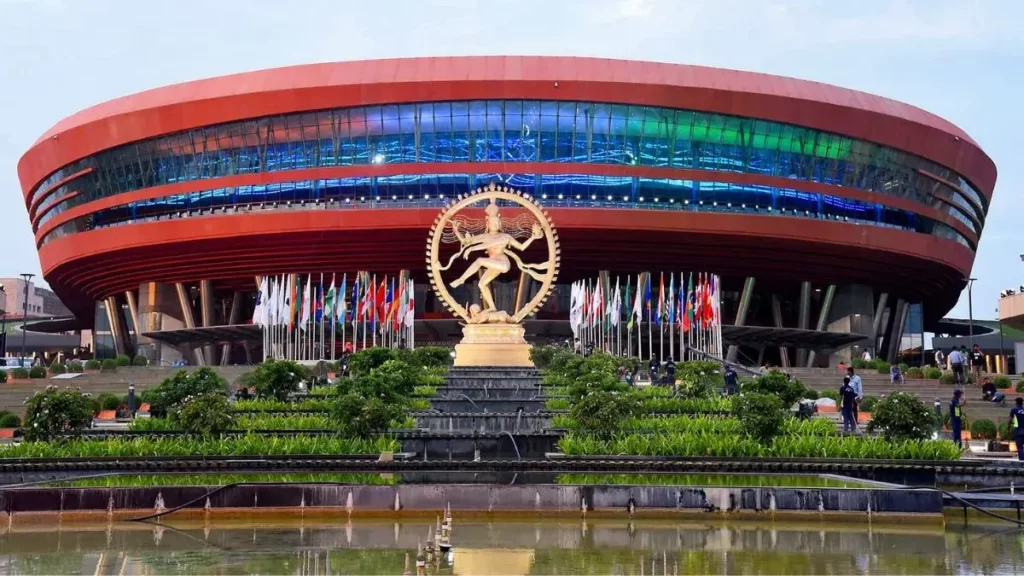
The 18th G20 Summit, hosted by India, kicked off today in the national capital, New Delhi, with more than 30 heads of state, top officials from the European Union, and invited guest countries in attendance. The two-day summit is being held at the newly inaugurated Bharat Mandapam, and it promises to address critical global challenges under the theme “Vasudhaiva Kutumbakam” or “One Earth · One Family · One Future.” The summit commenced with world leaders arriving at the venue, Bharat Mandapam, from 9.30 am onwards. The first session of the G20 Summit, titled ‘One Earth,’ took place at around 10.30 am. This session is dedicated to accelerating climate action, focusing on increased mitigation efforts and strengthening the global net zero emission agenda as soon as possible. The theme underscores the interconnectedness of all life forms on Earth, emphasizing the value of human, animal, plant, and microorganism life. In the evening, a dinner hosted by the President of India, Droupadi Murmu, was scheduled to bring together foreign delegates, parliamentarians, and ministers, along with former senior leaders of the nation. Key leaders attending the event include US President Joe Biden, British Prime Minister Rishi Sunak, Saudi Crown Prince Mohammed Bin Salman, Canadian Prime Minister Justin Trudeau, and Japanese Prime Minister Fumio Kishida. However, notably absent from the summit are Chinese President Xi Jinping and Russian President Vladimir Putin. China will be represented by Chinese Premier Li Qiang, while Russian Foreign Minister Sergey Lavrov will represent Russia. This marks India’s first time hosting the G20 Summit, with extensive preparations showcasing India’s tradition and strength. During its presidency, India has focused on various critical issues, including inclusive growth, digital innovation, climate resilience, and equitable global health access. India seeks to achieve the dual objectives of adding the African Union as a member of the G20 and resolving disagreements related to a joint statement concerning the conflict in Ukraine. The participating countries in the G20 Summit include Nigeria, Argentina, Italy, the African Union (represented by Comros), South Africa, Bangladesh, the United Kingdom, Japan, Saudi Arabia, the Republic of Korea, Egypt, Australia, the United States, Canada, China, the United Arab Emirates, Brazil, Indonesia, Turkey, Spain, Germany, France, Mauritius, the European Union, and Singapore. A warm welcome was extended to world leaders upon their arrival in Delhi, with Prime Minister Narendra Modi expressing confidence that the summit would chart a new path toward human-centric and inclusive development. Leaders who have arrived in the national capital for the G20 Summit include US President Joe Biden, UK Prime Minister Rishi Sunak, Bangladesh Prime Minister Sheikh Hasina, Italian Prime Minister Giorgia Meloni, Argentina President Alberto Fernandez, and Japan Prime Minister Fumio Kishida. The leaders were welcomed with traditional dance performances. Other distinguished attendees include Chinese Premier Li Qiang, UN Secretary-General Antonio Guterres, Oman Deputy Prime Minister Asaad bin Tariq bin Taimur, Russian Foreign Minister Sergey Lavrov, South Korean President Yoon Suk Yeol, Egypt President El-Sisi, UAE President Mohammed bin Zayed Al Nahyan, Australian Prime Minister Anthony Albanese, Canadian Prime Minister Justin Trudeau, Turkish President Recep Tayyip Erdogan, Indonesian President Joko Widodo, Singapore Prime Minister Lee Hsien Loong, and Brazilian President Luiz Inacio Lula da Silva. Additionally, African Union Chairperson Azali Assoumani, United Nations Secretary-General Antonio Guterres, International Monetary Fund (IMF) Managing Director Kristalina Georgieva, Mauritius Prime Minister Pravind Kumar Jugnauth, Organisation for Economic Cooperation and Development (OECD) Secretary-General Mathias Cormann, World Trade Organization (WTO) Director-General Ngozi Okonjo-Iweala, and European Commission President Ursula von der Leyen have also arrived in Delhi to participate in the summit. The 18th G20 Summit holds the promise of fostering collaborative solutions for the benefit of the global population and contributing to overall global well-being in a rapidly changing world.


Global Leaders Convene in New Delhi for 18th G20 Summit Read More »