ArdorComm Media Group

Saturday, June 27, 2026 6:55 AM

investor protection

SEBI Collaborates with UIDAI and RBI to Enable Remote KYC for NRIs
ardorcomm news

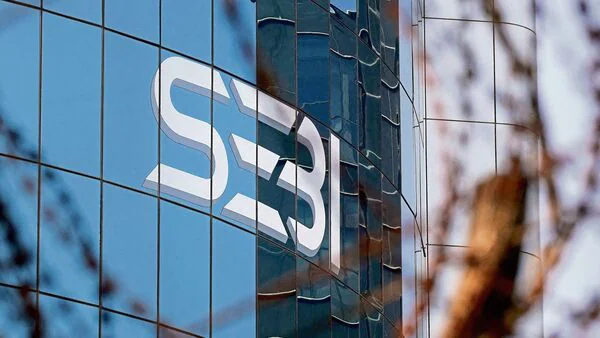
The Securities and Exchange Board of India (SEBI) is in advanced discussions with the Unique Identification Authority of India (UIDAI) and the Reserve Bank of India (RBI) to introduce a secure remote KYC (Know Your Customer) process for non-resident Indians (NRIs). The initiative, which is currently in the testing stage, aims to allow NRIs to complete KYC verification without the need to physically visit India. SEBI Chairman Tuhin Kanta Pandey described the move as a key priority for the regulator, stating, “This will be a major development once implemented, as it will simplify market access for NRIs.” He made these remarks while addressing an event organised by the BSE Brokers Forum (BBF). Pandey also outlined SEBI’s efforts to strengthen market surveillance, noting that the regulator is transitioning from “reactive supervision to predictive oversight.” He revealed that SEBI has revamped its data warehouse systems to incorporate advanced rule-based alerts designed to detect pump-and-dump schemes, bulk trade manipulations, and other fraudulent activities. Highlighting the regulator’s data-driven approach, Pandey said that such manipulative trading patterns are often traceable through analytics, and the upgraded surveillance infrastructure will enable SEBI to act more proactively. In addition, SEBI is working on a safety net mechanism for depository participants (DPs) to handle outages more effectively—similar to safeguards currently in place for stock brokers. “We are examining a system where, in case of a DP outage, issues can be managed at the depository level,” Pandey explained. On the foreign portfolio investor (FPI) front, SEBI plans to streamline registration further. “The FPI registration process is our window to the world. If that window is clogged with operational hurdles, it loses its clarity. The goal is not to increase risk but to simplify and modernize,” Pandey remarked. He reaffirmed SEBI’s continued focus on investor protection, particularly against cyber fraud and misleading financial advice from unregistered influencers. At the Global Fintech Fest (GFF) 2025 last week, Pandey also highlighted SEBI’s technology-driven reforms, including the Investor Risk Reduction Access Platform and a Unified Investor App, which have enhanced transparency and ease of access. These tools consolidate investor holdings, transaction histories, e-voting, and proxy advisory information under one interface. Pandey added that grievance redressal has also become more efficient through the integration of the Digital Locker system and an upgraded SEBI Complaints Redressal System (SCORES), further reinforcing the regulator’s commitment to a safer, more transparent market ecosystem. Source: IANS

SEBI Collaborates with UIDAI and RBI to Enable Remote KYC for NRIs Read More »

FM Nirmala Sitharaman Launches Nationwide Drive to Return ₹1.84 Lakh Crore in Unclaimed Assets

ardorcomm news

Finance Minister Nirmala Sitharaman on Saturday unveiled a major national campaign aimed at returning nearly ₹1.84 lakh crore worth of unclaimed financial assets to their rightful owners. These funds are currently lying idle across banks, the Reserve Bank of India (RBI), insurance companies, mutual funds, provident fund accounts, and other financial institutions. The three-month-long initiative focuses on creating public awareness and simplifying the process for individuals and families to reclaim their lost or forgotten assets. “These unclaimed amounts are not the government’s property — they belong to citizens,” Sitharaman emphasized, noting that people have long demanded action to recover such funds from entities like the RBI or the Investor Education and Protection Fund (IEPF). Explaining the reasons behind unclaimed assets, she said they often result from missing documents, untracked policies, or lack of awareness, describing the situation as “a ripe fruit hanging within reach but not yet claimed by those it belongs to.” The campaign is structured around three core pillars — Awareness, Access, and Action. Awareness: Educating citizens about the existence of unclaimed money. Access: Enabling easier tracking through the RBI’s UDGAM portal. Action: Ensuring officials follow up on even the smallest clues to help people reclaim their assets. Reassuring the public, the Finance Minister said the funds remain safe and are merely held in custody by the government and financial institutions, not owned by them. “Whether with banks, SEBI, or any other body, the money is securely maintained,” she said. Unclaimed deposits are transferred to the RBI, while unclaimed shares and securities are moved to the IEPF. The government aims to use this drive to reconnect individuals with their financial assets and enhance public trust in the country’s financial ecosystem. Source: TNN

FM Nirmala Sitharaman Launches Nationwide Drive to Return ₹1.84 Lakh Crore in Unclaimed Assets Read More »

Sebi Proposes Stricter Governance for Stock Exchanges, Clearing Corporations, and Depositories

In a move aimed at reinforcing accountability and public-interest orientation within key market institutions, the Securities and Exchange Board of India (Sebi) has introduced a set of proposals to tighten governance norms for stock exchanges, clearing corporations, and depositories. Outlined in a consultation paper released on Tuesday, the proposed reforms focus on strengthening the oversight of Market Infrastructure Institutions (MIIs), which have witnessed a significant rise in trading volumes, investor participation, and profitability in recent years. Sebi emphasized that while MIIs have evolved into financially robust entities, their public-interest responsibilities must be prioritized over commercial gains. The key suggestions cover three broad areas: Mandatory Executive Directors: Sebi has proposed the compulsory appointment of at least two executive directors (EDs) on the boards of MIIs. These directors would be responsible for critical functions including trading operations, clearing and settlement, compliance, risk oversight, and investor grievance management. They would be designated as key management personnel (KMPs), with authority on par with the managing director (MD). Institutions can optionally appoint a third ED to focus on business development. Defined Roles for Key Officers: The regulator aims to formally codify the duties of the MD, EDs, and other senior officers such as the chief technology officer (CTO) and chief information security officer (CISO). At present, these responsibilities are either informally assigned or spread across departments, leading to potential governance gaps. Restrictions on Board Memberships: To avoid conflicts of interest and strengthen focus, Sebi proposes that MDs of MIIs should not serve on boards of any commercial entities, barring unlisted government-owned organizations involved in non-commercial activities. EDs would be restricted to board positions only within MII subsidiaries. This approach aligns with similar governance rules applied in the banking sector. Legal experts have weighed in on the potential impact of these recommendations. Diviay Chadha, Partner at Singhania & Co., said the proposals underline the need for fixed accountability within MIIs, especially given the rapid increase in retail investors. He added that the institutions would likely need to revise their corporate governance structures and charter documents to meet the new standards. However, some industry observers raised concerns about possible unintended consequences. Akshaya Bhansali, Partner at Mindspright Legal, noted that while the move to restrict EDs from serving on unrelated boards is intended to ensure accountability, it may inadvertently reduce the pool of experienced independent directors available to other listed companies. These recommendations arrive at a pivotal juncture as Sebi continues its evaluation of the National Stock Exchange’s (NSE) pending IPO, originally proposed in 2016. In its February communication with NSE, Sebi reiterated the need for a deep-rooted culture of prioritizing public interest over profits at the operational level. Bhansali clarified that although these proposed governance norms are not specifically targeted at NSE, they could become informal benchmarks or implicit prerequisites for regulatory approvals if not explicitly decoupled from the IPO review process. Sebi has invited stakeholders and the public to submit feedback on the proposals by 15 July 2025. Source: Mint

Sebi Proposes Stricter Governance for Stock Exchanges, Clearing Corporations, and Depositories Read More »