ArdorComm Media Group

Monday, November 23, 2026 7:33 AM

JP Nadda

Pralhad Joshi Assumes Charge as Education Minister After Dharmendra Pradhan’s Resignation
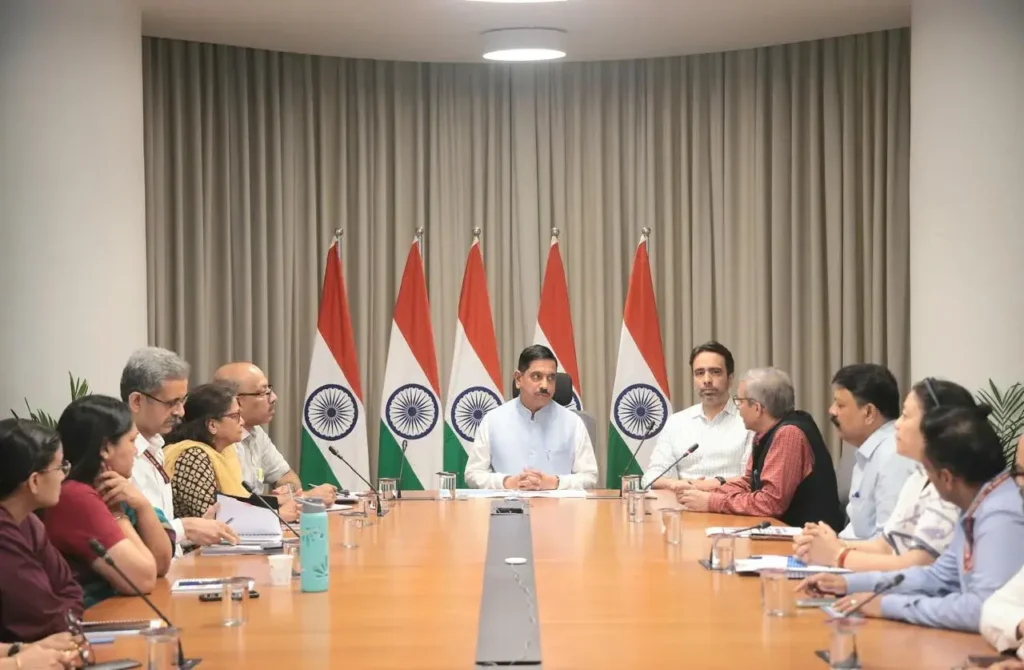
Union Minister Pralhad Joshi has been entrusted with the additional charge of the Ministry of Education after Dharmendra Pradhan stepped down from the post amid mounting protests over alleged examination paper leaks. Speaking to reporters after taking charge, Joshi expressed gratitude to Prime Minister Narendra Modi for the responsibility. He said he accepted the role with humility and highlighted the achievements of the Modi government over the past 12 years, adding that he would work with a strong sense of duty in his new assignment. Pradhan’s resignation came after weeks of nationwide demonstrations led by the Cockroach Janta Party (CJP), which had demanded his resignation over the government’s handling of the examination paper leak controversy. Following the resignation, the CJP announced the immediate withdrawal of its protest movement. Supporters gathered at Delhi’s Jantar Mantar were asked to disperse after the government agreed to the group’s key demands. The decision was announced during a joint press conference addressed by CJP spokespersons Saurav Das and Ashutosh Ranka, along with Union Ministers JP Nadda and Jitendra Singh. According to the CJP, the government has assured that all police cases registered against protesting students will be withdrawn and that no future action will be taken against them. The government has also agreed to provide the maximum compensation permissible under existing rules to the families of students who died by suicide in connection with the NEET paper leak controversy. Dharmendra Pradhan’s resignation was the principal demand of the protesters, and its acceptance paved the way for the suspension of the agitation. Source: NDTV  
Pralhad Joshi Assumes Charge as Education Minister After Dharmendra Pradhan’s Resignation Read More »

India, Japan Strengthen Healthcare Partnership at High-Level Delhi Meeting

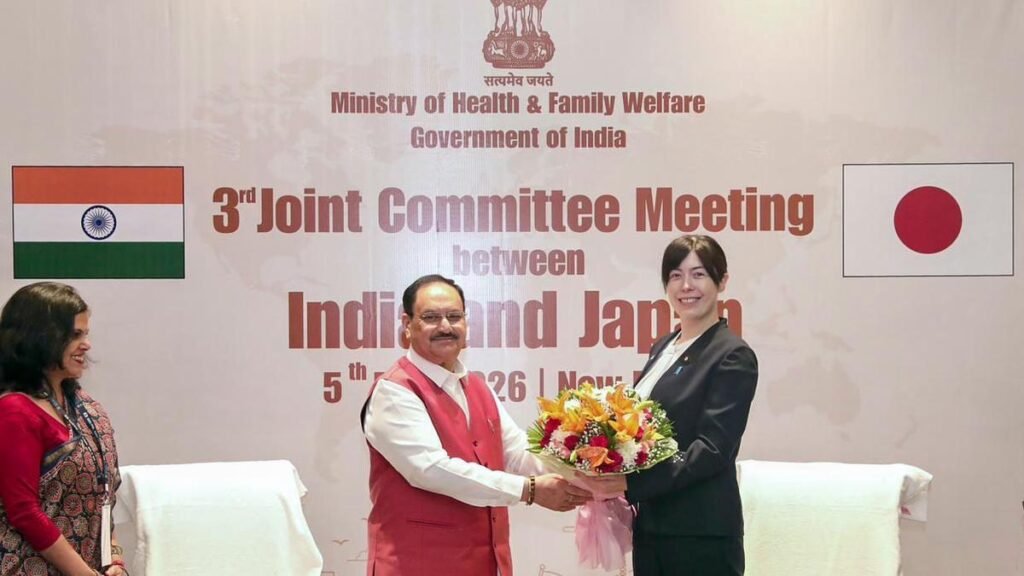
India and Japan on Tuesday reaffirmed their commitment to expanding cooperation in the healthcare sector during the third Joint Committee Meeting (JCM) on Healthcare held at Bharat Mandapam. The meeting was co-chaired by Union Health Minister J. P. Nadda and Japan’s Minister in charge of Healthcare Policy Kimi Onoda. Nadda said the partnership is driven by a common vision of stronger health systems, better access to healthcare, and innovation-led progress. Welcoming the Japanese delegation, Health Secretary Punya Salila Srivastava highlighted that the Joint Committee Meeting, conducted under the India-Japan Memorandum of Cooperation, has become an important platform for regular dialogue and deeper collaboration. During the discussions, both countries focused on several priority areas including prevention and management of non-communicable diseases (NCDs), resilient healthcare supply chains, digital health, and human resource development. India underlined the growing burden of NCDs and shared its strategy centred on early screening, continuous care, and long-term health promotion aligned with Sustainable Development Goals. Japan presented its work in cancer screening, early diagnosis, and treatment systems through technical cooperation. On supply chain resilience, India emphasised the capabilities of its pharmaceutical and medical devices industries, along with efforts to boost local manufacturing and affordable healthcare access. Japan outlined its public-private partnership model to ensure availability of high-quality medical products. India also showcased its digital public health infrastructure through the Ayushman Bharat Digital Mission, while Japan shared expertise in system integration, AI-enabled healthcare technologies, and collaborative research. Concluding the meeting, Nadda said the discussions have given fresh momentum to the India-Japan healthcare partnership and laid a roadmap for building more inclusive and resilient health systems. Source: PTI

India, Japan Strengthen Healthcare Partnership at High-Level Delhi Meeting Read More »

India, France Inaugurate Indo-French Centre for AI in Health at AIIMS Delhi

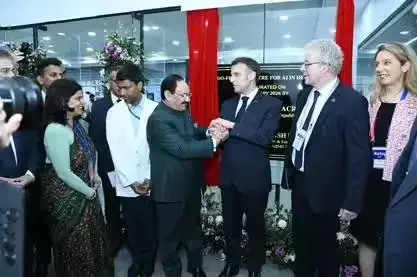
In a major step to deepen bilateral cooperation in healthcare and emerging technologies, Union Health Minister JP Nadda and French President Emmanuel Macron jointly inaugurated the Indo-French Centre for AI in Health (IFCAIH) at All India Institute of Medical Sciences (AIIMS), New Delhi. The newly launched centre is envisioned as a pioneering platform to accelerate AI-driven research, strengthen medical education, and promote clinical innovation. According to official sources, the IFCAIH aims to tackle complex healthcare challenges while fostering interdisciplinary collaboration between Indian and French institutions. Addressing the gathering, President Macron underlined the importance of developing sovereign AI capabilities. He stressed that India and France must build their own computing capacity and skilled talent to create trusted AI systems, rather than relying entirely on technologies developed elsewhere. He added that artificial intelligence must serve humanity, with strong safeguards for children, algorithmic transparency to reduce bias, and a commitment to preserving linguistic and cultural diversity. The launch of the centre coincided with the Rencontres Universitaires et Scientifiques de Haut Niveau (RUSH) 2026, a high-level academic and scientific forum organised at AIIMS on February 18 and 19 by the French Embassy. A key session titled “Indo-French Forum: AI in Brain Health and Global Healthcare” brought together scientists, clinicians, policymakers, and academic leaders from both nations to explore collaborative solutions in global health. The IFCAIH has been established under a joint Memorandum of Understanding between AIIMS, Sorbonne University, and Paris Brain Institute, with additional collaboration from Indian Institute of Technology Delhi and other leading French institutions. The initiative builds upon ongoing India-France cooperation in priority areas such as digital health, antimicrobial resistance, human resources for health, and the responsible use of health data. As part of the RUSH 2026 programme, President Macron engaged with young Indian innovators, including Priyanka Das Rajkakati and Manan Suri, during an interactive session moderated by Clara Chappaz, spotlighting youth-led innovation and cross-border AI collaboration. The event also featured a special segment at the Jawaharlal Auditorium highlighting major scientific and academic cooperation milestones between France and India. Moderated by Prof. Vijay Raghavan and Dr. Thierry Coulhon, Chairmen of RUSH, the session showcased expanding partnerships in higher education, research, and innovation. Union Minister JP Nadda reaffirmed India’s commitment to strengthening AI-enabled healthcare collaboration with France, noting that the new centre will serve as a catalyst for innovation, capacity building, and global knowledge exchange. President Macron later posted on X that France and India are mobilising AI for research, training, and innovation for the common good, reinforcing the shared vision of ethical, inclusive, and globally beneficial AI in healthcare. Source: ANI

India, France Inaugurate Indo-French Centre for AI in Health at AIIMS Delhi Read More »

PM Modi Chairs Day-Long Conclave with NDA CMs, Focuses on Good Governance and Development Synergies

Ardorcomm news

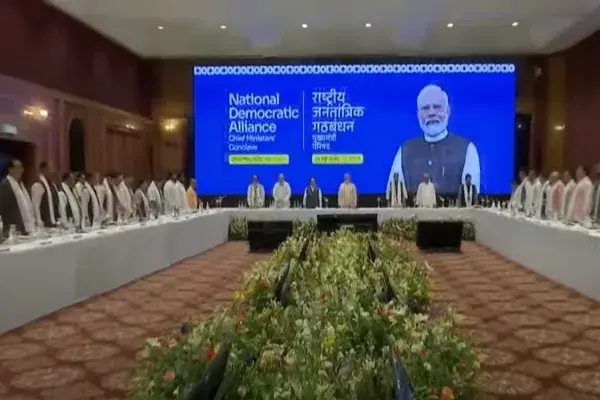
Prime Minister Narendra Modi chaired a comprehensive conclave in New Delhi, bringing together Chief Ministers and Deputy Chief Ministers from all 20 National Democratic Alliance (NDA)-governed states. The high-level meeting centred on strategies to accelerate development and ensure the effective delivery of governance through the “double-engine” model. Addressing the gathering, the Prime Minister stressed the importance of enhancing coordination and synergy across sectors such as healthcare, sanitation, agriculture, youth empowerment, and technology. He also encouraged states to intensify their efforts in delivering public services and creating impactful governance outcomes. In a post on social media, PM Modi highlighted the extensive discussions held during the conclave, which included sharing of successful models and initiatives from various states. These ranged from water conservation and grievance redressal mechanisms to administrative reforms, women empowerment, sports, and education. Organised by the BJP’s Good Governance Department, the conclave saw participation from 20 Chief Ministers and 18 Deputy Chief Ministers. Senior BJP leaders including Party President JP Nadda, Home Minister Amit Shah, and Defence Minister Rajnath Singh also took part in the day-long discussions. Speaking to the media after the meeting, BJP President JP Nadda stated that two key resolutions were adopted. The first praised the Indian armed forces for their bravery under Operation Sindoor, which targeted terror camps across the border. The second resolution reaffirmed the party’s stance on caste-based policies, clarifying that the BJP prioritises social integration and mainstreaming of backward communities without engaging in caste-based politics. The session also featured detailed presentations by the states showcasing their governance achievements. Additionally, leaders discussed preparations for major upcoming milestones, including the NDA government’s first anniversary on June 9, the 10th International Day of Yoga, and the 50th year since the declaration of the Emergency in 1975. The conclave reinforced the NDA’s collective commitment to good governance, innovation, and inclusive development across the nation. Source: newsonair  

PM Modi Chairs Day-Long Conclave with NDA CMs, Focuses on Good Governance and Development Synergies Read More »

India Became ‘Pharmacy of the World’ During Covid-19: JP Nadda

ArdorComm news

Union Minister of Health and Family Welfare, JP Nadda, hailed India as the ‘Pharmacy of the World’ on Monday while emphasizing the country’s significant contributions to global healthcare during the Covid-19 pandemic. Nadda was speaking at the 19th International Conference of Drug Regulatory Authorities (ICDRA) in New Delhi, where leaders from over 120 countries gathered to discuss regulatory practices and collaborative solutions to enhance global healthcare standards. “This prestigious platform [19th ICDRA] reflects our shared commitment to enhancing global healthcare standards and safeguarding public health,” Nadda said. He highlighted India’s pivotal role in addressing global health challenges through innovation, resilience, and collaboration. India’s Covid-19 Response: Vaccine Production and Global Impact Nadda elaborated on India’s rapid response during the pandemic, particularly its ability to ramp up vaccine production to meet both domestic and international needs. “During the unprecedented Covid-19 pandemic, India emerged not only as a global leader in health resilience and innovation but also reaffirmed its role as the pharmacy of the world,” he said. India’s extensive vaccination campaign, which successfully inoculated over a billion people, was described as a major milestone. Nadda credited healthcare workers and government initiatives for ensuring affordable access to essential medicines, vaccines, and medical supplies for nations around the globe. He also underscored India’s assistance to over 150 countries during the pandemic, driven by the ethos of “Vasudhaiva Kutumbakam,” the ancient Indian philosophy that emphasizes “the world is one family.” Cross-Border Collaboration and Regulatory Advancements Nadda emphasized that cross-border collaboration is essential for addressing global healthcare challenges. “The theme of this conference resonates deeply with our core belief that collaboration across borders, sectors, and disciplines is essential for creating lasting health solutions,” he stated. He also outlined India’s efforts to modernize its regulatory framework, highlighting the establishment of eight operational drug testing laboratories, with two more in the pipeline. Furthermore, eight mini testing labs have been set up at various ports to expedite the testing of imported materials. Over 95 percent of regulatory processes in India have been digitized, and the country’s medical device industry is now under regulation. With India’s healthcare system playing a crucial role in ensuring affordable access to medical supplies and vaccines during the pandemic, Nadda emphasized the importance of continued innovation and global cooperation to build a healthier, more resilient world. Source: Business Standard

India Became ‘Pharmacy of the World’ During Covid-19: JP Nadda Read More »

‘No Safety, No Duty’: OPD Services Hit by Nationwide Doctors’ Protest

Doctors across India have halted work, except for emergency procedures, in a nationwide protest against the rape and murder of a 31-year-old doctor at Kolkata’s RG Kar Medical College and Hospital. The protests have severely impacted outpatient department (OPD) services across the country, with healthcare workers demanding stricter security measures. The Federation of Resident Doctors’ Association (FORDA) announced a pause in elective services, describing the incident as a “travesty” in the history of the resident doctor community. In a letter to Union Health Minister JP Nadda, FORDA demanded the resignation of officials responsible for failing to protect the doctor and assurances that protesting doctors will not face manhandling. The Indian Medical Association (IMA) also sent a letter to Health Minister Nadda, urging the enactment of a central law to curb attacks on doctors and declaring hospitals as safe zones. Although 25 states have laws to prevent violence against doctors, the IMA noted that these are often ineffective. The association emphasized the need for a special central law to act as a deterrent. In response to the protests, treatment at hospitals in Kolkata and across the country has been disrupted. Patients and their relatives have expressed frustration over the inconvenience caused by the strike. In Lucknow, doctors at King George’s Medical University marched to the OPD to stop work, leading to patients demanding treatment by banging on the OPD’s shut doors. In Mumbai, doctors from prominent hospitals, including JJ Hospital, Sion Hospital, Nair Hospital, and King Edward Memorial Hospital, joined the protest. At AIIMS Delhi, daily surgeries have dropped by 80% and admissions by 35% due to the indefinite strike. AIIMS authorities have issued a circular urging doctors to return to work, citing a High Court order prohibiting protests on hospital premises. A civic volunteer who frequently visited the hospital has been arrested in connection with the Kolkata doctor’s rape and murder. West Bengal’s Chief Minister has given the city police a deadline to complete the investigation, after which the state government may recommend a CBI probe.

‘No Safety, No Duty’: OPD Services Hit by Nationwide Doctors’ Protest Read More »

Modi 3.0: Full List of Ministers and Their Portfolios in the New BJP Government

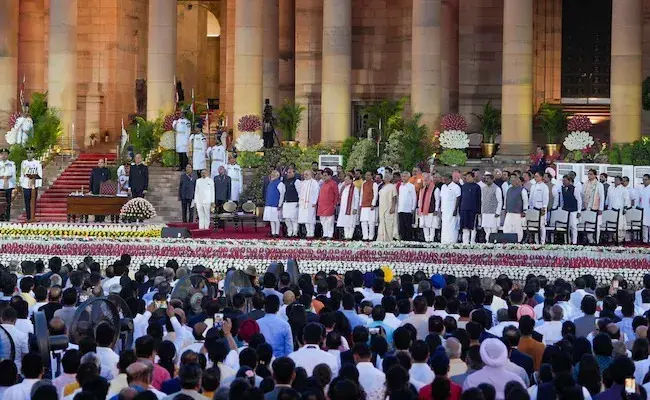
The new council of ministers led by Prime Minister Narendra Modi includes 61 members from the Bharatiya Janata Party (BJP) and 11 leaders from the National Democratic Alliance (NDA) allies. Of the 72 ministers, 43 have served three or more terms in Parliament, and 39 were ministers in the previous Union government. Full List of Ministries and Ministers in Modi 3.0 Government Here is a look at the top ministers and the portfolios they held in the previous Narendra Modi-led government: Prime Minister Narendra Modi Portfolios: Ministry of Personnel, Public Grievances and Pensions, Department of Atomic Energy, Department of Space, all important policy issues, and portfolios not allocated to any minister Ministry of Home Affairs Union Minister: Amit Shah Ministers of State: Nityanand Rai, Bandi Sanjay Kumar Ministry of Cooperation Union Minister: Amit Shah Ministers of State: Krishan Pal, Murlidhar Mohol Ministry of Defence Union Minister: Rajnath Singh Minister of State: Sanjay Seth Ministry of External Affairs Union Minister: S Jaishankar Ministers of State: Kirtivardhan Singh, Pabitra Margherita Ministry of Finance Union Minister: Nirmala Sitharaman Minister of State: Pankaj Chaudhary Ministry of Corporate Affairs Union Minister: Nirmala Sitharaman Minister of State: Harsh Malhotra Ministry of Road Transport and Highways Union Minister: Nitin Gadkari Ministers of State: Ajay Tamta, Harsh Malhotra Ministry of Health and Family Welfare Union Minister: JP Nadda Ministers of State: Anupriya Patel, Prataprao Ganpatrao Jadhav Ministry of Chemicals and Fertilisers Union Minister: JP Nadda Minister of State: Anupriya Patel Ministry of Youth Affairs and Sports Union Minister: Mansukh Mandaviya Minister of State: Raksha Nikhil Khadse Ministry of Labour and Employment Union Minister: Mansukh Mandaviya Minister of State: Shobha Karandlaje Ministry of Food Processing Industries Union Minister: Chirag Paswan Minister of State: Ravneet Singh Ministry of Agriculture and Farmers Welfare Union Minister: Shivraj Singh Chouhan Ministers of State: Ram Nath Thakur, Bhagirath Choudhary Ministry of Rural Development Union Minister: Shivraj Singh Chouhan Ministers of State: Dr. Chandra Shekhar Pemmasani, Kamlesh Paswan Ministry of Power Union Minister: Manohar Lal Khattar Minister of State: Shripad Naik Ministry of Housing and Urban Affairs Union Minister: Manohar Lal Khattar Minister of State: Tokhan Sahu Ministry of Tourism Union Minister: Gajendra Singh Shekhawat Minister of State: Suresh Gopi Ministry of Culture Union Minister: Gajendra Singh Shekhawat Minister of State: Rao Inderjit Singh Ministry of Information and Broadcasting Union Minister: Ashwini Vaishnaw Minister of State: L Murugan Ministry of Railways Union Minister: Ashwini Vaishnaw Ministers of State: Ravneet Singh, V Somanna Ministry of Electronics and Information Technology Union Minister: Ashwini Vaishnaw Minister of State: Jitin Prasada Ministry of Civil Aviation Union Ministers: Kinjarapu Rammohan Naidu, Murlidhar Mohol Ministry of Education Union Minister: Dharmendra Pradhan Ministers of State: Sukanta Majumdar, Jayant Chaudhary Ministry of Women and Child Development Union Minister: Annapurna Devi Minister of State: Savitri Thakur Ministry of Environment, Forest and Climate Change Union Minister: Bhupendra Yadav Minister of State: Kirtivardhan Singh Ministry of Jal Shakti Union Minister: CR Paatil Ministers of State: V Somanna, Raj Bhushan Choudhary Ministry of Parliamentary Affairs Union Minister: Kiren Rijiju Ministers of State: L Murugan, Arjun Ram Meghwal Ministry of Minority Affairs Union Minister: Kiren Rijiju Minister of State: George Kurian Ministry of Heavy Industries Union Minister: HD Kumaraswamy Minister of State: Bhupathi Raju Srinivasa Varma Ministry of Steel Union Minister: HD Kumaraswamy Minister of State: Bhupathi Raju Srinivasa Varma Ministry of Communication Union Minister: Jyotiraditya Scindia Minister of State: Dr. Chandra Shekhar Pemmasani Ministry of Development of North Eastern Region Union Minister: Jyotiraditya Scindia Minister of State: Sukanta Majumdar Ministry of Textiles Union Minister: Giriraj Singh Minister of State: Pabitra Margherita Ministry of Consumer Affairs, Food and Public Distribution Union Minister: Prahlad Joshi Ministers of State: BL Verma, Nimuben Jayantibhai Bambhaniya Ministry of New and Renewable Energy Union Minister: Prahlad Joshi Minister of State: Shripad Naik Ministry of Petroleum and Natural Gas Union Minister: Hardeep Singh Puri Minister of State: Suresh Gopi Ministry of Micro, Small and Medium Enterprises Union Minister: Jitan Ram Manjhi Minister of State: Shobha Karandlaje Ministry of Panchayati Raj Union Minister: Lallan Singh Minister of State: SP Singh Baghel Ministry of Fisheries, Animal Husbandry and Dairying Union Minister: Lallan Singh Ministers of State: SP Singh Baghel, George Kurian Ministry of Commerce and Industry Union Minister: Piyush Goyal Minister of State: Jitin Prasada Ministry of Ports, Shipping and Waterways Union Minister: Sarbananda Sonowal Minister of State: Shantanu Thakur Ministry of Social Justice and Empowerment Union Minister: Dr. Virendra Kumar Ministers of State: Ramdas Athawale, BL Verma Ministry of Tribal Affairs Union Minister: Jual Oram Minister of State: Durgadas Uikey Ministry of Coal Union Minister: G Kishan Reddy Minister of State: Satish Chandra Dubey Ministry of Mines Union Minister: G Kishan Reddy Minister of State: Satish Chandra Dubey Ministers of State (Independent Charge) Rao Inderjit Singh: Ministry of Statistics and Programme Implementation, Ministry of Planning, Ministry of Culture Dr. Jitendra Singh: Ministry of Science and Technology, Ministry of Earth Sciences, Minister of State in the Ministry of Personnel, Public Grievances and Pensions, Department of Atomic Energy, Department of Space Arjun Ram Meghwal: Ministry of Law and Justice Prataprao Ganpatrao Jadhav: Ministry of Ayush

Modi 3.0: Full List of Ministers and Their Portfolios in the New BJP Government Read More »