ArdorComm Media Group

Wednesday, November 25, 2026 9:43 AM

private investment

BRICS Economies Emerging as Key Drivers of Global Growth: Sitharaman

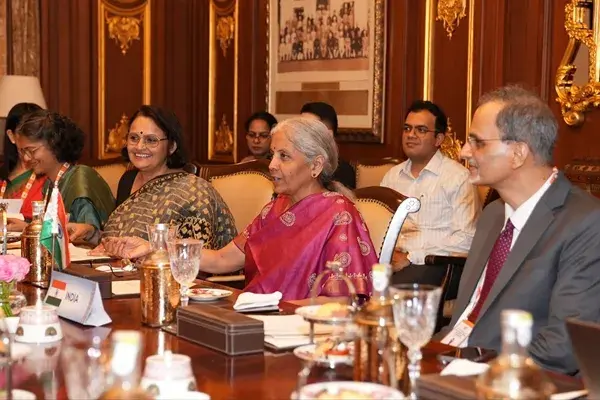
Union Finance Minister Nirmala Sitharaman has said that public investment should help unlock private investment rather than replace it, stressing the need for greater private capital participation across BRICS economies. Speaking at a seminar in Jaipur on the New Development Bank’s role in mobilising private investment in BRICS nations, Sitharaman said the grouping’s economies are among the key drivers of global economic growth. However, she noted that attracting private capital remains a significant challenge. The Finance Minister emphasised that access to capital alone is not enough. Building investor confidence, ensuring economic stability and maintaining a predictable, long-term policy environment are equally important to encourage investment. She also underlined the role of multilateral development banks in reducing investment risks, improving the financial viability of projects and boosting investor confidence, which can help attract private capital at scale. Highlighting India’s experience, Sitharaman said the government has expanded infrastructure development through sustained public capital expenditure and structural reforms. New Development Bank President Dilma Rousseff also spoke at the seminar. Earlier, Economic Affairs Secretary Anuradha Thakur said greater participation from private capital is increasingly important amid the evolving global economic environment. The seminar forms part of the BRICS Finance Ministers and Central Bank Governors’ meeting in Jaipur, being held under India’s BRICS Chairship 2026. The meeting aims to deepen cooperation among member countries on key global economic and financial matters. Source: News on AIR

BRICS Economies Emerging as Key Drivers of Global Growth: Sitharaman Read More »

India Posts 7.8% Growth in April–June, Services and Manufacturing Fuel Expansion

India’s economy surged 7.8% in the April–June quarter of FY 2025-26, outpacing expectations and reinforcing its status as the fastest-growing major economy worldwide. Robust demand, thriving services, and steady manufacturing are driving the momentum, placing the nation firmly on track to achieve a projected $7.3 trillion GDP by 2030 and secure its spot as the third-largest global economy. Broad-based growth across sectors India’s real GDP for Q1 FY26 stood at ₹47.89 lakh crore, up from ₹44.42 lakh crore last year, marking a significant improvement from the 6.5% growth recorded in the same period of 2024-25. On the supply side, agriculture grew 3.7% on the back of strong monsoons, manufacturing expanded 7.7%, construction advanced 7.6%, while services surged 9.3%. Gross Value Added (GVA) rose 7.6%, underscoring a widespread economic rebound. Economic Affairs Secretary Anuradha Thakur highlighted that growth is anchored in “strong fundamentals and resilient domestic demand,” citing steady gains across all key sectors. Services remain the star performer The services sector continued to shine with 9.3% growth, buoyed by trade, transport, hotels, communication, real estate, financial services, and public administration. Private consumption rose 7%, aided by higher employment, easing inflation, and healthier rural demand, while government spending grew nearly 10% in nominal terms. Industrial revival and GST milestone  Industrial activity strengthened, with the Index of Industrial Production rising 3.5% in July, compared to 1.5% in June. Manufacturing led the uptick, particularly in metals, electrical equipment, and mineral products. Meanwhile, GST marked its eighth anniversary in July 2025, with over 1.52 crore active registrations. States such as Uttar Pradesh, Maharashtra, Gujarat, Tamil Nadu, and Karnataka accounted for almost half of total registrations. Women entrepreneurs are becoming increasingly significant, making up 20% of taxpayers, with 14% of firms entirely women-owned. Upcoming GST reforms in October aim to lower essential taxes, simplify compliance for MSMEs, and boost transparency. Investment and foreign inflows Government-led infrastructure spending continues to support growth, with capital outlay reaching ₹10.52 trillion in FY25. Private investment has picked up pace, backed by improved business sentiment and capacity expansion. India attracted $81 billion in foreign inflows in FY25, pushing cumulative FDI since 2000 past $1 trillion. Equity inflows grew 27% year-on-year, while forex reserves remained robust at $695.5 billion in July, briefly crossing the $700 billion mark in June. Inflation relief and jobs boost  Inflation dropped sharply to 1.55% in July 2025, the lowest since 2017, with food inflation turning negative. RBI Governor Sanjay Malhotra credited healthy harvests and adequate supplies for the moderation, noting stable inflation should further spur demand. The labour market also showed resilience, with unemployment falling to 5.2% in July. Rural unemployment was 4.8%, compared with 6.8% in urban areas. Youth unemployment declined to 10.2%, below the global average. Female labour force participation has doubled over the past six years to 41.7%, signalling a structural shift. Reforms and outlook Government programs such as the Production Linked Incentive (PLI) scheme, Digital India, Bharat 6G Vision, PM Viksit Bharat Rozgar Yojana, and GatiShakti are fuelling manufacturing, digitalisation, and employment. Initiatives in financial inclusion, skilling, and logistics are also strengthening India’s growth base. Global agencies remain optimistic—IMF and UN project over 6% growth in the coming years, while S&P recently upgraded India’s sovereign rating for the first time in 18 years. Looking ahead, India’s economy is poised to cross the $5 trillion threshold by 2027, and $7.3 trillion by 2030. Policymakers will, however, need to balance growth with stability while ensuring inclusive benefits across regions and demographics. Source: DD News 

India Posts 7.8% Growth in April–June, Services and Manufacturing Fuel Expansion Read More »

Northeast India’s Transformation: 11 Years of Unprecedented Infrastructure Growth

Ardorcomm news

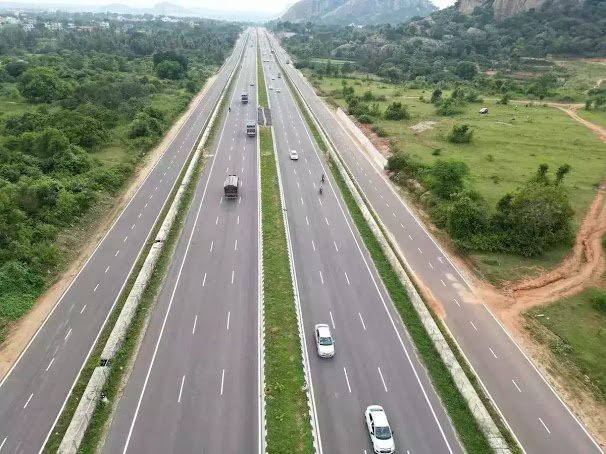
Over the past 11 years, Northeast India has undergone a dramatic transformation, emerging as a focal point of national infrastructure development. Between 2014 and 2025, the region has seen extensive upgrades in roadways, rail networks, air travel, and digital infrastructure, propelled by key government initiatives such as the Act East Policy and the North East Special Infrastructure Development Scheme (NESIDS). This sustained push has led to the construction of more than 4,000 kilometers of roads, opening up remote and strategically important border areas to easier access and development. Air connectivity has seen a major boost with the establishment of 10 new greenfield airports across states like Arunachal Pradesh, Mizoram, and Nagaland, drastically improving regional accessibility. Game-changing projects like the Bogibeel Bridge, already in operation, and the under-construction Dhubri-Phulbari Bridge—which will become the country’s longest—are revolutionizing cross-river transportation and logistics over the Brahmaputra River. Indian Railways has made major strides as well, with passenger rail services introduced for the first time in Mizoram and expanded rail connectivity reaching Arunachal Pradesh, Manipur, and Nagaland. These developments mark a historic first in many of these states. Further enhancing regional mobility, inland water transport has been revived through Ro-Ro (Roll-on/Roll-off) ferry services on the Brahmaputra, offering a low-cost, efficient cargo movement alternative. In tandem with physical infrastructure, the region has also witnessed a digital surge. Projects like Bharat Net and 4G saturation schemes are helping bridge the digital divide, ensuring internet access across all districts. Under the NESIDS program alone, over 600 infrastructure projects have been sanctioned, targeting improvements in essential public services such as healthcare, education, drinking water, and civic facilities. This comprehensive development drive is not only improving the standard of living for residents but is also positioning Northeast India as a promising destination for future private investment and economic growth.  Source: DD News  

Northeast India’s Transformation: 11 Years of Unprecedented Infrastructure Growth Read More »