ArdorComm Media Group

Thursday, April 16, 2026 3:52 AM

Rural Development

PM Modi Releases 21st PM-KISAN Instalment, ₹18,000 Crore Disbursed to Farmers Nationwide
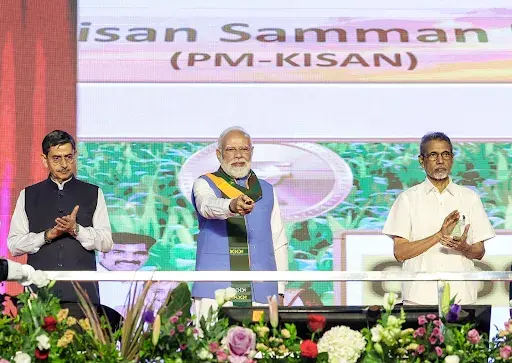
Prime Minister Narendra Modi on Wednesday disbursed the 21st instalment of the Pradhan Mantri Kisan Samman Nidhi (PM-KISAN) scheme during an event in Coimbatore, Tamil Nadu. With this release, ₹18,000 crore has been transferred directly to the bank accounts of nearly 9 crore farmers across India through the Direct Benefit Transfer (DBT) system. Launched on February 24, 2019, PM-KISAN provides ₹6,000 per year to every eligible landholding farmer family, delivered in three instalments of ₹2,000 each. The funds reach beneficiaries through Aadhaar-linked bank accounts, making it one of the largest DBT programmes globally. To date, over ₹3.70 lakh crore has been distributed to more than 11 crore farmer families, with women farmers making up over 25% of the beneficiaries. A robust digital ecosystem underpins the scheme, enabling strong transparency measures. Aadhaar-based e-KYC, digital verification of land records and the dedicated PM-KISAN portal ensure reliable beneficiary authentication. Farmers can self-register online, while payments are seamlessly processed via the Public Financial Management System (PFMS). Technological upgrades continue to make the scheme more accessible. The PM-KISAN mobile app, revamped in 2023 with face authentication, allows farmers to complete e-KYC remotely and track payments. The bilingual Kisan-eMitra AI chatbot, available in 11 regional languages, has helped resolve over 95 lakh farmer queries on eligibility, registration and payment issues. The Centre has also expanded beneficiary coverage through saturation drives. During the Viksit Bharat Sankalp Yatra in 2023, over one crore new eligible farmers were added. Another 25 lakh farmers were onboarded in the first 100 days of the new government in mid-2024. Uttar Pradesh recorded the highest number of beneficiaries in the 20th instalment, followed by Maharashtra. For India’s small and marginal farmers — over 85% of the farming population — PM-KISAN provides critical financial support, especially during sowing and harvesting seasons when inputs and labour costs rise. The scheme has also reduced dependence on informal moneylenders and increased financial stability during challenging times. Implementation is closely monitored by both Central and State governments. Beneficiary lists are displayed at the village level to ensure transparency and allow eligible farmers who were excluded to apply. States and Union Territories are required to recover funds paid to ineligible individuals — as of August 2025, ₹416 crore has been reclaimed. To improve delivery of welfare schemes further, the Ministry of Agriculture is developing a National Farmer Registry, which aims to create a unified digital database. This will help farmers access government benefits more easily without repeatedly submitting documentation. Source: DD News

PM Modi Releases 21st PM-KISAN Instalment, ₹18,000 Crore Disbursed to Farmers Nationwide Read More »
MoPR to Launch Nationwide ‘Sabki Yojana, Sabka Vikas’ Campaign on Oct 2 to Strengthen Grassroots Planning

ardorcomm news

The Ministry of Panchayati Raj (MoPR) is set to launch the nationwide “Sabki Yojana, Sabka Vikas” campaign on October 2, kicking off the People’s Plan Campaign (PPC) 2025–26 for preparing Panchayat Development Plans (PDPs) for 2026–27. First introduced in 2018, the initiative has helped Panchayats draft inclusive, evidence-based, and convergent development plans in line with both local needs and national objectives. As per data available on the eGramSwaraj portal, more than 18.13 lakh development plans have been uploaded since 2019–20, including 2.52 lakh plans under the current 2025–26 cycle. On September 26, Additional Secretary Sushil Kumar Lohani reviewed the readiness of States, Union Territories, and State Institutes of Rural Development in a virtual meeting. The MoPR has instructed States/UTs to strengthen monitoring systems, appoint nodal officers, train facilitators, finalize Gram Sabha schedules, and ensure public information boards are displayed before the end of September. The campaign will commence with Special Gram Sabhas on October 2, where past plans will be digitally reviewed through platforms such as eGramSwaraj, Meri Panchayat App, and Panchayat NIRNAY. Villages will also identify and prioritize incomplete projects funded under Central Finance Commission grants. Planning will be guided by the Panchayat Advancement Index (PAI) and supported by digital tools like SabhaSaar, with a push towards improving Own Source Revenue (OSR) and expanding community involvement. A special focus will also be placed on tribal empowerment through the Adi Karmayogi Abhiyaan. According to the ministry, this exercise is designed to strengthen participatory democracy, enhance transparency and accountability, and ensure better service delivery at the grassroots, reinforcing the role of Panchayats as vital institutions of rural governance. Source: DD News 

MoPR to Launch Nationwide ‘Sabki Yojana, Sabka Vikas’ Campaign on Oct 2 to Strengthen Grassroots Planning Read More »

New GST Reforms to Strengthen Indian Agriculture, Says Union Minister Shivraj Singh Chouhan

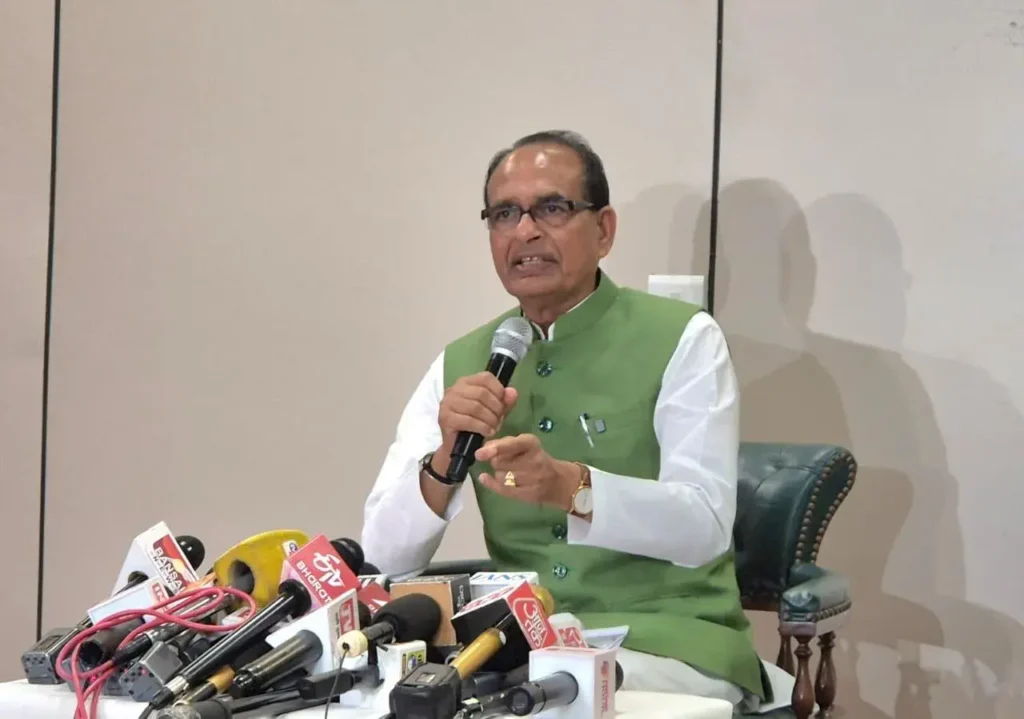
Union Agriculture and Rural Development Minister Shivraj Singh Chouhan has said that the recently announced GST reforms will significantly reduce the cost of farming, directly benefiting small and medium farmers across India. Addressing a press conference in Bhopal, he described the changes as a “boon for farmers and rural India.” Major Relief for Agriculture and Dairy The Minister highlighted that the reduction of GST on bio-pesticides and micro-nutrients will encourage farmers to adopt organic and natural farming over chemical fertilizers. Additionally, the complete exemption of GST on milk and cheese is expected to boost the dairy sector, benefiting consumers, dairy farmers, cattle rearers, and producers. GST cuts on butter, ghee, and milk cans will further strengthen the sector. Lower Costs for Farming Equipment According to Shri Chouhan, GST on agricultural machinery — including tractors, harvesters, power tillers, threshers, paddy planters, and seed drills — has been slashed from 18% to 5%, bringing substantial savings. A 35 HP tractor will now cost around ₹6.09 lakh, saving farmers nearly ₹41,000.  A 45 HP tractor will be cheaper by ₹45,000, while a 75 HP tractor will cost ₹63,000 less.  Equipment such as multi-crop threshers, paddy planters, power weeders, mulchers, and seed-cum-fertilizer drills will also see price reductions ranging between ₹5,000 and ₹32,000.  “These reforms mean that a farmer investing in essential machinery can save anywhere between ₹25,000 and ₹63,000,” Chouhan emphasized. Boost for Allied Sectors and Women Entrepreneurs The Minister also pointed out that allied activities such as animal husbandry, poultry, fisheries, beekeeping, and agro-forestry will gain momentum under the new GST regime. He praised the work of women self-help groups engaged in handicrafts, milk products, and rural enterprises, saying the exemptions would further empower initiatives like ‘Lakhpati Didi’, enhancing women’s income in villages. Support for Organic Farming and Food Processing GST reduction on fertilizer raw materials such as ammonia, sulphuric acid, and nitric acid (from 18% to 5%) is expected to lower fertilizer costs, making organic and natural farming more affordable. Similarly, reduced GST on processed fruits, vegetables, fish, honey, and dry fruits will support value addition and food processing industries, ensuring farmers get higher returns. Rural Infrastructure and Energy Savings Chouhan added that GST cuts on cement, iron, drip irrigation systems, and renewable energy equipment will lower the cost of rural housing, infrastructure projects, and irrigation, aligning with government schemes like Pradhan Mantri Awas Yojana. This, he said, will improve both living standards and productivity in rural India. Strengthening the Rural Economy “These GST reforms are more than just tax cuts — they represent a next-generation reform that will make agriculture profitable, promote allied farming, and empower women entrepreneurs,” the Minister said. He added that lower costs and rising demand would inject more money into the economy, ultimately boosting rural prosperity. Expressing gratitude to Prime Minister Narendra Modi and the Finance Ministry, Chouhan concluded: “Our goal is clear — to reduce production costs, increase output, and ensure higher profits for farmers. These GST reforms will change the face of Indian agriculture.” Source: PIB

New GST Reforms to Strengthen Indian Agriculture, Says Union Minister Shivraj Singh Chouhan Read More »

ITI Limited Wins ₹167 Crore E-Governance Contract in Maharashtra

State-owned telecom equipment manufacturer ITI Limited has secured a ₹167 crore e-governance contract from Maharashtra’s Rural Development Department. The project involves setting up and operating Aaple Sarkar Seva Kendra (ASSK) centers in Gram Panchayats across Chatrapathi Sambhaji Nagar, Nagpur, and Amaravati regions. The contract includes system maintenance for one year and deployment of technical manpower at the ASSK centers. The initiative aims to enhance digital citizen services in rural areas, fostering transparency, efficiency, and accessibility in e-governance. Rajesh Rai, Chairman and Managing Director of ITI Limited, emphasized the project’s significance in strengthening the Panchayati Raj System. “This initiative will empower rural citizens with better access to digital governance and help bridge the urban-rural divide in Maharashtra,” Rai stated. ITI Limited, India’s first public sector undertaking (PSU) post-independence, has diversified beyond its telecom equipment manufacturing legacy. The company now operates in sectors such as defense, railways, solar equipment, and IT services, while managing a state-of-the-art data center in Bengaluru that caters to government institutions and banks. The ASSK project represents a significant milestone in Maharashtra’s grassroots digital governance initiatives, further cementing ITI Limited’s position as a key player in the e-governance sector. On the financial front, ITI Limited’s shares were trading at ₹352, marking a 3.94% decline, down by ₹14.45, on the NSE at 1:33 PM today. This contract underlines Maharashtra’s commitment to modernizing governance and ITI Limited’s capabilities in driving technological advancements in rural India.

ITI Limited Wins ₹167 Crore E-Governance Contract in Maharashtra Read More »

Om Birla Encourages Women PRI Leaders to Harness AI and Innovation for Inclusive Governance

Lok Sabha Speaker Om Birla has called on women leaders from Panchayati Raj Institutions (PRI) to embrace artificial intelligence (AI) and innovation to make governance more inclusive and people-oriented. Speaking at the ‘Panchayat se Parliament 2.0’ programme on Monday, Birla emphasized the critical role of technology in driving sustainable development and empowering grassroots governance. The event, organized at the Central Hall of Samvidhan Sadan by the Parliamentary Research and Training Institute for Democracies (PRIDE) in collaboration with the National Commission for Women and the Ministry of Tribal Affairs, witnessed the participation of over 500 women PRI representatives from 22 states and Union territories. Birla highlighted the transformative power of women’s leadership in strengthening democracy, noting that their inclusion, particularly from rural and tribal communities, is key to achieving socio-economic change. He lauded the Nari Shakti Vandan Act as a testament to India’s progressive vision for gender equality and women’s empowerment. During the event, Birla demonstrated Sansad Bhashini, an AI tool designed to translate speeches into six Indian languages—Gujarati, Marathi, Odia, Tamil, Telugu, and Malayalam. The tool aims to bridge language barriers, fostering inclusive communication and governance. Reflecting on India’s journey since independence, Birla invoked the legacies of figures like Rani Laxmi Bai and tribal leader Bhagwan Birsa Munda, urging PRI representatives to draw inspiration from their contributions. He underscored the need for women-led development in addressing rural challenges such as clean drinking water, sanitation, and education while promoting self-reliant villages through entrepreneurship. The programme also featured interactive workshops on constitutional provisions, including the 73rd Amendment and the PESA Act, alongside discussions on government schemes targeting tribal welfare. The event reaffirmed India’s commitment to empowering women at all levels of governance, from panchayats to Parliament. Source: Business Standard Photo Credit: Business Standard

Om Birla Encourages Women PRI Leaders to Harness AI and Innovation for Inclusive Governance Read More »

Government Allocates ₹15.27 Lakh Crore for Major Sectors in Union Budget 2024

Finance Minister Nirmala Sitharaman presented her seventh Union Budget yesterday , allocating ₹15.27 lakh crore for major sectors such as defense, rural development, social welfare, and commerce. This budget marks the first of Prime Minister Narendra Modi’s third term. Key Allocations and Expenditures Defense Allocation: ₹4.54 lakh crore, a significant decrease from ₹6.21 lakh crore in the interim budget. Capital Outlay: ₹1.62 lakh crore for military capital expenditures, including weapons, ammunition, aircraft, and warships. Rural Development Allocation: ₹2.66 lakh crore. MGNREGA Funding: Increased from ₹60,000 crore in FY24 to ₹86,000 crore in FY25. Agriculture and Allied Activities Allocation: ₹1.52 lakh crore. Focus: Sustainable practices, digital infrastructure, and increased production. Home Affairs Allocation: ₹1.51 lakh crore. Specific Allocations: ₹42,277 crore for Jammu and Kashmir. ₹5,985 crore for Andaman and Nicobar. ₹5,862 crore for Chandigarh. ₹5,958 crore for Ladakh. Education Allocation: ₹1.26 lakh crore. Additional Allocation: ₹1.48 lakh crore for schooling, employment, and skilling. IT and Telecom Department of Telecommunications: ₹1.16 lakh crore. Ministry of Electronics and Information Technology: ₹22,000 crore. Health Allocation: ₹89,287 crore. Pharmaceutical Industry: ₹2,143 crore. Notable Announcement: Exemption of three more cancer medications from customs duties. Energy Allocation: ₹68,679 crore. New and Renewable Energy: ₹19,100 crore. Solar Power (Grid): ₹8,500 crore. Government Revenue and Expenditures Revenue Sources: Borrowings and other liabilities: 27%. Income tax revenue: 19%. GST and other taxes: 18%. Corporation taxes: 17%. Expenditures: States’ share of taxes and duties: 21%. Interest payments: 19%. Central sector schemes: 16%. Subsidies, pensions, and other payments: 19%. Additional Highlights Custom Duty Reductions: Three cancer drugs and two components for manufacturing X-ray machines. Tax Regime Tweaks: Raised standard deduction from ₹50,000 to ₹75,000, saving salaried employees up to ₹17,500. First-Time Professionals: One month’s salary as Provident Fund contribution for first job holders, benefiting 210 lakh youngsters. Capital Gains Exemption: Limit raised to ₹1.25 lakh per year. Angel Tax Reduction: For all investor classes. This budget reflects the government’s priorities across various sectors, balancing between infrastructure development, social welfare, and fiscal prudence.

Government Allocates ₹15.27 Lakh Crore for Major Sectors in Union Budget 2024 Read More »