





ArdorComm Media Bureau
October 27, 2026
India’s creator economy is entering a new phase. What began as a space for sharing videos, personal opinions and everyday experiences has evolved into a dynamic business ecosystem connecting creators, brands, audiences and digital platforms. From YouTubers and Instagram influencers to podcasters, educators and regional-language storytellers, creators are finding new ways to turn their ideas and influence into income.
But as the industry grows, an important question emerges: Can digital influence translate into a sustainable business, or does success still depend too heavily on algorithms, viral content and brand deals?
The answer lies in how creators approach their work. Building an audience may open the door, but creating a lasting business requires strategy, consistency, financial discipline and a clear understanding of what audiences value.
The Rise of India’s Creator Economy
India’s digital landscape provides fertile ground for the creator economy. Affordable smartphones, widespread internet access, social media adoption and the popularity of short-form video have made content creation accessible to people across cities, towns and smaller communities.
Creators no longer need to belong to established media organisations to reach large audiences. A teacher can explain complex concepts through short videos, a home chef can build a food-focused community, and a regional storyteller can connect with viewers who rarely see their experiences represented in mainstream media.
This shift has also expanded the definition of a creator. Beyond entertainers and lifestyle influencers, the ecosystem now includes independent journalists, financial educators, gaming professionals, subject-matter experts, artists and niche community builders.
Regional-language content is particularly important. Audiences increasingly have opportunities to discover information and entertainment in languages they use in everyday life. For creators, this creates room to build meaningful communities around local culture, specialised interests and shared experiences.
The opportunity, however, extends beyond gaining followers. It lies in building relationships that can support a business over time.
From Followers to Customers: Understanding the Real Value of Influence
A large following may look impressive, but it does not automatically translate into revenue. A creator with hundreds of thousands of followers may struggle to generate consistent income, while another with a smaller, highly engaged audience may build a profitable business.
The difference often comes down to trust, relevance and audience intent.
When people consistently turn to a creator for reliable advice, entertainment, inspiration or product recommendations, that relationship becomes valuable. Brands are interested not only in how many people a creator can reach, but also in whether those people listen, engage and take action.
This makes audience quality an important consideration in creator-led businesses. Engagement, repeat viewership, community participation and audience loyalty can offer more meaningful signals than follower counts alone.
Creators who understand their audience are also better placed to identify business opportunities. A fitness creator might develop a structured training programme, while a professional illustrator could sell digital resources or conduct workshops. A regional food creator might build a brand around recipes, culinary experiences or collaborations with local businesses.
In each case, the business grows from the value the creator already provides.
Beyond Brand Deals: Building Multiple Revenue Streams
Brand collaborations remain an important source of income for many creators. Sponsored videos, product placements, affiliate marketing and campaign partnerships allow businesses to reach specific audiences through familiar and relatable voices.
However, relying entirely on brand deals can leave creators vulnerable to fluctuating marketing budgets, changing platform policies and unpredictable campaign demand.
A more resilient approach involves developing multiple revenue streams that complement one another.
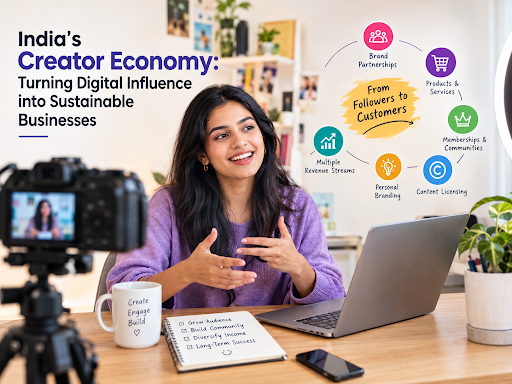
1. Brand Partnerships and Affiliate Marketing
Creators can collaborate with brands whose products or services genuinely match their content and audience. Affiliate links and referral arrangements can provide additional income when audiences make purchases through their recommendations.
The key is credibility. Audiences are more likely to maintain trust when promotional content is relevant, transparent and based on honest assessments rather than repeated endorsements.
2. Products and Services Owned by Creators
Selling products or services allows creators to move beyond earning solely from someone else’s advertising budget. Depending on their expertise, they might offer online courses, e-books, merchandise, consulting, digital templates, workshops or specialised services.
These offerings also give creators greater control over pricing, positioning and customer relationships.
3. Memberships and Community-Based Models
Some audiences are willing to pay for deeper access to a creator’s work. Paid communities, memberships, exclusive content and subscription-based newsletters can generate recurring revenue when they deliver consistent value.
Such models work best when the creator has established a clear reason for audiences to return, participate and remain subscribed.
4. Intellectual Property and Content Licensing
A creator’s work can have value beyond the platform on which it first appears. Original videos, photographs, illustrations, music, educational material and other creative assets may generate licensing opportunities, subject to appropriate rights and agreements.
Over time, a recognisable content library and distinctive creative identity can become business assets in their own right.
No single revenue model suits every creator. The objective is to build a combination that reflects the audience, the creator’s strengths and the resources required to maintain quality.
Why Personal Branding Is a Business Asset
In a crowded digital environment, visibility alone is not enough. Creators need a clear identity that helps audiences understand what they stand for and why their work is worth following.
Personal branding goes beyond logos, colours and a carefully designed profile. It is shaped by the creator’s subject expertise, communication style, values, consistency and relationship with the audience.
A technology creator who explains complex developments in simple language, for example, can establish a recognisable position through clarity and reliability. A travel creator might differentiate themselves through responsible tourism, detailed local knowledge or practical budget advice.
A strong personal brand also helps businesses assess whether a partnership is appropriate. When a creator’s audience, values and expertise align with a brand’s objectives, collaborations can feel more natural and produce better outcomes.
This does not mean creators should avoid experimentation. It means that new formats and ideas should strengthen, rather than constantly dilute, the identity they are building.
The Algorithm Trap: Why Creators Need Greater Control
One of the biggest challenges in the creator economy is dependence on digital platforms.
A change in recommendation systems can reduce the visibility of previously successful content. Monetisation rules may change, advertising rates can fluctuate, and an account restriction can disrupt a creator’s ability to reach their audience.
These risks make platform dependence a business concern, not simply a content distribution problem.
Creators can reduce their exposure by developing a presence across relevant platforms while avoiding the assumption that every platform deserves equal attention. They can also build more direct relationships through email newsletters, websites, customer databases and communities where appropriate consent and privacy safeguards are maintained.
Owning a website or maintaining a permission-based mailing list does not guarantee commercial success. However, these channels can give creators additional ways to communicate with their audiences without relying entirely on social media distribution.
The larger lesson is straightforward: A platform can help a creator build a business, but it should not become the entire business.
Professionalising Content Creation: The Business Skills That Matter
As creator-led enterprises mature, creativity needs to work alongside business management.
Creators must learn to negotiate contracts, understand payment terms, plan budgets, track expenses and evaluate the actual return on their time and investment. They also need to consider production costs, equipment, software, editing support, taxes and the resources required to maintain a consistent publishing schedule.
A campaign that generates substantial revenue may still be unprofitable if it requires excessive production costs or unpaid revisions. Similarly, a viral video may deliver visibility without creating a meaningful commercial opportunity.
Measuring business performance therefore requires more than views and likes. Useful indicators can include audience retention, conversion rates, repeat customers, revenue per campaign, customer acquisition costs and the proportion of income generated by different sources.
Professionalisation also involves knowing when to delegate. Editors, designers, accountants, production teams and marketing specialists can help creators manage increasing workloads. The goal is not to turn every creator into a large company, but to establish systems that make the business more reliable and less dependent on constant individual effort.
Trust, Transparency and Responsible Influence
The commercial value of a creator’s platform rests heavily on audience trust. Once that trust is damaged, rebuilding it can be difficult.
Creators face pressure to publish frequently, attract attention and secure lucrative partnerships. Under these conditions, sensational claims, undisclosed promotions and unverified information can become tempting shortcuts.
Yet long-term credibility requires a different approach. Paid partnerships should be disclosed clearly, product claims should be checked, and creators should distinguish personal opinions from verified information. Those working in areas such as finance, health or education have an additional responsibility to communicate within their expertise and avoid misleading audiences.
Brands also have a role to play. Instead of evaluating creators solely through reach, businesses should consider the quality of their content, the credibility of their recommendations and their approach to responsible communication.
Trust is not simply an ethical consideration. It is a commercial asset that supports audience loyalty and repeat engagement.
The Role of AI in the Next Phase of the Creator Economy
Artificial intelligence is opening new possibilities for content planning, research, transcription, editing, translation, subtitles and audience analysis. These tools can help independent creators work more efficiently and make content accessible to broader audiences.
For Indian creators, AI-assisted translation and localisation may offer opportunities to adapt content for different linguistic communities without rebuilding every production process from scratch.
However, efficiency should not come at the cost of originality or accuracy. Automated outputs can contain factual errors, generic language and misleading information. Synthetic images, voices and videos can also create questions about consent, authenticity and disclosure.
The most effective approach is to use AI as a supporting tool rather than a substitute for creative judgement. A creator’s distinctive perspective, lived experience, expertise and ability to understand an audience remain important differentiators.
As AI makes certain production tasks easier, the value of original ideas, credible information and recognisable creative voices may become even more significant.
What Does the Future Hold for India’s Creator Economy?
The next stage of India’s creator economy is likely to involve greater diversification. Alongside established influencers, specialised creators may find opportunities in professional education, regional entertainment, business knowledge, gaming, independent media and niche communities.
Creators may also build stronger partnerships with established businesses, media organisations, educational institutions and technology companies. These collaborations can create opportunities for original content, knowledge products, live experiences and new forms of audience engagement.
At the same time, growth will not be evenly distributed. Competition for attention is intense, income can be unpredictable, and not every creator will be able to convert popularity into a profitable enterprise.
This makes financial sustainability an essential part of the conversation. Creators need realistic expectations, an understanding of their operating costs and a business model that does not depend on every post becoming a success.
The measure of progress should therefore extend beyond follower milestones. A sustainable creator business is one that can consistently deliver value, earn audience trust, generate sufficient revenue and adapt when platforms or market conditions change.
Conclusion: Influence Creates Opportunity, but Strategy Builds Businesses
India’s creator economy represents more than a shift in how people consume content. It reflects a broader change in how individuals build brands, reach audiences and create commercial opportunities from their expertise and creativity.
But visibility is only the beginning. Sustainable success requires creators to understand their audiences, diversify income, protect their credibility, manage finances and build assets that retain value beyond a single viral moment.
For brands, the opportunity lies in moving beyond vanity metrics and developing meaningful partnerships with creators who can offer genuine audience connections. For platforms and policymakers, the challenge is to support a more transparent, responsible and resilient digital ecosystem.
And for creators themselves, the most important shift may be in how they define success.
The question is no longer simply how to gain more followers. It is how to turn attention into trust, trust into value, and value into a business built to last.
India’s creator economy will be shaped not only by those who capture the public’s attention, but by those who learn to sustain it responsibly.