





ArdorComm Media Bureau
September 5, 2026
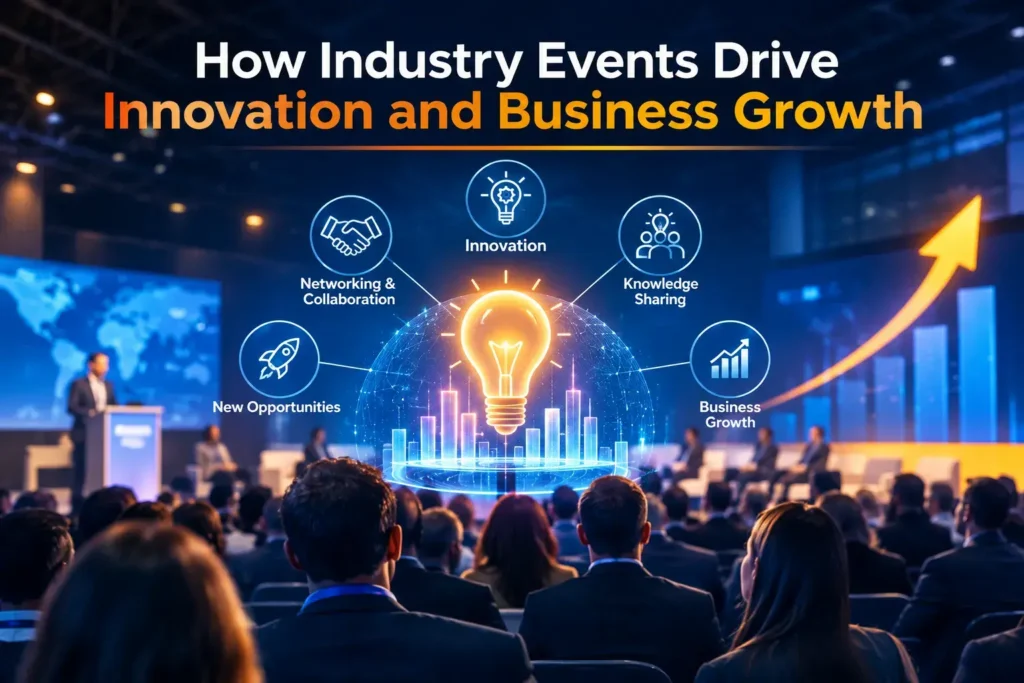
In a rapidly changing business environment, innovation is no longer optional. Organisations need new ideas, stronger partnerships, emerging technologies and deeper industry knowledge to remain competitive. While digital platforms have made communication easier than ever, industry events continue to provide something technology alone cannot fully replicate: meaningful human connection and collaboration.
Industry conferences, business summits, exhibitions, trade shows, leadership forums and networking events bring together business leaders, entrepreneurs, investors, technology providers, policymakers, educators and professionals under one roof.
These gatherings create an environment where ideas can be exchanged, partnerships can begin and opportunities can turn into measurable business outcomes.
According to the Events Industry Council and Oxford Economics, business events brought together 1.65 billion participants globally in 2025 and generated US$1.3 trillion in direct spending. Including direct, indirect and induced activity, business events supported US$3.1 trillion in total business sales, US$1.8 trillion in global GDP and 24.2 million jobs.
But the impact of industry events goes far beyond economic numbers. Their real value lies in their ability to connect people, accelerate knowledge sharing, encourage innovation and create opportunities for long-term business growth.
What Are Industry Events?
Industry events are professional gatherings designed to bring together people and organisations from a particular sector or business ecosystem.
They can include:
- Industry conferences
- Business summits
- Trade shows and exhibitions
- Leadership forums
- Networking events
- Technology conferences
- Investor and startup events
- Roundtables
- Workshops and masterclasses
- Awards and recognition programmes
These events provide a platform for participants to exchange ideas, understand market trends, discover new technologies and build professional relationships.
For example, India’s events ecosystem increasingly connects businesses with tourism, hospitality, transportation, technology, media and creative industries. KPMG’s 2026 assessment found that events also contribute to technology adoption, sustainability, sponsorship and destination development.
1. Industry Events Create Opportunities for Innovation
Innovation often begins with a conversation.
A business leader may discover a new technology through a conference presentation. A startup may find its first enterprise customer at an exhibition. Two organisations may identify an opportunity to collaborate after a panel discussion.
Industry events create these moments by bringing diverse perspectives together.
When professionals from different backgrounds interact, they can challenge existing assumptions, exchange experiences and develop new approaches to common problems.
This makes events valuable innovation platforms rather than simply gatherings.
From Ideas to Action
Innovation becomes meaningful when ideas move beyond discussion.
A well-designed industry event can help participants:
- Discover emerging technologies
- Understand new market opportunities
- Learn from successful case studies
- Identify industry challenges
- Meet potential technology partners
- Explore new business models
- Collaborate on future projects
The Events Industry Council’s latest research specifically identifies innovation, knowledge transfer, research collaboration, investment and new business opportunities as important catalytic effects of business events.
2. Networking Helps Businesses Build Valuable Relationships
One of the biggest advantages of attending industry events is networking.
Digital communication has made it possible to connect with almost anyone, but face-to-face interaction can create a different level of trust and engagement.
A conference can bring together:
- Potential clients
- Business partners
- Investors
- Suppliers
- Industry experts
- Government representatives
- Startup founders
- Technology providers
- Future employees
These relationships can develop into partnerships, sales opportunities, collaborations and long-term professional connections.
In fact, the Events Industry Council’s 2026 research found that 70% of respondents identified face-to-face relationship-building as the event outcome that is most difficult to replace.
3. Events Accelerate Knowledge Sharing
Industries are changing quickly.
Artificial intelligence, automation, digital transformation, sustainability and changing customer expectations are forcing organisations to continuously update their knowledge.
Industry events provide a concentrated environment for learning.
Instead of spending weeks researching different developments independently, professionals can gain insights from multiple experts within a single event.
Keynote speeches, panel discussions, workshops, demonstrations and roundtables can provide practical perspectives that businesses can take back to their organisations.
Why Knowledge Exchange Matters
Knowledge sharing helps organisations:
- Identify emerging trends
- Learn from industry leaders
- Avoid common mistakes
- Understand customer expectations
- Improve business processes
- Discover new technologies
- Develop future strategies
This makes industry events particularly valuable for decision-makers who need to understand where their industry is heading.
4. Industry Events Help Businesses Discover New Markets
Growth often requires businesses to look beyond their existing customer base.
Trade shows, exhibitions and industry conferences can introduce organisations to new markets, regions and customer segments.
For example, a technology company attending an industry exhibition may discover opportunities in education, healthcare, finance or government that were not part of its original growth strategy.
Events can therefore act as a bridge between businesses and new markets.
Participants can explore:
- New customer segments
- New geographical markets
- New industries
- New distribution channels
- New partnership opportunities
- Emerging business requirements
This can help organisations identify growth opportunities before their competitors.
5. Events Strengthen Brand Visibility
Industry events also provide an important platform for brand building.
Speaking at a conference, exhibiting at a trade show or participating in a panel can position an organisation as an active contributor to its industry.
For businesses, this can strengthen:
Brand Awareness → Credibility → Trust → Relationships → Business Opportunities
Thought leadership is particularly valuable.
When executives and experts share useful insights rather than simply promoting their products, they can build authority and credibility within their professional community.
Events therefore allow brands to demonstrate expertise in a way that traditional advertising cannot always achieve.
6. Industry Events Connect Startups With Established Businesses
Startups can benefit significantly from industry events.
Many early-stage businesses have innovative products but limited access to decision-makers, investors and established organisations.
Events can help bridge that gap.
A startup can use an industry conference to:
- Demonstrate its product
- Meet investors
- Find mentors
- Connect with potential customers
- Build partnerships
- Receive industry feedback
- Understand market requirements
At the same time, established companies can discover innovative technologies and emerging solutions by engaging with startups.
This creates a two-way innovation ecosystem.
7. Events Encourage Cross-Industry Collaboration
Some of the most valuable ideas emerge when different industries interact.
For example:
Education + AI = AI-powered learning
Healthcare + Technology = Digital health solutions
Finance + AI = Intelligent financial services
Media + Technology = New content and distribution models
Cross-industry events create opportunities for these connections.
India’s 2026 industry events research highlights the importance of events across MICE, live events, sports and related ecosystems, with spending flowing through sectors including hospitality, tourism, transport, retail, media, technology and creative industries.
8. Business Events Can Generate Measurable Economic Impact
The value of events is not limited to the people inside the venue.
Events create economic activity across a much wider ecosystem.
Participants may spend money on:
- Travel
- Hotels
- Restaurants
- Transportation
- Event services
- Technology
- Retail
- Entertainment
This creates opportunities for multiple industries.
KPMG’s 2026 India assessment found that, across the event categories it studied, every ₹1 of direct event-related expenditure was associated with approximately ₹1.46–₹2.03 of total economic activity, with MICE showing the highest multiplier at 2.03x.
The global picture is similarly significant. The Events Industry Council reported that business events generated US$3.1 trillion in total business sales in 2025 when direct, indirect and induced effects were included.
9. Industry Events Help Organisations Understand Market Trends
Businesses need to know what is happening today and what may happen tomorrow.
Industry events provide access to:
- Expert opinions
- Market discussions
- Product demonstrations
- Competitor insights
- Customer conversations
- Emerging technologies
- Industry research
This information can help decision-makers make better strategic choices.
For example, a company planning an AI transformation may learn about successful implementations, common challenges and emerging solutions through a technology conference.
The result is better-informed decision-making.
10. Events Support Leadership and Thought Leadership
Modern business leadership is not only about managing an organisation.
Leaders are increasingly expected to contribute to wider industry conversations.
Speaking at a summit or participating in a panel allows leaders to share perspectives on:
- Innovation
- Technology
- Policy
- Workforce development
- Sustainability
- Market trends
- Industry challenges
This can strengthen both personal and organisational credibility.
Events therefore provide an important platform for developing thought leadership.
11. The Future of Industry Events Is Hybrid and Technology-Driven
The future of events is not simply about returning to traditional conferences.
Technology is changing how events are planned, delivered and experienced.
Modern events increasingly use:
- AI-powered personalisation
- Event apps
- Digital registration
- Live streaming
- Hybrid participation
- Virtual networking
- Data analytics
- Digital matchmaking
- Interactive audience engagement
- AI-assisted content creation
KPMG’s 2026 India study found that 44.8% of organisers were already using AI tools for areas such as content creation, logistics or personalisation, while livestreaming and hybrid formats were identified as a leading technology investment priority.
The objective is not to replace human interaction with technology.
Instead, technology should make human interaction more relevant, personalised and measurable.
12. How Businesses Can Maximise the Value of Industry Events
Simply attending an event does not guarantee business growth.
Organisations should approach events strategically.
Before the Event
- Define clear objectives
- Research speakers and participants
- Identify potential partners
- Schedule important meetings
- Prepare marketing materials
- Set networking goals
During the Event
- Participate in discussions
- Ask meaningful questions
- Meet new people
- Attend relevant sessions
- Demonstrate expertise
- Capture useful insights
- Explore partnership opportunities
After the Event
The post-event stage is equally important.
Businesses should:
- Follow up with contacts
- Share useful event insights
- Schedule follow-up meetings
- Evaluate leads
- Measure ROI
- Convert discussions into projects
- Maintain long-term relationships
The real value of an event often appears after the event itself.
Measuring the ROI of Industry Events
Businesses should measure more than attendance numbers.
Useful event KPIs include:
- Number of qualified leads
- New partnerships
- Sales opportunities
- Meetings generated
- Customer acquisition
- Brand mentions
- Website traffic
- Social media engagement
- Media coverage
- Speaking opportunities
- Investment opportunities
- Revenue generated
A successful event should create measurable outcomes—not just memorable experiences.