ArdorComm Media Group

Thursday, May 21, 2026 1:51 PM

Governance Community

PM Modi Reviews Progress of Rs 31,000 Crore Worth of Key Projects Across Seven States

News on Gov

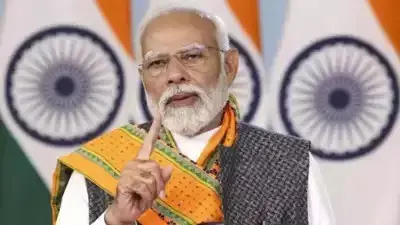
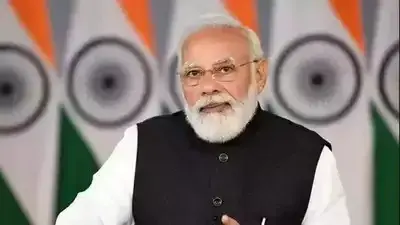
Prime Minister Narendra Modi conducted a PRAGATI meeting on Wednesday to assess the progress of eight significant projects spanning seven states, collectively valued at approximately Rs 31,000 crore, according to a statement from his office. PRAGATI, a multi-modal platform for Pro-Active Governance and Timely Implementation of projects involving both the central and state governments, marked its 43rd edition during this meeting. These projects encompassed various domains, with four focusing on water supply and irrigation, two centred on expanding national highways and connectivity, and two related to rail and metro rail connectivity. The statement specified, “These projects have a cumulative cost of around Rs 31,000 crore and relate to 7 states: Bihar, Jharkhand, Haryana, Odisha, West Bengal, Gujarat, and Maharashtra.” Prime Minister Modi stressed the importance of leveraging the PM Gati Shakti National Master Plan Portal in conjunction with technologies like satellite imagery to address implementation and planning challenges regarding project location and land requirements. He recommended that stakeholders involved in projects within densely populated urban areas appoint nodal officers and establish teams to enhance coordination. For irrigation projects, the Prime Minister advised organizing visits to areas where successful rehabilitation and reconstruction work had been carried out, with the intention of showcasing the transformational impact of these projects to inspire early execution. During the meeting, he also examined the progress of ‘Mobile Towers and 4G Coverage under USOF Projects.’ These projects aim to provide mobile coverage to 33,573 villages through 24,149 mobile towers under the Universal Service Obligation Fund (USOF). Modi instructed officials to ensure that mobile towers are installed in all uncovered villages within the current financial year, emphasizing the importance of regular meetings with all stakeholders to achieve full mobile coverage even in remote areas. According to the statement, up to the 43rd edition of PRAGATI meetings, a total of 348 projects with a combined cost of Rs 17.36 lakh crore have undergone review.

PM Modi Reviews Progress of Rs 31,000 Crore Worth of Key Projects Across Seven States Read More »

NHAI Unveils Enhanced AI-Powered ATMS for Improved Road Safety and Digital Enforcement on Indian Highways

News on Gov

The National Highways Authority of India (NHAI) has introduced an updated policy to enhance road safety and reduce response times to incidents on the nation’s highways and expressways. This initiative leverages the latest advancements in artificial intelligence (AI) technology and focuses on digital enforcement of traffic regulations. As part of these improvements, the previous VIDS cameras are being replaced with the newly developed Video Incident Detection and Enforcement System (VIDES). VIDES is equipped to identify 14 distinct incidents, including violations such as triple riding, not wearing helmets or seatbelts, driving in the wrong lane or direction, the presence of animals on the road, and pedestrian crossings. Depending on the detected incident, VIDES will trigger responses such as notifying route patrol vehicles or ambulances, generating electronic traffic violation fines (e-challans), relaying alerts to nearby Variable Messaging Boards, or sending notifications through the ‘Rajmargyatra’ mobile app to nearby travelers. To ensure comprehensive coverage, these cameras will be installed approximately every 10 kilometers along the national highways, with advanced Command & Control Centers every 100 kilometers that integrate feeds from various cameras. The Vehicle Speed Detection System (VSDS) is now integrated into VIDES, optimizing the use of Automatic Number Plate Recognition (ANPR) cameras. Additionally, the Traffic Monitoring Camera System (TMCS) positioned every 1 kilometer on the national highways is being enhanced with capabilities such as automated accident detection and identifying stalled vehicles. NHAI is strengthening collaboration with local traffic agencies by providing dedicated workstations for traffic police representatives in the Command & Control Centers, facilitating real-time coordination and response through network sharing of camera feeds. The deployment of Advanced Traffic Management System (ATMS) is expected to contribute to disaster management by offering valuable input for effective planning and implementation. It will also enable the online sharing of highway status and other crucial information, benefiting both the agencies and highway users. The policy also includes provisions for developing integrated utility corridors along the national highways to establish Optic Fiber Cables (OFC) infrastructure. While the ATMS equipment will initially use OFC for communication with the Command & Control Centers, the policy also anticipates future integration of 5G-based communication tools as 5G coverage expands.

NHAI Unveils Enhanced AI-Powered ATMS for Improved Road Safety and Digital Enforcement on Indian Highways Read More »

MeitY Working Groups Deliver First IndiaAI Report with ‘AI for All’ Vision

Seven working groups under the Ministry of Electronics and Information Technology (MeitY) have delivered the inaugural IndiaAI report on October 13. The report was officially presented to Rajeev Chandrasekhar, the Union Minister of State for Skill Development & Entrepreneurship and Electronics & IT. He emphasized that this report will serve as India’s guiding roadmap for nurturing its AI ecosystem. The report represents a comprehensive plan for IndiaAI, aligning with Prime Minister Modi’s vision of “India for AI and AI for India” and aiming to be a catalyst for the 1 trillion dollar digital economy. According to MeitY, the government’s approach to AI is comprehensive and ambitious, demonstrated by a wide array of initiatives under the IndiaAI program. IndiaAI follows a mission-centric approach focused on improving the existing AI ecosystem in areas such as computational infrastructure, data, AI funding, research, skill development, and institutional capacity for data to harness AI’s potential for India’s progress. Rajeev Chandrasekhar outlined how IndiaAI is not limited to supporting startups and skill development but also includes key components like the India Datasets Platform, a vast collection of anonymized datasets for Indian researchers. Additionally, the India AI Compute Platform, a public-private partnership, will offer significant GPU capacity to startups and researchers. IndiaAI will also back the development of AI chips in collaboration with the Semicon India program. The report provides details on establishing Centers of Excellence, the institutional framework for data governance, and suggestions for leveraging India’s demographic dividend as an IT powerhouse to enhance AI skills in the country. It also outlines recommendations for the Design Linked Incentive (DLI) Scheme, which aims to provide financial incentives and infrastructure support to domestic firms, startups, and MSMEs. MeitY’s statement underlines that the goal of this comprehensive study is to identify actionable steps for achieving the vision of “AI for all” across all aspects of IndiaAI.

MeitY Working Groups Deliver First IndiaAI Report with ‘AI for All’ Vision Read More »

Government Launches Chemical Sector Statistical Data Portal to Promote Industry Efficiency

The Indian government has introduced a web portal aimed at providing valuable statistical information concerning the chemical sector to all interested parties. This portal, accessible at www.charak.chemicals.gov.in, serves as a platform for gathering data on various aspects of the chemical industry, including production, installed capacity, exports, imports, purchases, and sales. The Ministry of Chemicals and Fertilizers made this announcement. The web portal, a collaborative effort between the Department of Chemicals and Petrochemicals and the National Informatics Centre, was unveiled at a workshop organized by the industry association FICCI in New Delhi. The Department plans to conduct similar workshops in several cities, such as Vadodara, Vapi, Pune, Bengaluru, Chennai, Bhubaneswar, and Hyderabad, during October and November. The primary goal of this portal is to enhance the chemical and petrochemical industries by streamlining data collection, promoting efficiency, and granting access to the latest industry innovations and technological advancements. Furthermore, the portal will empower users, researchers, educators, and policymakers to generate quick visual representations and comprehensive reports tailored to the specific requirements of the chemical sector. This initiative will establish a support system for promoting industry best practices, establish an accurate inventory of chemical data, and provide geographical data support to various stakeholders, including policymakers, affiliated industries, researchers, and educators, as stated in the release.

Government Launches Chemical Sector Statistical Data Portal to Promote Industry Efficiency Read More »

India Issues Ultimatum to Canada to Withdraw 41 Diplomats by October 10

India has issued an ultimatum to Canada, demanding the removal of 41 diplomats by October 10, warning that failure to do so will result in the loss of diplomatic immunity for these officials. This move comes amid escalating diplomatic tensions between the two nations, with India insisting that Canada needs to significantly reduce its diplomatic presence to achieve parity with Indian diplomats stationed in Ottawa. Currently, there are over 60 Canadian diplomats in India, while India has just over 20 diplomats in Canada. The strained relations between the two countries were exacerbated by Canadian Prime Minister Justin Trudeau’s recent statement in Parliament, where he accused “Indian government agents” of being involved in the assassination of a designated Indian terrorist. This accusation has further strained diplomatic ties and pushed them to an all-time low. Following Trudeau’s allegations, both India and Canada expelled one diplomat each from the other’s embassies, further escalating tensions. India has vehemently denied Canada’s claims, labelling them as politically motivated and lacking credible evidence. The call for a reduction in Canadian diplomatic staff became public in September when India’s Ministry of External Affairs spokesperson, Arindam Bagchi, stated, “Yes, we’ve informed the government of Canada that there should be parity in the strength of our mutual diplomatic presence. Their number is much higher than ours in Canada… I assume there will be a reduction from the Canadian side.”

India Issues Ultimatum to Canada to Withdraw 41 Diplomats by October 10 Read More »

PM Modi to Virtually Distribute 51,000 Appointment Letters in Nationwide Job Fair

In a virtual event scheduled for Tuesday, Prime Minister Narendra Modi will distribute approximately 51,000 appointment letters to recently recruited government employees across various departments. This nationwide ‘Rozgar Mela’ will take place simultaneously at 46 locations, as announced by the Prime Minister’s Office (PMO). The newly appointed individuals will be joining different government ministries and departments, including the Department of Posts, Indian Audit & Accounts Department, Department of Atomic Energy, Department of Revenue, Department of Higher Education, Ministry of Defence, Ministry of Health and Family Welfare, among others. The PMO emphasized that the Rozgar Mela is a significant step towards fulfilling the Prime Minister’s commitment to prioritize employment generation. It is expected to serve as a catalyst for further job creation, offering meaningful opportunities to young individuals for empowerment and active participation in the country’s development. Additionally, the newly appointed personnel will have the chance to enhance their skills through the Karmayogi Prarambh program, an online module available on the iGOT Karmayogi portal. This platform offers access to over 680 e-learning courses designed for flexible learning on any device, further enriching the training opportunities for the new recruits.

PM Modi to Virtually Distribute 51,000 Appointment Letters in Nationwide Job Fair Read More »

Lok Sabha and Rajya Sabha Shift to New Parliament Building; Old Complex to Become Heritage Site

In a historic move, the Lok Sabha and Rajya Sabha are scheduled to meet at 1:15 PM and 2:15 PM, respectively, within the premises of the New Parliament Building. The transition from the Old Parliament Building to the new one took place on Monday, with both houses officially recognizing the new edifice as the Parliament House of India. Today, the Lok Sabha and Rajya Sabha will conduct their sessions in the modernized Parliament complex, marking a pivotal moment during the five-day Special Session of the Parliament initiated on Monday. The former iconic Parliament Complex, which has served as the ‘temple of democracy’ for over seven decades, will now be preserved as a heritage site, with the New Parliament Complex, inaugurated earlier this year by Prime Minister Modi, taking its place. The notification regarding this significant change was issued by the Lok Sabha Secretariat on September 18, designating the new Parliament building located in New Delhi, adjacent to the existing Parliament House with Raisina Road to the south and Red Cross Road to the north, as the Parliament House of India. The Central Hall program, scheduled for 11 AM today at the old Parliament building, will commemorate the rich legacy of the Indian Parliament and reaffirm the commitment to transform India into a developed nation by 2047. Security personnel at the Parliament building have also been outfitted in new uniforms, featuring khaki trousers, cream-colored jackets, cream shirts with pink lotus motifs (for men), and vibrant sarees with jackets (for women), along with turbans for marshals, signalling a distinct dress code. On Monday, both houses adjourned after discussing Parliamentary democracy’s evolution over the last 75 years. Presiding officers confirmed that proceedings would commence in the new Parliament building on Tuesday afternoon. Prior to the Lok Sabha and Rajya Sabha sessions at noon, all MPs from both houses will assemble for group photographs, symbolizing the shift to the New Parliament Complex.

Lok Sabha and Rajya Sabha Shift to New Parliament Building; Old Complex to Become Heritage Site Read More »

Government Building Digital Public Infrastructure for Future Job Skills: MoS IT Rajeev Chandrasekhar

The Minister of State for Electronics and Information Technology, Rajeev Chandrasekhar, announced the government’s commitment to digital skilling, emphasizing the development of Digital Public Infrastructure (DPI) to prepare young Indians for future tech-oriented jobs. Speaking at the Skill India Digital event, where the government launched the Skill India Digital portal to benefit all citizens, especially those aged 15 and above, the minister highlighted the global recognition of DPIs during the G20 Summit and their application in digital skilling for India’s youth. Chandrasekhar stated, “This DPI aligns with Prime Minister Narendra Modi’s vision of Skill India and Digital India, addressing the growing importance of digital skills in a post-Covid world. Its purpose extends to nurturing both entrepreneurship and employment opportunities.” During the event, Union Education Minister Dharmendra Pradhan, along with Chandrasekhar, unveiled Skill India Digital, an advanced digital platform designed to consolidate various skilling initiatives. In a recent statement, Chandrasekhar highlighted India’s impressive technological advancements, which gained international attention during the G20 Summit. India’s DPI, much like the Unified Payments Interface (UPI) and Aadhaar, has disrupted conventional norms and showcased the country’s digital transformation efforts. He remarked, “Today, the world is recognizing India’s remarkable achievements in technology, utilizing Digital Public Infrastructure to revolutionize governance and enhance citizens’ lives.” The G20 leaders have pledged to adopt, construct, and maintain a Global Digital Public Infrastructure, emphasizing the importance of fostering a secure and robust global digital economy and ecosystem.

Government Building Digital Public Infrastructure for Future Job Skills: MoS IT Rajeev Chandrasekhar Read More »

NITI Aayog’s Special Campaign 2.0: Clearing Pending Matters and Boosting Cleanliness

NITI Aayog has launched Special Campaign 2.0 to address pending matters and promote cleanliness. This initiative, inspired by Mahatma Gandhi’s vision of a clean India, began in October 2021 and has continued into 2022 and 2023. Special Campaign 2.0, which runs from November 2022 to August 2023, aims to ensure the prompt resolution of public grievances, references from Members of Parliament, state governments, inter-ministerial consultations, and parliamentary assurances by ministries and departments. The campaign is led by NITI Aayog, along with its associated offices, including the Development Monitoring & Evaluation Office (DMEO) and Atal Innovation Mission (AIM) in NITI Bhawan, as well as the National Institute of Labour Economics Research and Development (NILERD) in Narela, New Delhi. It focuses on addressing public grievances, parliamentary assurances, PMO references, and emphasizes record management, cleanliness both indoors and outdoors, and the disposal of office scrap to create more space within NITI Aayog. During this campaign, significant progress has been made in resolving public grievances, parliamentary assurances, and PMO references. Additionally, a substantial number of files have been reviewed and cleared, freeing up valuable space, and generating revenue through the disposal of office scrap. Over 75% of the designated physical files have been reviewed, and approximately 95% of public grievances and appeals have been addressed. Moreover, redundant scrap materials and obsolete items have been identified for disposal.

NITI Aayog’s Special Campaign 2.0: Clearing Pending Matters and Boosting Cleanliness Read More »

Global Leaders Convene in New Delhi for 18th G20 Summit

The 18th G20 Summit, hosted by India, kicked off today in the national capital, New Delhi, with more than 30 heads of state, top officials from the European Union, and invited guest countries in attendance. The two-day summit is being held at the newly inaugurated Bharat Mandapam, and it promises to address critical global challenges under the theme “Vasudhaiva Kutumbakam” or “One Earth · One Family · One Future.” The summit commenced with world leaders arriving at the venue, Bharat Mandapam, from 9.30 am onwards. The first session of the G20 Summit, titled ‘One Earth,’ took place at around 10.30 am. This session is dedicated to accelerating climate action, focusing on increased mitigation efforts and strengthening the global net zero emission agenda as soon as possible. The theme underscores the interconnectedness of all life forms on Earth, emphasizing the value of human, animal, plant, and microorganism life. In the evening, a dinner hosted by the President of India, Droupadi Murmu, was scheduled to bring together foreign delegates, parliamentarians, and ministers, along with former senior leaders of the nation. Key leaders attending the event include US President Joe Biden, British Prime Minister Rishi Sunak, Saudi Crown Prince Mohammed Bin Salman, Canadian Prime Minister Justin Trudeau, and Japanese Prime Minister Fumio Kishida. However, notably absent from the summit are Chinese President Xi Jinping and Russian President Vladimir Putin. China will be represented by Chinese Premier Li Qiang, while Russian Foreign Minister Sergey Lavrov will represent Russia. This marks India’s first time hosting the G20 Summit, with extensive preparations showcasing India’s tradition and strength. During its presidency, India has focused on various critical issues, including inclusive growth, digital innovation, climate resilience, and equitable global health access. India seeks to achieve the dual objectives of adding the African Union as a member of the G20 and resolving disagreements related to a joint statement concerning the conflict in Ukraine. The participating countries in the G20 Summit include Nigeria, Argentina, Italy, the African Union (represented by Comros), South Africa, Bangladesh, the United Kingdom, Japan, Saudi Arabia, the Republic of Korea, Egypt, Australia, the United States, Canada, China, the United Arab Emirates, Brazil, Indonesia, Turkey, Spain, Germany, France, Mauritius, the European Union, and Singapore. A warm welcome was extended to world leaders upon their arrival in Delhi, with Prime Minister Narendra Modi expressing confidence that the summit would chart a new path toward human-centric and inclusive development. Leaders who have arrived in the national capital for the G20 Summit include US President Joe Biden, UK Prime Minister Rishi Sunak, Bangladesh Prime Minister Sheikh Hasina, Italian Prime Minister Giorgia Meloni, Argentina President Alberto Fernandez, and Japan Prime Minister Fumio Kishida. The leaders were welcomed with traditional dance performances. Other distinguished attendees include Chinese Premier Li Qiang, UN Secretary-General Antonio Guterres, Oman Deputy Prime Minister Asaad bin Tariq bin Taimur, Russian Foreign Minister Sergey Lavrov, South Korean President Yoon Suk Yeol, Egypt President El-Sisi, UAE President Mohammed bin Zayed Al Nahyan, Australian Prime Minister Anthony Albanese, Canadian Prime Minister Justin Trudeau, Turkish President Recep Tayyip Erdogan, Indonesian President Joko Widodo, Singapore Prime Minister Lee Hsien Loong, and Brazilian President Luiz Inacio Lula da Silva. Additionally, African Union Chairperson Azali Assoumani, United Nations Secretary-General Antonio Guterres, International Monetary Fund (IMF) Managing Director Kristalina Georgieva, Mauritius Prime Minister Pravind Kumar Jugnauth, Organisation for Economic Cooperation and Development (OECD) Secretary-General Mathias Cormann, World Trade Organization (WTO) Director-General Ngozi Okonjo-Iweala, and European Commission President Ursula von der Leyen have also arrived in Delhi to participate in the summit. The 18th G20 Summit holds the promise of fostering collaborative solutions for the benefit of the global population and contributing to overall global well-being in a rapidly changing world.

Global Leaders Convene in New Delhi for 18th G20 Summit Read More »