

ArdorComm Media Group

Saturday, June 27, 2026 2:42 PM

Education Community

14 BHU Scholars Awarded Prime Minister’s Research Fellowship

Fourteen research scholars from Banaras Hindu University (BHU) have earned the prestigious Prime Minister’s Research Fellowship (PMRF) in the latest cycle. These scholars, representing various departments at BHU, have been selected through a rigorous national-level selection process. Under the PMRF scheme, the chosen scholars receive an attractive fellowship package, including a research contingency grant. For the first two years, the fellowship amounts to Rs 70,000 per month, increasing to Rs 75,000 per month in the third year, and Rs 80,000 per month in the fourth and fifth years of their research projects. Additionally, researchers can access a research contingency grant of Rs 2 lakh per annum. The PMRF scheme, initially launched in the 2018-2019 budget, is designed to promote high-quality research and attract the best talent into the research field. BHU, known for its commitment to excellence, has increased its representation in prestigious schemes and fellowships, reflecting its dedication to fostering research and academic achievement. Vice-Chancellor Prof. Sudhir Kumar Jain expressed optimism about BHU’s future performance in this regard.

14 BHU Scholars Awarded Prime Minister’s Research Fellowship Read More »

Over 20 Million Students Register on UGC’s Academic Bank of Credit, Says UGC Chairman

News on Edu

UGC Chairman Mamidala Jagadesh Kumar announced that more than 20 million students from across the nation have registered on the University Grants Commission’s Academic Bank of Credit (ABC) platform. He made this announcement during the western zone vice chancellor’s conference held at Maharaja Sayajirao University in Baroda, Gujarat, on October 26. Chairman Kumar emphasized that in recent years, the UGC has introduced various reforms. Although over 20 million students have already registered on the ABC platform, he stressed the importance of ensuring that every student register and that their academic credentials and credit certificates are uploaded to the ABC platform. During the conference, the UGC Chairman also discussed the progress made in implementing the reforms initiated by the UGC. The Academic Bank of Credit (ABC) is one of the provisions outlined in the National Education Policy 2020 (NEP 2020). ABC offers undergraduate and postgraduate students the flexibility to exit and re-enter their courses within a specified time frame. Additionally, it aims to provide every student with the opportunity to open an academic bank account with ABC to transfer credits for the attainment of various degrees, diplomas, or certificates.

Over 20 Million Students Register on UGC’s Academic Bank of Credit, Says UGC Chairman Read More »

BHU Secures INR 1 Crore Donation to Establish 40 Chemistry Scholarships in Honour of Renowned Alumnus

News on Edu

Banaras Hindu University (BHU) has entered into a noteworthy agreement with the Kalipatnapu Foundation, securing a substantial donation of Rs 1 crore. This generous contribution will establish 40 scholarships tailored for undergraduate (UG) and postgraduate (PG) students majoring in chemistry at the Institute of Science. These scholarships are set up in honour of the late Kalipatnapu Kondiah, who was a distinguished alumnus and former faculty member at BHU. Kondiah’s academic journey began with a BSc and MSc at BHU, and he later served as a faculty member within the Chemistry Department from 1922 to 1941, eventually assuming the role of the department’s head. His remarkable journey took a turn when he left BHU in 1941 to join the freedom movement, enduring a five-year imprisonment. Following his release, Kondiah’s dedication to his country led him to establish a chemical factory in Andhra Pradesh, contributing significantly to India’s self-reliance. The Kalipatnapu Foundation, initiated by his family, including his son Dr. Indusekhar Rao Kalipatnapu, his late daughter Smt Indira Devi, and his grandson Chaitanya Kalipatnapu, has facilitated this substantial donation. The Memorandum of Understanding (MoU) was formally signed by BHU Registrar Professor Arun Singh and Dr. Indushekhar Rao in the presence of Vice Chancellor Professor Sudhir Jain and other members of the Kalipatnapu family, including Indushekhar Rao’s wife, Chaitanya Kalipatnapu, and his niece. Vice Chancellor Jain expressed his admiration for the Foundation and the Kalipatnapu family, acknowledging the immense value of their contribution in supporting students on their quest for knowledge. He emphasized that such benevolent donations play a pivotal role in BHU’s mission to provide quality education to deserving students, particularly those hailing from financially disadvantaged backgrounds.

BHU Secures INR 1 Crore Donation to Establish 40 Chemistry Scholarships in Honour of Renowned Alumnus Read More »

AICTE Extends Admission Deadlines for 2023-24 Academic Session

The All India Council for Technical Education (AICTE) has introduced a modified academic schedule for the 2023-24 academic session. As per the newly announced calendar for technical and professional education, the deadline for first-year student admissions into vacant seats at technical institutions has been extended to October 30. Additionally, the last date for lateral entry admissions into second-year courses for newly enrolled students is also October 30. Furthermore, the cutoff date for universities or boards to grant affiliation to technical institutes is also October 30. Nevertheless, institutions offering online and open-distance learning (ODL) programs will adhere to the University Grants Commission (UGC) guidelines for approval and course admissions in the first and second sessions. The updated academic calendar is available on the official AICTE website, aicte-india.org. The AICTE made these adjustments in response to a Supreme Court order dated October 13, 2023. Consequently, the deadline for admissions into all AICTE-approved institutions and affiliation with universities has been extended to October 30, 2023. Previously, the deadline for admitting first-year students to institutions was set for September 15, and the affiliation grant deadline was July 31. It’s important to note that these revisions do not apply to standalone PGDM and PGCM institutions.

AICTE Extends Admission Deadlines for 2023-24 Academic Session Read More »

UGC Launches WhatsApp Channel for Enhanced Stakeholder Communication

The University Grants Commission (UGC) has introduced the “UGC India WhatsApp Channel” as a means of staying connected with various stakeholders. This move is a significant step toward making crucial higher education information more accessible. According to UGC Chairman M. Jagadesh Kumar, the launch of the UGC India WhatsApp Channel signifies a shift toward a more inclusive and informed higher education landscape. By embracing technology and utilizing a widely used platform, the UGC is modernizing its communication strategy, making it easier for stakeholders to access real-time information on higher education. UGC is on WhatsApp! Please join UGC India WhatsApp Channel for latest important news related to higher education in India. You can scan the QR code below or tap on the link:https://t.co/T0J9hS6lYP pic.twitter.com/4VQcwF4ExX — Mamidala Jagadesh Kumar (@mamidala90) October 16, 2023 This innovative initiative ensures that a wide range of stakeholders, including Higher Educational Institutions, educators, students, and others, can easily access accurate and current information at their fingertips. A key advantage of this platform is its inclusivity, recognizing that not everyone has seamless access to UGC websites or other social media platforms. The WhatsApp Channel serves as a powerful tool for reaching a broader audience, bridging the digital divide and ensuring that policy updates on higher education are readily available to all. Real-time updates are highly valuable in the ever-evolving landscape of higher education. With the WhatsApp Channel, stakeholders can receive timely information on policy changes, educational reforms, and other critical updates as they happen. This immediacy enhances transparency and allows institutions, educators, and students to adapt quickly to new developments, creating a more agile and informed educational environment. For Higher Educational Institutions, the channel offers a direct means of staying informed about regulatory changes, guidelines, and best practices. Educators can benefit from real-time information on curriculum modifications, assessment methods, and professional development opportunities. Students also gain direct access to pertinent updates on examinations, scholarships, and other aspects of their academic journey. To join the UGC India WhatsApp Channel, you can use this link: https://www.whatsapp.com/channel/0029VaCh6c50gcfMkcXzgq1w

UGC Launches WhatsApp Channel for Enhanced Stakeholder Communication Read More »

IIT JAM 2024 Registration Deadline Extended to October 20

The registration deadline for the IIT JAM 2024 (Joint Admission test for Masters) has been extended to October 20, 2023, by the Indian Institute of Technology, Madras (IIT-M). Previously, candidates had the opportunity to apply from September 5 to October 13, but now they have until October 20 to complete their registrations. To apply, interested individuals can visit the official website at jam.iitm.ac.in. The IIT JAM 2024 examination is scheduled to take place on February 11, 2024. After the exam, response sheets and answer keys will be accessible through the JOAPS login, with the results being announced on March 22, 2024. Scorecards will then be available from April 2, 2024. Subsequently, the admission application process will commence on April 10, 2024. In terms of eligibility, there is no age restriction, and even foreign nationals with Indian degrees are eligible to apply, subject to the policies of the admitting institute. Candidates who have completed an undergraduate degree or are currently in the final year of their undergraduate programs are eligible to apply for the JAM 2024 examination. Additionally, IIT Roorkee has introduced a new academic program, MSc (Biosciences and Bioengineering), and will admit students to this program based on their JAM – Biotechnology scores for the academic year 2024-25. IIT Mandi has also introduced a new academic program. The Joint Admission test for Masters (JAM) is conducted to facilitate admissions to various postgraduate science programs, including MSc, MSc (Tech), MS (Research), MSc – MTech Dual Degree, Joint MSc – PhD, and MSc – PhD Dual Degree, at the IITs, offering a pathway for students to pursue a career in the field of science.

IIT JAM 2024 Registration Deadline Extended to October 20 Read More »

UGC Draft Guidelines Propose Mandatory Internships for Undergraduate Students to Enhance Employability and Research Skills

The University Grants Commission (UGC) has released preliminary guidelines suggesting mandatory internships for undergraduate students as a means to enhance their employability and foster an understanding of research while earning academic credits. These draft guidelines, titled “Guidelines for Internship/Research Internship for Undergraduate Students,” are aligned with the National Education Policy (NEP) 2020, which emphasizes the integration of internships and research opportunities into undergraduate curricula. The UGC made these guidelines available to the public for feedback and suggestions. The UGC has recognized that many graduates struggle to enter the workforce due to their lack of practical skills, knowledge, and experience, which employers typically seek. Internships are considered a crucial tool for improving these employability skills and can equip students with competency, professionalism, expertise, and confidence, as well as kindle their interest in research. Currently, internships are not obligatory for all undergraduate programs and are primarily restricted to technical and professional courses. UGC Chairperson M Jagadesh Kumar believes that hands-on experience through internships will bridge the gap between academic learning and the real world, enhancing students’ grasp of concepts. He emphasizes the importance of students acquiring a broad range of skills, such as communication, teamwork, problem-solving, and time management. These internships, as outlined in the UGC guidelines, are designed to help students gain valuable soft and technical skills highly valued by employers and establish professional connections with potential mentors. The draft guidelines propose two types of undergraduate internships: those focused on employability and those designed to cultivate a passion for research. For students pursuing a three-year undergraduate degree, a mandatory internship of 60 to 120 hours will occur after the fourth semester. Those opting for a four-year degree will participate in a research internship during the eighth semester. These internships can earn students up to 12 academic credits. The guidelines also recommend the appointment of a coordinator or the establishment of a well-defined mechanism for the smooth coordination and execution of internships across diverse disciplines within each higher education institution’s research and development (R&D) cell. Furthermore, the guidelines propose evaluating students during their internships. Evaluation methods may include assessments by the research internship supervisor based on the students’ efforts and research output or through seminar presentations and viva-voce at the higher education institution (HEI).

UGC Draft Guidelines Propose Mandatory Internships for Undergraduate Students to Enhance Employability and Research Skills Read More »

IIT Kanpur Opens Applications for eMasters in Next Generation Wireless Technologies and New Online Postgraduate Programs

IIT Kanpur is currently accepting applications for its eMasters program in Next Generation Wireless Technologies. The application window is open until October 31, 2023, and the new cohorts will commence in January 2024. Prospective applicants can submit their applications directly through the official IIT Kanpur website at emasters.iitk.ac.in/course/masters-in-wireless-technologies. There is an application fee of Rs 1,500. Upon selection, candidates will need to pay a registration fee of Rs 40,000 within one week. The admission fee, which is essential for enrollment, is Rs 1,60,000. Additionally, there’s a module fee that varies based on the number of modules selected, with each module costing Rs 45,000. There are a total of 12 modules in the program. The quarterly fee, payable at the beginning of each quarter, amounts to Rs 15,000 per quarter, totaling Rs 60,000 for the entire program. It’s important to note that all fees are non-refundable and non-transferable. One distinctive feature of this program is that it doesn’t require applicants to have a GATE score. Moreover, it offers participants the flexibility to complete the program within a time frame of 1 to 3 years. The program will be taught by the esteemed faculty of IIT Kanpur through live interactive classes held only on weekends, complemented by self-paced learning. The eMasters course has been developed by the Department of Electrical Engineering at IITK with the primary objective of training professionals in equipment and device technology to deliver expertise in voice, data, and multimedia information. The curriculum includes core modules like Wireless Communication, Probability and Random Processes, Applied Linear Algebra for Wireless Communication, and Digital Communication Systems, which cater to the needs of contemporary professionals. The program comprises a 60-credit curriculum with 12 industry-focused modules. It also grants access to IITK’s placement cell, incubation cell, and alumni network, offering valuable opportunities for career advancement and networking. In addition to the eMasters program, IIT Kanpur has introduced six new online postgraduate programs. Admission to these programs does not necessitate GATE scores. Interested candidates can apply at emasters.iitk.ac.in until October 31, with classes commencing in January 2024.

IIT Kanpur Opens Applications for eMasters in Next Generation Wireless Technologies and New Online Postgraduate Programs Read More »

Education Minister Introduces Optional Bi-Annual Board Exams to Reduce Student Stress

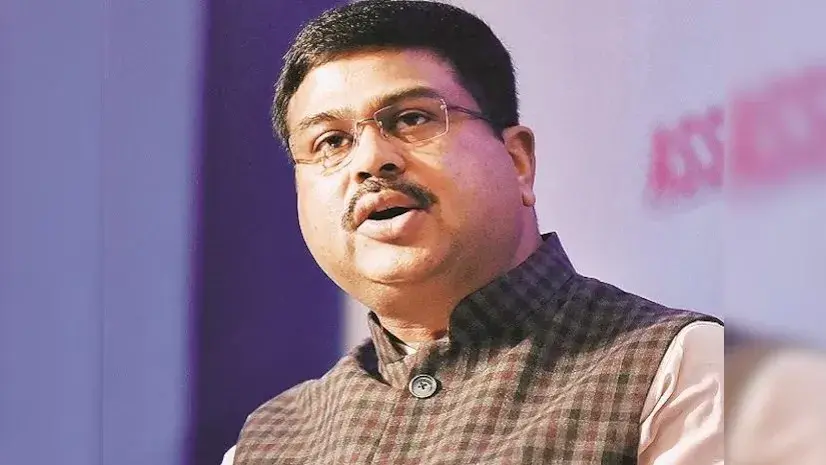
Union Education Minister Dharmendra Pradhan has announced that students will not be obligated to take class 10 and 12 board exams twice a year. The option for bi-annual exams is being introduced to alleviate the stress caused by the fear of a single opportunity. Pradhan emphasized that this choice will be entirely voluntary, with no compulsion for students to participate. He explained that students often feel pressured, thinking they missed a year or could have performed better, and the new system aims to alleviate that stress. The New Curriculum Framework (NCF), introduced by the Ministry of Education in August, intends to hold board exams twice a year to provide students with more time and opportunities to excel and retain the best score. Pradhan has received positive feedback from students regarding this initiative and aims to implement it from 2024. In response to the alarming number of student suicides in Kota, a major coaching hub in Rajasthan, Pradhan expressed concern and stated that it is a collective responsibility to ensure students are stress-free. The issue of ‘dummy schools,’ where students skip regular schooling to attend coaching classes, was also raised. Pradhan emphasized the need for serious discussions on this issue. Regarding the Central Advisory Board of Education (CABE), which hasn’t convened in the last three years, Pradhan mentioned that it is being reconstituted to align with the evolving education system and the new National Education Policy. Pradhan also shared that two Indian Institutes of Technology (IITs), Delhi and Madras, are in the process of establishing offshore campuses, with discussions ongoing with other countries interested in hosting Indian educational institutions. Guidelines for foreign universities setting up campuses in India are under consideration and will be announced soon. Pradhan addressed the objections of states like Karnataka and West Bengal to the National Education Policy (NEP), suggesting that these objections are more political than academic. He emphasized the focus on synergy between education and skills to equip students with both academic and practical abilities for the 21st-century workplace. This includes the establishment of skill hubs and the implementation of the Academic Bank of Credit to enhance students’ mobility across higher education institutions and integrate skills into a credit-based system.

Education Minister Introduces Optional Bi-Annual Board Exams to Reduce Student Stress Read More »

Ministry of Education Invites Applications for 2023-24 NMMS Scholarships for Classes 9-12

The Ministry of Education’s Department of School Education and Literacy has initiated the registration process for the National Merit cum Means Scholarship Scheme (NMMSS) for the 2023-24 academic year. This scholarship program is aimed at supporting academically accomplished students in grades 9 to 12 who come from economically disadvantaged backgrounds. Aspiring students can submit their applications through the official National Scholarship Portal (NSP) website at scholarships.gov.in. The deadline for scholarship applications is November 30. The primary objective of this scholarship is to minimize the dropout rate among students after Class 8 and encourage them to pursue their education through the secondary level. Every year, one lakh new scholarships are granted to deserving students starting from Class 9, with the possibility of renewal for classes 10 to 12, particularly for those attending state government schools, government-aided institutions, and local body schools. The scholarship award amounts to Rs 12,000 per annum. The scholarship funds are directly transferred to the selected students’ bank accounts through electronic transfer using the Public Financial Management System (PFMS) and the Direct Benefit Transfer (DBT) mode. To be eligible for this scholarship, students must have a parental income not exceeding Rs 3.50 lakh per annum. Additionally, applicants should have secured a minimum of 55 percent marks or equivalent grades in their Class 7 examinations to qualify for the selection test. There is a relaxation of 5 percent in the eligibility criteria for SC and ST students. The application process involves two levels of verification on the NSP platform. The first level of verification, conducted by the Institute Nodal Officer (INO), will take place on December 15. The second level of verification, overseen by the District Nodal Officer (DNO), is scheduled for December 30.

Ministry of Education Invites Applications for 2023-24 NMMS Scholarships for Classes 9-12 Read More »