ArdorComm Media Group

Saturday, April 18, 2026 5:39 PM

Education Community

MP Board Results 2026 Declared: Pratiba Singh Solanki Tops Class 10 with 499 Marks

The Madhya Pradesh Board of Secondary Education has officially announced the Class 10 and Class 12 results for 2026 on April 15. The results were declared by Chief Minister Dr Mohan Yadav. Students can access their scorecards through the official websites, including mpbse.mponline.gov.in, mpbse.nic.in, mpresults.nic.in, result.mponline.gov.in, and digilocker.gov.in. To download their results, candidates need to enter their roll number and required login credentials. This year, Pratiba Singh Solanki secured the top position in Class 10 by scoring an impressive 499 out of 500 marks. The Class 10 board exams were conducted from February 13 to March 6, 2026, with the Hindi exam rescheduled to March 6. Meanwhile, Class 12 exams took place between February 7 and March 7 in a single shift from 9 am to 12 noon. Some exams, including Hindi, Urdu, and Marathi, were also rescheduled. Practical exams for both classes were held from February 10 to March 10 at designated centres. As per MPBSE guidelines, students must score at least 33% in each subject to pass. Those who fail to meet this requirement will be eligible to appear for supplementary exams. The Class 10 supplementary exams are scheduled from May 7 to May 19, 2026, while Class 12 supplementary exams will be held from May 7 to May 25, 2026. Last year, the Class 12 pass percentage stood at 74.48%, while Class 10 recorded a pass rate of 76.22%. Girls outperformed boys, with a pass percentage of 79.27% compared to 73.21% for boys.

MP Board Results 2026 Declared: Pratiba Singh Solanki Tops Class 10 with 499 Marks Read More »

CBSE Class 10 Results 2026 Announced: Pass Percentage Rises to 93.70%, Girls Outshine Boys

The Central Board of Secondary Education has released the Class 10 Board Examination 2026 results, recording an overall pass percentage of 93.70%, a marginal increase from last year’s 93.66%. Out of 24.83 lakh registered students, around 24.71 lakh appeared for the exams, and over 23.16 lakh students successfully cleared them, indicating steady academic performance nationwide. Girls once again led the results with a 94.99% pass rate, outperforming boys, who secured 92.60%, while transgender candidates recorded 87.50%. Among different school categories, Kendriya Vidyalayas (KVs) emerged as top performers with an impressive 99.57% pass percentage, followed by Jawahar Navodaya Vidyalayas (JNVs) at 99.42%. Private schools achieved a 93.77% pass rate, whereas government and government-aided schools stood at 91.43% and 91.01%, respectively. Students can check their results through official CBSE websites as well as digital platforms like UMANG and DigiLocker by entering their login credentials. Continuing its policy, CBSE has decided not to release a toppers list to discourage unhealthy competition. However, merit certificates will be awarded to the top 0.1% of students in each subject. In alignment with the National Education Policy 2020, students will also have the opportunity to appear for a second board examination in May 2026 to improve their scores in up to three subjects. Reacting to the announcement, Union Education Minister Dharmendra Pradhan called it a significant milestone and encouraged students to see their results as part of a broader learning journey. The Class 10 board exams were conducted from February 17 to March 11, 2026, in a single shift across the country. Check the results on: results.cbse.nic.in and cbseresults.nic.in. 

CBSE Class 10 Results 2026 Announced: Pass Percentage Rises to 93.70%, Girls Outshine Boys Read More »

Historic 106-Year-Old School in J&K to Be Transformed into Heritage Institution

In a significant move to preserve educational legacy, the government has announced the redevelopment of one of Jammu and Kashmir’s oldest institutions, the Boys Higher Secondary School in Bhaderwah, into a heritage school. Originally established in 1920 as Amar Singh High School by Maharaja Pratap Singh, the institution holds the distinction of being the first high school in the Chenab Valley region. Located in Bhaderwah town of Doda district, the school has played a pivotal role in shaping generations of students for over a century. The foundation stone for the redevelopment project, estimated at ₹3.06 crore, was laid by Additional Deputy Commissioner Sunil Kumar Bhutyal in the presence of Principal and alumnus Kailash Chander. The initiative is being carried out under the ‘Prerna’ Heritage School scheme, aimed at revitalizing historic institutions into inspiring centres of learning. According to officials, the upgraded campus will offer an immersive educational environment while preserving the institution’s historical character. The project is also expected to strengthen emotional and cultural ties among alumni, many of whom have longstanding family connections to the school. Highlighting the significance of the initiative, Bhutyal noted that the redevelopment aligns with the broader vision of Narendra Modi to empower youth through meaningful educational reforms. The ‘Prerna’ initiative, he said, seeks to motivate students to become agents of positive change in society. Principal Kailash Chander described the development as deeply personal and historic, sharing that three generations of his family have studied at the institution. Leading the school after it has been granted heritage status, he added, is a moment of immense pride. The school’s academic affiliations have evolved over time, reflecting its longstanding prominence. Before India’s independence, it was affiliated with the University of the Panjab until 1947. It later came under the aegis of Banaras Hindu University and subsequently the University of Jammu and Kashmir. Since 1974, it has been affiliated with the Jammu and Kashmir State Board of School Education. During the 2015–16 academic session, the institution was renamed Model Higher Secondary School. With this redevelopment, the century-old institution is set to enter a new phase—blending heritage preservation with modern education, and continuing its legacy of academic excellence. Source: PTI  

Historic 106-Year-Old School in J&K to Be Transformed into Heritage Institution Read More »

IGNOU Strengthens India’s Open Learning Landscape: Vice President at 39th Convocation

At the 39th convocation ceremony of Indira Gandhi National Open University, Vice President C. P. Radhakrishnan highlighted the institution’s pivotal role in shaping India’s open and distance learning ecosystem. Addressing the gathering on April 7, 2026, he noted that IGNOU serves over 14 lakh learners, with a significant representation of women (56%) and students from rural and disadvantaged backgrounds (58%), reinforcing its inclusive reach. Reflecting on the challenges posed by the COVID-19 pandemic, the Vice President commended IGNOU’s resilience, emphasizing how its well-established distance education model ensured continuity in learning. He praised the university’s effective use of digital platforms like SWAYAM and e-GyanKosh, which helped maintain academic engagement and strengthened its position as a leader in technology-enabled education. Encouraging students to embrace progress, Mr. Radhakrishnan addressed concerns around technological advancements, recalling initial fears about computers replacing jobs. He pointed out that such innovations ultimately created more employment opportunities and contributed to economic growth. He added that emerging technologies, including artificial intelligence, have the potential to enhance learning outcomes, offer personalised education, and improve student support systems. At the same time, he stressed the importance of balancing modern development with traditional values and ethical considerations. Also present at the event, Delhi Lieutenant Governor Taranjit Singh Sandhu underscored IGNOU’s transformative impact on Indian education. He noted that the university has successfully dismantled barriers related to geography, time, and access, enabling millions to pursue education. Addressing the graduating students, he remarked that in today’s dynamic world, a degree is only the starting point, and continuous learning, adaptability, and skill development are essential for future success. Source: The Hindu

IGNOU Strengthens India’s Open Learning Landscape: Vice President at 39th Convocation Read More »

NTA Launches Official Instagram & Facebook Handles for Real-Time Exam Updates

The National Testing Agency (NTA) has introduced its official presence on Instagram and Facebook to deliver instant updates to students preparing for key national entrance examinations. This initiative is designed to make communication quicker, more direct, and easily accessible. Aspirants appearing for exams like Joint Entrance Examination (JEE) Main, National Eligibility cum Entrance Test (NEET), and Common University Entrance Test (CUET) can now follow these platforms to stay informed about critical developments. Announcing the move on X, the agency highlighted that students will be able to access “real-time updates, exam alerts, and everything” in one place. Candidates are encouraged to follow these verified handles to avoid missing important announcements. Big Update! NTA is now closer to you than ever 📲 Get real-time updates, exam alerts, and everything you need — all in one place. Follow us and stay ahead. Don’t miss out 🚀#NTAExams #NowOnInstagram #StayUpdated #ExamAlerts #NTAUpdates pic.twitter.com/5zw99ioneM — National Testing Agency (@NTA_Exams) April 6, 2026 What kind of updates will be shared? The social media channels will provide timely notifications related to: Application form releases Examination schedules City intimation slips Admit card updates Answer key releases Result announcements This is expected to significantly ease the process of tracking multiple updates, especially during peak exam periods when information is released rapidly. Why this initiative matters The move reflects NTA’s push to enhance digital communication and engage directly with students. With a growing number of candidates relying on social media for quick updates, the agency aims to minimize misinformation and streamline access to authentic information. Established in 2017, the NTA is responsible for conducting major national-level entrance exams for higher education, including JEE Main, CUET (UG & PG), and NEET (UG). Students are advised to follow the official accounts to stay consistently updated. Source: TOI

NTA Launches Official Instagram & Facebook Handles for Real-Time Exam Updates Read More »

India Introduces AI & Computational Thinking for Classes 3–8, Expanding Early Tech Education in Schools

In a major step toward embedding future skills in school education, the Ministry of Education has unveiled a new Artificial Intelligence (AI) and Computational Thinking (CT) curriculum for students from Classes 3 to 8 under the Central Board of Secondary Education. Announced on April 1, the initiative marks the first structured integration of AI concepts at the foundational and middle school levels. Union Education Minister Dharmendra Pradhan described the move as a “transformative step” aimed at preparing students for a technology-driven future. According to the Minister, the curriculum is supported by well-designed modules, detailed teacher handbooks, and a strong assessment framework. These components are intended to provide students with early exposure to emerging technologies while ensuring a systematic learning approach. This development aligns with the vision of the National Education Policy 2020, which emphasizes digital literacy, coding, and the development of 21st-century competencies from an early stage. While AI was previously offered as an elective subject for Classes 9 to 12, this initiative expands its reach to younger learners. The curriculum has been developed by an expert panel led by a professor from Indian Institute of Technology Madras, with participation from key institutions such as CBSE, NCERT, Navodaya Vidyalaya Samiti, and Kendriya Vidyalaya Sangathan. The rollout will begin in the academic session 2026–27 in a phased manner. Schools affiliated with CBSE will receive necessary guidelines, resources, and teacher training support to ensure consistent implementation across both urban and rural regions. The curriculum is designed to be age-appropriate, introducing younger students to core computational thinking skills like pattern recognition, logical reasoning, and problem-solving. As students progress, they will gradually explore foundational AI concepts. Rather than being taught as a separate subject in early grades, AI and CT will be integrated into existing subjects and classroom activities. The approach prioritizes experiential learning through projects, digital tools, and hands-on exercises. To address challenges in implementation, teachers will undergo dedicated training programs supported by structured handbooks. Additionally, assessments will focus on conceptual clarity and practical application instead of rote memorization. Overall, the initiative aims to build a strong technological foundation among students, equipping them with critical thinking and problem-solving skills necessary for the evolving digital landscape. Source: Deccan Herald

India Introduces AI & Computational Thinking for Classes 3–8, Expanding Early Tech Education in Schools Read More »

IIT Kharagpur Moves to Launch First-Ever MD Programme, Awaits NMC Clearance

Indian Institute of Technology Kharagpur has formally applied to the National Medical Council seeking approval to introduce a postgraduate Doctor of Medicine (MD) programme, marking a potential first for the IIT system. Institute Director Suman Chakraborty confirmed that the application has been submitted ahead of the March 31 deadline. While the Ministry of Education has expressed support, the final approval will depend on the Ministry of Health and Family Welfare, as the proposal requires coordination between multiple ministries. The institute plans to initially offer 20 seats under the MD programme. Preparations are already underway, including the recruitment of 20 doctors who will serve as faculty members. Training for students will take place at the institute’s medical facilities, including the Dr B C Roy Multi Specialty Medical Research Centre and the Syama Prasad Mookerjee Super Speciality Hospital. Admissions are expected to be conducted through the National Eligibility cum Entrance Test (NEET). Additionally, the Syama Prasad hospital is being expanded into a 220-bed inpatient department (IPD) facility under a mission-mode initiative, aimed at enhancing healthcare services for the campus and surrounding community. The proposal was earlier approved by the institute’s Board of Governors in September 2025, but timelines for final approval remain uncertain pending regulatory clearance. Source: PTI

IIT Kharagpur Moves to Launch First-Ever MD Programme, Awaits NMC Clearance Read More »

Delhi Economic Survey 2025–26 Highlights Higher School Enrolment Among Girls Across All Levels

The Economic Survey of Delhi 2025–26 reveals a significant trend in school education, with girls consistently outnumbering boys in enrolment across all academic stages. The gap ranges between 8–10% at key levels and exceeds 10 percentage points compared to national averages. At the primary level, the Gross Enrolment Ratio (GER) for girls in Delhi stands at 107.2, notably higher than 97.4 for boys, pushing the overall GER to 101.8—well above the national average of 90.9. A similar pattern is observed at the upper primary stage, where girls recorded a GER of 122 compared to 113.1 for boys, significantly surpassing the all-India figure of 90.3. This upward trend continues across other levels. At the elementary stage, girls achieved a GER of 112.8 versus 103.4 for boys. In secondary education, girls recorded 104.7 compared to 98 for boys, while at the higher secondary level, the figures stood at 87.2 for girls and 78.7 for boys. The Net Enrolment Ratio (NER), which measures age-appropriate school participation, also reflects stronger participation among girls. At the primary level, girls reached full enrolment with a NER of 100, compared to 90.5 for boys. At upper primary and elementary levels, girls nearly achieved universal enrolment, maintaining a clear lead over boys and outperforming national averages. At the secondary level, girls recorded 82.5 NER compared to 72.5 for boys, while at the higher secondary level, the figures were 68.8 for girls and 58.8 for boys. The survey further indicates that school attendance rates in Delhi are higher than the national average across all stages, based on data from the 75th National Sample Survey (NSS). In terms of academic performance, results are mixed. At the Class 3 level, Delhi students scored slightly below the national average in language (62% vs 64%) and mathematics (57% vs 60%). However, by Class 6, students in Delhi outperformed the national average in language (60% vs 57%) and matched it in mathematics (47%). Environmental studies scores were also marginally better at 51% compared to the national average of 49%. By Class 9, Delhi students demonstrated stronger performance across most subjects. Language scores reached 65% against the national average of 54%, while mathematics stood at 40% compared to 37%. Science and social science results were also higher at 46% and 44%, respectively. Overall, the findings highlight Delhi’s strong performance in school enrolment and attendance, with girls leading across all levels, while academic outcomes show steady but varied progress. Source: PTI

Delhi Economic Survey 2025–26 Highlights Higher School Enrolment Among Girls Across All Levels Read More »

India Emerging as Global Innovation Powerhouse, Says Dharmendra Pradhan at Bharat Innovates Pre-Summit

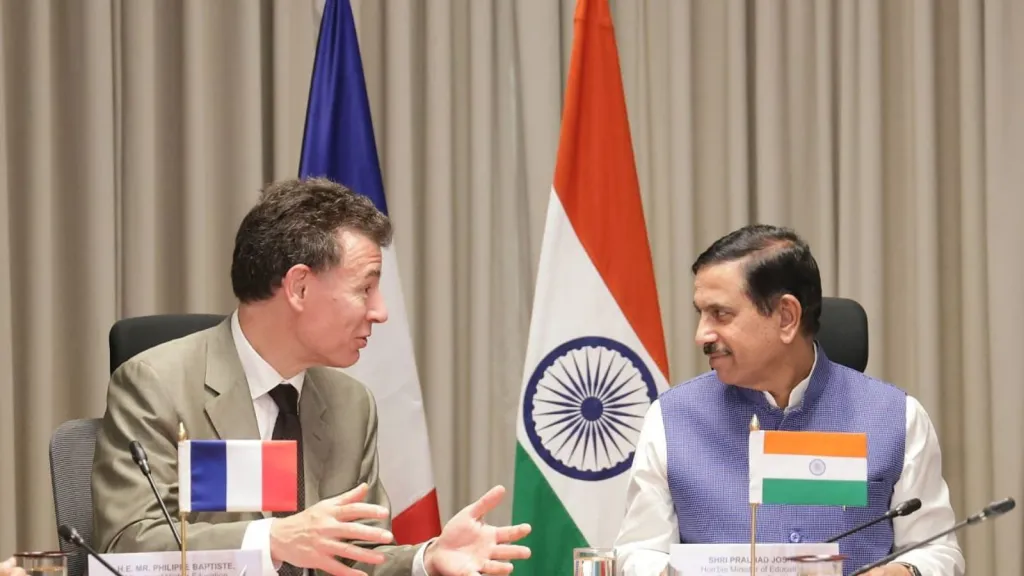
Union Education Minister Dharmendra Pradhan highlighted India’s growing stature as a global innovation hub while addressing the concluding session of the Bharat Innovates Deep-Tech Pre-Summit held at Indian Institute of Technology Bombay. During the event, the minister engaged in roundtable discussions with investors, industry leaders, and academic experts. He noted that the pre-summit serves as a precursor to Bharat Innovates 2026, scheduled to take place in Nice. The discussions focused on advancing deep-tech innovation, strengthening collaboration between academia and industry, and enhancing India’s startup ecosystem. Pradhan emphasised the importance of sustained funding for emerging ventures to help them scale, foster innovation, and promote research-driven entrepreneurship. He reiterated that Bharat Innovates aims to showcase India’s research and development capabilities on the global stage while facilitating international collaborations and unlocking investment opportunities. Underscoring India’s potential, he stated that the country is well-positioned to develop scalable and cost-effective solutions not only for domestic needs but also for the Global South. He described the initiative as a dynamic platform that brings together ideas, talent, and resources to accelerate innovation and deepen industry-academia partnerships. On the sidelines of the summit, Pradhan chaired a roundtable attended by around 175 investors and industry stakeholders. He also interacted with innovators working across key sectors such as energy, climate and sustainability, semiconductors, space and defence, healthcare, biotechnology, advanced computing, mobility, and smart cities. The pre-summit saw participation from 137 deep-tech startups selected from over 1,186 applications across the country. These startups showcased innovations in areas including artificial intelligence, advanced materials, clean technology, and next-generation manufacturing, drawing strong interest from investors. The event also enabled meaningful engagement between startups, venture capital firms, and industry representatives, paving the way for collaboration, commercialisation, and global expansion. Prominent dignitaries present included K. Radhakrishnan, Vineet Joshi, Abhay Karandikar, and Shireesh Kedare. Reaffirming the government’s commitment to innovation, Pradhan stressed the need to translate research ideas into market-ready solutions that create real-world impact. He expressed confidence that the innovations showcased at the pre-summit would significantly contribute to strengthening India’s position as a global leader in technology and entrepreneurship. The Bharat Innovates Deep-Tech Pre-Summit marks an important milestone in India’s innovation journey, with selected startups set to represent the country’s deep-tech ecosystem at the international event in France in 2026. Source: DD News 

India Emerging as Global Innovation Powerhouse, Says Dharmendra Pradhan at Bharat Innovates Pre-Summit Read More »

Rajnath Singh Unveils 100 New Sainik Schools, Boosts NCC Strength to 20 Lakh Cadets

Rajnath Singh has announced a major expansion of India’s military-style education ecosystem, revealing plans to establish 100 new Sainik Schools under a public-private partnership (PPP) model. The announcement was made during the Diamond Jubilee celebrations of Sainik School Ghorakhal. In a parallel move, the Defence Minister also confirmed that the strength of the National Cadet Corps (NCC) will be increased from 17 lakh to 20 lakh cadets. This expansion aims to bring an additional three lakh युवाओं into a structured framework that emphasizes discipline, leadership, and civic responsibility. Highlighting the vision behind the decision, Singh noted that the expansion is not merely about numbers but about shaping future citizens equipped with strong values essential for nation-building. He further emphasized that Sainik Schools are not limited to preparing students for armed forces careers. Instead, they play a broader role in nurturing leadership qualities, resilience, and a sense of responsibility that can benefit multiple sectors. A key highlight of his address was the growing inclusion of girls in Sainik Schools. Singh praised the performance of girl cadets, stating that their achievements have effectively dispelled any doubts about their capabilities. Reinforcing the message of gender equality, he asserted that daughters are excelling alongside sons across all fields. The announcements reflect a continued push by the government to strengthen youth development initiatives while fostering leadership and inclusivity at the grassroots level. Source: PTI  

Rajnath Singh Unveils 100 New Sainik Schools, Boosts NCC Strength to 20 Lakh Cadets Read More »