ArdorComm Media Group

Monday, April 13, 2026 5:41 PM

Media Entertainment & Art Community

India to Face Australia in Dubai Semi-Final; New Zealand to Meet South Africa in Lahore
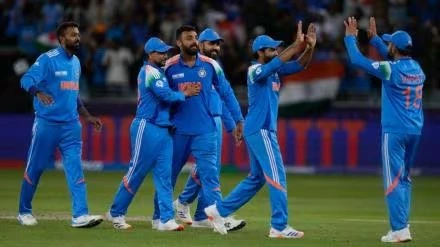
India will take on Australia in the first semi-final of the Champions Trophy in Dubai on Tuesday after securing a 44-run victory over New Zealand in their final group-stage match. Meanwhile, New Zealand will travel to Lahore to face South Africa in the second semi-final on Wednesday. A complex scheduling situation has resulted in logistical challenges for some teams. Both Australia and South Africa had initially flown to Dubai in preparation for the knockouts. However, South Africa will now have to return to Lahore for their semi-final match against New Zealand. An ICC official stated that the decision to keep Australia in Dubai was made to provide them with maximum preparation time for the semi-final on March 4. The tournament schedule was impacted by India’s refusal to play any of their matches in Pakistan. As a result, their semi-final was pre-determined to be held in Dubai, regardless of their standing in Group A. The PCB had earlier attempted to convince India to play in Lahore, but the BCCI cited a lack of government approval for travel to Pakistan. New Zealand is set to fly to Lahore early Monday morning, while South Africa will return to Pakistan later in the day after spending roughly 36 hours in Dubai. Following India’s dominant group-stage performance, captain Rohit Sharma emphasized the importance of momentum heading into the knockout stage. “You try to win every game and correct mistakes quickly,” Rohit said. “Australia has a rich history in ICC tournaments, but we’ll focus on our game and look forward to the contest.”

India to Face Australia in Dubai Semi-Final; New Zealand to Meet South Africa in Lahore Read More »
White House to Control Press Access to Trump, Breaking Long-Standing Tradition

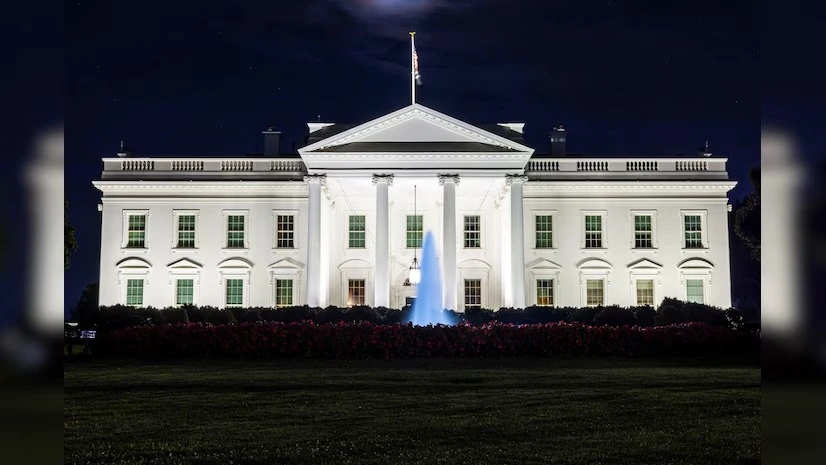
The White House announced on Tuesday that its officials will now decide which news outlets can regularly cover President Donald Trump up close, marking a significant departure from a century-old tradition where an independent press pool held the president accountable on behalf of the American public. The move, alongside the government’s arguments in a federal lawsuit filed by The Associated Press over media access, has sparked concerns among free speech advocates and journalists. Critics argue that it represents an unprecedented attempt to control coverage of the presidency, potentially limiting transparency and press freedom. White House Press Secretary Karoline Leavitt defended the decision, stating that the changes aim to modernize the press pool by rotating traditional outlets and incorporating streaming services. She framed the shift as a way to enhance inclusivity and restore access to the American people who elected Trump. However, media experts warn that allowing the president to selectively choose coverage raises serious First Amendment concerns. Three major wire services that distribute news globally criticized the decision, emphasizing that restricting press access could hinder the dissemination of reliable information about the U.S. president. Free speech advocates have also voiced alarm, warning that such control over media access sets a dangerous precedent for democracy. The announcement adds to growing tensions between the Trump administration and the press, with concerns that limiting access could undermine journalistic independence and public accountability. Source: Business Standard

White House to Control Press Access to Trump, Breaking Long-Standing Tradition Read More »

India’s Got Latent Controversy: Govt Urges OTT, Social Media to Follow Regulations

Amid the controversy surrounding remarks made by YouTuber and podcaster Ranveer Allahbadia on comedian Samay Raina’s YouTube show India’s Got Latent, the Ministry of Information and Broadcasting (MIB) has reiterated the importance of adhering to the Information Technology (IT) Rules, 2021. According to a Livemint report, the MIB has advised OTT platforms and social media networks to ensure compliance with content regulations, particularly regarding age-based classifications. The ministry emphasized self-regulation and the need for strict adherence to guidelines for content rated “A”, aiming to protect children from exposure to inappropriate material. Government’s Advisory on OTT and Social Media Following public backlash over Allahbadia’s comments regarding parents and sex, the MIB issued an official advisory, marking the second reminder in two months on content regulation. The ministry highlighted concerns raised by Members of Parliament, statutory bodies, and the general public over the alleged spread of obscene and vulgar content on digital platforms. The advisory stated: “OTT platforms must comply with applicable laws and the Code of Ethics under IT Rules, 2021, particularly in maintaining age-based content classification. Self-regulatory bodies of these platforms should proactively take action against violations of the Code of Ethics.” Parliament & Supreme Court’s Response The issue has also reached the Parliamentary Standing Committee on Information Technology and Communications, which expressed concerns about the lack of proper regulation of digital content. Lawmakers have called for stricter enforcement of IT laws to prevent the spread of explicit material. Meanwhile, the Supreme Court weighed in on the matter while hearing Allahbadia’s bail plea. With multiple FIRs filed against him across states for obscenity, the top court granted interim protection from arrest but issued strong warnings regarding online content moderation. The Supreme Court observed: Social media influencers must be mindful of their societal impact. Popularity does not grant immunity from accountability. Freedom of speech has limitations and does not justify inappropriate remarks. A bench of judges remarked: “Would anyone find such language acceptable in any setting? He is insulting people, including parents. His mindset, reflected in his words, is deeply troubling.” The court also hinted at government inaction in regulating digital platforms, stating: “If the government does not take action, we will step in. There is a regulatory vacuum that needs to be addressed.” With growing scrutiny, the controversy has reignited debates over freedom of expression, content moderation, and government intervention in digital media.

India’s Got Latent Controversy: Govt Urges OTT, Social Media to Follow Regulations Read More »

Supreme Court Stresses Caution in Media Reporting While Quashing Defamation Case

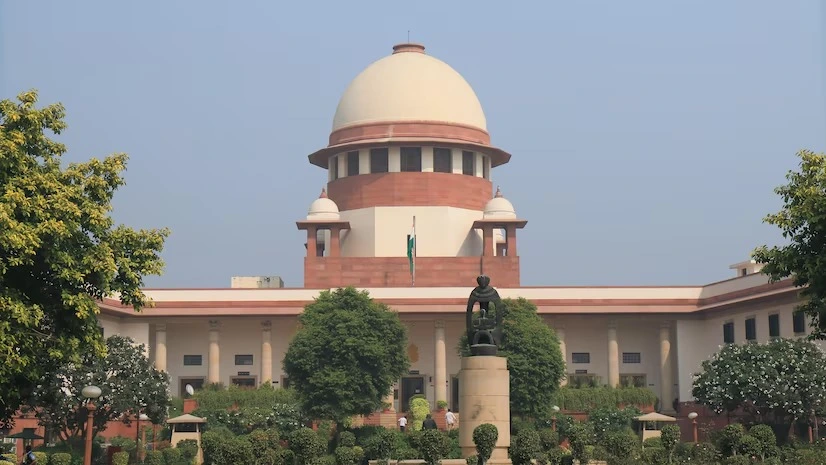
The Supreme Court of India has emphasized that media professionals, especially those in key positions, must exercise utmost caution and responsibility before publishing any statements, news, or opinions. The court underscored the significant influence of the press in shaping public sentiment while also affirming the paramount nature of the right to freedom of speech and expression under Article 19(1)(a) of the Constitution. A bench comprising Justices J B Pardiwala and R Mahadevan made these observations while quashing a defamation case against the editorial director and journalists of the Times of India. The case stemmed from an article questioning the authenticity of paintings auctioned by Bid & Hammer – Fine Art Auctioneers. The top court noted procedural irregularities in the magistrate’s summoning order and ruled that the complainant failed to provide sufficient evidence that the article had harmed its reputation. The complainant had alleged that the publication fostered unjustified suspicion about the authenticity of its auctioned artworks, affecting public perception. Quoting English writer Edward Bulwer-Lytton’s famous phrase, “The pen is mightier than the sword,” the court highlighted the power of media and the necessity for accuracy and fairness in reporting. It noted that while journalism plays a crucial role in public discourse, incorrect or misleading reporting can have far-reaching consequences on the reputation of individuals and institutions. The Supreme Court concluded that remanding the case for further examination of witnesses would serve no useful purpose, as over a decade had passed since the publication, and the auction had already been completed. This verdict reaffirms the delicate balance between press freedom and responsible journalism, ensuring that while media remains a pillar of democracy, it must also uphold principles of fairness and credibility.

Supreme Court Stresses Caution in Media Reporting While Quashing Defamation Case Read More »

White House Bars Associated Press from Oval Office, Air Force One Over Gulf of Mexico Naming Dispute

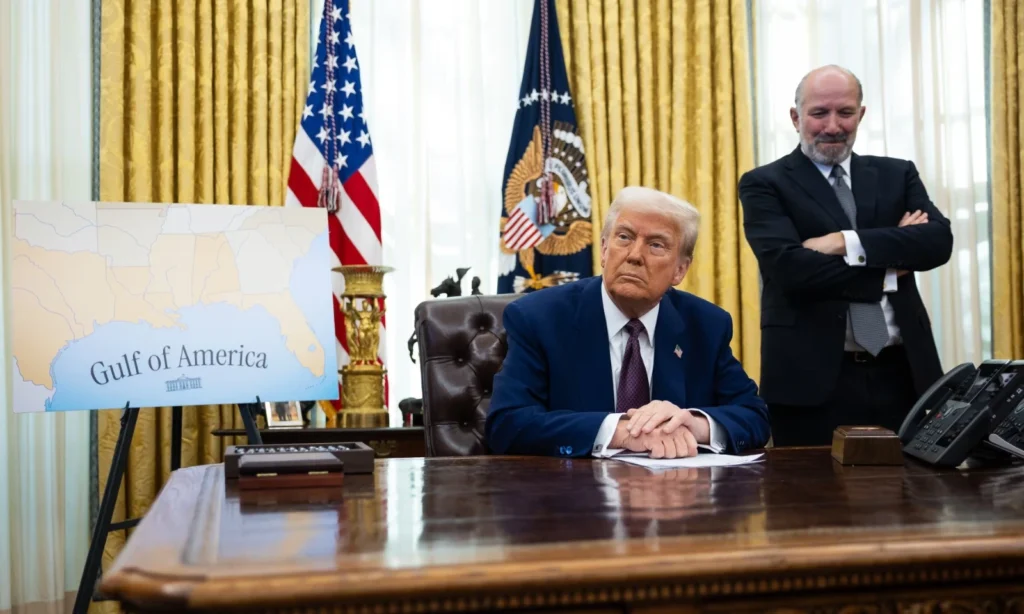
The White House has indefinitely blocked Associated Press (AP) journalists from accessing the Oval Office and Air Force One, citing the news agency’s refusal to adopt the Gulf of America as the official name for the Gulf of Mexico. White House Deputy Chief of Staff Taylor Budowich announced the decision on X, stating, “The Associated Press continues to ignore the lawful geographic name change of the Gulf of America. This decision is not just divisive, but it also exposes the AP’s commitment to misinformation.” Budowich further accused the 175-year-old news agency—whose style guide is widely used by global journalists—of “irresponsible and dishonest reporting.” While AP reporters and photographers will retain credentials to the White House complex, they will be barred from select events, including executive order signings and presidential travel on Air Force One. On Friday, an AP journalist was blocked from attending an Oval Office event, with a White House official reportedly telling them, “No, sorry,” when they attempted to enter. The New York Times has condemned the move, calling it “a repeated act of retribution” against press freedom. AP’s Executive Editor, Julie Pace, described the White House’s actions as an attempt to “punish” independent journalism and a “clear violation” of the First Amendment. The controversy stems from Trump’s unilateral decision to rename the Gulf of Mexico to Gulf of America—a change that only holds authority within U.S. federal documents. In response, the AP released a statement confirming it would continue using “Gulf of Mexico” in its reporting. The ban on AP journalists could significantly impact White House coverage, as the agency provides news to numerous local and national outlets that lack dedicated Washington correspondents. Critics argue that Trump’s move sets a dangerous precedent, while his supporters view it as a stand against biased media. Source: Guardian

White House Bars Associated Press from Oval Office, Air Force One Over Gulf of Mexico Naming Dispute Read More »

Vir Das Slams Mainstream Media Amid Ranveer Allahbadia Controversy

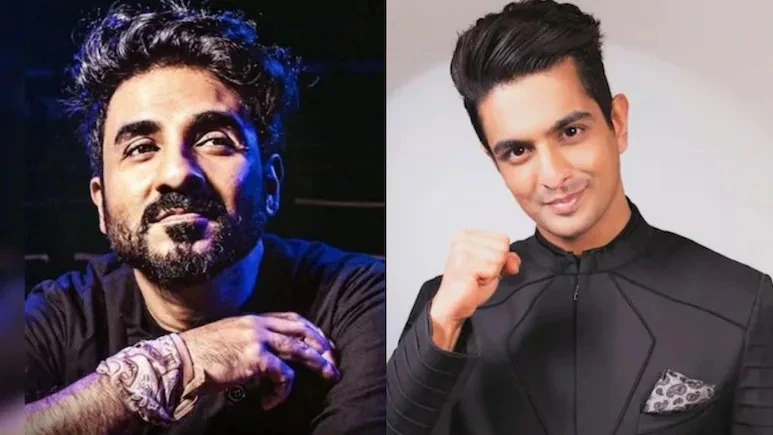
New Delhi, February 12: Comedian Vir Das has weighed in on the controversy surrounding the roast show India’s Got Latent, where guest judge Ranveer Allahbadia sparked outrage with a controversial question posed to a contestant. The show, featuring Samay Raina, Jaspreet Singh, Apoorva Makhija, and Ashish Chanchlani, has drawn widespread criticism, leading to intervention from the National Commission for Women (NCW) and a possible parliamentary panel inquiry. The controversy erupted after Allahbadia, popularly known as BeerBiceps, asked a female contestant: “Would you rather watch your parents have sex every day for the rest of your life or join in once and stop it forever?” The remark led to backlash from the public and politicians, prompting the NCW to summon all key figures involved, including the show’s producers, Tushar Poojari and Saurabh Bothra, for a hearing on February 17 in New Delhi. Vir Das Criticizes Media’s Role In a statement, Vir Das addressed the debate over comedic standards, stating that a comedian must evolve based on audience feedback. However, he took a sharp dig at traditional media, accusing it of using the controversy to attack new digital platforms. “We are watching a bunch of irrelevant mainstream media anchors bordering extinction trying to take down new media that gets millions more views, longer interviews, and far more impact at a fraction of the cost,” Das wrote. He further urged audiences to question journalism standards, stating that while comedy is being debated, the media should also be scrutinized for its priorities. Meanwhile, the NCW condemned the remarks as vulgar and offensive, citing a violation of dignity and respect. The commission has mandated the in-person appearance of all involved parties on February 17 at 12 PM at its New Delhi office. With growing political and public scrutiny, the controversy surrounding India’s Got Latent continues to escalate.

Vir Das Slams Mainstream Media Amid Ranveer Allahbadia Controversy Read More »

Pentagon Revamps Press Corps Workspace, Favoring Pro-Trump Outlets

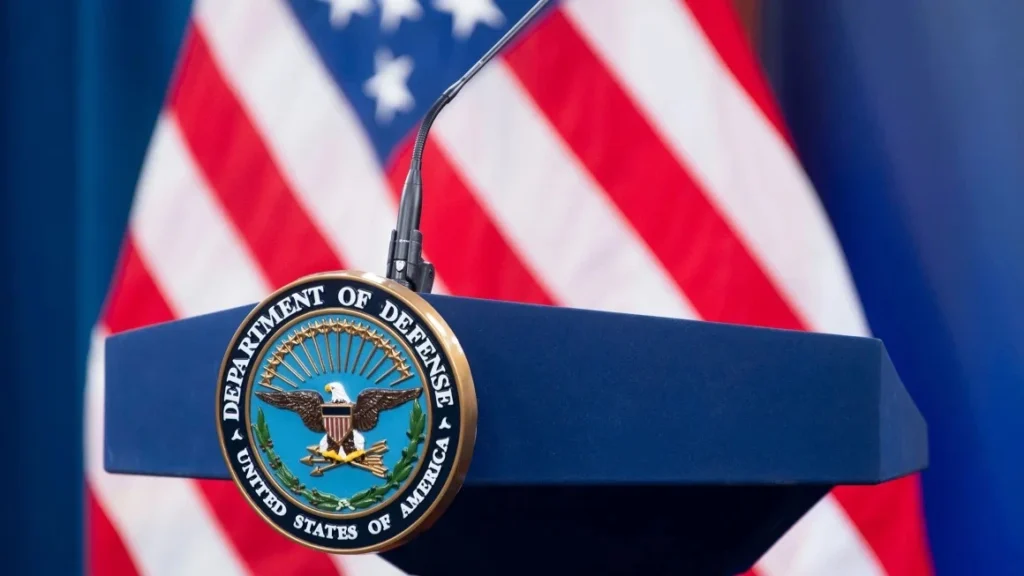
The Pentagon has announced a controversial “annual media rotation program”, set to take effect on February 14, that will replace major mainstream outlets with smaller, pro-Trump media organizations in the Pentagon press corps workspace. Key Changes: NBC News → One America News Network (OANN) (TV) National Public Radio (NPR) → Breitbart (Radio) The New York Times → New York Post (Print) Politico → HuffPost (Online) While the move aligns with the Trump administration’s push to disrupt media norms, it has sparked backlash from journalists and press freedom advocates. NBC News expressed “disappointment”, while the National Press Club raised concerns over “press restrictions and transparency.” Critics argue that Breitbart lacks a significant radio presence, and One America News, which has faced lawsuits over false election claims, does not even subscribe to Nielsen ratings. Despite losing their office space, the displaced outlets will retain full press access to Pentagon briefings and travel opportunities. However, press members fear that removing workspaces could limit in-depth coverage of Defense Secretary Pete Hegseth’s tenure. Reaction & Impact: Kevin Baron, a former Pentagon Press Association VP, called it “the erasure of journalism at the Pentagon.” The National Press Club is demanding greater transparency on the selection process. Some view this as an attempt to sideline critical journalism while promoting pro-Trump media voices. The decision is already facing pushback, and further challenges from media organizations are expected. Source: CNN

Pentagon Revamps Press Corps Workspace, Favoring Pro-Trump Outlets Read More »

Donald Trump Alleges USAID Corruption, Claims Billions Stolen for Media Payoffs

Former U.S. President Donald Trump has made an explosive claim that billions of dollars have been stolen from USAID and funneled to news media outlets as a “payoff” for favorable coverage of Democrats. Posting on Truth Social, Trump singled out Politico, alleging it received $8 million and questioning whether other major outlets, including The New York Times, were also beneficiaries. Politico’s leadership swiftly denied the accusation in a memo to staff, stating that the publication has “never been a beneficiary of government programs or subsidies—not one cent, ever, in 18 years.” The controversy arises amid Trump’s sweeping government overhaul, which has included a 90-day freeze on foreign aid, mass furloughs at USAID, and a shutdown of thousands of global programs. Federal worker unions have raised concerns over widespread layoffs, with at least 20,000 employees reportedly accepting a buyout offer from the administration. Adding to the upheaval, Trump has appointed Elon Musk to spearhead the restructuring of federal agencies, triggering protests and uncertainty in Washington.

Donald Trump Alleges USAID Corruption, Claims Billions Stolen for Media Payoffs Read More »

Parliamentary Committee to Review Media Issues: Fake News, Sensationalism, and Declining Newspaper Readership

A parliamentary committee meeting on Friday is set to address various pressing media concerns, including “rampant” paid news, fake news, and the rise of sensationalism in TV channels. The Standing Committee on Communications and Information Technology, led by BJP MP Nishikant Dubey, will review the implementation of media laws and discuss factors impacting the media landscape. Key issues likely to be raised include the disproportionate focus on crime and celebrity news, which often comes at the expense of serious, impactful reporting. Sources say that media trials, which shape public opinion and influence legal outcomes, will also be discussed. Additionally, the committee may highlight the decline of traditional newspapers, particularly in the face of digital disruption and declining readership. The meeting will address concerns over TV debates, which often devolve into shouting matches, as well as conflicts of interest within media ownership, journalists, and political entities. Such conflicts, the sources noted, undermine the credibility of news reporting and compromise ethical standards due to a lack of strong regulatory mechanisms. The committee may also bring up the long-drawn legal battles that journalists and media houses face, which discourage investigative reporting. Financial struggles of regional and vernacular media outlets, as well as the havoc caused by fake news during elections, are expected to be major points of discussion. Additionally, the committee is likely to examine the impact of foreign-owned social media giants and the need for regulation to prevent harm to society, political leaders, and even the country. Key figures, including the Information and Broadcasting Secretary, Prasar Bharti CEO, Press Registrar General, and Press Council of India Chairperson, are expected to appear before the panel. Source: Telegraph India

Parliamentary Committee to Review Media Issues: Fake News, Sensationalism, and Declining Newspaper Readership Read More »