ArdorComm Media Group

Monday, March 16, 2026 10:06 AM

Education Community

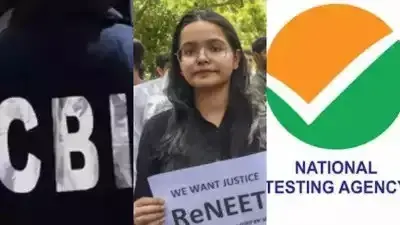
CBI Makes First Arrests in NEET-UG Paper Leak Case, Two Detained in Patna

Blog on Education

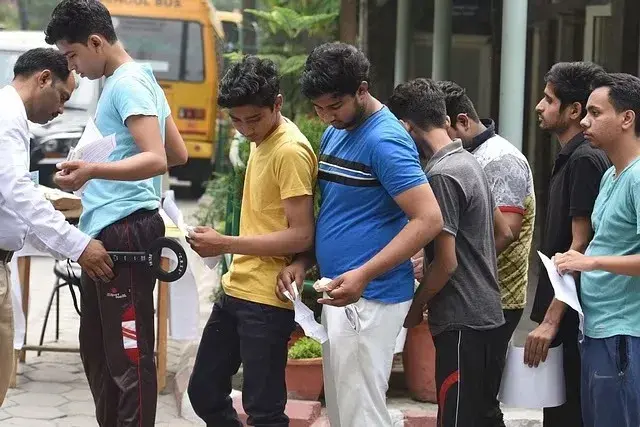
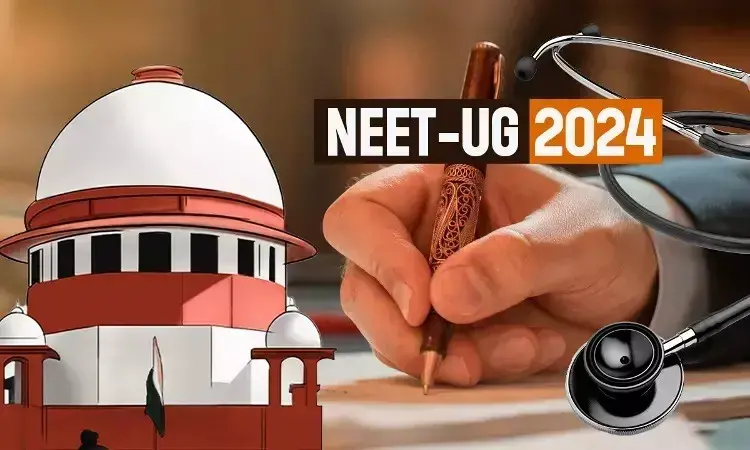
The Central Bureau of Investigation (CBI) has made the first arrests in the NEET-UG paper leak case, detaining two individuals from Patna. The arrests, which took place on Thursday, involve Manish Kumar and Ashutosh Kumar, who allegedly provided safe premises for aspirants before the examination. Here, the candidates were given leaked papers and answer keys, according to officials. The CBI has registered six FIRs related to the NEET paper leak case. The NEET-UG, conducted by the National Testing Agency (NTA), is an important examination for admissions to MBBS, BDS, AYUSH, and other related courses in government and private institutions across India. This year’s examination was held on May 5, 2024, at 4,750 centers in 571 cities, including 14 abroad, with over 23 lakh candidates appearing for the test. The first FIR by the CBI was registered on Sunday, just a day after the Ministry of Education announced that it would hand over the investigation into the alleged irregularities in the exam’s conduct to the central agency. The demand for a CBI probe was raised by a section of protesting students. The CBI’s swift action in arresting the two individuals from Patna marks a significant development in the ongoing investigation. The agency is expected to continue its probe to identify and apprehend other culprits involved in the paper leak scandal.  

CBI Makes First Arrests in NEET-UG Paper Leak Case, Two Detained in Patna Read More »

Himachal Government to Roll Out Early Childhood Care Scheme

The Himachal Pradesh government, led by Chief Minister Sukhvinder Singh Sukhu, is set to launch a comprehensive early childhood care scheme aimed at the holistic development of children aged between three and six years. This initiative underscores the state government’s dedication to providing quality early childhood education and nurturing young minds. Chief Minister Sukhu announced on Thursday that the education department will implement a combination of all four Early Childhood Care and Education (ECCE) models recommended in the National Education Policy, 2020. “This initiative highlights the state government’s commitment to providing quality early childhood education and ensuring the holistic development and nurturing of the young minds in Himachal,” he said in a statement. Implementation Strategy The ECCE models to be implemented include: Standalone anganwadis. Anganwadis co-located with primary schools. Pre-primary schools covering children aged up to five or six co-located with existing primary schools. Standalone pre-primary schools. Currently, the state government runs 6,297 pre-primary sections in primary schools, catering to around 60,000 children. Additionally, there are 2,377 anganwadis co-located with these primary schools. Chief Minister Sukhu emphasized that this scheme will ensure the overall growth and development of young children, laying a strong foundation for their future education and well-being. The government’s approach aims to integrate early childhood education seamlessly into the existing educational framework, providing a robust and supportive environment for the state’s youngest learners.

Himachal Government to Roll Out Early Childhood Care Scheme Read More »

Uttar Pradesh’s Aided Schools to Embrace Modern Education System

The Yogi Adityanath-led government in Uttar Pradesh has launched an ambitious project to modernize the state’s aided schools, connecting over 400 institutions to a new online platform via a mobile app. This initiative, part of Chief Minister Yogi Adityanath’s vision for educational development, aims to rejuvenate the educational infrastructure and management across the state. App Development and Implementation The Uttar Pradesh Electronics Corporation Limited (UPLC) has been tasked by the Social Welfare Department to develop this app. The UPLC is in the process of selecting empanelled companies through an e-tender to create the app. The chosen agency will conduct a detailed project study based on departmental feedback and compile a System Requirements Specification (SRS). Key Features of the App The app will offer a range of features designed to streamline and enhance school management, including: Registration Modules: For students, staff, and school infrastructure. Management Information System (MIS): To streamline data management. Advanced Security Features: Including login and access controls, user role definitions, and permission settings. Scalability and Analytics: To handle large volumes of data efficiently. Hosting and Maintenance: With 16 GB RAM hosting, 1 TB storage, and annual maintenance plans. Comprehensive Database and Training The app will track essential information for over 60,000 students and provide detailed records for staff and school infrastructure. In alignment with the Computer Emergency Response Team (CERT) guidelines, the implementing agency will also provide a three-day official training for staff to ensure smooth operation and management. Benefits and Vision This project, spearheaded by Chief Minister Yogi Adityanath, promises significant improvements in the management and operational efficiency of aided schools in Uttar Pradesh. The integration of modern technology into the education system marks a critical step towards enhancing the quality of education across the state, making it more efficient and transparent.

Uttar Pradesh’s Aided Schools to Embrace Modern Education System Read More »

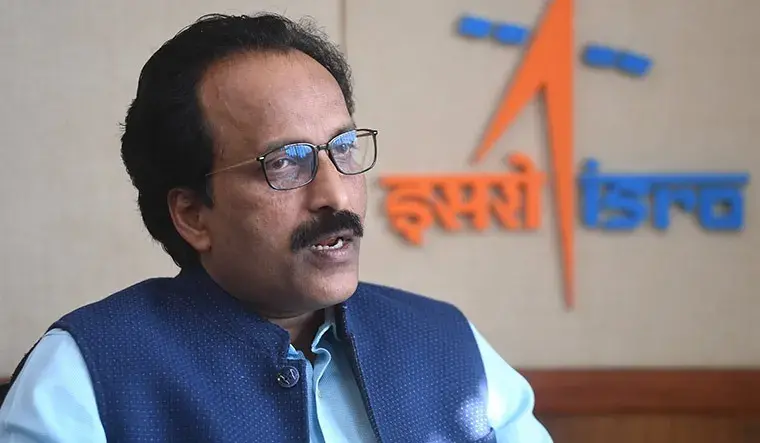
Who is Subodh Kumar Singh, NTA Chief Removed After NEET, NET ‘Leaks’?

Subodh Kumar Singh, the chief of the National Testing Agency (NTA), was removed from his position on Saturday night following allegations of irregularities in the NEET-UG and UGC-NET exams. Singh has been placed on compulsory wait in the Department of Personnel and Training, while retired 1985 batch officer Pradeep Singh Karola has been appointed as the interim chief until a permanent replacement is named. Over the past two months, the NTA has faced scrutiny over alleged paper leaks and irregularities in two of India’s major competitive examinations. Subodh Kumar Singh, who has maintained a low profile throughout his career, found himself at the center of this controversy. A native of Uttar Pradesh, Singh holds a Bachelor’s and Master’s degree in engineering from the Indian Institute of Technology Roorkee and an MBA from the Indira Gandhi National Open University (IGNOU), New Delhi. Before his appointment as NTA chief in June 2023, Singh served as the additional secretary in the Department of Food and Public Distribution under the Union Ministry of Consumer Affairs, Food and Public Distribution. Singh’s career includes nine years at the Chhattisgarh Secretariat from 2009 to 2018, where he worked under the state’s three-time BJP Chief Minister Raman Singh. He held various positions, including joint secretary, deputy secretary in personnel and general administration, special secretary, and director for personnel management. He also served as the secretary to the Chief Minister, managing director of the state’s electricity distribution department, and secretary of the mineral resources and industries and commerce department. During his tenure in Chhattisgarh, Singh was credited with significant achievements such as digitizing the Chief Minister’s Office (CMO), transforming the state’s mineral sector, and improving road connectivity in Naxal-affected areas. He also played a key role in developing airports in Jagdalpur, Bilaspur, and Ambikapur, and expanding the state’s rail network. Despite being perceived as close to former Chief Minister Raman Singh, Singh was appreciated by leaders across political lines for his work. His tenure remained free from major controversies, even amidst corruption allegations against Raman Singh’s government. In recognition of his contributions, Singh received a national award in 2002 from the Ministry of Rural Development for excellence in implementing the Mahatma Gandhi National Rural Employment Guarantee Act. In 2019, he received another national award for digital transformation and transparency in mineral auctioning. Colleagues describe Singh as an “honest and straightforward” officer. A retired colleague from the CMO referred to him as “a gem of an officer and an asset to the government,” calling for a thorough inquiry into the current allegations against him.

Who is Subodh Kumar Singh, NTA Chief Removed After NEET, NET ‘Leaks’? Read More »

NCERT Introduces ‘Criticism of Secularism’ in Textbook: Parties Disregard Equality, Prioritise Minority

The National Council of Educational Research and Training (NCERT) has revised the Class XI political science textbook, incorporating a critical perspective on secularism in India. This new content suggests that political parties prioritize minority interests for vote bank politics, leading to “minority appeasement.” Key Changes: Previous Content: The earlier edition emphasized that there is “little evidence” suggesting vote bank politics favors minorities and stated that such politics should only be considered wrong if it results in injustice. It claimed that all political parties utilize vote banks without inherently troubling implications unless injustice is created. Revised Content: The new version states that while vote bank politics might theoretically be harmless, it distorts electoral politics by mobilizing social groups to vote en masse for specific parties, thus prioritizing short-term gains over long-term development. It highlights that competitive vote bank politics can exacerbate social divisions and portrays different groups as rivals. The revision asserts that this form of politics is associated with minority appeasement, leading to the marginalization of minority groups and preventing social reforms. Justification for Changes: The NCERT explained that the previous version failed to adequately define vote bank politics and appeared to justify it. The revised content aims to provide a relevant criticism of Indian secularism, addressing perceived anomalies in the earlier text. These revisions are part of NCERT’s ongoing efforts to update the curriculum but are separate from the broader overhaul set to be completed by the 2025-26 academic session. This ongoing process, initiated in September 2021, involves comprehensive inputs from states, constitutional bodies, and expert groups.

NCERT Introduces ‘Criticism of Secularism’ in Textbook: Parties Disregard Equality, Prioritise Minority Read More »

PM Modi to Inaugurate 1600-Year-Old Nalanda University’s New Campus, Calls It ‘Very Special Day for Education Sector’

Prime Minister Narendra Modi is set to inaugurate the new campus of Nalanda University in Bihar’s Rajgir. In a post on X (formerly Twitter), he expressed his happiness on the occasion, calling it a “very special day for our education sector.” He highlighted Nalanda’s “strong connection with our glorious past” and its role in catering to the educational needs of the youth. PM Modi wrote, “It’s a very special day for our education sector. At around 10:30 AM today, the new campus of Nalanda University will be inaugurated at Rajgir. Nalanda has a strong connection with our glorious past. This university will surely go a long way in catering to the educational needs of the youth.” The university is a collaboration between India and East Asia Summit (EAS) countries, with deep historical roots. The original Nalanda University, established around 1600 years ago, is considered one of the first residential universities in the world. According to a PMO release, the Prime Minister will visit the Ruins of Nalanda at around 9:45 AM. The ruins were declared a UN Heritage Site in 2016. At around 10:30 AM, he will inaugurate the new campus and address the gathering on the occasion. The ceremony will be attended by several eminent people, including heads of missions from 17 countries. The new campus features two academic blocks with 40 classrooms, accommodating around 1900 students. It has two auditoriums with a capacity of 300 seats each, a student hostel for around 550 students, and various other facilities, including an international centre, an amphitheatre for up to 2000 individuals, a faculty club, and a sports complex. The campus is designed as a ‘Net Zero’ Green Campus, self-sustaining with solar plants, domestic and drinking water treatment plants, a water recycling plant, 100 acres of water bodies, and other environment-friendly facilities.

PM Modi to Inaugurate 1600-Year-Old Nalanda University’s New Campus, Calls It ‘Very Special Day for Education Sector’ Read More »

NEET UG Result Row: Bihar Police Find Evidence Suggesting Paper Leak

The Economic Offences Unit (EOU) in Bihar, investigating allegations of a leaked National Eligibility-cum-Entrance Test (NEET) paper, has found evidence suggesting that some students knew the questions before the May 5 exam, according to media reports on Sunday, June 16. What Did the Police Find? Media reports, citing EOU officials, stated that 13 individuals, including four students, have been arrested for their suspected involvement in the alleged leak. Some of those arrested are also accused of receiving the question papers ahead of the test. Additional Director General of Police, EOU, N H Khan, informed the Indian Express that they had queried the National Testing Agency (NTA), which organizes NEET, and the investigation is “very much suggestive of a paper leak.” According to the Times of India, EOU Deputy Inspector General (DIG) Manavjeet Singh Dhillon mentioned that a list of the 13 people was recovered from a “safe house” on the outskirts of Patna. The police believe that approximately 30 medical aspirants were summoned by what they termed the “exam mafia” to receive questions and answers before the exam. Dhillon claimed that four of the arrested candidates confessed during interrogation that the questions they received at the “safe house” on May 4 were identical to those on the exam, according to TOI. Education Minister Denies Allegations of Paper Leak Amid media reports and nationwide protests by students, Indian Education Minister Dharmendra Pradhan stated on Friday, June 14, that issues were observed in six of the over 4,700 centers where the exam was conducted. He asserted that NEET was otherwise conducted satisfactorily across the country. Pradhan denied allegations of corruption within the NTA and the paper leak but added that if proven, “no one will be spared.” He assured that every aspect is being investigated, and those responsible for any lapses will be held accountable. Protests and Controversy The NEET exam, held on May 5 across 4,750 centers in India, saw participation from approximately 2.4 million candidates. The results, initially expected on June 14, were declared 10 days early as the evaluation was completed ahead of schedule. The announcement of results sparked outrage and protests due to alleged irregularities, as 67 students scored a perfect 720. Since then, students across India have been demanding a re-examination.  

NEET UG Result Row: Bihar Police Find Evidence Suggesting Paper Leak Read More »

Universities Can Now Take Admissions Twice A Year: UGC Chairman

Indian universities and higher education institutions (HEIs) will now be allowed to conduct admissions twice a year, akin to foreign universities, announced UGC chief Jagadesh Kumar. The two admission cycles will be scheduled for July-August and January-February, starting from the 2024-25 academic session, according to a report by news agency PTI. “If Indian universities can offer admission twice a year, it will benefit many students such as those who missed admission to a university in the July-August session due to a delay in the announcement of board results, health issues, or personal reasons,” Kumar told PTI. “Biannual university admissions will help students maintain motivation since they do not have to wait one full year to be admitted if they miss admission in the current cycle. With biannual admissions in place, industries can also do their campus recruitment twice a year, improving employment opportunities for the graduates,” he added. The UGC chief elaborated that biannual admissions will facilitate higher education institutes (HEIs) in better planning their resource allocation, including faculty, labs, classrooms, and support services. This streamlined approach is expected to enhance the operational efficiency of universities. “Universities worldwide already follow a biannual admission system. If Indian HEIs adopt the biannual admission cycle, our HEIs can enhance their international collaborations and student exchanges. As a result, our global competitiveness will improve, and we will align with the global educational standards,” Kumar said. “If HEIs adopt biannual admissions, they need to work on administrative intricacies, good planning for increased use of available resources, and providing seamless support systems for the smooth transition of students admitted at dissimilar times of the year. HEIs can maximize the usefulness of biannual admissions only when they sufficiently prepare faculty members, staff, and students for the transition,” he added. Kumar, however, clarified that offering biannual admissions will not be mandatory for universities. HEIs with the necessary infrastructure and teaching faculty can choose to utilize this opportunity at their discretion. “Offering biannual admissions will not be mandatory for the HEIs, it is the flexibility that UGC provides to the HEIs which want to increase their student intake and offer new programs in emerging areas. To be able to admit students twice a year, HEIs must make suitable amendments to their institutional regulations,” he said.

Universities Can Now Take Admissions Twice A Year: UGC Chairman Read More »

CBSE Warns Schools After AI Finds Huge Gap Between Theory and Practical Marks Among 50% of Student Results

The Central Board of Secondary Education (CBSE) has discovered a significant discrepancy between theory and practical marks in certain subjects for 50% or more students in around 500 CBSE-affiliated schools. This finding emerged from the analysis of last year’s results using advanced artificial intelligence (AI) tools. The AI analysis revealed the need for meticulous assessment during practical examinations in schools. As a result, the CBSE has issued an advisory to these schools, urging them to review and enhance their internal assessment procedures. “The aim is to implement a more robust, transparent, and reliable mechanism to ensure that the assessment process is realistic and adds substantial value to the students’ academic journey,” the CBSE advisory stated. This advisory emphasizes the importance of fairness and accuracy in practical examinations, aiming to improve the overall quality of education in CBSE-affiliated institutions.  

CBSE Warns Schools After AI Finds Huge Gap Between Theory and Practical Marks Among 50% of Student Results Read More »

Maharashtra Govt Alleges Injustice to State Students in NEET Exam Results; Seeks Cancellation

The Maharashtra government has demanded the immediate cancellation of last month’s NEET exam results, citing injustice to students from the state. Several aspirants of the National Eligibility-cum-Entrance Test (NEET-UG), conducted on May 5 at 4,750 centers in 571 cities, previously alleged that mark inflation led to a record 67 candidates achieving the top rank, including six from the same exam center in Haryana. The results were declared on June 4. The National Testing Agency (NTA) denied any irregularities, attributing the high scores to changes in NCERT textbooks and grace marks for time lost at exam centers. Maharashtra Medical Education Minister Hasan Mushrif stated, “The NEET exams were probably conducted after taking money. The results are such that no student of Maharashtra will get admission for the MBBS course in government or private colleges in the state.” He mentioned that many parents have approached him regarding the issue and that the state might approach the court for resolution. NEET-UG is the qualifying entrance exam for various medical and dental courses, with over 80,000 MBBS seats available in more than 540 medical colleges across India. Congress leader Priyanka Gandhi Vadra called for an investigation into the alleged irregularities, stating, “First the NEET exam paper was leaked and now the students allege that there has been a scam in its results as well.” Tamil Nadu Chief Minister M K Stalin also criticized NEET, claiming it undermines social justice and federalism. He highlighted issues like question paper leaks, clustering of toppers at specific centers, and mathematically improbable grace marks as major concerns.  

Maharashtra Govt Alleges Injustice to State Students in NEET Exam Results; Seeks Cancellation Read More »