ArdorComm Media Group

Saturday, February 21, 2026 12:54 PM

Education Community

IIT Guwahati promotes the entrepreneurial ecosystem by incubating 42 start-ups

The Technology Incubation Center (TIC) at the Indian Institute of Technology, Guwahati has supported 42 start-up companies that will operate in a multitude of sectors, including robotics, IT, the water and oil industries, biotechnology, machine learning, the internet of things (IoT), renewable energy, home automation, and logistics. These start-ups have been backed by the incubation centre, which strives to give young people and aspiring entrepreneurs a place to develop their unique ideas into workable business plans. The incubation center’s main goals are to improve traditional knowledge, biodiversity, and science and technology. It also provides a platform for entrepreneurship, fosters a research mindset for societal development, and serves as a bridge between academics, technologists, and industry. The Government of India’s Ministry of Micro, Small, and Medium Enterprises (MSME) has authorised and acknowledged the incubation centre at IIT Guwahati. Start-ups may potentially receive grant aid from The Technology Development Board, which is a part of the Indian government’s Ministry of Science and Technology. The incubation centre welcomes candidates from all areas of incubatees/startups and assists them in turning their concepts into profitable companies. By introducing the candidates to a network of faculties, funding organisations like Oil India Limited (OIL) and Numaligarh Refinery Limited (NRL), among others, and other financial institutions like Indian Bank and YES bank, the centre would assist the candidates.

IIT Guwahati promotes the entrepreneurial ecosystem by incubating 42 start-ups Read More »

UNICEF Introduces the Education Mascot “Uni” to Draw Attention to the Learning Crisis Among Underprivileged Children

The United Nations International Children’s Emergency Fund (UNICEF) unveiled a brand-new mascot for global education. The mascot, Uni, which stands for every child’s right to a quality education, will serve as an ambassador for education. The introduction of the new mascot, according to UNICEF, aims to emphasise the value of high-quality education and call attention to the world’s learning crisis. Uni, a blue bag, stands for the optimism that children and their community experience as a result of having access to high-quality education. A simple written story cannot be read and understood by over 70% of children in low- and middle-income nations. According to the organisation, Uni is designed to highlight the existing state of education and motivate activities to help improve it. The Uni mascot, which was created internally by the organisation, has also been produced in life-size by UNICEF. The mascot is six feet tall and covered in a full-body backpack made of bright blue felt and comforting foam. The backpack is similar to the 1.3 million schoolchildren who received the iconic blue UNICEF backpacks last year. “Uni embodies our aspiration that every child has the right to go to school and learn. Every child has a right not only to be in school but to learn in school, acquiring the basic skills that are the foundation for higher learning and higher income levels someday,” according to Paloma Escudero, UNICEF’s global director of communication and advocacy. The Transforming Education Summit will be held in New York on September 16, 17, and 19. UNICEF anticipates that the Uni mascot will contribute to global educational system change. In particular, the crisis of inclusion, equity, quality, and relevance in education is being highlighted by the summit. The future of children and youth around the world is being affected by the issue, which the UN says is sometimes slow-moving and unnoticed.

UNICEF Introduces the Education Mascot “Uni” to Draw Attention to the Learning Crisis Among Underprivileged Children Read More »

BITS Pilani and Coursera collaborate to launch BSc in Computer Science

In partnership with Coursera, the Birla Institute of Technology and Science (BITS), Pilani has introduced an online Bachelor of Science (B.Sc) in Computer Science programme. Beginning today, interested candidates can visit the Coursera website at coursera.org. Starting now, interested applicants can submit an application for the first cohort, which starts in November 2022. The deadline for applications is November 15. Steps to apply for the programme: Step 1: Go to coursera.org, the Coursera website. Step 2: Candidates can find the option for “online degrees” in the top scroll of the homepage. Step 3: Following that, scroll down and select the link for “Computer Science and Engineering Degrees.” Step 4: Candidates can select the link for the BSc Computer Science from BITS on the new page after clicking “show more” on the previous one. Step 5: Select the “apply now” button at the top. Step 6: Complete the form with all the necessary personal information and submit the registration fee, if required. The early application deadline is October 17, and the final application deadline is November 15. The start of classes is set for November 30. It’s interesting that the degree has no entrance exams and is available to students with a variety of backgrounds, including those without a strong foundation in science or considerable mathematics. Anyone who has completed class 12 or its equivalent is eligible to apply. The three-year degree can also be finished in six years by registered candidates. This will give students the freedom to study the programme concurrently with employment or another degree programme. Students can earn the program’s intermediate exit option, a diploma, in about two years.  

BITS Pilani and Coursera collaborate to launch BSc in Computer Science Read More »

Education minister invites US Educational institutes to partner with India for skilling and transformation

Dharmendra Pradhan, the union minister of education, invited US educational institutions to collaborate with India in the fast-changing fields of education and skilling. In order to offer twinning programmes, joint degrees, and dual degree programmes, higher education institutions in both nations should work more closely together academically. “The new National Education Policy (NEP) has lays emphasis on internationalisation of education. I called upon American institutions and companies to partner with India in rapidly-transforming education and skilling landscape. A growing digital economy, aspirational population, a knowledge-based society and policy reforms are creating unprecedented opportunities in India,” Pradhan said. The education minister was present at the India Ideas Summit when the comments were made. The US-India Business Council and the US Chamber of Commerce, International Affairs, South Asia jointly organised the event. Maximizing the Next 75 Years of US-India Prosperity was the event’s theme. “India and the US have similar societies and shared values. Education and Skill development are important pillars of Indo-US relations,” Pradhan said. The minister also urged improved cooperation between the two countries in the fields of research and skill development. India is making significant attempts to reskill, upskill, and skill its youth. If focused training and capacity building are offered in accordance with industry requirements, India’s vast, young, and educated population will be a benefit to any sector worldwide, he continued. India is in a good position, mostly because of its demographic advantage and other skilling initiatives, according to Pradhan. Source: PTI  

Education minister invites US Educational institutes to partner with India for skilling and transformation Read More »

Union Cabinet approves launch of centrally-sponsored PM SHRI Schools

The Cabinet declared on September 7 that it has approved the launch of a new, government sponsored scheme for creating PM SHRI Schools (PM Schools for Rising India). The Center wants to reinforce up to 14,600 schools under the programme in five years, or between 2022 and 2027, for a cost of Rs 27,360 crore. The Cabinet announced that these institutions, which include Kendriya Vidyalayas and Navodaya Vidyalayas, will subsequently become PM SHRI Schools. Minister of Education Dharmendra Pradhan said, “The Union Cabinet has approved the launch of a new scheme for setting up PM-SHRI schools. Over 14,000 schools including Kendriya Vidyalayas and Navodaya Vidyalayas will be strengthened to emerge as PM-SHRI schools.” An objective assessment would be performed for this to ensure that two schools are identified in each Block so that improvements to their educational standards may be achieved. A total of Rs 2 crore would be given to each PM SHRI model school over the course of two years for upgrading, and school authorities will have the discretion to spend up to 40% of the money. With digital learning tools, 3D labs, and vocational education, the PM SHRI model schools, which are anticipated to serve 20 lakh students, would be technology-driven. The schools would also be required to have an emphasis on entrepreneurship. Using a portal, the performance of the schools and the students would be monitored.

Union Cabinet approves launch of centrally-sponsored PM SHRI Schools Read More »

Experts dwell on NEP provisions at a Seminar on Quality Assurance in Higher Education “QAHE-2022” organised at Chitkara University

Accreditation and Quality Assurance Cell at Chitkara University, Punjab organised a National Seminar on Quality Assurance in Higher Education “QAHE-2022”. In this two days event, Education Experts deliberated on National Education Policy with a special focus on Quality Assurance in Higher Education. The event was organised in association with National Assessment and Accreditation Council (NAAC) and Tata Tele Business Services. Eminent speakers in the seminar included Dr. R. K. Goel, Director-IQAC, Punjabi University, Patiala, Prof. (Retd.) L. N. Mittal, Formerly Professor at NITTTR, Chandigarh, Dr. Kawaljeet Singh, Director, University Computer Centre, Punjabi University, Patiala, Dr. Sandhir Sharma, Dean, Chitkara Business School; and Dr. V. K. Jadon, Dean-Academics, CUIET (Applied Engineering), Chitkara University, Punjab. On the occasion a souvenir with 91 research articles received from research scholars and faculty members on the topic “Quality Assurance in Higher Education” was also launched. In total 122 research articles were received and best were shortlisted for publication in this souvenir which will be scrutinised further for publication in the Scopus database. Sharing her views Dr Madhu Chitkara, Pro-Chancellor Chitkara University said that we at Chitkara are always focused on the implementation of the NEP into the modern education system to meet the Industry 5.0 requirements. She gave her valuable insights about quality in higher education. She said that the most effective factor is human capital, expressed in the knowledge, skills, creative abilities, and moral qualities of individuals in society. Higher education institutions are increasingly viewed as economic engines by policy makers and seen as essential for ensuring knowledge production through research and innovation. She also shared her views about quality in higher education. She said that education is now considered as instrument of change, as change is happening quicker than in older times. Chitkara university is always focused on the multidisciplinary research and consultancy and so far university has published 4000+ Scopus articles which have more than 14000 citations. 1800 patents have been applied so far out of 300 patents have been published and 150 granted. On the occasion Dr. Goel discussed the role of accreditation agencies in improving the education system in higher educational institutes and how rankings contribute to imparting quality education and institutional growth. Dr. L.N. Mittal emphasised the role of teachers in improving the teaching-learning process. He suggested ways in which teachers could improve themselves and give their contributions to improving students by encouraging themselves for their career progression. Prof. Jadon discussed the importance of outcome-based education and further he elaborated on the concepts of PO and CO attainment and their importance in today’s education system. Dr. Sandhir Sharma enlightened us on curriculum-aspects, teaching-learning-evaluation, and teaching competency. Dr. Sharma’s explores the role of dialogue during the classroom. Dr. Sharma also explores the linkage between curriculum and accreditation as well as rankings. Dr. Kawaljeet Singh discussed the issues concerning e-Content Development in Online Learning Mode in the context of NEP 2020. All the presentations delivered by the candidates in the seminar were focused on the impact of accreditation agencies on the education system, how the education system transitioned itself to an online education system during COVID ’19, what are the after effects, and how NEP can contribute to strengthening the Indian education system. Chitkara University has been established and managed by passionate academicians with the sole mission of making each and every student “industry ready”. With more than 25,000 students and 1,700 staff from over 100 different countries, the university is proud of the impact that its graduates, life-changing research, and innovative campuses and industry developments have made – both in India and around the world. Chitkara University has been awarded the rating of A+ by the prestigious National Assessment and Accreditation Council (NAAC), which places it among the 5% of higher education institutions (HEIs) in India to be granted such a coveted grade.    

Experts dwell on NEP provisions at a Seminar on Quality Assurance in Higher Education “QAHE-2022” organised at Chitkara University Read More »

Delhi University to offer paid internships to UG, PG students

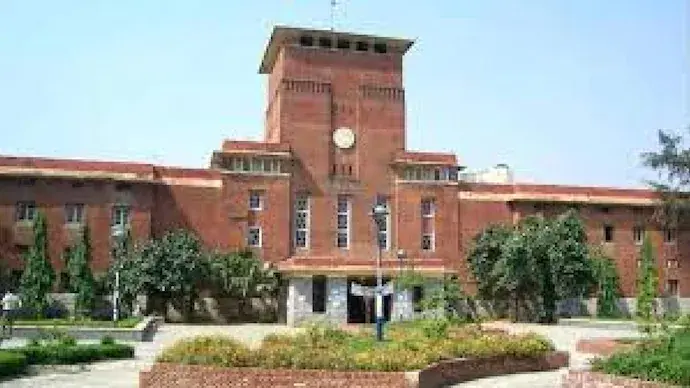
According to officials, the Delhi University will launch a paid internship programme for undergraduate and graduate students this academic year in an effort to deliver a comprehensive education in line with the National Education Policy (NEP). According to VC Yogesh Singh, the goal of the Vice Chancellor Internship Scheme (VCIS) is to provide training in both soft and hard skills by combining cognitive knowledge with experiential learning. All University of Delhi regular full-time students enrolled in any undergraduate or graduate course are eligible to apply for VCIS. According to an official document, the internship would be offered all year round based on the needs of the Delhi University’s departments, centres, and institutes. “The scheme is a unique experience in helping students broaden their mental faculties by learning skills and inculcating a sense of responsibility towards the university system. “It is a method to intertwine holistic knowledge with the innovative avenues of earning while learning the nitty gritty of academics and administration,” Singh added. The total intended number of interns in both categories is 200, and students will be chosen based on an interview. VCIS facilitation at Delhi University falls within the purview of the Dean of Students’ Welfare’s office. According to officials, the Vice Chancellor’s approval will be required before the number of interns may be reevaluated and recommended by DSW. There would be a regular internship and a summer internship under VCIS. A summer internship will be available throughout the eight-week break. It might be flexible for 15-20 hours a week. In the meantime, it said that a (regular) internship during the academic term may include flexible hours of 8 to 10 per week. The summer intern will receive Rs. 10,000 per month in contrast to the normal intern’s striped of 5,000. Each fiscal year, the stipend will increase by 5%, it stated. At the conclusion of the internship, the DSW will issue a certificate, along with an evaluation report from the relevant employing department, centres, and institutes. According to the document, those who are interested must register online, and a properly submitted application will only be valid for six months. The exact topics and areas of interest must be stated and indicated by interested students. “Applicants may indicate three preferences of specific domain/areas of interest while applying for VCIS. The applicants must upload a letter of recommendation (LOR) and no objection certificate (NOC) from their head of the department of the college while applying for the internship,” the document mentioned.

Delhi University to offer paid internships to UG, PG students Read More »

Education Minister calls Delhi government’s education system hollow

Union Education Minister Dharmendra Pradhan attacked the Delhi government harshly, calling the state’s educational system “hollow” and “a gimmick.” Attacking the AAP administration over the excise policy, Pradhan claimed that Arvind Kejriwal, the chief minister of Delhi, and Manish Sisodia, his deputy, are trying to hide their “theft” by bringing up the New York Times article on Delhi’s education system. “Delhi’s education system is khokhla (hollow) and a nautanki (gimmick).”  In his speech at Business Today’s “India@100 conclave” on Friday, Pradhan stated that the performance of class 10 and 12 students in Delhi government schools has been steadily declining according to the National Achievement Survey. “They are just trying to cover up for their theft using the excise policy by showing the New York Times article while in reality the situation is different,” he added. After the CBI raided the home of Sisodia, who also holds the portfolios of education and excise, in connection with allegations of irregularities in the formulation and implementation of the government’s excise policy, the New York Times report that was published last week had set off a verbal spat between the BJP and the Aam Aadmi Party (AAP). The New York Times, an American newspaper, had stated that the story was based on “impartial and on-the-ground reporting” while rejecting the claim that it was paid news. Source: PTI

Education Minister calls Delhi government’s education system hollow Read More »

President Murmu will confer national awards to 46 teachers on September 5 

On September 5, President Droupadi Murmu will bestow 46 chosen awardees the National Awards to Teachers 2022 in recognition of their distinctive contributions to education, according to officials. Three teachers each from Himachal Pradesh, Punjab, Maharashtra, and Telangana were chosen from the list of candidates. The recipients from these four states are Yudhveer, Virender Kumar, and Amit Kumar (from Himachal Pradesh); Harpreet Singh, Arun Kumar Garg, and Vandana Shahi (from Punjab); Shashikant Sambhajirao Kulthe, Somnath Waman Walke, and Kavita Sanghvi (from Maharashtra); and Kandala Ramaiah, TN Sridhar, and Sunitha Rao (Telangana), are the awardees from these four states. Every year on September 5—Teachers Day—the Ministry of Education hosts a function at Vigyan Bhawan to bestow awards to the nation’s top teachers who have been chosen after a rigorous, transparent, and online three stage selection process. According to a senior official, “The purpose of National Awards to Teachers is to celebrate the unique contribution of teachers in the country and to honour those teachers who through their commitment and industry have not only improved the quality of school education but also enriched the lives of their students.” The selected teachers are Pradeep Negi and Kaustubh Chandra Joshi (Uttarakhand), Sunita and Durga Ram Muwal (Rajasthan), Neeraj Saxena and Om Prakash Patidar (Madhya Pradesh), Saurabh Suman and Nishi Kumari (Bihar), G Ponsankari and Umesh TP (Karnataka), Mala Jigdal Dorjee and Sidharth Yonzone (Sikkim). The other awardees include Anju Dahiya (Haryana), Rajni Sharma (Delhi), Seema Rani (Chandigarh), Maria Murena Miranda (Goa), Umesh Bharatbhai Vala (Gujarat), Mamta Ahar (Chhattisgarh), Iswar Chandra Nayak (Odhisha), Buddhadev Dutta (West Bengal), Javid Ahmed Rather (Jammu and Kashmir), Mohd Jabir (Ladkah), Khursheed Ahmad (Uttar Pradesh), Mimi Yhoshii (Nagaland), Nongmaithem Gautam Singh (Manipur), Gamchi Timre R Marak (Meghalaya), Santosh Nath (Tripura), Meenakshi Goswami (Assam), Shipra (Jharkhand), Ranjan Kumar Biswas (Andaman and Nicobar), Aravindaraja (Puducherry), Ramachandran (Tamil Nadu), Ravi Aruna (Andhra Pradesh). “Among the selected teachers one is from CISCE board, two from Kendriya Vidyalayas, one each from Jawahar Navodaya Vidyalaya and Eklavya Residential School, while two teachers are from CBSE board,” the official said.

President Murmu will confer national awards to 46 teachers on September 5  Read More »

UGC approves proposal for hiring industry experts as professors of practice

Article on Edu

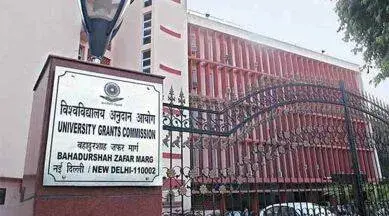
According to draft regulations issued by the higher education regulator, universities and colleges may soon be able to employ industry specialists in addition to the sanctioned posts of regular faculty under a new category of faculty positions called professors of practice. The University Grants Commission stated that the professors of practise will be employed for a fixed tenure of no longer than four years, and their strength at any given time cannot exceed 10% of the sanctioned faculty posts. The regulatory body announced in March that it was thinking about introducing such a clause, and on August 18 during its 560th meeting, the commission approved the draft guidelines. These will now be made available for public feedback. According to the draft guidelines, the purpose of establishing this new faculty category is to attract eminent experts from a variety of fields into academia, including engineering, science, technology, entrepreneurship, commerce, social sciences, media, literature, fine arts, civil services, the armed forces, legal profession, and public administration. According to UGC Chairperson M. Jagadesh Kumar, the provision is a part of the National Education Policy (NEP) 2020 implementation, which focuses on skill-based education to fulfil industry and economic needs. “This will help to take real-world practises and experiences into classrooms and augment faculty resources in higher education institutions,” according to Kumar. “It will enable higher education institutions to formally associate with persons of eminence and encourage them to participate in experiential learning, research, training, skilling, entrepreneurship and extension and to play a mentoring role.” The positions are only open to experts with a minimum of 15 years of experience. The guidelines suggest that if a candidate has “exemplary” professional experience, no formal academic qualification would be taken into account. The draft guidelines stated, “These experts will also be exempted from the requirement of publications and other eligibility criteria stipulated for the recruitment of faculty members at the professor level. However, they should possess the skills to carry out the duties and responsibilities specified in the following section.” The positions won’t be available to those who are currently employed as teachers. The professors of practice will engage in one of three categories: industry-funded, institution-funded, or honorary. The institutions may collaborate with industry to support the roles in the first category. Under the second category, they will be required to pay the professors out of their own resources. The third category allows the institutions to choose the honorarium amount using their own funds. The guidelines elaborate on the selection process for professors of practice, stating that the head of the institution will invite nominations from distinguished experts. The recommendations will be taken into consideration by a selection committee made up of two senior professors and one esteemed external member. The instructions said that the statutory bodies of the institutes will make a decision based on its recommendations. The initial term of the engagement may be up to one year, with subsequent extensions possible. The guidelines stated that “The maximum duration of service of Professor of Practice at a given institution should not exceed three years and is extendable by one year in exceptional cases and the total service should not exceed four years under any circumstance.”

UGC approves proposal for hiring industry experts as professors of practice Read More »