ArdorComm Media Group

Tuesday, December 2, 2025 9:59 PM

Governance Community

Argentina’s President Plans Mass Government Job Cuts

Argentina’s President, Javier Milei, has announced plans to terminate the employment of 70,000 government workers as part of his aggressive measures to trim the bloated state apparatus. While representing a fraction of the country’s 3.5 million public sector employees, Milei’s sweeping actions have ignited concerns and protests from powerful labor unions. In addition to the massive job cuts, Milei has initiated a freeze on public works projects, reduced funding to provincial governments, and discontinued over 200,000 social welfare programs, citing corruption. These moves align with his overarching goal of achieving fiscal equilibrium amidst soaring inflation rates, which have eroded wages and pensions by 276% annually. Addressing the IEFA Latam Forum in Buenos Aires, Milei emphasized the need for drastic measures to combat economic challenges, likening his approach to wielding a “chainsaw” to address the nation’s fiscal woes. However, Milei’s austerity measures have sparked backlash, with some labor unions staging strikes in protest. Private sector workers have also experienced significant wage losses since Milei assumed office in December, according to government reports. Responding to Milei’s announcement, the leader of the state workers union ATE declared a national strike, signaling growing discontent among labor groups. Despite the contentious nature of his policies, Milei highlighted growing public optimism about Argentina’s economic prospects. He cited polls indicating increased confidence in the government’s ability to address economic issues, suggesting that his measures are viewed favorably by the populace. While Milei remains resolute in his pursuit of fiscal stability, the pushback from labor unions and the broader implications of his austerity measures on Argentina’s workforce and economy remain subjects of intense debate and scrutiny.

Argentina’s President Plans Mass Government Job Cuts Read More »

Central Government Employees Anticipate Pay Hike and Arrears on March 30: 7th Pay Commission Updates

Central government employees are eagerly awaiting potential salary increases and arrears, with reports suggesting that they might receive them on March 30, a day earlier than usual, due to March 31 falling on a Sunday. However, the Reserve Bank of India (RBI) has instructed banks to operate on March 31, despite it being a non-working day, as it marks the end of the financial year. The increase in salaries is linked to the dearness allowance (DA) for employees and pensioners, calculated based on the latest Consumer Price Index for Industrial Workers (CPI-IW) data. The increment follows the accepted formula recommended by the 7th Central Pay Commission. Earlier this year, the government approved a 4 percent rise in DA, effective from January 2024, bringing it up to 50 percent. This elevation in DA triggers corresponding increases in House Rent Allowance (HRA) and various special allowances, benefiting millions of central government employees and pensioners. The last increase in DA occurred in October 2023, when it rose from 42 percent to 46 percent, benefiting nearly 49 lakh central government employees and over 67 lakh pensioners. Additionally, the government had approved Diwali bonuses for certain officials, setting a limit for non-productivity linked bonuses. The anticipation of salary hikes and arrears reflects the government’s commitment to enhancing employee welfare, particularly during a challenging economic period.

Central Government Employees Anticipate Pay Hike and Arrears on March 30: 7th Pay Commission Updates Read More »

Kerala Government Initiates Legal Action Against President Murmu for Withholding Assent for Bills

The Kerala Government has filed a lawsuit against President Droupadi Murmu for withholding assent for four Bills passed by the Kerala Legislature. Additionally, Kerala Governor Arif Mohammed Khan is being sued for delaying the Bills and subsequently reserving them for consideration by the President. The Kerala Government argues that the President’s actions in withholding assent without providing any reasons violate Articles 14, 200, and 201 of the Constitution, labeling them as arbitrary. Furthermore, the State contends that referring the Bills to the President undermines constitutional morality and disrupts the federal structure of governance. The lawsuit, filed before the Supreme Court, lists the Secretary to the President, the Kerala Governor, and the Additional Chief Secretary to the Governor as respondents. Kerala plans to be represented in the court by a senior lawyer specializing in Constitutional matters along with C.K. Sasi, its Standing Counsel. The State asserts that the Union Government’s involvement in advising the President to withhold assent to Bills within the State’s jurisdiction undermines the federal structure and encroaches on the State’s domain. The actions of the Governor, particularly in bundling up Bills for referral to the President after significant delays, are seen as deliberate attempts to evade constitutional duties. The Kerala Government maintains that the Governor’s actions disrupt the balance envisioned by the Constitution among the three organs of the State and subvert the federal structure. By reserving Bills solely within the State’s domain for the President’s consideration, the Governor’s actions render the State Legislature ineffective. The State’s legal action underscores its commitment to upholding constitutional principles and protecting its legislative autonomy. As the case unfolds in the Supreme Court, it marks a significant moment in the ongoing debate over federalism and the balance of power between the Union and State governments.  

Kerala Government Initiates Legal Action Against President Murmu for Withholding Assent for Bills Read More »

India Inc’s Board Sizes Decrease Amid Heightened Governance Scrutiny

Amid increasing scrutiny on governance issues, corporate boards in India are witnessing a reduction in size, according to a report by Excellence Enablers, backed by former SEBI Chairman M Damodaran. In fiscal years FY’18 and FY’19, the range of board members varied from 4 to 22. However, the maximum board size has contracted to 16 by FY23. The report underscores the importance of ensuring adequate board membership to effectively constitute mandatory board committees. With five required board committees, sufficient members are needed to prevent overlap among committee memberships. Highlighting the essence of good corporate governance, the report emphasizes the significance of voluntary adherence to governance best practices. Entities that proactively adopt governance measures often influence regulatory standards for the broader business community. Under the Companies Act, 2013, public companies must have a minimum of three directors, while private companies require at least two directors. The maximum limit for board size is fifteen directors. SEBI mandates that listed public companies appoint one-third of their board as independent directors, except for Public Sector Undertakings (PSUs). Additionally, if the chairperson is a non-executive director, one-third of the board must comprise independent directors. In cases where there’s no regular non-executive chairperson, at least half of the board should consist of independent directors. As of March-end 2023, six companies were found to be non-compliant with independent director norms. The report stresses the importance of maintaining a balanced mix of executive and non-executive directors on boards to leverage diverse perspectives and experience. It cautions against combining the roles of Chairman and MD/CEO, highlighting the potential conflict of interest and the adverse impact on corporate governance. Moreover, the report recommends making the appointment of a lead independent director mandatory for boards chaired by executives to ensure effective governance oversight.

India Inc’s Board Sizes Decrease Amid Heightened Governance Scrutiny Read More »

Unplanned Urbanization Spurs Water Crisis in Bengaluru, IISc Study Reveals

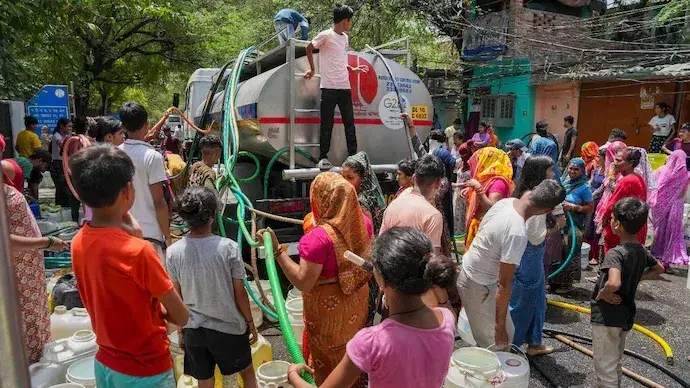
An in-depth study conducted by the Indian Institute of Science (IISc) sheds light on the alarming consequences of unplanned urbanization in Bengaluru, with concrete structures engulfing 93% of the city’s landscape. Over the past five decades, the city has witnessed a staggering 1055% increase in built-up areas, accompanied by a 79% decline in water spread areas and an 88% loss of vegetation. This uncontrolled urban expansion has led to severe water scarcity, exacerbating existing challenges such as air pollution and resource inequity. According to Prof. TV Ramachandra from IISc’s Centre for Ecological Sciences, the dwindling water spread area, which has plummeted from 2,324 hectares in 1973 to just 696 hectares in 2023, is a primary contributor to the depletion of the groundwater table. The study highlights the detrimental impact of encroachment and pollution on Bengaluru’s water bodies, with 98% of lakes encroached upon and 90% receiving untreated sewage or industrial effluents. This degradation has hindered groundwater recharge, exacerbating the city’s water woes. Ramachandra also underscores the adverse effects of vanishing green cover on air quality and temperature regulation, emphasizing that the city’s current tree population is insufficient to sequester respiratory carbon. Remote sensing data reveals a stark reality: only 1.5 million trees support a population of 9.5 million in Bengaluru, indicating a critical imbalance between green cover and urbanization. To address these pressing concerns, IISc has developed the Bangalore Information System (BUiS) and Bangalore Lakes Information System (BLIS), providing researchers and policymakers with essential tools to visualize urban dynamics, tree distribution, and ecologically sensitive areas. The system aims to raise awareness about the adverse effects of rapid urbanization and facilitate informed decision-making to mitigate its impacts. As Bengaluru grapples with its evolving urban landscape, the findings underscore the urgent need for sustainable urban planning strategies to safeguard natural resources, mitigate pollution, and promote ecological resilience in the face of rapid urban expansion.  

Unplanned Urbanization Spurs Water Crisis in Bengaluru, IISc Study Reveals Read More »

Tamil Nadu Farmers Profit from Government-backed Bio Fish Tanks

In 2023, the Fisheries Department of Tamil Nadu introduced Bio Fish Tanks, revolutionizing fish farming for local farmers. These tanks, subsidized by the government, have enabled farmers like Sebastiyar from Thirukkanur Patti village in Thanjavur district to rear fish at low costs. Sebastiyar shared insights into this innovative venture, highlighting the assistance provided by the Fisheries Department in setting up bio fish tanks using tarpaulin. With adequate training, farmers optimize water usage for fish growth, a crucial aspect of sustainable farming. While Sebastiyar noted that bio fish tanks may not be universally profitable, he emphasized their suitability for small-scale businesses. Each tank can accommodate around 450 fish, but with two tanks, Sebastiyar can rear up to 1000 fish at a time. The tanks are specifically designed for Tilapia or Jalebi Fish and lobster, known for their nutritional value and economic viability. One key advantage of bio fish tanks is their protective covering, shielding fish from predators like crows and cranes, a feature not feasible in traditional water bodies. Sebastiyar’s success in fish sales underscores the practical benefits of this scheme, attracting customers from nearby villages. To participate, individuals must visit their district’s Fisheries Department office, submit necessary documents, and qualify for subsidies ranging from 40% for men to 60% for women. Through Bio Fish Tanks, Tamil Nadu’s farmers are not only boosting their incomes but also contributing to sustainable aquaculture practices, paving the way for a thriving agricultural sector.  

Tamil Nadu Farmers Profit from Government-backed Bio Fish Tanks Read More »

Pew Report Highlights Surge in Support for Strong Leader Governance, India Among Nations Seeing Significant Uptick

As elections loom in various nations, a recent Pew Research Center survey underscores a notable trend: a growing appeal for strong leader governance, challenging the traditional framework of representative democracy. Released on February 28, the survey reveals that support for authoritarian leadership has surged in several countries since 2017, with India among those witnessing a significant uptick. While representative democracy remains widely favored, with 77 percent across 24 democratic countries labeling it as “good,” dissatisfaction with its functioning within their own countries is evident, with a median of 59 percent expressing discontent. The survey coincides with a pivotal year for democracies globally, with elections scheduled in over 50 nations, including India’s Lok Sabha elections and the US presidential election in November. India stands out with the highest level of endorsement for a strong leader model, with 67 percent of respondents viewing it favorably, marking a notable increase of 12 percent since 2017. Prime Minister Narendra Modi enjoys a commendable 79 percent favorability rating, ranking third globally. Across Europe, individuals supporting right-wing populist parties exhibit a greater inclination toward authoritarianism. In Germany, for instance, 37 percent of those favoring the Alternative for Germany party express support for non-democratic governance. Support for authoritarian leadership tends to be more pronounced among individuals with lower education and income levels, as well as those leaning ideologically rightward. Notably, poorer nations show higher support for autocratic regimes, including military rule. Mexico stands out with a remarkable 23 percent surge in support for a strong leader since 2017, alongside increased support for democracy. The United States, despite its status as the wealthiest nation, exhibits noteworthy backing for autocratic systems, with 15 percent endorsing military rule and 26 percent favoring a strong leader model. Overall, while support for authoritarianism has increased in several countries, military rule remains the least favored form of government globally, with only a median of 15 percent expressing support across surveyed nations.

Pew Report Highlights Surge in Support for Strong Leader Governance, India Among Nations Seeing Significant Uptick Read More »

Nepal’s Political Landscape Shifts as Maoist Centre-Nepali Congress Coalition Crumbles

The political landscape in Nepal witnessed a seismic shift as the coalition government between the Communist Party of Nepal (Maoist Centre) and the Nepali Congress, led by Sheh Bahadur Deuba, collapsed. Former Finance Minister Surendra Pandey announced on Facebook that Prime Minister Pushpa Kumar Dahal would swear in a new council of ministers on Monday, ushering in a fresh coalition government. The new coalition, dubbed the Left Alliance, will comprise four political parties: the Communist Party of Nepal (Maoist Centre) under Prime Minister Pushpa Kumar Dahal’s leadership, the Communist Party of Nepal-Unified Marxist Leninist (CPN-UML), the Rastriya Swatantra Party, and the Janata Samajbadi Party. Prime Minister Dahal, known for his political maneuvering, is set to retain his position, with ministers recommended by the coalition parties expected to join the new cabinet. The collapse of the Maoist Centre-Nepali Congress coalition was precipitated by a dispute over the chairmanship of the National Assembly. The Maoist Centre’s decision to contest for the position sparked tensions with the Nepali Congress, leading to the dissolution of the fragile alliance. Despite previous assurances from Prime Minister Dahal to support the Nepali Congress in the National Assembly chairmanship election, the Maoist Centre opted to field its candidate, exacerbating the rift between the two parties. The upcoming election for the National Assembly Chairman, scheduled for March 12, has intensified political tensions, with parties vying for control over key positions in Nepal’s legislative bodies. As Nepal navigates through this period of political turbulence, the realignment of alliances and the pursuit of power dynamics within the government underscore the challenges of maintaining stability in the Himalayan nation.

Nepal’s Political Landscape Shifts as Maoist Centre-Nepali Congress Coalition Crumbles Read More »

Government Employees Prepare for Indefinite Strike Demanding Restoration of Old Pension Scheme

A consortium of trade unions and associations representing approximately 28 lakh Union government employees, including those from the Railways and Central Public Sector Undertakings, along with over three crore employees and teachers from state governments, is gearing up for an indefinite strike starting May 1. The primary demand behind the strike is the restoration of the Old Pension Scheme (OPS) in place of the current National Pension Scheme (NPS). The decision to proceed with the strike was unanimously taken by the steering committee of the Joint Forum For Restoration of Old Pension Scheme (JFROPS), which plans to serve strike notices to respective administrations on March 19. Shiv Gopal Mishra, the Convener of JFROPS and General Secretary of All India Railwaymen’s Federation (AIRF), stated that talks with the Centre regarding the issue had collapsed, leading to the decision for the strike. Despite repeated protests, letters to the Prime Minister and Finance Minister, and discussions in Joint Consultative Machinery (JCM) meetings, the government has neglected their demands. Ahead of the strike call, strike ballots were conducted in Railways, various departments, and PSUs under the Centre, with unions claiming nearly 100% support from employees. General Secretary of All India Defence Employees Federation, C. Srikumar, expressed discontent over the government’s insensitivity towards their genuine grievances. He noted the disparity in treatment, citing the recommendation of defined and guaranteed pension for judges by the Judicial Pay Commission while government employees continue to face the uncertainty of the National Pension Scheme. Mishra emphasized that the strike was necessitated by the government’s indifference to their demands, and all unions except the pro-government Bharatiya Mazdoor Sangh (BMS) will participate. Regarding the timing of serving the strike notice amidst the possibility of the model code of conduct for general elections, Mishra highlighted the importance of the OPS issue and urged for its discussion during elections, even if the model code of conduct is in effect. He expressed hope that the government would address their demands, considering the significant impact on millions of lives.

Government Employees Prepare for Indefinite Strike Demanding Restoration of Old Pension Scheme Read More »

PM Modi Confident of BJP’s Victory in Upcoming Lok Sabha Polls, Eyes Third Term

Prime Minister Narendra Modi expressed unwavering confidence on Monday that the Bharatiya Janata Party (BJP) would secure victory in the upcoming Lok Sabha polls, paving the way for the commencement of his government’s third term in June. During the launch event of more than 2,000 railway infrastructure projects valued at over Rs 41,000 crore, PM Modi highlighted the rapid pace of development projects initiated across the nation under his administration. He emphasized the transformative changes witnessed in the railways, including the introduction of Vande Bharat trains, symbolizing the progress made by India in the past decade. PM Modi’s optimism about the BJP’s electoral prospects was palpable as he reiterated his earlier prediction of winning a significant number of seats in the Lok Sabha. He projected that the National Democratic Alliance (NDA) would secure over 400 seats, with the BJP alone clinching at least 370 seats. PM Modi underscored that his government’s third term would witness significant decisions and lay the foundation for India’s prosperity over the next millennium. Addressing the youth directly, PM Modi assured them that their aspirations were integral to his vision for the nation. He emphasized that India now aspires for greatness and tirelessly strives to realize its ambitions, with the synergy of the youth’s dreams and hard work alongside his unwavering determination, ensuring a prosperous future for the country. In his speech, PM Modi painted a picture of a resurgent India poised for remarkable economic growth, firmly asserting that his tenure would usher in an era where India emerges as the world’s third-largest economic power. He reaffirmed his commitment to building a developed India, asserting that the aspirations of the nation’s citizens would be met under his leadership.

PM Modi Confident of BJP’s Victory in Upcoming Lok Sabha Polls, Eyes Third Term Read More »