ArdorComm Media Group

Wednesday, February 11, 2026 10:37 AM

Health & Wellness Community

WHO seeks $2.5 billion for health emergency responses in 2023

In an appeal made on Monday, the World Health Organization requested $2.54 billion for its operations in 2023 to assist millions of people throughout the world who are experiencing medical emergencies. According to the UN health agency, there are currently an unprecedented number of interlinked health emergencies that require attention. It referred to the brutal war in Ukraine, the effects of war on health in Yemen, Afghanistan, Syria, and Ethiopia, as well as disaster brought on by climate change, such as the enormous floods that hit Pakistan last year and the rising food shortages in the Sahel and the Horn of Africa. Additionally, it emphasised that all of these emergencies coincide with the significant health system disruptions brought on by the Covid-19 pandemic and outbreaks of other deadly diseases like measles and cholera. As the WHO launched its appeal, its director Tedros Adhanom Ghebreyesus stated, “We’re witnessing an unprecedented convergence of crises that demands an unprecedented response. ” “The world cannot look away and hope these crises resolve themselves.”  According to him, the WHO is now addressing 54 health crises around the world, 11 of which are classified as high-level emergencies that demand a comprehensive response. Jarno Habicht, WHO’s representative in Ukraine, emphasised that since Russia began its full-scale invasion about a year ago, the war-torn nation has experienced more than 700 attacks on healthcare, including strikes against hospitals and ambulances. At the same time, widespread attacks on vital infrastructure throughout Ukraine “mean healthcare facilities cannot perform their duties,” he said, highlighting how they frequently operate under “very difficult circumstances” without electricity, heating, or water. The numerous health crises are occurring at a time when the demand for humanitarian aid as a whole is soaring. According to UN estimates, this year will see an unprecedented 339 million people throughout the world require some type of emergency assistance, up roughly a quarter from 2022. Gordon Brown, a former British prime minister and present WHO ambassador for global health financing, stated that “Specialised medical supplies and expertise are needed immediately, if we are not to abandon the sick to disaster, disease and death.” During the appeal event, he added, “I want to plead with donors to respond urgently to this emergency appeal to fund vaccines, drugs treatments, equipment and medical expertise.” “Give hope a shot, inject optimism, inoculate us against more avoidable deaths.”

WHO seeks $2.5 billion for health emergency responses in 2023 Read More »

Cipla develops a point of care testing device “Cippoint”

Cipla has introduced Cippoint, a point-of-care testing device in Mumbai. It offers testing for things like coagulation markers, thyroid function, metabolic markers, diabetes, infectious diseases, and cardiac markers. The device has CE IVD approval. According to the company, this indicates that it has received approval from the European In-Vitro Diagnostic Device Directive, ensuring accurate testing procedures. With the entry into these new markets, Cipla has increased the range of products it offers to diagnostics laboratories. Cipla hopes to close the current gap in India’s diagnostic ecosystem by supplying reliable, accurate tests at reasonable costs. A faster clinical decision-making process will be possible due to Cippoint, an immunofluorescence-based quantitative analyser that gives healthcare providers access to test results in 3–15 minutes. Cippoint offers an automated system and a user-friendly interface that can be used even in remote locations with weak infrastructure, mobile vans, and rural areas. Achin Gupta, CEO of One India Business at Cipla, commented on the launch by saying, “Cipla has always been at the forefront of addressing the global diseases burden. We are actively working towards delivering innovative solutions that enable prompt and effective diagnosis, thereby plugging gaps in the diagnostic ecosystem. This development further strengthens our vision of supporting patients across the healthcare continuum.”

Cipla develops a point of care testing device “Cippoint” Read More »

Over 10 crore health records are digitally linked to the Ayushman Bharat Health Account

Under the Ayushman Bharat Digital Mission (ABDM), over 10 crore health records have been digitally linked to the Ayushman Bharat Health Account, a move that helps people compile a thorough medical history across various healthcare providers. So far, more over 30 crore people have created their own Ayushman Bharat Health Accounts (ABHA). Digitally linking their health records to their ABHA accounts will allow citizens to manage and access their records whenever it’s convenient for them. It will make it possible for citizens to compile thorough medical histories from different healthcare providers, enhancing clinical decision making. A digital exchange of relevant health records between citizens and ABDM-registered healthcare providers is also feasible. “I am happy to share that ABDM has touched another milestone. With 10 crore health records linked to Ayushman Bharat Health Account, we appreciate all citizens for coming forward to support our efforts in making healthcare digital in India.” The National Health Authority’s CEO, Dr. R. S. Sharma, stated in a tweet. With the assistance of state governments, numerous health facilities around the nation are implementing this digital linkage of people’s health records with ABHA. The Ayushman Bharat Digital Mission (ABDM), which aims to build the foundation required to enable the nation’s integrated digital health infrastructure, will be implemented nationwide, the prime minister announced in September 2021.

Over 10 crore health records are digitally linked to the Ayushman Bharat Health Account Read More »

Health Minister Mandaviya wants the diaspora to raise awareness of the traditional medical system

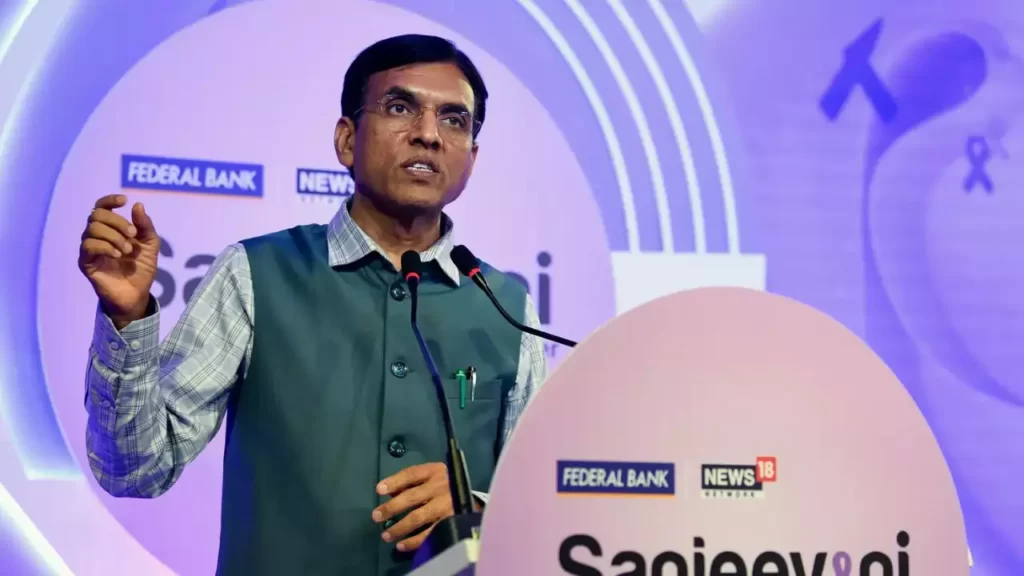
Mansukh Mandaviya, the union minister for health, chemicals, and fertilisers, stated on Monday that members of the Indian diaspora may educate people in other nations about India’s traditional medical system, yoga, homoeopathy, naturopathy, and trained health workers. The minister said that efforts are being made in the health sector to ensure that everyone has access to basic infrastructure and health services. He was speaking at a plenary session on “Role of Overseas Indians in Expanding Indian Health Facilities in Azadi ka Amrit kaal of – Vision 2047” in Pravasi Bharatiya Diwas. During the Azadi ka Amrit kaal, Mandaviya asked the NRI community to support in the expansion of India’s health services since “India has become an important medical tourism destination today due to its quality and affordable health services.” According to him, India meets about 15% of the demand for generic medicines in Africa, 40% in the United States, and 25% in the United Kingdom. Speaking to NRIs, Mandaviya stated that the number of MBBS seats has increased from 53,000 in 2014 to 96,000 in order to support the expansion of health services. The number of seats for post-graduation has increased from 31,000 to 63,000. Dr. Rajkumar Ranjan Singh, Union Minister of State for External Affairs, stated: “The healthcare sector is a huge opportunity for the development of the country and India is ready to seize the opportunity with its quality tech-savvy healthcare services.” The minister also provided a brief overview of India’s expanding healthcare sector. Sushri Janaina Tewaney Mencomo, Panama’s first cabinet minister of Indian origin, said: “The message of India’s spirituality and unity is contained within every citizen of Indian origin, which gives them a unique identity in the whole world.”

Health Minister Mandaviya wants the diaspora to raise awareness of the traditional medical system Read More »

India’s pharma industry expands by 8% in ’22, driven primarily by price hikes

According to market research firm AWACS, the Indian pharmaceutical market (IPM) expanded by 8% annually to 1.8 lakh crore in 2022, primarily due to price rises even as volumes held steady. A low base and the large volume offtake of Covid-19 and associated drugs such anti-infectives, vitamins, and medications for gastrointestinal and respiratory issues, pain, and fever were the main drivers of the market’s 14.9% increase in 2021. Sales of anti-infectives, including antibiotics and antifungals, fell by 5% in 2022 after increasing by 25% in 2021. Anti-infective sales volume decreased by 1%. With sales of $22,531 crore, “Anti-infectives” was the second-largest segment in 2022. Although volume growth was negative, the cardiac category, the largest therapy segment with a 13% market share, experienced an 8% gain to reach 23,561 crore in 2022. The third-largest segment, gastrointestinal, experienced a 10% increase in sales, while volumes were unchanged. Anti-diabetes sales increased by 6% in value and 1% in volume. In 2022, both in terms of value and volume, the therapeutics segment—which includes products for respiratory, gynaecology, ophthalmology, urology, and sex stimulants—was an outlier. The respiratory market continued to perform well, with volume growth of 12.4% and market growth of 19% both attributed to the worsening air quality that is aggravating respiratory diseases like asthma and chronic obstructive pulmonary disease. At 14,428 crore, the respiratory market was the sixth-largest pharmaceuticals category.

India’s pharma industry expands by 8% in ’22, driven primarily by price hikes Read More »

Ayush aims to open new avenues with ‘SMART’ initiative for quality research in Ayurveda

Under the auspices of the Ministry of Ayush, the National Commission for Indian System of Medicine (NCISM) and Central Council for Research in Ayurvedic Sciences (CCRAS) established the “SMART” initiative to mainstream ayurvedic research among teaching professionals. The programme utilises ayurvedic colleges and hospitals to advance scientific research in healthcare-related fields. In the presence of the NCISM president, board of ayurveda, BS Prasad, and other senior authorities, the programme was introduced by the NCISM chairman, Vaidya Jayant Deopujari, and the director general of CCRAS, Rabinarayan Acharya. Until January 10, 2023, eligible institutions may apply for the SMART programme. Through NCISM, the ministry informed all accredited academic institutions and hospitals of the eligibility requirements and the application process. The SMART program’s main goal is to find, support, and promote creative research proposals in the fields of healthcare research, including, but not limited to, obesity, diabetes mellitus, rheumatoid arthritis, chronic bronchitis, dyslipidemia, psoriasis, non-alcoholic fatty liver disease (NAFLD), osteoarthritis, iron deficiency anaemia, chronic bronchitis, dyslipidemia, and dyslipidemia. NCISM Chairman Vaidya Jayant Deopujari said this about the initiative: “I am confident that this program has the potential to transform clinical research in Ayurveda. It was observed that the research potential of the large community of Ayurveda teachers remains under utilised mostly. Therefore, the ‘SMART’ program will have a deep long term rejuvenating impact on research in the field of Ayurveda and it will be a great service to the nation, I congratulate CCRAS for this initiative and ensure all support on behalf of NCISM.” BS Prasad, head of the board of ayurveda at NCISM, commented on the SMART initiative, saying: “The large network of Ayurveda colleges and hospitals across the country is an asset for the country in terms of its healthcare needs. This network has not only been offering healthcare services in hardest times, but it also has contributed significantly in terms of healthcare research in the country. The ‘SMART’ program will certainly motivate teachers for taking up projects in designated areas of healthcare research and create a large database.”

Ayush aims to open new avenues with ‘SMART’ initiative for quality research in Ayurveda Read More »

Delhi government grants hospitals Rs. 104 crores to procure general medications in response to a new Covid scare

The Delhi government authorised a budget of Rs 104 crore on Monday for hospitals to purchase generic medicines as part of emergency plans in response to a rise in cases of Covid in several nations. Deputy Chief Minister Manish Sisodia gave the heads of government hospitals instructions to share information with the Health department by the end of the day on beds, ventilators, ICUs, human resources, oxygen plants, and medical logistics. “The surge in Covid cases globally is a matter of concern for everyone. Delhi hospitals have been asked to prepare well in advance and stay vigilant. An amount of Rs 104 crore has been approved to ensure that there is no shortage of any medicines at government hospitals and they are well prepared to deal with any situation,” a statement quoted Sisodia as saying. The deputy chief minister stated that on Tuesday, a mock drill will be held at each hospital to make sure that the institutions are prepared to manage Covid in accordance with the Center’s instructions. Any deficiencies, he stressed, will be quickly addressed by Health department employees. The mock drill will evaluate, among other things, the availability of beds, human resources, referral sources, testing capacity, medical logistics, telemedicine services, and medical oxygen. From Tuesday, the public will have access to real-time information on the availability of beds, oxygen cylinders, and ventilators on a portal run by the Delhi government, according to officials. An official stated that testing would probably soon be increased. Currently, the city hosts between 2,500 and 3,000 tests every day. Meetings with non-governmental organisations and resident welfare organisations are being held, and they are being asked to raise awareness of the current situation. The new Omicron sub-variant BF.7 of the coronavirus, which is leading to an increase in cases in other countries, has not yet been found in Delhi, according to Chief Minister Arvind Kejriwal, who also stated last week that his government is well prepared to handle any situation. There have been directives issued to boost precaution dose coverage, staffing levels in hospitals, and provide samples from all positive cases for genome sequencing. Kejriwal has also instructed authorities to obtain prior approval before purchasing any necessary materials and to check the infrastructure at all hospitals. They are self-sufficient in terms of oxygen availability and storage, according to the chief minister. Delhi experienced an oxygen crisis during the second Covid wave last year, with hospitals using social media to post SOS alerts about running out on supplies. However, according to experts, India shouldn’t be too concerned about the BF.7 sub-strain because there are many individuals who have gained immunity to the virus, either through vaccination or prior infection, in comparison to China, where people have little immunity because of strict restrictions.

Delhi government grants hospitals Rs. 104 crores to procure general medications in response to a new Covid scare Read More »

India’s first 5G, AI-driven colonoscopy trial conducted by Airtel, Apollo Hospitals, and AWS

In India’s first-ever colonoscopy trials, which were carried out utilising AI and Airtel’s 5G technology, colon cancer was found significantly more quickly and accurately, according to an announcement from Bharti Airtel and Apollo Hospitals. The other three firms that worked together on these trials were HealthNet Global, AWS, and Avesha. Currently, colon cancer is identified manually during a colonoscopy procedure, requiring a lot of care and time from medical professionals to provide an accurate diagnosis. The procedure is not only time-consuming, lasting up to 30 to 40 minutes per case, but it is also discomforting for both the patients and the doctors and nurses who have to perform the procedure. Even when the doctor adjusted the scope to overlay the picture on the right portion of the colon, the AI-guided colonoscopy procedure displayed image processing in real-time without any lags.  The introduction of this technology will provide doctors access to an extra set of eyes and increase the rate at which polyps are detected. Utilizing platforms from AWS (Amazon Web Services India P Ltd), Avesha edge inferencing applications processed the data in real-time. Trials for AI-assisted Colonoscopy Polyp Detection will assist physicians in enhancing patient care, increasing detection rates by accurately recording information, and minimising errors. Ajay Chitkara, CEO and Director of Airtel Business, commented on the trial by stating that “Ultra-fast, low latency 5G networks will transform the healthcare sector in the country. At Airtel, we are geared up to lead this transformation and have demonstrated this by conducting India’s first colonoscopy trials. Healthcare is one of the most promising use cases for 5G, and we are delighted to collaborate with Apollo Hospitals, AWS, HealthNet Global and Avesha.” Dr. Sangita Reddy, Joint Managing Director, Apollo Hospitals Group, stated that “By augmenting doctor’s ability to detect, AI has been proved to improve physician’s accuracy. Early detection and removal of polyps can easily avoid them from becoming cancerous. Apollo has always been a forerunner in the adoption of technology. Our patient-centric approach keeps us on an outlook for technologies which can make outcomes better.” Reiterating Chitkara’s and Dr. Reddy’s praise for 5G and AI as useful tools for developing healthcare, Vaishali Kasture, Head-Enterprise, Mid-Market & Global Businesses, India & South Asia, AWS India said, “5G and edge technologies offer high speed and real-time data analysis that can help transform the delivery of healthcare. AI inference provides better insight and information to healthcare professionals to predict, diagnose, and treat patients more effectively.”

India’s first 5G, AI-driven colonoscopy trial conducted by Airtel, Apollo Hospitals, and AWS Read More »

Health minister reviews Covid situation, directs officials to be on high alert and strengthen surveillance

Union Health Minister Mansukh Mandaviya reviewed the COVID-19 situation in the country on Wednesday in light of a recent surge in cases in some regions of the world, and instructed officials to remain vigilant and increase surveillance. “In view of the rising cases of Covid-19 in some countries, reviewed the situation with experts and officials today. COVID is not over yet. I have directed all concerned to be alert and strengthen surveillance. We are prepared to manage any situation,” Mandaviya stated this in a tweet. In view of the rising cases of #Covid19 in some countries, reviewed the situation with experts and officials today. COVID is not over yet. I have directed all concerned to be alert and strengthen surveillance. We are prepared to manage any situation. pic.twitter.com/DNEj2PmE2W — Dr Mansukh Mandaviya (@mansukhmandviya) December 21, 2022 The meeting was attended by the secretaries of health, pharmaceuticals, biotechnology, Ayush, Indian Council of Medical Research (ICMR) Director General Rajiv Bahl, Member (Health) of NITI Aayog Dr V K Paul, and National Technical Advisory Group on Immunization (NTAGI) Chairman Dr N K Arora, among others. Union Health Secretary Rajesh Bhushan stated in a letter to states and UTs that such an effort will enable timely detection of newer variants, if any, circulating throughout the country and will facilitate the implementation of necessary public health measures. Given the rise in cases in Japan, the United States of America, the Republic of Korea, Brazil, and China, the Union Health Ministry encouraged all states and union territories on Tuesday to increase whole genome sequencing of positive Covid samples in order to track emerging variants. COVID has been spreading rapidly in China. According to informal figures, over 40% of Beijing residents are currently infected with COVID. The CCP, on the other hand, has shifted its agenda to depict COVID as a simple flu. As the number of cases increases in major Chinese cities, even people with minor symptoms are rushing to hospitals. Emergency call operators are receiving 30,000 calls each day, which is six times the daily average. According to Voices Against Autocracy, there are long queues outside fever clinics in several towns. Treatments and medication are in low supply, and hospitals are stressed as doctors and nurses become infected with the illness. Doctors who have tested positive or are asymptomatic are also being urged to report to work, putting the public at danger of further transmission. Epidemiologists recently predicted that at least three COVID waves would hit China this winter. According to The Hong Kong Post, the Chinese government was “under-prepared” when it unexpectedly ended its zero-COVID policy in response to nationwide protests. The Chinese government has stayed silent on the number of deaths so far. However, Chinese authorities have warned of successive waves of COVID infections in the coming months, since cases have continued to increase since restrictions were lifted earlier this month. Source: PTI, ANI

Health minister reviews Covid situation, directs officials to be on high alert and strengthen surveillance Read More »

AIIMS data retrieved, services restored

More than two weeks after the AIIMS cyber-attack, Minister of State for Health Bharati Pravin informed the Lok Sabha on Friday that all data had been recovered from an unaffected backup server, and that most of the institute’s services had been restored. In response to a question, Pawar stated that no specific amount of ransom was wanted by the hackers, despite the fact that a statement on the server implied it was a cyber-attack. The All India Institute of Medical Sciences has filed a FIR with the Special Cell of the Delhi Police in connection with the attack, according to the minister’s written reply. The e-Hospital application of the National Informatics Centre (NIC) was hosted on five physical servers at AIIMS Delhi. All data for the e-Hospital was recovered from an unaffected backup server and restored on new servers. “Most of the functions of e-Hospital applications like patient registration, appointment, admission, discharge etc have been restored after two weeks of the cyber-attack,” Pawar stated in a written response. Also Read: AIIMS server attack is part of a larger conspiracy by organised gangs: Minister The National Nodal Agency for Responding to Cyber Security Incidents, the Indian Computer Emergency Response Team (CERT-In), has “Empanelled Information Security Auditing Organizations” for auditing computer systems, networks, and applications involving public service delivery, including the Ayushman Bharat Digital Mission (ABDM). AIIMS took immediate steps to enhance security, including endpoint hardening, string firewall policies, and network segmentation, according to the minister. To reduce the patient load on the Delhi hospital, the Pradhan Mantri Swasthya Suraksha Yojana (PMSSY) has approved the setting up of 22 new AIIMS and 75 projects of upgradation of existing government medical colleges or institutions through the establishment of super speciality blocks or trauma centres. They are in various stages of delivering inpatient and outpatient services to the underprivileged. Day-to-day operations or surgeries, as well as accompanying duties and record keeping, were carried out manually. The dashboard for real-time emergency bed availability at AIIMS Delhi was designed in-house, according to the reply.

AIIMS data retrieved, services restored Read More »