ArdorComm Media Group

Tuesday, December 30, 2025 9:39 PM

Interviews

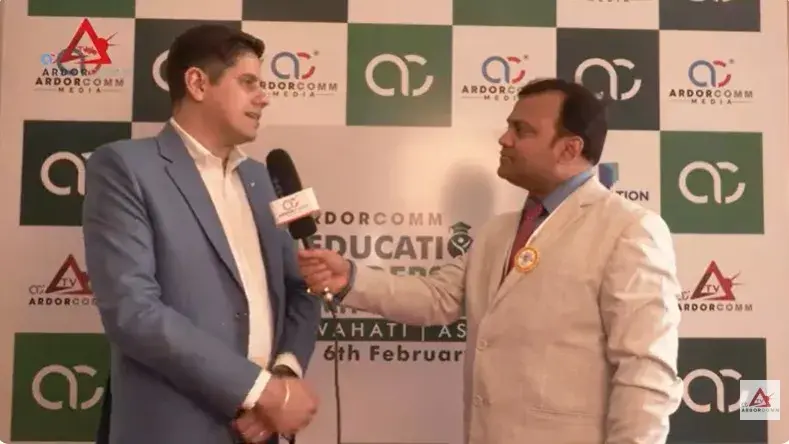
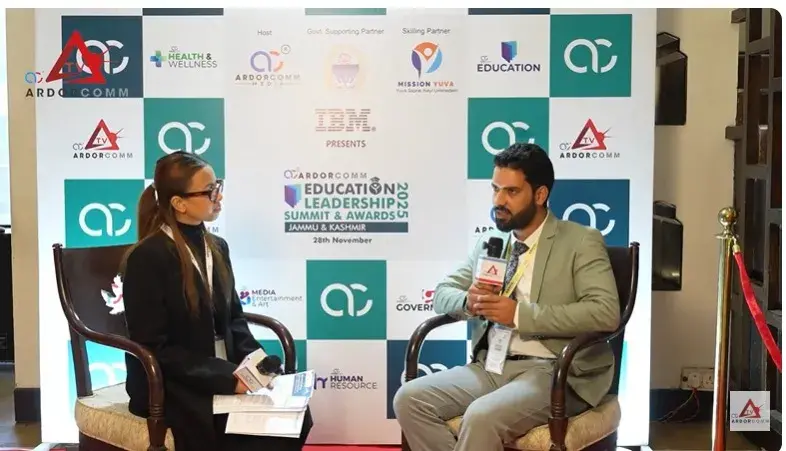
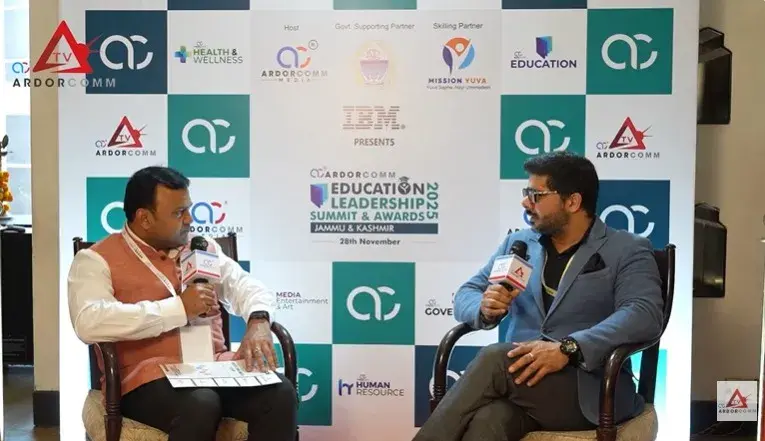
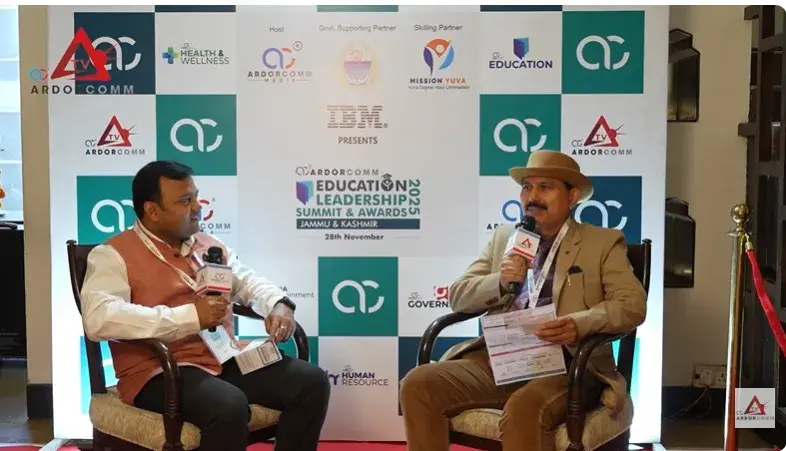
Ikkz Ikbal, Principal, Maryam Memorial Institute Pandithpara Qaziabad, Srinagar shares insights on Integrating Technology and Skills for the Future

Can you please introduce yourself and tell us a little about your institution. Yeah, my name is Ikkz Iqbal. I am the Principal and the Academic Head of Maryam Memorial Institute, Pandithpara. This institute is situated in a rural area of Baramulla, Jammu and Kashmir. Despite many challenges, we are trying to integrate technology into the school curriculum and school management so that our students are prepared for the future—the AI storm and the digital storm that are coming. Students should be ready for that. For this, we have taken many initiatives which I believe are unique. We have a Samarth Prayer Programme initiative, where we give students something new to learn every day. That is a unique program we are running. Another initiative is titled Way to Destination, where we inculcate competition-based training in students right from Class 6, so that they become competitive and competent enough for the competitive examinations across the nation. We are also providing vocational and skill-based training to our students so that they do not remain dependent after completing their studies, because job opportunities are getting limited. Skilled people do not need to look for jobs—the jobs will find them. That is what we are trying to achieve in our institution, and we hope the institute succeeds in this. Thank you. You were a panel speaker today. How was your experience interacting with panelists from both school and higher education backgrounds? It was a very good blended panel, where we had panelists from schools as well as higher education. The experience was very enriching. I got to understand the problems we are facing in the Himalayan regions and the possible solutions to them. I believe that if these discussions do not remain only at the discussion level but are taken to the practical level, we will get real solutions. I also believe that school education and higher education will achieve equity, because equity begins with access—access to students, access to teachers, access to trainers, access to parents, and access to society as a whole. That is how we can achieve results and move towards digital empowerment. That is what Digital India is all about. You have attended multiple panels and industry sessions today. How has your experience been so far? First of all, the hospitality in this part of the nation—Jammu and Kashmir—is remarkable. We are very hospitable people, and thank you for appreciating that. Secondly, ArdorComm Media Group is doing a wonderful job by blending and integrating what is happening in education with technology. Thank you for giving us this opportunity and bringing these important discussions into the limelight. I believe ArdorComm will conduct such events in Kashmir as well. We are ready to welcome you there, because we need such programs and such initiatives more than anyone else. I truly hope you will come, and we will warmly welcome you. Thank you so much. Could you share a few lines about ArdorComm Media and give your wishes? ArdorComm Media is doing a great job. As rightly said in the speech by the founder, there is no fixed office setup, yet the organization is working across the nation, throughout India, and that itself is a great initiative. I hope ArdorComm Media rises day by day. The initiatives you are taking are remarkable, and you must continue with these efforts. I hope you reach the zenith, Inshallah. That is my wish. Thank you.  

Ikkz Ikbal, Principal, Maryam Memorial Institute Pandithpara Qaziabad, Srinagar shares insights on Integrating Technology and Skills for the Future Read More »

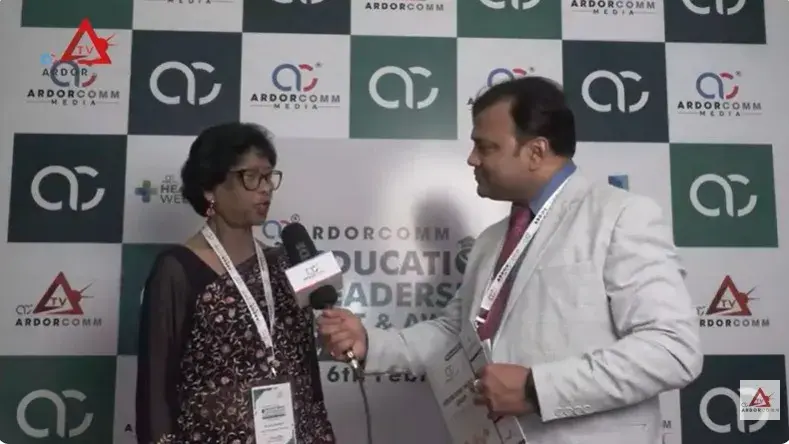
Prof. (Dr.) Rani Mughal, Principal, Govt. Degree College Surankote, Poonch shares her experience at AELSA Jammu 2025

We welcome you to today’s event, how was your experience? My name is Dr. Rani Mughal. I am the Principal of Government Degree College Surankote, District Poonch, Jammu & Kashmir. I am thankful to ArdorComm Media for inviting me as an academic delegate to participate in this education summit. Additionally, I would like to make a point here. There are many summits happening in today’s era. When I was listening to the CEO, Kumar Chandan Anand ji, I was really inspired by his story. You mentioned that you do not have any physical office anywhere in India, yet you are doing a wonderful job and organizing such kinds of events. These events are not only promoting entrepreneurial skills but are also creating awareness that we are living in an age where technology is at the forefront. I thank ArdorComm Media for coming to remote regions like ours. It gives delegates a chance to express themselves and come to a platform where there is diversity. There are so many academicians here, and you have also invited civil servants. Today’s event is even more special because our Deputy Chief Minister, who is also from Jammu & Kashmir, will be the chief guest. I would like to give my best wishes and request that you organize more and more events in Jammu & Kashmir, especially in rural regions. If such events are organized here, it will be very beneficial for us.  

Prof. (Dr.) Rani Mughal, Principal, Govt. Degree College Surankote, Poonch shares her experience at AELSA Jammu 2025 Read More »

Ritesh Kapoor, Director- Principal, A.S.N. Hr. Secondary School, Channi Himmat, Jammu shares insights on Skill Development, Digital Learning, and Holistic Education

We would like to know more about your institution. ASN Higher Secondary School stands for Adarsh Shiksha Niketan. The school was established in 1969, so we have a very strong historical background. It has 56 years of excellence. What role does skill development play at your institution? No school can run without skills and will. Skill development programs have been introduced at our school for the last decade. With government involvement, there is a special program called the INSPIRE Awards, where students’ skills are judged. They are asked to make projects and present their ideas and concepts in video format, project form, and written form, which are uploaded, and the government felicitates them. Our school has been part of the INSPIRE Awards category for more than 10 years. From which grade is skilling implemented in your institution? We have skill-based programs from Class 8 to Class 12. Before implementing any digital technology or innovation, what parameters do you follow? Our school is a fully smart campus with Wi-Fi. Every classroom is digital, equipped with tablets, smart TVs, and smart books. We definitely welcome new concepts, ideas, and technologies. AI and robotics are doing wonderful work in the market, and we will give them a warm welcome for sure. What are the key pointers before enrolling any tech partner? It needs to be user-friendly and pocket-friendly. Parents already face financial burdens related to uniforms, books, fees, and tuition. So before adding anything new to the curriculum or fee structure, we ensure it is genuine, economical, and budget-friendly. How important is sports in today’s curriculum, especially with increasing digitalization? To some extent, sports were lagging behind, but now parents, students, and schools have understood its importance. They are encouraging students toward sports and allied activities, and we actively push our students to participate. What weightage do you give to extracurricular activities? Two days ago, we held our inter-school annual day function where we felicitated merit holders, staff performers, and achievers in academics, extracurricular activities, co-curricular activities, and sports. We encourage students strongly, and teachers feel very proud when students participate and succeed. I am happy to share that our school stood first in inter-school cricket, hockey, debate, quiz (senior and junior categories), and painting competitions. Are you promoting entrepreneurship at the school level? Yes. I run a newspaper and a coffee house as well. We encourage students to start writing and improve their skills. Good writers are given opportunities to publish, and some are even paid. Around 100 students have received nominal payments for their writing skills. On special occasions, students also make cookies, chocolates, and cakes, which we sell at the coffee house. The earnings go directly to the students. How do forums like this help the education community? Education is always a joint venture. Schools cannot function alone without government support and corporate participation. For any event to be purposeful and successful, companies and stakeholders must come forward.  This forum includes everyone—from KG to PG, principals, owners, vice chancellors, and even bureaucrats. Have you attended a forum like this before? No, this is the first time. I congratulated the team during my panel discussion because this is the first platform where I saw discussions on skills, values, technology, involving teachers, principals, directors, vice chancellors, and bureaucrats together. Any key takeaways from today’s event? There are only takeaways—lots of learning and things to implement. This is the fourth anniversary of ArdorComm Media Group. Any message or wishes? ArdorComm is doing a wonderful job. Having representatives from 50 different cities is truly commendable. Keep doing your best, and you will definitely receive blessings and continued success.

Ritesh Kapoor, Director- Principal, A.S.N. Hr. Secondary School, Channi Himmat, Jammu shares insights on Skill Development, Digital Learning, and Holistic Education Read More »

Dr. Balbinder Singh Pathania, Executive Director, Dronacharya PG College, Kangra shares insights on Skilling, Digital Learning, and Empowering Students in the Himalayan Region

Please introduce yourself and your institute, sir. I am Dr. Balbinder Pathania from Dronacharya PG College of Education, Kangra, Himachal region. We have been running our college since 2006. We offer B.Ed, M.Ed, BBA, BCA, PGDCA, and B.Com courses. I am very happy and I want to appreciate ArdorComm Media Private Limited. The founder is with us, Mr. Kumar Chandan Anand. I really want to appreciate him for bringing all education leaders from school education to higher education together. There is a lot of exchange of learning, and through the latest technologies like AI, many experts from various schools and colleges are sharing and exchanging ideas. This initiative really enhances learning, and it will ultimately reach the children and students. This will lead to empowered citizens, which is the ultimate objective of education. I also see that these meetings are going to various regions. I would like to invite you, to Himachal, Dharamshala also, to do such kinds of events where there is a lot of learning. I am finding that most of the software companies here are informing us about various products that are going to add value to students’ lives, institutional growth, and student development. Skilling, upskilling, and reskilling are the need of the hour, and employment is also a big issue. I feel that Chandan sir is taking initiatives at the school level and college level with a vision that we will reach many people. It felt very good to be here in Jammu, and I am carrying a lot of learning with me to share with my faculty and students. Yes, it is going to have a big impact. Under your leadership, what initiatives has your institute taken toward Digital India in the Himalayan region? The schools and areas where we belong are village areas. Our BCA department is empowering students through blended learning and smart technology. They are giving students basic computer application skills. The idea that I got from your side is that we can sponsor a few very good students from government schools and bring them to the college level. We can offer internships during summer or winter vacations. When they go back to their schools, they will share their learning with their colleagues. That is something we can do. What is the takeaway from today’s event? The takeaway from today’s event is accelerating education through technology, learning exchange, and new skills that provide employment opportunities for students. We also learned how we can have better networking. I saw many multinational companies here. They have initiated ideas like including data analytics in BBA courses. I really want to appreciate the initiatives you have taken forward. There is a lot of learning and networking, and through such events, we can also include these ideas in our institution. We recently completed our fourth year, and this is our fourth anniversary. Any message or wishes you would like to share? Wonderful. I really want to appreciate this. Just four years, like a child, and you have done so much. It is highly appreciable. I bless you from the core of my heart, and I pray to God that every year you reach new heights and reach many villages and remote areas, spreading the message through technology and education. I want to appreciate your work and wish you all the best. Many congratulations on your four-year journey. God bless you.  

Dr. Balbinder Singh Pathania, Executive Director, Dronacharya PG College, Kangra shares insights on Skilling, Digital Learning, and Empowering Students in the Himalayan Region Read More »

Kumar Chandan Anand, Founder, CEO & Group Editor, ArdorComm Media Group Shares ArdorComm’s Vision for Education and Collaboration

Can you tell us a bit about ArdorComm Media? My name is Kumar Chandan Anand. I am the CEO, Group Editor, and Founder of ArdorComm Media Group. ArdorComm is a mix of two words — Ardor and Comm. Ardor means passion, zeal, and how enthusiastically you do your work. Comm stands for community and communication. So, with whatever intensity or passion we have, we engage the community through communication. That is what ArdorComm means. Our tagline is “Connecting Communities for Socio-Digital Transformation.” Today, media and digital media have an important role in every sector — whether it is education, healthcare, human resources, governance, media, entertainment, or art. If you look at different verticals, social media and digital media should be implemented everywhere. It is very important to move from traditional ways of working to an enhanced, elevated digital way of working. When organizations adopt this, they grow faster and stay competitive in the market. ArdorComm Education Leadership Summit & Awards has been organized so well. Many people did not imagine something like this would happen here. This is your 18th flagship event. Can you tell us more about it? Yes, this is our 18th flagship event. Small-scale events happen everywhere, but flagship events follow a defined pattern. Our flagship is called ArdorComm Education Leadership Summit & Awards. From the name itself, it is clear that ArdorComm Media organizes this event for the education and academic community. Along with knowledge-sharing sessions, we also organize an awards ceremony. This platform helps us recognize and honor academicians and educators who are doing exceptional work in education. Educators are often the unsung heroes, and there are very few platforms available to appreciate them. We want to change that. Our vision is not limited to metros and tier-one cities. We want to build strong education hubs in tier-two and tier-three cities as well. With the same passion with which we organize events in big cities, we are organizing them in smaller towns. We want to bring leadership together, create networking and collaboration opportunities, and generate meaningful outcomes. What is the purpose and long-term impact of such events? The purpose is knowledge sharing and collaboration, which is extremely important today. Government dignitaries have joined us on this forum. The Jammu & Kashmir government is supporting us, and today our Hon’ble Deputy Chief Minister is the Chief Guest. Directors from Skill Mission and Mission Yuva have also joined us. This forum brings government, academia, and corporate leaders together on one platform. When all stakeholders come together, meaningful solutions emerge that benefit the larger community. One of the panelists spoke about challenges such as lack of AI exposure, teacher training, and infrastructure in certain regions. What are your thoughts on this? Artificial Intelligence is trending because it has become part of our day-to-day life. It can be extremely helpful, but proper teacher training is essential. Whenever any technology is implemented, training must come first. Only then will implementation be successful. Students will consume technology better if teachers are well-equipped. Artificial Intelligence, machine learning, robotics, gaming, and IoT platforms are no longer optional. These must be integrated into the curriculum today. What message would you like to give to students and teachers? My message to students and the teaching community is simple: whatever you do, do it with passion. When you work with passion and intensity, success will definitely follow. At ArdorComm, passion is our foundation. Keep working diligently, stay committed, and you will achieve success. What are the future plans of ArdorComm Media Group? As a media organization, our focus is to create more networking platforms and maximize collaboration opportunities. We want to bring the three pillars of society — government, academia, and corporate — onto one platform to discuss meaningful solutions. This is our mission and our vision for community growth.  

Kumar Chandan Anand, Founder, CEO & Group Editor, ArdorComm Media Group Shares ArdorComm’s Vision for Education and Collaboration Read More »

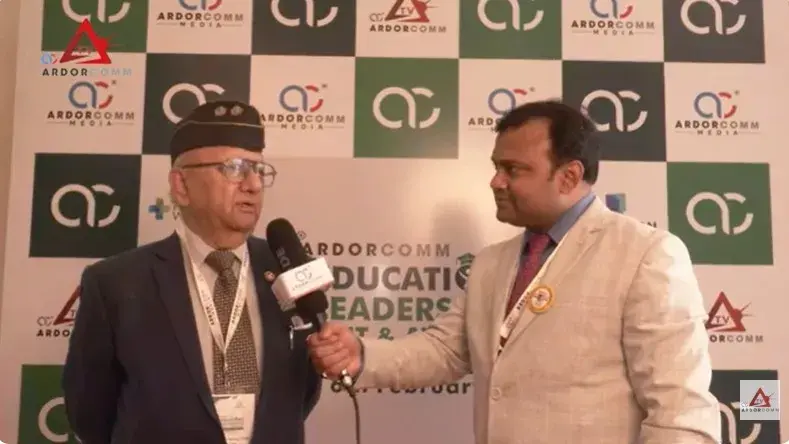
Dr. Mohammed Azam, Principal, Shri Chhote Shah Govt. Degree College, Mendhar shares about NAAC Success, and Digital-First Education 

We have Dr. Mohammed Azam at this event, can you please introduce yourself? Myself Dr. Mohammed Azam, Principal of SCS Shri Chhote Shah Government Degree College, District Poonch. I’m leading the degree college where NEP has been introduced since 2022. Recently, in the month of May, my college has been accredited for the first time in J&K UT. My college is number one for virtual mode of NAAC accreditation, and our college has got a good B Grade. Our college is located just half a kilometer near the LoC line of control. My students and faculty have done very well. That’s why, for the first time in J&K UT, we got a B Grade accreditation at the national level. What streams are there in your college? Earlier, we had only two streams: Science and Arts. But nowadays, under NEP, there are 18 major subjects and 34 minor subjects. Multidisciplinary subjects and value-added courses are also offered based on the national-level education pattern. What are your thoughts on this event? I’m delighted to attend this function. I’m thankful to the organizers and your team for inviting me from the extreme border. I will bring back the message of this conference to my students and faculty members. Today’s sessions are one of the best I must say. I’m not exaggerating my views, but because you have made all the efforts and have a collective venture here in soft skilling, accelerating education patterns, school education, and higher education from different fields, covering what we need for the future — it’s all under one roof. I can say we’ll get a good message for the people, for our younger generation, so that they can excel in the coming days in the era of the internet and all these digital platforms. They can excel, and we can share our experiences with them as well. Tomorrow or the day after tomorrow, after returning, I will organize a program at the college level showcasing your valuable contribution in this field.  

Dr. Mohammed Azam, Principal, Shri Chhote Shah Govt. Degree College, Mendhar shares about NAAC Success, and Digital-First Education  Read More »

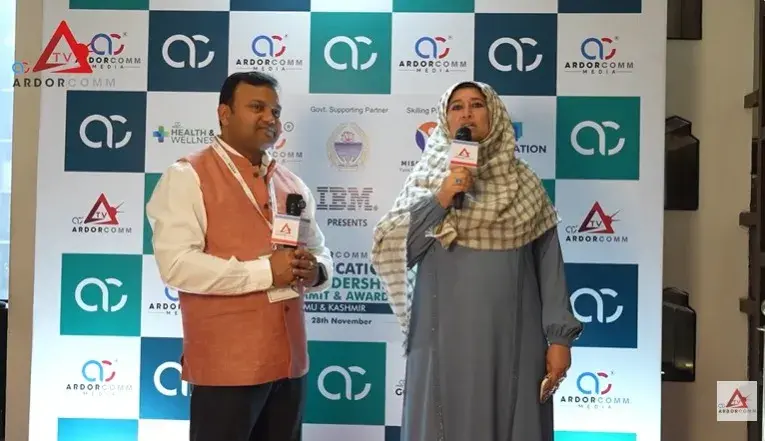
Sahitya Sudha, Headmistress, Sai International School, Kathua, shares insights on Embracing Value-Based Education and Emerging Technologies 

Welcome to ArdorComm Media. How are you feeling throughout this event? It’s a wonderful experience. Many educators are here. I came to know about many things. We discussed many topics that are very useful for educating students in the right way. We also talked about value education. I think it has been a well-spent day, a wonderful time spent together with all the educators and other company members. It was truly wonderful. You have witnessed different panels, industry speeches, and the inauguration. What are your thoughts on the event overall? I think such an event should definitely be done. Earlier, it was not happening in Jammu. It’s not a small city, but we really like such events. This event has been a real opening for educators. I think we will take the same things we learned here and deliver them to our students. They will come to know about recent developments, like upcoming technologies. For example, we discussed AI and IBM’s initiatives. We came here to learn about many things that should be incorporated for students in the education sector. I think it’s the need of the time, and Jammu really needs it.  Do you have any message or thoughts about ArdorComm Media? I would like to thank ArdorComm Media a lot for organizing this event. This is one of the best events I have ever attended in Jammu. 

Sahitya Sudha, Headmistress, Sai International School, Kathua, shares insights on Embracing Value-Based Education and Emerging Technologies  Read More »

Baba Nazrul Islam, Chairman – Life Foundation School Budgam & President – J&K Private Schools Association, emphasizes on Empowering Schools, Skilling Staff, and Fostering Collaborative Learning in J&K

Would you like to introduce a bit more about your association? Actually, this association spans across the LoC of J&K and the plains of Jammu and Kashmir. It covers the entire region, with approximately 4,700 schools associated. Around 94% of these are budget schools. We also have elite schools associated, enabling collaborative learning. I have recently taken over the association, and now it is very vibrant across all districts. We have tehsil-level units, district-level units, and division-level units—one in Jammu and another in Kashmir. What is the mission of your association? Our association focuses on making the government understand that private schools should be treated as knowledge partners. Another key goal is achieving the SDG objectives of quality education and promoting collaborative learning. Collaborative learning is essential to understand the best practices happening across Jammu, Kashmir, and even near the LoC. Despite being in a conflict zone for the last 40 years, schools in these areas have acted as agents of peace and pillars of stability, which need to be strengthened. Regarding technological initiatives, I believe we should strengthen the infrastructure of private schools, making them technological hubs that serve the community. Initially, the government can be the community owner, while individual schools manage and operate them under the supervision of the association. After 10 years, ownership should transfer to the schools themselves, because ultimately this infrastructure is being given back to the community and funded by taxpayers’ money. The key challenge is creating a robust system. If we rely solely on government agencies, no one takes full responsibility for maintenance and repairs. By giving ownership to schools after 10 years, they are responsible for managing and serving the community, and eventually, it becomes their property. We need to change the dynamics and adopt out-of-the-box solutions; without innovative thinking, these initiatives cannot succeed. How do you see technology and digitalization being integrated into schools in your region? I recently visited a group of progressive schools in Kashmir for voluntary pilot projects. We assessed internet connectivity, computer availability, and basic infrastructure. Clearly, there is a gap in infrastructure, though cosmopolitan schools are more advanced. We also need to focus on improving mathematical skills, linguistics, and financial literacy. Without a solid foundation in these areas, interest in AI, data science, and other emerging fields cannot be fully realized. How is skilling being addressed in schools, and how is teacher training managed? Teacher training is a major bottleneck in private schools. India has the highest number of budget schools in the world, which form the backbone of our education system. Teachers in private schools have not always been selected through proper processes like SSRBs, unlike government teachers who have access to DIETs, SCRTs, and NCERTs for training. Private schools often rely on companies to support curriculum selection and teacher development. Curriculum is a USP for us, and government intervention sometimes creates bottlenecks. We use a combination of online and offline sessions to train teachers, ensuring they are equipped to implement quality education. How does participation in forums like the ArdorComm Education Leadership Summit & Awards help your association in terms of knowledge sharing and growth? These forums are extremely beneficial. They allow us to socialize, network, and learn from experts. For example, I met the director of the government’s Skill Mission here, which helped me understand the new programs being launched in schools. We also explored skill development initiatives for non-teaching staff, such as drivers and maids, integrating them into productive activities that contribute to the school and the community. I had been thinking about this for a month, as many of these staff members spent their time idle, resting, or chatting without any productive engagement. I wanted them to feel that being associated with the school gives them a tangible benefit. The idea was to train them in skill-development sessions, enabling them to contribute to the school and even generate income by selling their work to the market. This approach empowers them economically while benefiting the school and the community. These sessions also provide an opportunity to meet other educators, share experiences, and consult with experts. For instance, I learned during the forum about programs launched by the government on the 25th that I had previously missed. The director of the Skill Mission personally interacted with me and encouraged suggestions, allowing us to contribute to these initiatives. Such forums are invaluable for learning, collaboration, and implementing practical solutions. I sincerely congratulate the organizers for creating this platform, which is truly progressive and impactful. Finally, this is the fourth anniversary of ArdorComm Media Group. Do you have any message or wishes? I wish them all the best. Knowledge is invaluable, and collaborative learning is essential. Organizations like ArdorComm play a significant role in shaping education in India. I also want to acknowledge their work in conflict zones like the Himalayas, which is truly commendable. In this “Amrit Kaal” of education, collaborative learning cannot happen in isolation. Organizations like ArdorComm have a vital role to play in promoting knowledge and innovation across the country. I salute their efforts in working in challenging areas, and I hope to organize one or two conferences or sessions in Srinagar soon.  

Baba Nazrul Islam, Chairman – Life Foundation School Budgam & President – J&K Private Schools Association, emphasizes on Empowering Schools, Skilling Staff, and Fostering Collaborative Learning in J&K Read More »

Arvind Mahajan, Chairman & MD, Spring Dales English School, Kathua, shares insights on nurturing skills, values, and future-ready students in J&K

We have with us Mr. Arvind Mahajan. He’s the Chairman and MD of Spring Dales English School, Kathua. We welcome you to today’s event. Thank you. It is a privilege. We would like to know more about your school. Our school, Springdale’s English School, is an ATL school funded by NITI Aayog, and we started in 1991. It was started by my mother and father, who is a retired government HOD of Physics and Computer Science from Government Degree College, Kathua. It started in ’91 with a very humble beginning of 11 students. Today, we are proud to say that we are a community of 1,100 students with excellent academic achievements and state-of-the-art facilities to engage students and help them grow value-wise. We are talking so much about technology and digitalization in events and daily life. What initiatives has your school taken in this regard? Technology-wise, we are very cautious about its use for students because we feel personal touch is more important. If a teacher relies too much on software for grading, they may not remember the students’ names or their progress. In our school, every student is precious. Each teacher knows every student’s name, their strengths, weaknesses, and what is going on in their life. The advantage of technology can sometimes dilute this personal connection. However, for certain processes like fee collection, we use systems to maintain accuracy. In higher classes, we have adopted integrated flat panels from ExtraMarks for smart classes. But when it comes to ERP implementation, we are cautious about bypassing the emotional touch of a teacher with technology. What role does skill-based learning play in your institution, and from which standard do you implement it? We are doing skill-based education right from the first class. Even our kindergarten students engage in activities like fireless cooking. They also participate in poem recitation competitions and various creative initiatives. During Diwali, they do rangoli competitions, and there are events like chefs, modeling competitions, and design workshops. For example, we collaborated with the Indian Institute of Art and Design and World University Design, Sonipat, for our 11th and 12th students, where they made beautiful dresses using waste newspapers and did modeling around it. Recently, we did a design workshop with Bennett University, where the Dean of the Design Department introduced our students to design concepts and portfolio creation. We focus on experiential learning to give students real skills to survive and thrive. For instance, one of our students recently received the Inspire Manak Award of ₹10,000 for creating an automatic on-off gas lighter system that turns off after 10 minutes of cooking. What are your key takeaways from today’s event, having networked and shared knowledge with so many people? One key takeaway was learning about the Mission YUVA initiative from Mr. S. Alam, Director of Mission YUVA. The J&K government is working hard to make students career-ready. I personally faced the challenge of being out of J&K for 15 years in the corporate sector because I couldn’t find a job there. I worked with companies like Bharat Petroleum, Hindustan Petroleum, Jindal Steel. Later, I returned as HR Head at Narayana Hospital, IIM Jammu as administrative officer. This resonated with me because I want children in my district and state to be self-empowered—entrepreneurs rather than job seekers—so they aren’t dependent on other states. Mission YUVA aligns with this vision, and we encourage our students, who are already working on startups in Atal tinkering labs, to apply to this platform. Another learning was regarding value-based education. My mother built this into our school curriculum starting from kindergarten. Our students are different because they are grounded in values, respect elders, and learn important life lessons early on. So, the two main takeaways for me are: value-based education is more important than mere scholastic achievements, and Mission YUVA is an excellent initiative to support. Finally, we are pleased to share that this is the fourth anniversary of ArdorComm Media Group. Do you have any message or wishes? I would like to heartily congratulate you for organizing event after event that are grand successes, inviting eminent educationists from the government sector, and providing a platform for leaders like us to learn. This is especially important in a state like J&K, where opportunities are limited. You have come from different parts of the country to launch this conference here, which is commendable. Keep doing the good work, and we are very thankful for inviting us and organizing this conference in Jammu & Kashmir.  

Arvind Mahajan, Chairman & MD, Spring Dales English School, Kathua, shares insights on nurturing skills, values, and future-ready students in J&K Read More »

“LTSU: Skills for the World. Values for Life.” A Conversation with EPL Anu Kaushal, Training Director & Communications

“LTSU isn’t just producing skilled youth — we are raising ethically passionate leaders for India’s future,” says Anu Kaushal, Training Director & Communications at Lamrin Tech Skills University. What makes Lamrin Tech Skills University stand out in today’s education landscape? Lamrin Tech Skills University stands apart because of its founding principle — “A Class for Masses.” We exist to empower youth at scale, providing quality, skill-based education that actually leads to employability. The biggest differentiator is that LTSU is shaped by industry minds and aligned with industry demands — a university where relevance is the curriculum. This is not symbolic; it is concrete. Our global partners — IBM, L&T, ICA Edu Skills — are on campus, training students directly, building curriculum, mentoring, and shaping learning outcomes to meet international skill standards. Collaborations with NSDC and IIT Ropar strengthen this ecosystem, linking national skilling frameworks with research, innovation, and industry-ready training. “LTSU doesn’t prepare students for the industry. The industry prepares students at LTSU.” LTSU calls itself a skills-first university. How do you implement that philosophy on the ground? We believe skills are not learned—they are practiced. At LTSU, students train in environments that mirror real industry floors: IBM Innovation Lab L&T-driven engineering and construction technologies ICA Edu Skills-led business and finance training NSDC-aligned certification pathways Live projects under industry mentors Collaboration-driven learning with IIT Ropar Students don’t wait for internships to experience industry culture — they live it every semester. We ensure students develop not just technical skills, but also soft skills, communication abilities, and workplace behavior expected in high-demand global roles.   Leadership and character-building seem embedded in LTSU’s culture. How intentional is that? Extremely intentional. Technical excellence alone cannot build strong professionals. We want our graduates to lead teams, manage people, and create workplaces rooted in dignity and respect. I often say: “At LTSU, we are raising not just leaders — we are raising ethically passionate leaders.” Skill gives you competence. Ethics give you character. The combination gives you long-term success. Our mission reflects this beautifully: to skill young leaders through the transformative power of scientific education, liberal arts, and our rich heritage. This balance — skill + values — is what makes our students unique in the global workforce. “Ethical strength is a skill too. And at LTSU, it’s a non-negotiable one.” LTSU is often called one of India’s fastest-emerging, industry-led universities. How do these collaborations benefit students? Collaborations are our backbone. Partnerships with IBM, L&T, ICA Edu Skills, NSDC, and academic engagements with IIT Ropar give students: Real-world exposure Curriculum built by industry experts Practical training from global mentors Placement opportunities in emerging tech and engineering sectors Certifications that hold international value Instead of students running after employers, employers come looking for LTSU-trained youth. That’s the power of being an industry-rooted university — something very few institutions can claim honestly. What personally drives you in your role as Training Director & Communications? I’ve always believed that education can rewrite the story of a life. Every time I see a young student from a small town walk into a global-tech conversation with confidence, competence, and clarity — I feel the impact we’re creating. What keeps me going is the fact that LTSU is not just building careers. We are building character, courage, and ethical leadership in our youth. When a student grows into a skilled, ethical, emotionally balanced professional, you realize this is not just education — this is transformation. “When skills meet ethics, students don’t just succeed — they shine because skill makes you capable. Ethics make you credible.” If you had to describe LTSU in one powerful line for our readers, what would it be? “LTSU is shaping a future where India’s youth are skilled like the world’s best — and grounded like the nation’s finest.” Your closing message for students, parents, and industry? To students: Skill yourself so well that opportunity has no choice but to follow you. To parents: Choose an environment that prepares your child for life, not just a degree. To industry: Partner with us. The workforce you dream of is being trained here. To young India: lead with skill, stand with ethics, rise with courage.  Lamrin Tech Skills University stands beyond the idea of a university — it is architecting India’s skilled and ethical future.  

“LTSU: Skills for the World. Values for Life.” A Conversation with EPL Anu Kaushal, Training Director & Communications Read More »