





ArdorComm Media News Network
October 8, 2026
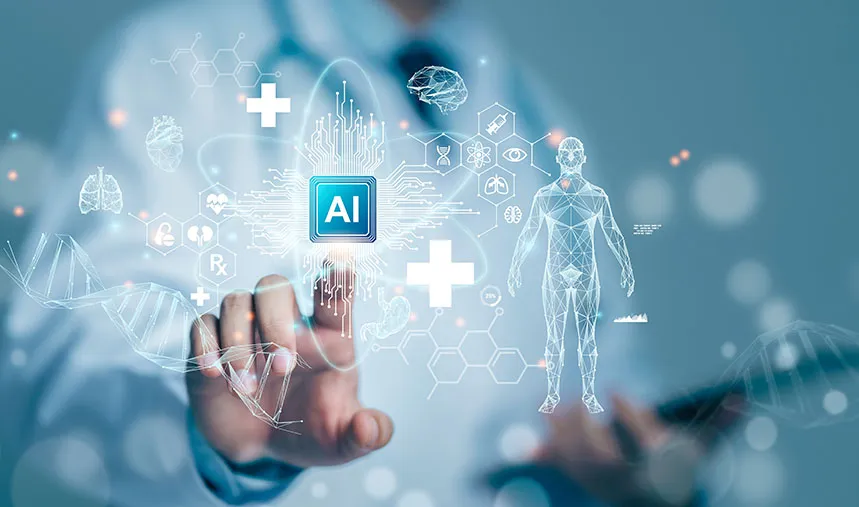
Healthcare is entering an era where the most important medical breakthrough may not be a new drug or device, but the ability to understand each patient in greater depth. Artificial intelligence can analyse vast amounts of medical data, precision medicine can help match treatments to individual biological profiles, and digital health can bring care closer to where people live and work.
Together, these technologies are beginning to shift healthcare from a largely reactive system to one that can anticipate risks, personalise interventions and support patients beyond the hospital. As these capabilities mature, the healthcare landscape of 2030 could look fundamentally different from the one we know today.
From Reactive Healthcare to Predictive Care
For decades, much of healthcare has been reactive. A patient develops symptoms, seeks medical attention, undergoes tests and then receives treatment. Advances in data science are gradually changing this sequence.
AI systems can analyse large and complex datasets, identify patterns and support disease detection, diagnosis and treatment decisions. Regulatory agencies such as the US Food and Drug Administration already recognise the growing role of AI-enabled medical devices in clinical care.
Imagine a healthcare system where a combination of medical history, laboratory results, imaging, lifestyle information and continuously collected health data can help identify a patient’s changing risk before a serious condition becomes apparent.
This does not mean AI will independently diagnose every patient. Rather, its most valuable role may be as an additional layer of intelligence supporting healthcare professionals.
The doctor will still need to understand the patient. AI can help process the enormous amount of information surrounding that patient.
AI Becomes a Clinical Assistant, Not a Replacement for Doctors
The most realistic future of AI in healthcare is not a world without doctors. It is a world in which doctors have better tools.
AI can assist with analysing medical images, identifying patterns in clinical data, summarising patient records, supporting clinical decision-making and reducing some administrative workloads. In research and pharmaceutical development, AI can also help researchers work through large datasets and identify potential avenues for investigation.
But healthcare is fundamentally different from many other industries. A medical decision can have consequences that cannot simply be reversed.
That makes accuracy, validation and human oversight essential. The FDA notes that AI-enabled medical technologies require careful consideration throughout their lifecycle, while international guidance on good machine-learning practice emphasises safe, effective and high-quality development.
The future doctor may therefore work alongside an increasingly sophisticated digital assistant—one that can process information at a scale that humans cannot, while the physician remains responsible for clinical judgement, communication and the human side of care.
The Rise of Precision Medicine
Perhaps the most important change will be the gradual move away from the idea that one treatment should work equally well for everyone.
Two patients can have the same diagnosis but respond very differently to the same medicine. Their genetics, environment, lifestyle, medical history and other biological characteristics can influence both disease risk and treatment response.
Precision medicine attempts to account for these differences.
Large research programmes are already demonstrating what becomes possible when different forms of health information are brought together. The US National Institutes of Health’s All of Us Research Program, for example, combines information including electronic health records, genomic data, physical measurements, surveys and wearable-device data to support research into more individualised approaches to prevention and treatment.
By 2030, the expansion of such datasets could help medicine become increasingly targeted. Instead of asking simply, “What treatment is normally used for this disease?”, clinicians may increasingly ask, “What treatment is most appropriate for this particular patient?”
That is a profound change in the philosophy of healthcare.
Digital Health Will Make Care More Continuous
Healthcare is also moving beyond the hospital and clinic.
Smartwatches, connected medical devices, remote monitoring systems and digital health platforms are creating new ways to collect information outside traditional healthcare settings. For patients with chronic conditions, this could mean that important health indicators are monitored between appointments rather than assessed only during occasional clinical visits.
The result could be a more continuous relationship between patients and healthcare providers.
A patient may no longer need to wait until the next appointment to discover that something has changed. A healthcare professional could potentially receive relevant information earlier and decide whether intervention is necessary.
But digital health should not become an endless stream of notifications. The real objective is not to collect more data; it is to turn useful data into meaningful action.
The Patient Will Become More Connected to the Healthcare System
Another major shift could be the changing role of patients themselves.
Digital platforms are already making it easier for people to access health records, communicate with healthcare providers, monitor certain health indicators and participate in their own care.
Over time, patients may have a more complete picture of their health rather than receiving fragmented information from different doctors, hospitals and diagnostic centres.
This could also encourage a shift from treatment-oriented healthcare towards prevention.
Instead of focusing exclusively on managing disease after it appears, healthcare systems could increasingly use data to identify risk earlier and encourage interventions before a condition becomes more serious.
The Data Challenge
There is, however, a major obstacle behind almost every digital healthcare ambition: data.
Healthcare data is highly sensitive. Medical records, genomic information, biometric measurements and information generated by wearable devices can reveal deeply personal details about an individual.
The more healthcare becomes data-driven, the more important privacy, cybersecurity, consent and responsible data governance become.
WHO has repeatedly stressed that AI in healthcare needs to be developed and deployed with safety, ethics, equity and appropriate governance at its core. It has also warned that poorly governed AI could deepen existing inequalities rather than reduce them.
This is particularly important for countries with significant differences in healthcare access. A sophisticated AI system is of limited value if the people who need healthcare most cannot access the digital infrastructure required to use it.
The Risk of a Digital Divide
The healthcare revolution must therefore address a difficult question: Who benefits from it?
Technology can potentially expand access, particularly through telemedicine, remote monitoring and digitally enabled services. But it can also create new inequalities if advanced tools remain concentrated in well-funded hospitals and urban centres.
Healthcare systems will need to invest not only in algorithms and devices but also in connectivity, digital literacy, trained healthcare professionals and affordable access.
The goal should not be to create a technologically advanced healthcare system for a privileged minority. It should be to use technology to make quality care more accessible to wider populations.
Human Connection Will Remain at the Centre
There is a temptation to describe the future of healthcare entirely in terms of machines, algorithms and data. That would miss the most important part.
A patient is not simply a collection of medical records.
Doctors must understand fear, uncertainty, family circumstances, financial limitations and individual preferences. A machine may identify a pattern in a scan, but explaining a diagnosis compassionately remains deeply human.
AI can process information. Precision medicine can improve personalisation. Digital health can improve connectivity. None of them eliminates the need for trust.
The healthcare system of 2030 will therefore need to balance technological capability with human judgement.
Healthcare 2030: A More Personal Future
The healthcare industry is entering an era in which the boundaries between medicine, technology and data science are becoming increasingly blurred.
AI could help clinicians make sense of complex information. Precision medicine could make treatment more individualised. Digital health could bring monitoring and care closer to where people live.
Together, these technologies could move healthcare from a predominantly reactive model toward one that is more predictive, preventive and personalised.
But technology alone will not determine whether that future succeeds. Strong regulation, responsible innovation, data protection, clinical validation and equitable access will be just as important as the technology itself.
The real promise of Healthcare 2030 is therefore not simply smarter machines or more connected hospitals. It is the possibility of building a healthcare system that understands the individual better, identifies problems earlier and gives healthcare professionals better tools to care for the people who need them.
And if that balance between innovation and humanity can be achieved, the biggest transformation in healthcare may not be that technology takes centre stage—but that it quietly makes better patient care possible.