






ArdorComm Media Bureau
September 18, 2026
Jodhpur, 15th September 2026: Artificial Intelligence is increasingly being used to answer questions and process information. But in real-world situations, people often need more than an answer—they need an intelligent system that can understand information from different sources, connect it with relevant knowledge and help complete a task.
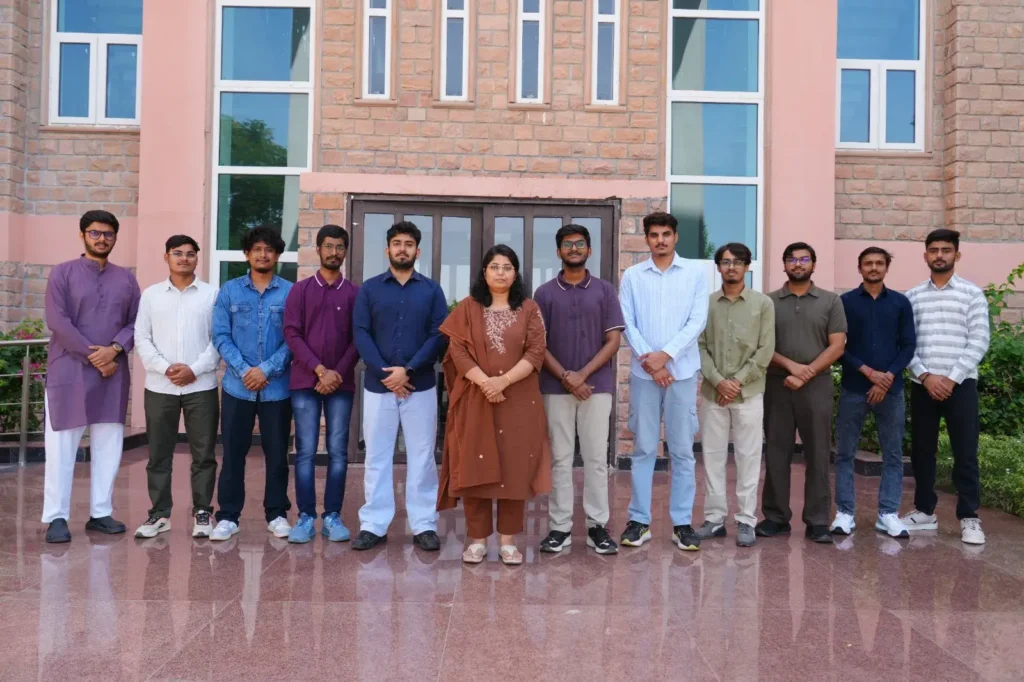
Researchers at the Indian Institute of Technology Jodhpur (IIT Jodhpur) are working towards developing such AI assistants for healthcare, education, research and industry. The research is being led by Dr. Divya Saxena, Assistant Professor, Department of Computer Science and Engineering, at the Institute’s Machine Intelligence Lab.
The research aims to develop AI systems that can bring together different forms of information—including images, text, documents, speech and sensor data—and use them together to provide useful, task-specific assistance. In healthcare, for example, such systems could help connect medical images with reports and patient information. In industry, they could bring together machine images, sensor readings, operational logs and technical manuals to support troubleshooting. In education and research, they could help users work with papers, documents and learning resources.
The scale of India’s healthcare, education and industrial ecosystem underlines the need for AI systems that can process and reason across multiple forms of data efficiently. In healthcare, a 2023 review reported that India had roughly one radiologist for every 100,000 people, with subspecialty radiologists particularly scarce and concentrated mainly in large tertiary-care hospitals and academic institutions. This highlights the potential value of AI systems that can help clinicians work with medical images, reports and other patient information, particularly where specialist expertise may be limited.
In school education alone, UDISE+ 2024–25 records 24.69 crore students, 14.71 lakh schools and 1.01 crore teachers, creating an enormous opportunity for AI-assisted, personalised learning and academic support. Higher education adds nearly 4.46 crore students, according to provisional AISHE data for 2022–23.
On the industrial front, India’s manufacturing sector generated about ₹47.47 lakh crore in real GVA in 2025–26, growing 10.7% over the previous year. This reflects the scale of industrial activity where AI could support areas such as predictive maintenance, quality control, process optimisation and decision-making. Together, these numbers demonstrate why multimodal, efficient and agentic AI—capable of working with text, images, documents, speech and sensor or machine data—can have wide-ranging applications across healthcare, education and industry, particularly when such systems can deliver useful intelligence with lower computational requirements.
A key focus is also to make these AI systems smaller, faster and easier to deploy. Large AI models can require expensive computing infrastructure and continuous internet connectivity. IIT Jodhpur’s research therefore explores ways to enable capable AI systems to operate locally—for example, in a hospital, factory or low-connectivity rural environment—while reducing computing and deployment requirements.
The research brings together three interconnected areas: Multimodal Learning, which enables AI to work with different types of information; Efficient AI, which focuses on making AI models practical and resource-efficient; and AI Agents, which can use information, tools, domain knowledge and context to assist with complete tasks rather than simply answering individual questions.
Dr. Divya Saxena, Assistant Professor, Department of Computer Science and Engineering, IIT Jodhpur, said:
“Our aim is to build AI systems that can understand information from different sources, work within real-world resource constraints and provide meaningful, context-specific assistance. The future of AI is not only about building bigger models, but also about making AI affordable, scalable, private and useful where it is needed.”
She added, “We want to move beyond AI systems that only answer questions towards AI assistants that can connect information, knowledge and tools to support people in completing real-world tasks.”
The broader vision of this research is to develop AI as a practical support system for people, institutions and society, particularly in areas where information comes from multiple sources and resources may be limited.
( Disclaimer: This report is generated from PRO services. ‘ArdorComm Media’ holds no responsibility for its content. )