


ArdorComm Media Group

Saturday, January 31, 2026 10:30 PM

21stCenturySkills

‘ArdorComm – Education Leadership Summit & Awards 2026’, to be held on 6th February 2026 in Guwahati, Assam

The Northeast region of India stands at a powerful inflection point in its education journey. With rising literacy rates, expanding digital infrastructure, increasing private and public investment, and a strong policy push through NEP 2020, the region is steadily transforming into a vibrant hub of learning, innovation, and talent development. Against this dynamic backdrop, ArdorComm Media Group proudly announces the ‘ArdorComm – Education Leadership Summit & Awards 2026’, scheduled to take place on 6th February 2026 in Guwahati, Assam. The Theme: A Vision for Tomorrow’s Northeast “Future-Ready Northeast: Building Skills & Mindsets for a Smarter Tomorrow” captures the essence of the summit’s vision. The theme reflects the urgent need to go beyond conventional education models and focus on developing future-ready skills, adaptive mindsets, digital fluency, and ethical leadership—all essential for navigating a rapidly evolving global economy. As industries are reshaped by artificial intelligence, automation, data, and sustainability imperatives, education systems must evolve in parallel. The summit aims to explore how institutions across the Northeast can align learning outcomes with employability, entrepreneurship, and lifelong learning. Northeast India: Progress, Potential & Promise Northeast India has made significant strides in education over the past decade. High primary school enrolment, growth in private unaided schools, establishment of new universities, and improved access to digital tools have collectively enhanced educational outcomes. Government-led initiatives such as Digital India, Sarva Shiksha Abhiyan, Rashtriya Madhyamik Shiksha Abhiyan, teacher training programs, and focused skilling missions are bridging gaps in access, quality, and infrastructure. NEP 2020 provides a timely framework to further strengthen this progress by: Integrating local languages and cultural contexts into curricula Encouraging experiential, multidisciplinary, and skill-based learning Promoting entrepreneurship, innovation, and vocational education Strengthening teacher capacity and institutional autonomy Together with private sector participation and EdTech innovation, these efforts are preparing students across school, higher education, and vocational segments to meet the demands of the 21st-century workforce. A Confluence of Education Leaders from the Region The ArdorComm – Education Leadership Summit & Awards 2026 will bring together senior leadership from schools, colleges, universities, skill institutions, EdTech companies, start-ups, and government bodies, with strong representation from the eight Northeastern states—Arunachal Pradesh, Assam, Manipur, Meghalaya, Mizoram, Nagaland, Tripura, and the ‘brother state’ Sikkim. The summit is designed as a high-impact knowledge-sharing platform where academicians, educators, policymakers, HR leaders, industry experts, and EdTech innovators can exchange insights, discuss challenges, and co-create solutions for sustainable educational growth. What to Expect at AELSA 2026 The one-day summit will feature: 6+ thought-provoking sessions 40+ distinguished speakers from education, government, and industry 2+ closed-door roundtable discussions Participation from 100+ school leaders and 100+ higher education leaders Presence of 40+ government dignitaries and policymakers Engagement with 25+ EdTech and corporate organizations Key Discussion Points NEP & Tech Advantage from KG to PG: Building a future-ready generation Reimagining Higher Education in the Digital Era: Transformation, trends & pathways Digital Pathways to Lifelong Learning: Balancing innovation, inclusion & ethics AI, Innovation & Inclusion: Reimagining education for tomorrow’s Northeast Bridging Education & Employability: Skills for the 21st-century workforce These sessions aim to offer actionable insights, best practices, and policy perspectives relevant to both regional and national education ecosystems. Celebrating Excellence: ArdorComm Education Leadership Awards 2026 A key highlight of the event will be the ArdorComm Education Leadership Awards 2026, which recognise and celebrate exemplary contributions, innovative initiatives, and transformational leadership across the education sector. In an era marked by rapid change, educators, institutions, and EdTech organisations have demonstrated resilience by adapting, reskilling, reinventing, and leading from the front. These awards aim to honour those trendsetters and changemakers who have significantly enhanced teaching, learning, and employability outcomes. Award Segments Preschools School Education Higher Education Skills & Training EdTech Startups EdTech Corporate Winning an ArdorComm Education Leadership Award brings national visibility, peer recognition, and credibility, positioning institutions and organisations as leaders of educational transformation. Why You Should Be Part of This Summit The ArdorComm – Education Leadership Summit & Awards 2026 is more than an event—it is a movement to empower the Northeast through education, skills, and innovation. Participants will gain: Strategic insights into policy, technology, and workforce trends Opportunities to network with top decision-makers and influencers Exposure to innovative models and successful case studies A platform to showcase achievements and thought leadership Join the Movement As Northeast India prepares for a smarter, more inclusive, and future-ready tomorrow, AELSA 2026 in Guwahati invites you to be part of this transformative journey. Date: 6th February 2026 Venue: Guwahati, Assam Participate | Partner | Nominate for Awards Together, let us build skills, shape mindsets, and create a future-ready Northeast. Visit: https://ardorcomm-media.com/aelsa/
‘ArdorComm – Education Leadership Summit & Awards 2026’, to be held on 6th February 2026 in Guwahati, Assam Read More »

Dr. Anup Kumar Rajput, Head of Publication Division at NCERT, Ministry of Education, Government of India, Emphasizes the Crucial Role of Digital Technology in Enhancing Learning

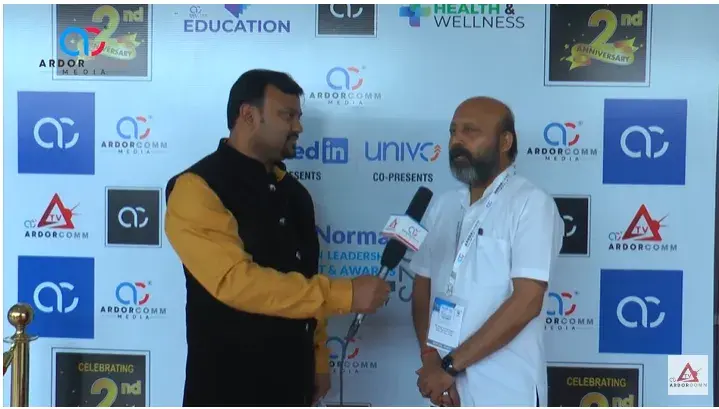
 “Nowadays, children have access to a plethora of learning resources, particularly digital ones. This highlights the necessity of incorporating digital technology into our school education system,” says Dr. Anup Kumar Rajput, Head of Publication Division at NCERT, Ministry of Education, Government of India, in an interview with Chandan Anand, CEO & Group Editor, ArdorComm Media Group at the ‘New Normal – Education Leadership Summit & Awards 2023’ #ELSANewDelhi #ELSAGurugram What are the takeaways of today’s session for you? Very nice. You are doing a good job by getting all these people collected together, and they are discussing the real issues which they are either facing with the policy or with the curriculum. So, the discussion is not only for the sake of discussion, but certainly, we will find out solutions to many of our problems, which we want the system to improve itself. Obviously, such kind of gatherings are very, very important, and you are doing a good job. I am finding many people are very good in having their own experiences shared here. So, that certainly is going to give a good way to implement the National Education Policy and the National Curriculum Framework for the foundational stage. We have seen that NEP has included Early Childhood Education as a part of the main framework of school education. What are your views on that? It’s essential. The Government of India has realized that foundational education, particularly preschool education, is very, very important and this should be included in the mainstream of education. Earlier, it was not, internationally it has been done long back when they recognized that preschool education is having the same importance as school education. So, that’s why this time, it has been realized and now it is going to come into the school education system, particularly the government education system, and will improve the learning levels of children. Even learning difficulties will somewhere be reduced with this inclusion of preschool in the mainstream education system. Normally we find children who have learning problems or maybe learning deficiencies after class three or four. So, now those most probably will be reduced because it has been envisaged in the policy that there should be a strong foundation. Once the foundation of literacy and numeracy is built up then obviously learning of all other subjects will not be a bigger problem for all the children. How does e-learning and digitalization play a role in these sectors? E-Learning has to play a major role because, during my childhood, we only had two primary learning resources: books and teachers. The books back then were not very advanced, often printed with just a single color. Similarly, our teachers were not very well-equipped with teaching materials. However, now, things have changed drastically. Nowadays, children have access to a plethora of learning resources, particularly digital ones. This highlights the necessity of incorporating digital technology into our school education system. But the approach should be a blended one. There are several ways to integrate digital technology. First, teachers can teach on their own, utilizing the resources available to them. Second, collaborative teaching can take place, where multiple teachers contribute their expertise. The third approach involves teachers using technology to aid their teaching. These methods can be blended together, both inside and outside the classroom. We can even explore innovative models like the flipped classroom, which has been experimented with not only in India but also in other countries. The key is to seamlessly integrate digital technology and e-learning into the teaching and learning process. However, the role of teachers remains crucial. They need to adapt and learn how to effectively use digital tools and resources. By doing so, they can harness the benefits of digital technology to enhance the learning experience for students and improve their learning outcomes. What changes have you brought in the NCERT books to make them more interesting for students and kids? NCERT follows the National Curriculum Framework. So, CBSE has to play a major role in board classes like class 10, 11, and 12. So, before that, the National Curriculum Framework is there, on the basis of which the curriculum is framed in different subjects for different classes. And this time, the major objective behind all other things is Competency-Based Education. Now, competencies have been placed at the center, and competency means simply the combination of knowledge, skills, attitudes, and values. When all these four things join together, then we say children are becoming competent. Our whole system was now earlier working only on knowledge, we were giving knowledge through books. Now, the skill part has been added into it, and attitude and values are required to be there. So, obviously, we need different learning material which is to be given to the children and to the teachers. So, this time, the material which is embedded with technology, that is required. For example, in the print books, you will find QR codes have been given at different places, almost at the beginning of every chapter. QR codes are obviously giving you an idea about the audios available there, videos available, they can play a video, they can play an audio, they can see an animation, and so on. So, number one is that, number two, keeping in view all sorts of learners because we have learners with different abilities. Some are visually impaired, some are physically impaired, some are hearing impaired, and so on. So, for all sorts of children, now we want that these books should be conducive to the requirements of all the children. So, that’s why the embossed books are being prepared, books with augmented reality material along with them, that’s also being prepared. Audiobooks have been prepared. NCERT has prepared audiobooks. But one issue is very important that this all is going to increase the volume of a book, the weight of a book and then children have to certainly carry these books. So, obviously one thing which this National Curriculum Framework has mentioned, NEP

Dr. Anup Kumar Rajput, Head of Publication Division at NCERT, Ministry of Education, Government of India, Emphasizes the Crucial Role of Digital Technology in Enhancing Learning Read More »