ArdorComm Media Group

Tuesday, November 17, 2026 4:44 PM

affordable education

Delhi Named World’s Most Affordable Student City in QS Best Student Cities 2027; Mumbai Tops Indian Rankings

Delhi has been recognised as the world’s most affordable destination for students in the QS Best Student Cities 2027 rankings, while Mumbai emerged as India’s highest-ranked student city by climbing to 91st place globally. Released on Wednesday by global higher education analytics firm QS Quacquarelli Symonds, the annual rankings evaluate 150 cities worldwide based on six key parameters: university quality, employer activity, affordability, desirability, student mix and student view. Globally, Seoul retained the top position with a perfect overall score of 100, followed by Tokyo in second and London in third. Melbourne secured fourth place, while Munich and Sydney shared the fifth spot. The global top 10 also featured Paris, Berlin, Vienna and Zurich, with Singapore, Beijing and Kuala Lumpur ranking just outside the top 10. Among Indian cities, Mumbai improved seven places from 98th to 91st, becoming the country’s best-performing student destination with an overall score of 61.8. The city performed particularly well in employer activity and affordability, ranking 34th and 12th globally in those categories, respectively. Delhi entered the global top 100 by moving up from 104th to 99th place with an overall score of 60.3. The national capital earned the highest affordability score worldwide (93.9), making it the most affordable city for students globally. According to QS, the average annual tuition fee for international students in Delhi is around US$2,700 (approximately ₹2.6 lakh). Delhi also ranked 29th globally in employer activity, highlighting strong career opportunities for graduates. Bengaluru slipped six positions to joint 114th with an overall score of 56.0. QS attributed part of the decline to comparatively higher international tuition fees, averaging around US$5,400 annually, the highest among the four Indian cities included in the rankings. Meanwhile, Chennai recorded a modest improvement, climbing from 128th to 123rd place with an overall score of 54.0. World’s Top 10 Student Cities 2027 Seoul, South Korea Tokyo, Japan London, United Kingdom Melbourne, Australia Munich, Germany (Joint) Sydney, Australia (Joint) Paris, France Berlin, Germany Vienna, Austria Zurich, Switzerland QS stated that the Best Student Cities rankings are based on 23 performance indicators grouped under six broad categories: university quality, employer activity, affordability, desirability, student mix and student view. To qualify, a city must have a population exceeding 250,000 and host at least two universities featured in the QS World University Rankings. Source: Indian Express  
Delhi Named World’s Most Affordable Student City in QS Best Student Cities 2027; Mumbai Tops Indian Rankings Read More »

Kendriya Vidyalayas See Sharpest Drop in Fresh Admissions in Five Years

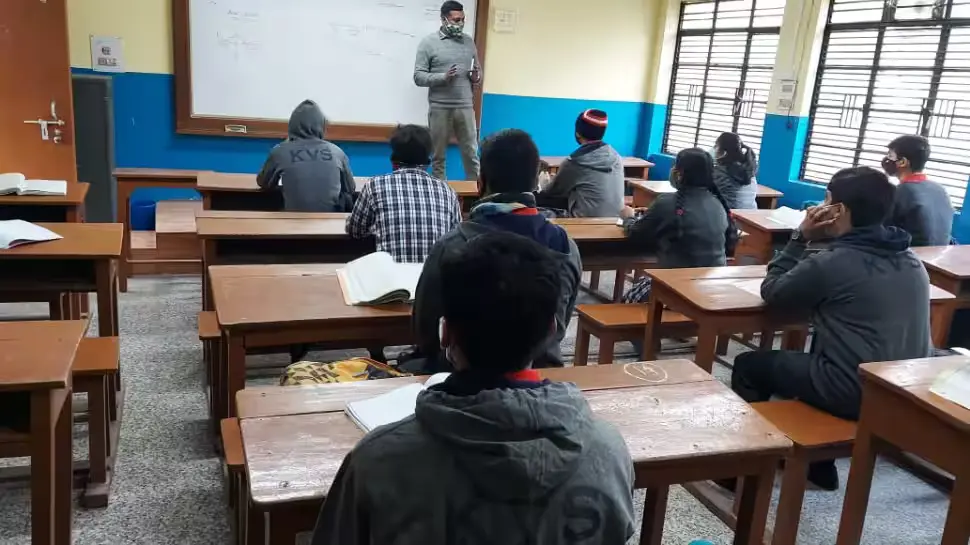
Fresh admissions to Kendriya Vidyalayas (KVs) have dipped to a five-year low for the 2024–25 academic year, with only 1,39,660 new students enrolled, as per data presented by the Ministry of Education in the Lok Sabha. This marks a steady and concerning downward trend in both new enrolments and overall student numbers in India’s flagship network of centrally run schools. A Downward Spiral in Enrolments Responding to a question in Parliament, Union Education Minister Dharmendra Pradhan provided year-wise figures highlighting the consistent drop in KV enrolments. New admissions have declined from 1,95,081 in 2020–21 to 1,39,660 in 2024–25 — a fall of nearly 29%. Meanwhile, the total student strength across all KVs also saw a dip from 14,29,434 in 2021–22 to 13,50,518 in 2024–25. Academic Year Fresh Enrolments Total Student Strength 2020–21 1,95,081 13,87,763 2021–22 1,82,846 14,29,434 2022–23 1,57,914 14,24,147 2023–24 1,75,386 13,89,560 2024–25 1,39,660 13,50,518 Though there was a temporary recovery in enrolments during 2023–24, the overall trajectory has remained downward, with this year witnessing the most significant fall in both fresh admissions and total enrolment figures. Structural Strains in a National Network Established to cater primarily to children of Central Government employees — particularly those in transferable jobs within Defence, Paramilitary Forces, PSUs, and autonomous institutions — the KV system currently operates 1,280 schools across India. However, challenges such as inadequate infrastructure, teacher shortages, and admission bottlenecks, especially in urban and semi-urban areas, are beginning to strain the system. Expansion Despite Falling Numbers Despite the declining enrolment trend, the Central Government approved the setting up of 85 new Kendriya Vidyalayas in December 2024, aimed at boosting capacity in the Civil and Defence sectors. Additionally, a KV in Shivamogga, Karnataka, is being expanded by adding two new sections per class. The initiative carries a total budget of ₹5,872.08 crore — ₹2,862.71 crore allocated for capital projects (including construction) and ₹3,009.37 crore for recurring expenditures. However, actual implementation remains slow due to challenges such as: Delays in land transfer and legal ownership Approval processes for building designs and cost estimates Fund disbursal lags Administrative clearance delays at the local level These procedural hurdles often stall the timely launch of new schools or the expansion of existing ones. Decoding the Decline Experts attribute the drop in admissions to several key factors: Overcrowding: Many KVs have hit their capacity limits, especially in cities, making it harder for new students to secure seats. Construction delays: Several approved schools are yet to become operational due to incomplete infrastructure. Emerging competition: An increase in affordable, private CBSE schools in smaller towns may be attracting families away from KVs. Policy ambiguities: Unclear guidelines in certain regions are adding to confusion over eligibility and admissions. Rethinking the Road Ahead While the government continues to emphasize the ongoing expansion of the KV network, the sharp drop in enrolment calls for an urgent review of operational and policy priorities. Education experts suggest the need for swift action to improve school infrastructure, accelerate construction timelines, digitize admissions, and invest in teacher training. With public demand for affordable, quality education still high, the future of Kendriya Vidyalayas may well depend on how effectively these systemic issues are addressed. Source: TOI

Kendriya Vidyalayas See Sharpest Drop in Fresh Admissions in Five Years Read More »

Over 4.7 Lakh Pirated NCERT Books Seized Since 2024, Says Education Ministry

In a significant crackdown on textbook piracy, the Ministry of Education revealed that over 4.7 lakh pirated NCERT textbooks have been confiscated across India since 2024. This update was shared in a written response by Union Minister of State for Education, Jayant Chaudhary, during a Rajya Sabha session on Wednesday. “Reports of NCERT textbook piracy have emerged from various parts of the country. From 2024 to 2025, enforcement teams seized around 4.71 lakh counterfeit books in multiple operations carried out in different states,” said Chaudhary. He emphasized that piracy is largely driven by the profit motives of unauthorized operators. NCERT’s mission, Chaudhary reiterated, is to provide high-quality educational resources at minimal cost to students across India, functioning on a no-profit, no-loss model. Highlighting recent efforts to combat the menace, he informed that in the past year alone, NCERT conducted raids on 29 locations linked to the production and distribution of pirated books. These included premises using unauthorized NCERT watermarked paper and illegal printing setups. Assets and equipment worth over ₹20 crore were seized during these raids. To address the root causes of piracy, several measures have been implemented, including a 20% price cut on textbooks, improved paper and print quality with advanced machinery, faster and timely textbook production, and expanded online availability through e-commerce channels. In a tech-driven approach, NCERT also tested an innovative anti-piracy mechanism—developed and patented by IIT Kanpur—on one million copies of a Class 6 textbook, aiming to deter counterfeit reproduction through secure tracking technology. Source: PTI Image Credit: iStock  

Over 4.7 Lakh Pirated NCERT Books Seized Since 2024, Says Education Ministry Read More »