


ArdorComm Media Group

Tuesday, November 24, 2026 9:41 AM

AI and Employment

AI to Transform, Not Terminate Jobs: Amazon CEO Andy Jassy
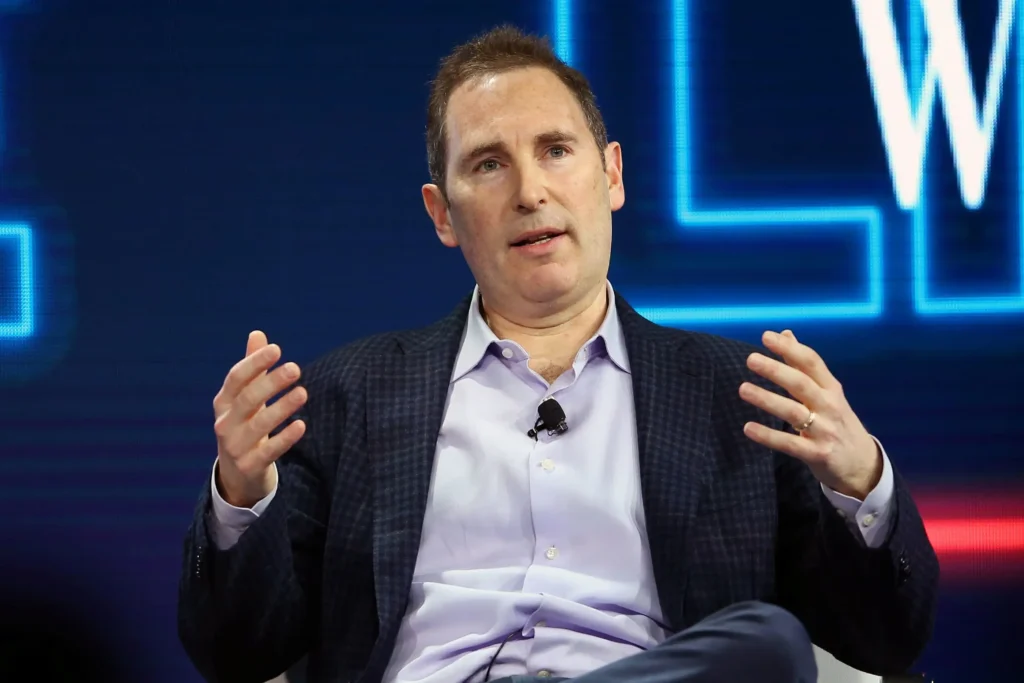
Artificial intelligence is poised to redefine the workplace rather than eliminate jobs, according to Andy Jassy, CEO of Amazon. Addressing widespread concerns about AI-driven unemployment, Jassy suggested that fears of large-scale job losses are likely exaggerated. In a recent media interaction, Jassy acknowledged that many roles which have depended heavily on human labour over the past two to three decades may require fewer workers in the future. However, he stressed that this shift does not mean employment opportunities will vanish altogether. Instead, the structure and skill requirements of jobs are expected to evolve. “I do believe that a lot of the jobs that we’ve thrown human beings at the last 20 or 30 years, you won’t need as many human beings doing those same jobs. But I also think there will be other jobs created. And that has always happened in every technology shift,” he said. Backing this perspective, a recent report by Morgan Stanley suggested that AI’s long-term impact on employment may be less disruptive than widely feared. While automation will affect certain roles, the report stated that most workers are unlikely to be permanently displaced. Instead, many are expected to transition into new or emerging roles — some of which do not yet exist. Morgan Stanley drew comparisons with major technological advancements over the past 150 years, including electricity, mechanised farming, computers and the internet. These innovations transformed industries and reshaped job requirements but did not eliminate the need for human labour. The report also referenced the introduction of spreadsheets in the 1980s as an example. While spreadsheets reduced demand for some clerical tasks, they enabled financial professionals to focus on more strategic and high-value responsibilities, ultimately creating new career pathways within the sector. Industry leaders and analysts therefore suggest that AI will reshape the workforce, demanding new skills and adaptability, rather than causing widespread unemployment. Source: IANS

AI to Transform, Not Terminate Jobs: Amazon CEO Andy Jassy Read More »

IBM Integrates AI to Streamline HR Operations, Replaces 200 Roles

In a significant move toward embracing artificial intelligence (AI), IBM has begun a strategic overhaul of its internal processes, leading to the replacement of around 200 human resources (HR) positions with AI-powered systems. This development reflects a broader industry shift where automation is being leveraged to handle repetitive administrative tasks, freeing up human workers to focus on more strategic and client-centric responsibilities. According to reports from industry insiders, the tech giant has already automated several HR functions such as employee verification and internal job transfers. These changes are part of IBM’s vision to drive operational efficiency while simultaneously upskilling its workforce to thrive in an AI-integrated future. IBM’s CEO, Arvind Krishna, recently confirmed that hundreds of HR roles have been transitioned to AI agents. However, he emphasized that this transformation has not led to a decline in overall employment. On the contrary, the company has expanded its workforce in key areas like programming, marketing, and sales—fields that rely on critical thinking and interpersonal skills, and are thus less susceptible to automation. Strategic Shift Towards AI-Augmented Roles The decision to automate portions of the HR function is rooted in IBM’s broader objective of enabling employees to engage in higher-value work. By offloading routine tasks to AI, the organization aims to allow HR professionals to focus on strategic planning, employee engagement, and other complex functions that require human insight. Nickle LaMoreaux, IBM’s Chief Human Resources Officer, noted that the impact of AI on jobs is more about transformation than elimination. She clarified that while certain tasks will be automated, most roles will evolve rather than disappear—enabling professionals to work alongside AI tools that boost productivity and decision-making. Looking Ahead IBM anticipates that up to 30% of back-office roles, particularly those with minimal customer interaction, could be affected by AI within the next five years. This could influence approximately 7,800 positions globally. Nonetheless, the company remains committed to investing in talent across creative, analytical, and tech-driven domains—areas that continue to demand human ingenuity despite rapid advances in automation.   Source: The New Indian Express Image credit: Shutterstock  

IBM Integrates AI to Streamline HR Operations, Replaces 200 Roles Read More »