


ArdorComm Media Group

Sunday, November 22, 2026 9:32 PM

AI education

India Introduces AI & Computational Thinking for Classes 3–8, Expanding Early Tech Education in Schools
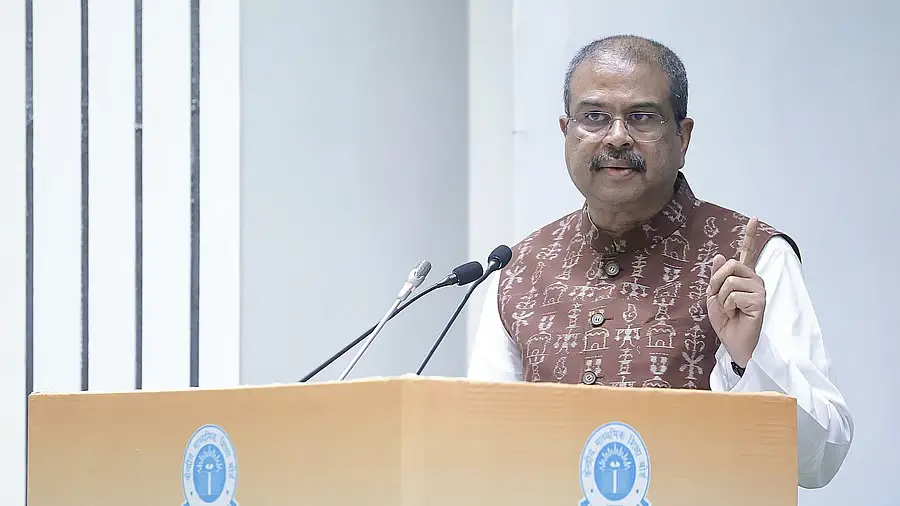
In a major step toward embedding future skills in school education, the Ministry of Education has unveiled a new Artificial Intelligence (AI) and Computational Thinking (CT) curriculum for students from Classes 3 to 8 under the Central Board of Secondary Education. Announced on April 1, the initiative marks the first structured integration of AI concepts at the foundational and middle school levels. Union Education Minister Dharmendra Pradhan described the move as a “transformative step” aimed at preparing students for a technology-driven future. According to the Minister, the curriculum is supported by well-designed modules, detailed teacher handbooks, and a strong assessment framework. These components are intended to provide students with early exposure to emerging technologies while ensuring a systematic learning approach. This development aligns with the vision of the National Education Policy 2020, which emphasizes digital literacy, coding, and the development of 21st-century competencies from an early stage. While AI was previously offered as an elective subject for Classes 9 to 12, this initiative expands its reach to younger learners. The curriculum has been developed by an expert panel led by a professor from Indian Institute of Technology Madras, with participation from key institutions such as CBSE, NCERT, Navodaya Vidyalaya Samiti, and Kendriya Vidyalaya Sangathan. The rollout will begin in the academic session 2026–27 in a phased manner. Schools affiliated with CBSE will receive necessary guidelines, resources, and teacher training support to ensure consistent implementation across both urban and rural regions. The curriculum is designed to be age-appropriate, introducing younger students to core computational thinking skills like pattern recognition, logical reasoning, and problem-solving. As students progress, they will gradually explore foundational AI concepts. Rather than being taught as a separate subject in early grades, AI and CT will be integrated into existing subjects and classroom activities. The approach prioritizes experiential learning through projects, digital tools, and hands-on exercises. To address challenges in implementation, teachers will undergo dedicated training programs supported by structured handbooks. Additionally, assessments will focus on conceptual clarity and practical application instead of rote memorization. Overall, the initiative aims to build a strong technological foundation among students, equipping them with critical thinking and problem-solving skills necessary for the evolving digital landscape. Source: Deccan Herald

India Introduces AI & Computational Thinking for Classes 3–8, Expanding Early Tech Education in Schools Read More »

Gujarat Rolls Out AI Action Plan to Revolutionize Governance by 2030

Ardorcomm news

The Gujarat government has approved a comprehensive Artificial Intelligence (AI) Implementation Action Plan for 2025–2030, signaling a major step toward embedding AI technologies into its governance and public service mechanisms. Endorsed by Chief Minister Bhupendra Patel, the initiative is geared toward enhancing service delivery, optimizing administrative efficiency, and leveraging AI across key sectors including healthcare, education, agriculture, and finance. This strategic blueprint, developed by the Department of Science and Technology and shaped by insights from a 10-member AI Taskforce, aligns with national development visions such as Viksit Gujarat@2047 and Viksit Bharat@2047. It also supports the Centre’s push under Prime Minister Narendra Modi’s leadership to integrate AI into governance, public policy, and digital infrastructure. The five-year roadmap highlights six core areas: Data Security and Compliance: Establishing a trusted, regulation-friendly data environment. Infrastructure Development: Expanding GPU- and cloud-powered digital frameworks, with plans to launch AI factories in smaller cities. Skilling Initiatives: Training 2.5 lakh individuals—including students, MSMEs, and government personnel—in AI, machine learning, and emerging technologies. Research & Industry Collaboration: Fostering academic-industry partnerships to develop real-world AI models tailored for governance. Startup Support: Boosting DeepTech innovation with funding, mentorship, and incubation for startups. Responsible AI: Instituting auditing systems, safety protocols, and ethical guidelines to ensure transparent and secure AI deployment. Implementation will be phased, beginning with the creation of a state-level AI data repository and the establishment of AI development hubs. Pilot programs will be rolled out in select government departments to test and refine AI use cases. To guide the initiative, a dedicated AI and Deep Tech Mission will be established—tasked with overseeing project design, monitoring, and cross-sectoral collaboration. Gujarat has already laid strong groundwork in the AI space, launching an AI Centre of Excellence at GIFT City, organizing capacity-building workshops for civil servants, and initiating efforts to develop Indian language-based AI solutions. The state also conducted an AI Innovation Challenge to source practical AI applications from innovators and entrepreneurs. With this action plan, Gujarat positions itself at the forefront of AI-enabled governance, aiming to create a smarter, more responsive, and future-ready administrative ecosystem. Source: The Hindu Photo Credit: PTI  

Gujarat Rolls Out AI Action Plan to Revolutionize Governance by 2030 Read More »