ArdorComm Media Group

Wednesday, November 25, 2026 6:40 PM

Airtel Digital TV

DTH Operators Provision Over Rs 11,000 Crore Against Disputed Licence Fees
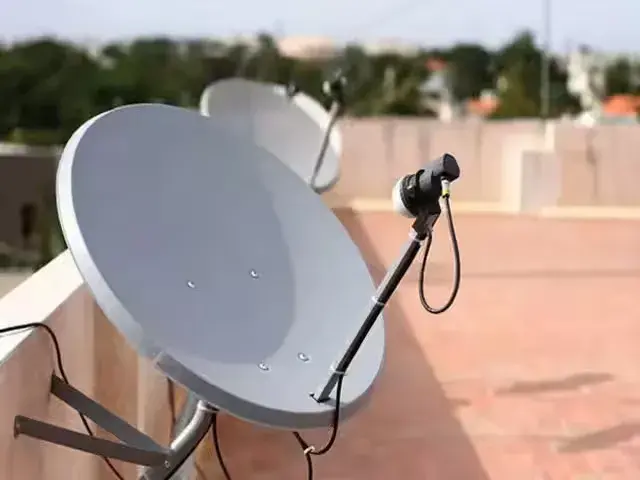
India’s major direct-to-home (DTH) operators have collectively made provisions of more than Rs 11,000 crore against disputed licence-fee liabilities raised by the Ministry of Information and Broadcasting (MIB), highlighting the growing financial pressure on the sector. According to regulatory filings for the financial year ended March 31, 2026, the operators are also awaiting clarity from the government on a possible reduction in the existing 8% licence fee levied on adjusted gross revenue (AGR). The disputed dues are currently subject to legal proceedings.  Tata Play has provided Rs 2,331 crore against an MIB demand of Rs 4,548 crore and has recognised another Rs 3,232 crore as a contingent liability. Bharti Telemedia, which operates Airtel Digital TV, has made provisions of around Rs 4,487 crore. Dish TV has provided approximately Rs 4,866 crore against a demand of Rs 7,203 crore up to FY25. Sun Direct has also faced an additional licence-fee demand of Rs 2,107 crore covering the period from FY2007-08 to FY2023-24.  The licence-fee issue has been a long-running point of contention between the government and DTH companies. In May 2025, the MIB had issued demand notices totalling around Rs 16,000 crore to four private DTH operators over outstanding licence fees.  The dispute comes at a challenging time for the DTH industry, which is dealing with subscriber losses and increasing competition from OTT platforms and DD Free Dish. The sector has consequently been looking beyond traditional satellite television, with operators expanding into areas such as IPTV, broadband and OTT aggregation. The government’s decision on the future structure of the DTH licence fee could therefore have a significant bearing on the financial sustainability and transformation strategy of India’s private DTH industry. Source: Economic Times

DTH Operators Provision Over Rs 11,000 Crore Against Disputed Licence Fees Read More »
DTH Revenues Dip in FY25 While FM Radio Sees Growth: MIB Report

Media news

The Ministry of Information and Broadcasting (MIB) reported a decline in revenue from the Direct-to-Home (DTH) television sector in FY25, signaling a waning user base for pay TV services. In contrast, earnings from the FM radio sector witnessed an uptick, according to the ministry’s latest financial disclosures. In FY25, revenue from private DTH operators stood at ₹648.73 crore, down from ₹692 crore in FY24 and ₹859.96 crore in FY23—a 25% decline over two years. Meanwhile, private FM radio revenues rose to ₹196.28 crore, up from ₹186.80 crore in FY24 and ₹178.99 crore in FY23. Overall, the ministry earned ₹1,012.39 crore in non-tax revenue in FY25 through the Bharatkosh platform on the NTR e-portal, primarily from TV and radio licensing fees. India’s DTH sector, comprising Tata Play, Airtel Digital TV, Dish TV, and Sun Direct, has seen a continuous drop in active pay-TV subscribers—from 70.26 million in 2020 to 56.92 million in 2025, as per TRAI data. This trend is driven by a growing shift toward OTT platforms and the free-to-air DD Free Dish service, which now reaches an estimated 50–60 million households. Adding to the sector’s challenges, the MIB issued demand notices exceeding ₹16,000 crore to private DTH operators for unpaid licence fees. Meanwhile, DD Free Dish, operated by Prasar Bharati, does not pay licence fees and falls outside the private DTH revenue structure. On the other hand, FM radio continues to maintain its relevance, especially in regional and semi-urban markets. Revenue is generated through entry and migration fees, licence fees, tower rentals, and processing charges. The ministry noted FM’s growing popularity among youth and advertisers, with 388 private FM channels operating across 113 cities in 26 states and 5 Union territories as of March 2024. New FM stations have also been launched in border areas such as Leh, Kargil, Bhaderwah, Kathua, and Poonch to bolster outreach efforts. TRAI data shows total advertising revenue for FM radio reached ₹466.63 crore in Q4 FY24, a slight drop from ₹500.11 crore in Q3, but still reflecting the medium’s resilience in a rapidly evolving media environment. Source: Economic Times  

DTH Revenues Dip in FY25 While FM Radio Sees Growth: MIB Report Read More »

Tata Play and Airtel Digital TV Set to Merge, Creating India’s Largest Pay-TV Entity

The Tata and Bharti groups are finalizing a merger between their direct-to-home (DTH) businesses, Tata Play and Airtel Digital TV, in a strategic move to consolidate their positions amid a shrinking pay-TV market. Merger Details and Ownership Structure The merger will be executed through a share swap, with Airtel expected to hold a majority stake of 52-55% in the combined entity, while Tata Play’s shareholders, including Walt Disney, will own 45-48%. This deal is set to enhance Airtel’s non-mobile revenues by reinforcing its ‘triple play’ strategy, which integrates telecom, broadband, and DTH services. Tata Play, formerly Tata Sky, was initially a joint venture with Rupert Murdoch’s News Corp, with Walt Disney acquiring News Corp’s stake in 2019 after purchasing 21st Century Fox. Airtel Digital TV, operated under Bharti Telemedia Ltd, is a wholly owned subsidiary of Bharti Airtel. Market Impact and Subscriber Base The merger will provide Airtel access to Tata Play’s 19 million subscriber homes, creating a combined entity with 35 million paid subscribers as of September 2024 and revenue exceeding ₹7,000 crore in FY24. Additionally, Tata Play’s broadband arm has 500,000 customers, offering cross-selling opportunities. Both companies are expected to sign a heads of terms agreement soon, after which due diligence will begin. The operations of both firms are valued at approximately ₹6,000-7,000 crore each. While Airtel’s senior management is likely to oversee the new entity, Tata is negotiating for two board seats. Industry Trends and Competitive Landscape This deal follows a decade after the Dish TV-Videocon d2h merger and aligns with broader industry shifts, such as Reliance Industries and Walt Disney merging Star India and Viacom18 to form JioStar. The pay-TV sector has contracted significantly, with subscriber numbers falling from 120 million to 84 million homes in recent years due to competition from OTT platforms and DD Free Dish’s free DTH service. A TRAI report from September 2024 indicates that pay DTH subscribers have declined to 60 million from 70 million in FY21. Analysts believe Airtel aims to convert Tata Play’s top 5 million DTH subscribers into broadband customers to boost average revenue per user (ARPU). Regulatory Challenges and Financial Liabilities The merger faces regulatory scrutiny, particularly due to pending licence fee disputes. Bharti Telemedia has a potential liability of ₹5,580 crore, with provisions of ₹3,426 crore made as of March 31, 2024. Tata Play also faces a consolidated licence fee demand of ₹3,628 crore, including ₹1,401.66 crore in interest. Future Outlook Despite the pay-TV sector’s decline, the merged entity is poised to become India’s largest pay-TV provider, leveraging bundled services and broadband integration to drive future growth. Source: Social Samosa

Tata Play and Airtel Digital TV Set to Merge, Creating India’s Largest Pay-TV Entity Read More »