


ArdorComm Media Group

Friday, March 20, 2026 7:13 AM

Cervical Cancer

Single HPV Shot Shown to Offer Strong Protection Against Cervical Cancer, Major Study Finds
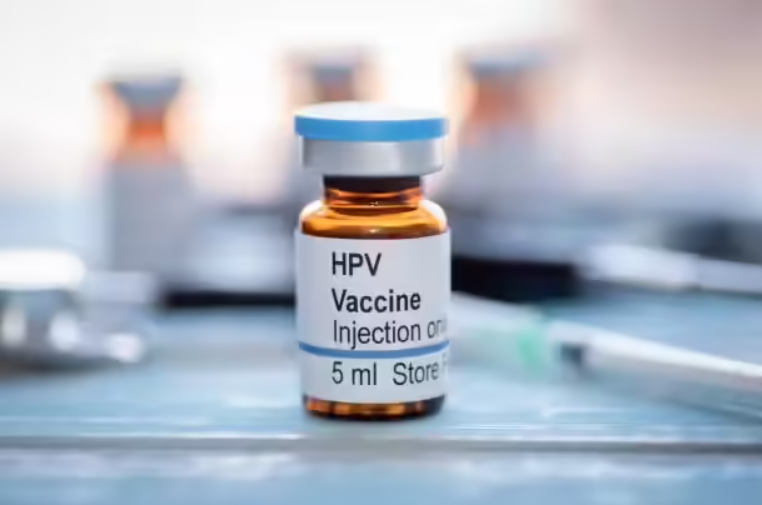
A landmark international study suggests that one dose of the HPV vaccine may be just as effective as the standard two-dose regimen, potentially transforming cervical cancer prevention efforts worldwide. Researchers announced on Wednesday that a single human papillomavirus (HPV) vaccine shot provided nearly the same level of protection against the virus strains most linked to cervical cancer. HPV is a widespread sexually transmitted infection, and while most cases resolve on their own, persistent infections can lead to cervical cancer and several less common cancers in both women and men. The HPV vaccine has been advised for U.S. girls since 2006, contributing to a decline in precancerous cervical conditions among women in their 20s — the first cohort vaccinated in adolescence. Still, cervical cancer remains a major global threat, causing around 340,000 deaths annually, particularly in parts of the world where vaccination access is limited. The promising findings come from a large Costa Rica-based trial led by the U.S. National Cancer Institute, involving more than 20,000 girls aged 12 to 16. Participants received one of two widely used HPV vaccines. After six months, half received a second dose while the other half were given a different childhood vaccine. Over five years of follow-up, researchers conducted regular cervical screenings and compared results with an unvaccinated control group. Published in the New England Journal of Medicine, the study concluded that a single dose offered about 97% protection, essentially matching the effectiveness of two doses. Dr. Ruanne Barnabas of Massachusetts General Hospital, in an accompanying editorial, highlighted that while earlier studies hinted at single-dose efficacy, this research solidifies long-term confidence in the approach. “We now have the evidence and tools to eliminate cervical cancer — what’s needed is the global commitment to deploy them effectively and fairly,” Barnabas wrote. In the U.S., two doses remain the official recommendation for children aged 11 or 12, with catch-up vaccinations advised up to age 26. The Centers for Disease Control and Prevention reports that 78% of teens aged 13 to 17 have received at least one dose. Worldwide, however, fewer than one-third of adolescent girls are vaccinated, according to the World Health Organization, which has already begun supporting single-dose strategies to improve coverage. Researchers noted that the study did not assess protection against other HPV-related cancers, such as those of the head and neck, and stressed that longer-term monitoring is still necessary. Source: AP

Single HPV Shot Shown to Offer Strong Protection Against Cervical Cancer, Major Study Finds Read More »

India Plans Major HPV Vaccine Push with Frontline Training and Awareness Drive

The Union Health Ministry is set to launch comprehensive capacity-building initiatives for frontline workers involved in administering the Human Papillomavirus (HPV) vaccine, as part of its ongoing efforts to prevent cervical cancer among young girls. This follows Union Finance Minister Nirmala Sitharaman’s announcement in the 2024 interim budget encouraging HPV vaccination for girls aged 9–14. Sources indicate that multiple meetings have been held by the ministry to devise a detailed strategy for the rollout. “Capacity building for frontline health workers, along with sensitization through IEC (Information, Education, and Communication) activities, is being planned for smooth implementation of the HPV vaccination program,” a senior official confirmed. The National Technical Advisory Group on Immunisation (NTAGI) had recommended the inclusion of the HPV vaccine in India’s Universal Immunisation Programme in June 2022. Currently, India has access to vaccines from MSD Pharmaceuticals and Serum Institute of India. MSD’s Gardasil 4 and Serum Institute’s Cervavac target four HPV sub-types: 6, 11, 16, and 18. Gardasil 9 — India’s first gender-neutral HPV vaccine — offers protection against nine HPV sub-types and is available for girls (9–26 years) and boys (9–15 years). The vaccines provide protection against cervical, vulvar, vaginal, and anal cancers, as well as genital warts in both males and females. Sub-types 16 and 18 are the leading causes of cervical cancer, officials noted. The World Health Organization (WHO) recommends a single-dose vaccine for optimal protection. India, home to 16% of the world’s women, accounts for nearly 25% of global cervical cancer cases and 33% of related deaths. Each year, around 80,000 Indian women are diagnosed with cervical cancer, and approximately 35,000 succumb to the disease. Source: Business Standard

India Plans Major HPV Vaccine Push with Frontline Training and Awareness Drive Read More »

Novel HPV Methylation Test Boosts Cervical Cancer Detection

Researchers at the Montefiore Einstein Cancer Centre (MECC), designated by the National Cancer Institute (NCI), have developed a groundbreaking test to detect a type of cervical cancer that often goes unnoticed by traditional Pap tests. This discovery has significant implications for cervical cancer screening. The study’s findings were recently published in the Journal of the National Cancer Institute (JNCI). Dr. Howard Strickler, the co-senior and corresponding author of the JNCI paper and a member of MECC, explained, “Our innovative test demonstrates a high sensitivity for detecting cervical adenocarcinoma (ADC), which now accounts for up to 25 percent of cervical cancer cases, along with its precursor lesions, adenocarcinoma in situ (AIS), which often progress into ADCs.” Cervical adenocarcinomas have higher mortality rates compared to the more common cervical squamous cell cancers since they are frequently missed by current screening methods. Dr. Strickler’s goal is to identify the disease at an early stage, before it evolves into cancer. Dr. Strickler also serves as a professor and heads the division of epidemiology at the Albert Einstein College of Medicine. The Pap test, a method in which a pathologist examines tissue samples for abnormal cells, has significantly reduced the incidence of cervical squamous cell cancer over the past six decades. However, the prevalence of ADC has not decreased due to the Pap test’s limited effectiveness in detecting it. In recent years, HPV testing, which identifies the human papillomaviruses (HPVs) responsible for nearly all cervical cancer cases, has become a standard screening tool alongside the Pap test. Although there are over 100 HPV types, three specific types (HPV 16, 18, and 45) account for more than 70 percent of all cervical cancer cases and over 90 percent of ADC cases. Current HPV tests cover these three types and can alert infected women to a high risk of developing cervical cancer. While vaccines like Gardasil-9 offer protection against nine HPV types, several generations of women are now beyond the eligible age for vaccination. Therefore, screening and preventive treatment for cervical cancer will remain crucial for decades. The MECC-developed HPV test takes a novel approach by examining methylation levels in HPV 16, 18, and 45. Dr. Robert D. Burk, a co-leader of the study and a member of Einstein and MECC, explained, “Next-generation genetic testing has provided us with opportunities to more accurately detect oncogenic HPV strains and identify genomic patterns associated with the development of AIS and ADC.” Methylation, the process of adding methyl groups (CH3) to DNA, is a common occurrence in both viral and human DNA, playing a crucial role in altering gene expression. The study, conducted in collaboration with the NCI, analyzed methylation levels in cervical tissue samples from 1,400 women who underwent cervical cancer screening at Kaiser Permanente Northern California before 2014, with known cervical cancer statuses. By assessing HPV in these samples, researchers calculated methylation percentages at 35 different viral-genome sites, providing each sample with a “methylation score” based on the average methylation percentage across these sites. Women with methylation scores in the top 25 percent had significantly increased odds of developing ADC or AIS. Dr. Burk emphasized, “If our findings are confirmed in clinical trials, women with a high methylation score may benefit from more extensive evaluation, such as colposcopy and specialized tissue examination, in addition to Pap tests. This could lead to early diagnosis and treatment for ADC or the removal of AIS lesions before they progress to ADC.” Dr. Strickler noted that the test’s equipment could potentially be simplified, making it suitable for broader use in resource-limited countries. Cervical cancer remains the fourth most common cancer among women, with a disproportionately higher burden in lower- and middle-income countries, especially those in Sub-Saharan Africa where HIV-HPV co-infections are prevalent. Significant disparities also exist within the United States, with the Bronx, one of the nation’s poorest urban congressional districts, experiencing cervical cancer rates 50 percent higher than Manhattan. More frequent and effective screening could help bridge this healthcare disparity. “Ideally, the new HPV methylation test would only need to be done once every three to five years,” added Dr. Strickler, expressing hope that the test could enhance cervical cancer screening equity in the U.S. and beyond.

Novel HPV Methylation Test Boosts Cervical Cancer Detection Read More »