

ArdorComm Media Group

Sunday, October 11, 2026 11:32 AM

Chhattisgarh

India’s Single-Teacher Schools Decline by 3,282, But Five States Record Sharp Rise
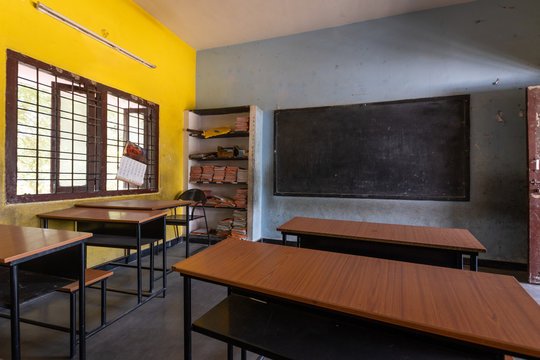
India recorded a net decline of 3,282 single-teacher schools in 2025-26, with their total number falling from 1,04,125 in 2024-25 to 1,00,843, according to data from the Unified District Information System for Education Plus (UDISE+). The figures were also presented in the Rajya Sabha in late July in response to a question concerning teacher vacancies. A single-teacher school is one where one teacher handles multiple classes and subjects, making it an important indicator of staffing shortages and resource constraints in school education. However, the national decline masks significant differences between states. Five states alone reported a combined reduction of more than 11,000 single-teacher schools, more than three times the overall national decline. This was offset by substantial increases in several other states, resulting in a net reduction of 3,282 schools nationally. Madhya Pradesh records biggest decline Madhya Pradesh reported the largest reduction, with its number of single-teacher schools dropping from 7,217 in 2024-25 to 2,269 in 2025-26 — a fall of 4,948 schools. Chhattisgarh recorded the second-largest decline, reducing its count by 3,512, from 5,973 to 2,461. Uttar Pradesh, which continues to have one of the highest numbers of such schools among major states, saw the figure fall from 9,508 to 7,874, a reduction of 1,634. Punjab and Gujarat also registered notable declines, with their single-teacher school numbers falling by 682 and 601 respectively. Andhra Pradesh sees largest increase In contrast, Andhra Pradesh recorded the biggest increase in the country. The state’s single-teacher schools rose from 12,912 in 2024-25 to 16,357 in 2025-26, an increase of 3,445. Maharashtra reported an addition of 1,117 such schools, while Rajasthan saw an increase of 1,083. Karnataka and Jharkhand recorded increases of 693 and 655 respectively. The contrasting trends indicate that the national improvement has not been evenly distributed across the country. Government response does not explain state-wise variation The Centre’s response in the Rajya Sabha did not provide a state-specific explanation for the sharp variations. It cited factors such as teacher retirements, resignations, creation of new posts, rationalisation of teacher deployment and changes in student enrolment as general reasons for teacher vacancies. The government also did not provide the state-wise sanctioned, working and vacant teacher positions sought in the original question. It said such information is maintained by individual state governments and Union Territory administrations. Instead, the response provided the number of teachers currently in position and the number of single-teacher schools based on UDISE+ 2025-26 data. This means the available figures alone cannot establish whether reductions in single-teacher schools were primarily due to new teacher appointments. Other factors, including school mergers, closures or changes in classification, could also have contributed. Pupil-teacher ratio indicates improvement The latest data also point towards relatively favourable pupil-teacher ratios, although the two years cannot be compared directly because the figures were presented differently. UDISE+ 2024-25 reported an overall national pupil-teacher ratio of 24 students per teacher. For 2025-26, the government provided level-wise ratios of 19 at the primary level, 17 at upper primary, 15 at secondary and 23 at higher secondary. All four ratios are below the 2024-25 composite figure. The government said these figures remain within the benchmarks outlined under the National Education Policy (NEP) 2020, which recommends a pupil-teacher ratio below 30 nationally and below 25 in areas with a high proportion of socio-economically disadvantaged students. While the figures suggest an improvement in teacher availability, the different methods of reporting mean they should not be treated as a direct year-on-year comparison. Source: Indian Express

India’s Single-Teacher Schools Decline by 3,282, But Five States Record Sharp Rise Read More »
Chhattisgarh Moves to Offer Primary Education in 18 Local Languages and Dialects

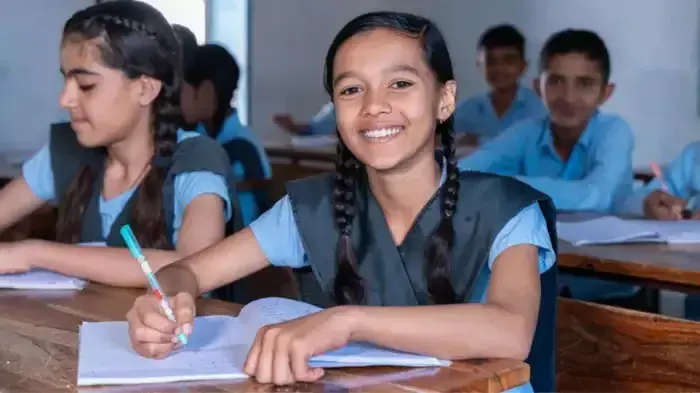
The Chhattisgarh government has initiated a move to provide primary education in local languages and dialects in remote tribal regions as part of the National Education Policy (NEP) 2020. This policy recommends that the mother tongue or the local language be the medium of instruction at least up to the fifth standard. Chief Minister Vishnu Deo Sai has directed the State Education Department to develop and distribute bilingual books in 18 local languages and dialects for free, focusing on providing high-quality educational resources. “The new initiative of providing education in local language will also be helpful in preserving local culture and traditions,” Sai said while addressing the state-level ‘Shala Praveshotsav’ programme at Bagiya village in the tribal-dominated Jashpur district. The Shala Praveshotsav is an annual event held at the beginning of the new academic session to motivate children to enroll in schools. This year, it was moved from the state capital Raipur to Bagiya, the CM’s hometown. The literacy rate of Chhattisgarh is 70.28%, lower than the national average of 76%. School Education Secretary Siddharth Komal Pardeshi mentioned that courses will be prepared in several languages, including Chhattisgarhi, spoken by 65.83% of Class 1 students; Sargujiha (spoken by 9.38%); Halbi (4.19%); Sadari (3.97%); Gondi-Dantewada (2.33%); and Kudukh (0.7%). An Education Department official stated that in tribal areas, primary school exams can also be taken in local languages and dialects. “But for higher classes, it will still be conducted in Hindi and English,” the official said.  

Chhattisgarh Moves to Offer Primary Education in 18 Local Languages and Dialects Read More »

Chhattisgarh BJP Government Launches Ambitious Five-Year Free Rice Initiative for Vulnerable Communities

The Bharatiya Janata Party (BJP) government in Chhattisgarh has announced a groundbreaking initiative to provide free rice to impoverished families for the next five years, starting January 2024. The decision, mirroring Prime Minister Narendra Modi’s commitment to extending welfare schemes, particularly the Pradhan Mantri Garib Kalyan Anna Yojana, is expected to benefit more than 67 lakh beneficiaries. The Chhattisgarh State Food Security Act will serve as the legal framework for this initiative, ensuring that eligible ration card holders from various categories, including Antyodaya, priority, differently-abled, and single destitute individuals, receive free rice through fair price shops. This bold step, taken under the leadership of Chief Minister Vishnu Deo Sai, seeks to provide sustained relief to those grappling with economic hardships. The Food and Civil Supplies Department, acting on the Chief Minister’s directive, has issued instructions to all district collectors for the seamless implementation of the program. Ration card holders falling under the Antyodaya and priority categories, in line with the National Food Security Act guidelines, will be entitled to the monthly distribution of food grains at no cost. The coverage period spans from January 2024 to December 2028, ensuring a consistent support system for the state’s most vulnerable populations. This initiative underscores the government’s commitment to social welfare and poverty alleviation, addressing the basic nutritional needs of citizens facing economic challenges. As Chhattisgarh takes a pioneering step in providing sustained assistance to its underprivileged communities, the move is expected to garner support and appreciation from various quarters.

Chhattisgarh BJP Government Launches Ambitious Five-Year Free Rice Initiative for Vulnerable Communities Read More »

BJP Leadership Shuffle: Bhajan Lal Sharma, Mohan Yadav, and Vishnu Deo Sai Take Charge as Chief Ministers in Rajasthan, Madhya Pradesh, and Chhattisgarh

News on Government

The Bharatiya Janata Party (BJP) officially announced Bhajan Lal Sharma as the new Chief Minister of Rajasthan, following a conclusive BJP Legislature Party meeting held in Jaipur yesterday. The meeting, which commenced at 4 pm, saw the presence of all 115 BJP MLAs at the party office, marking a crucial moment in Rajasthan’s political landscape. The selection process was overseen by Defence Minister Rajnath Singh, Rajya Sabha member Saroj Pandey, and BJP National General Secretary Vinod Tawde, appointed as observers by the BJP to ensure a smooth and transparent selection of the Rajasthan Chief Minister. The saffron party emerged victorious in the Rajasthan Assembly polls on December 3, securing a clear majority and displacing the Congress party. Notably, the BJP’s strategy in selecting chief ministers has taken an interesting turn in states like Chhattisgarh and Madhya Pradesh, where the party also claimed victory. In Chhattisgarh, tribal leader Vishnu Deo Sai was chosen, while in Madhya Pradesh, Mohan Yadav, the party’s OBC face and former education minister, secured the chief ministerial position. Both choices surprised many as the BJP opted for fresh faces over seasoned leaders. Mohan Yadav, a three-time MLA from Madhya Pradesh’s Ujjain South, is set to take the oath as the chief minister at Bhopal’s Lal Parade Ground. In Chhattisgarh, Vishnu Deo Sai, a four-time Lok Sabha MP and three-time state BJP chief, will be sworn in as the CM at the Science College ground in Raipur. In Madhya Pradesh, Rajendra Shukla and Jagdish Devda are expected to be sworn in as deputies of Mohan Yadav. However, in Chhattisgarh, the BJP is yet to make an official announcement regarding the deputy CMs. Speculations suggest that Arun Sao and Vijay Sharma might assume these roles alongside Sai. The swearing-in ceremonies in Bhopal and Raipur are anticipated to witness the presence of political heavyweights, including Prime Minister Narendra Modi, Union Home Minister Amit Shah, and Uttar Pradesh Chief Minister Yogi Adityanath. The BJP’s choices for chief ministers in these states reflect a strategic shift, opting for fresh and dynamic leadership over experienced veterans.

BJP Leadership Shuffle: Bhajan Lal Sharma, Mohan Yadav, and Vishnu Deo Sai Take Charge as Chief Ministers in Rajasthan, Madhya Pradesh, and Chhattisgarh Read More »