ArdorComm Media Group

Wednesday, June 24, 2026 5:16 PM

Deep-Tech Startups

India Emerging as Global Innovation Powerhouse, Says Dharmendra Pradhan at Bharat Innovates Pre-Summit
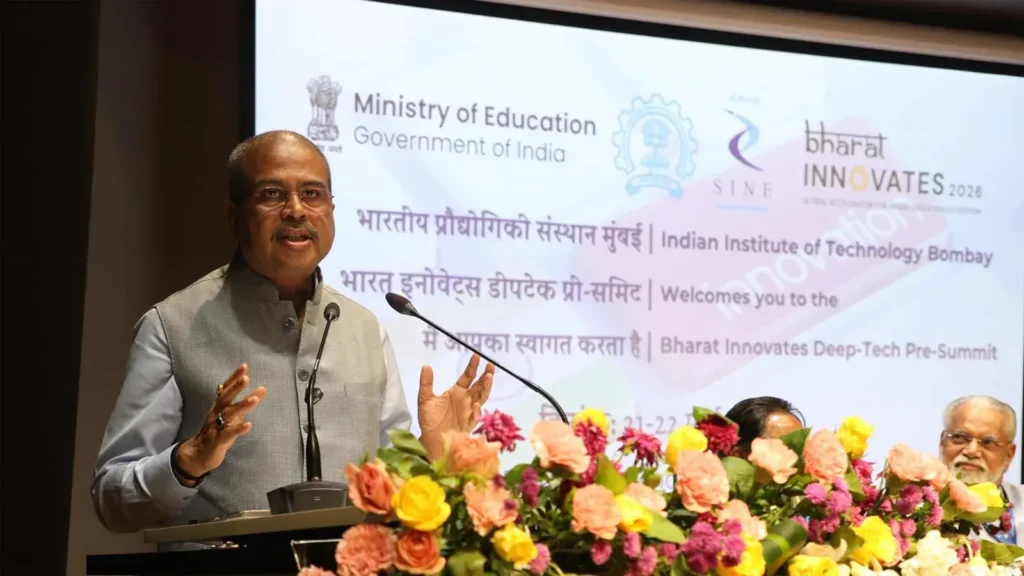
Union Education Minister Dharmendra Pradhan highlighted India’s growing stature as a global innovation hub while addressing the concluding session of the Bharat Innovates Deep-Tech Pre-Summit held at Indian Institute of Technology Bombay. During the event, the minister engaged in roundtable discussions with investors, industry leaders, and academic experts. He noted that the pre-summit serves as a precursor to Bharat Innovates 2026, scheduled to take place in Nice. The discussions focused on advancing deep-tech innovation, strengthening collaboration between academia and industry, and enhancing India’s startup ecosystem. Pradhan emphasised the importance of sustained funding for emerging ventures to help them scale, foster innovation, and promote research-driven entrepreneurship. He reiterated that Bharat Innovates aims to showcase India’s research and development capabilities on the global stage while facilitating international collaborations and unlocking investment opportunities. Underscoring India’s potential, he stated that the country is well-positioned to develop scalable and cost-effective solutions not only for domestic needs but also for the Global South. He described the initiative as a dynamic platform that brings together ideas, talent, and resources to accelerate innovation and deepen industry-academia partnerships. On the sidelines of the summit, Pradhan chaired a roundtable attended by around 175 investors and industry stakeholders. He also interacted with innovators working across key sectors such as energy, climate and sustainability, semiconductors, space and defence, healthcare, biotechnology, advanced computing, mobility, and smart cities. The pre-summit saw participation from 137 deep-tech startups selected from over 1,186 applications across the country. These startups showcased innovations in areas including artificial intelligence, advanced materials, clean technology, and next-generation manufacturing, drawing strong interest from investors. The event also enabled meaningful engagement between startups, venture capital firms, and industry representatives, paving the way for collaboration, commercialisation, and global expansion. Prominent dignitaries present included K. Radhakrishnan, Vineet Joshi, Abhay Karandikar, and Shireesh Kedare. Reaffirming the government’s commitment to innovation, Pradhan stressed the need to translate research ideas into market-ready solutions that create real-world impact. He expressed confidence that the innovations showcased at the pre-summit would significantly contribute to strengthening India’s position as a global leader in technology and entrepreneurship. The Bharat Innovates Deep-Tech Pre-Summit marks an important milestone in India’s innovation journey, with selected startups set to represent the country’s deep-tech ecosystem at the international event in France in 2026. Source: DD News 
India Emerging as Global Innovation Powerhouse, Says Dharmendra Pradhan at Bharat Innovates Pre-Summit Read More »

Govt eases norms for deep-tech startups, drops three-year eligibility rule for DSIR recognition

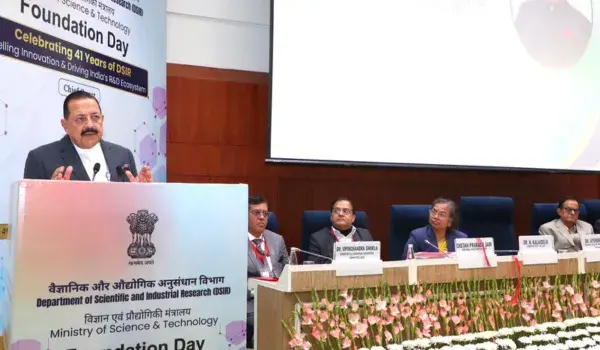
The central government has announced a major policy relief for deep-tech startups by removing the mandatory three-year existence requirement to obtain recognition under the Department of Scientific and Industrial Research (DSIR)’s Industrial Research and Development Promotion (IRDP) Programme. Speaking at the 41st Foundation Day of DSIR in New Delhi, Union Minister of Science and Technology Dr Jitendra Singh said the decision is aimed at enabling deep-tech startups to scale faster at early stages, even before they achieve operational maturity. He noted that the move signals the government’s growing trust in India’s innovation ecosystem and its confidence in the long-term sustainability and intent of homegrown innovators. The Minister emphasised that the reform aligns with several transformational steps taken under Prime Minister Narendra Modi’s leadership, including opening up the nuclear and space sectors to private participation. To support innovation in these emerging domains, he said the government will further accelerate policy and institutional initiatives. Dr Singh also highlighted that India is steadily advancing the vision of Aatmanirbhar Bharat, while simultaneously positioning itself as a reliable global innovation and technology partner for other nations. During the event, the Minister unveiled a series of initiatives to strengthen India’s research, development, and innovation ecosystem. These included the release of Guidelines for Recognition of In-House R&D Units, the recognition framework for Centres of Deep-Tech Startups, the launch of the PRISM Network Platform – TOCIC Innovator Pulse, and Creative India 2025 under the PRISM scheme. Source: newsonair

Govt eases norms for deep-tech startups, drops three-year eligibility rule for DSIR recognition Read More »

PM Modi Unveils ₹1 Lakh Crore R&D Fund, Calls for Ethical and Inclusive Innovation at ESTIC 2025

Prime Minister Narendra Modi addressed the Emerging Science, Technology and Innovation Conclave (ESTIC) 2025 at Bharat Mandapam on Nov 3, highlighting India’s growing leadership in science, technology, and innovation. Welcoming participants from India and abroad — including scientists, innovators, academics, and policymakers — the Prime Minister celebrated India’s landmark achievements in both sports and science. Opening his remarks, PM Modi congratulated the Indian women’s cricket team for their historic ICC Women’s World Cup victory, saying the nation was “immensely proud” of their achievement, which will inspire millions of young Indians. The Prime Minister also hailed India’s scientists for successfully launching the heaviest communication satellite, commending ISRO for its continued contribution to India’s space advancements. He noted that both achievements reflected India’s growing spirit of excellence and innovation. R&D Boost: ₹1 Lakh Crore RDI Scheme Announced Underscoring the government’s commitment to strengthening India’s research ecosystem, PM Modi formally launched the ₹1 lakh crore Research, Development and Innovation (RDI) Scheme Fund, designed to boost private sector–led R&D. He emphasized that, for the first time, capital will be made available for high-risk, high-impact research projects, and reaffirmed that the government is “building a modern innovation ecosystem” by easing financial rules, procurement norms, and regulatory frameworks to accelerate the journey from lab to market. He also referred to the establishment of the Anusandhan National Research Foundation (ANRF) to expand research and innovation across Indian universities. India’s Innovation Momentum PM Modi highlighted India’s transformation into a global innovation hub — noting that R&D spending has doubled in the past decade, patent registrations have risen 17-fold, and India now ranks as the world’s third-largest startup ecosystem. Over 6,000 deep-tech startups are driving progress in areas such as clean energy, materials science, and semiconductors, while India’s bio-economy has grown from $10 billion in 2014 to $140 billion today. He said, “India is no longer a consumer of technology — it is a driver of technological transformation,” citing the nation’s indigenous vaccine success during the COVID-19 pandemic and the reach of its Digital Public Infrastructure, which connects over two lakh gram panchayats with optical fibre. Empowering Women in Science Highlighting inclusive innovation, the Prime Minister celebrated the rising participation of women in STEM. He noted that women now make up 43% of STEM students in India — above the global average — and that annual patent filings by women have increased from fewer than 100 to over 5,000. He added that Indian women scientists are now at the forefront of space research and innovation. Encouraging the Next Generation PM Modi underscored the importance of nurturing scientific curiosity among youth. Recalling the public excitement around Chandrayaan and the recent Indian space station mission, he said these moments have inspired young minds to explore science. He announced plans to expand Atal Tinkering Labs from 10,000 to 25,000 labs, giving over one crore students a platform for hands-on innovation. The Prime Minister also shared that 10,000 new research fellowships will be awarded over the next five years under the Prime Minister’s Research Fellowship to further empower young scientists. India’s Vision for Ethical AI and Future Technologies Speaking about the future of emerging technologies, PM Modi stressed that science and technology must remain ethical, inclusive, and human-centric. He cited the India AI Mission, with an investment of ₹10,000 crore, aimed at making AI accessible and beneficial for all. He also announced that India will host the Global AI Summit in February 2026, focusing on inclusive and safe AI governance. Calling for innovation in critical areas such as nutrition security, biofortified crops, clean energy storage, bio-fertilisers, and genomic medicine, the Prime Minister urged scientists to work towards achieving self-reliance in key inputs and technologies. Concluding his address, PM Modi invoked the spirit of “Jai Vigyan, Jai Anusandhan”, reaffirming the government’s full support for researchers and innovators. He expressed confidence that the outcomes of ESTIC 2025 will chart a new roadmap for India’s scientific and technological future. Source: PIB

PM Modi Unveils ₹1 Lakh Crore R&D Fund, Calls for Ethical and Inclusive Innovation at ESTIC 2025 Read More »