



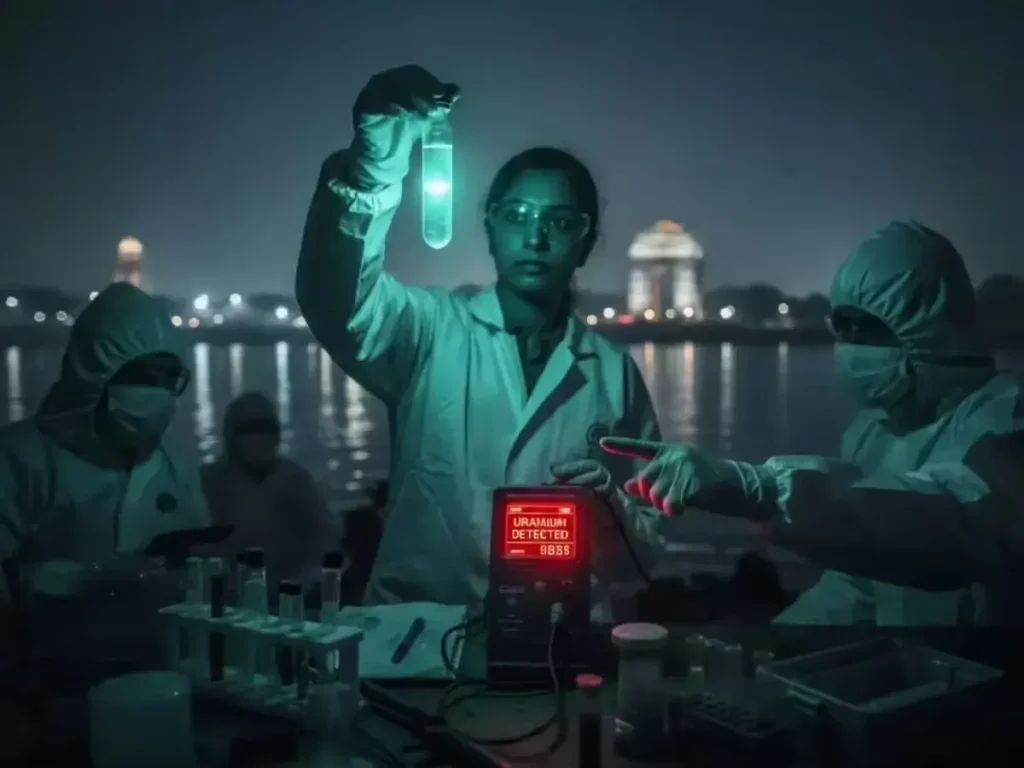
Uranium detected in Delhi’s groundwater: New report sparks major public-health alarm
A new assessment of Delhi’s groundwater has revealed a worrying rise in uranium contamination, placing the national capital among the top three affected regions in India after Punjab and Haryana. The Annual Ground Water Quality Report 2025 released by the Central Ground Water Board (CGWB) shows that 13–15% of the city’s water samples now contain uranium levels exceeding the permissible limit of 30 ppb, raising red flags over drinking-water safety and long-term health implications, according to a Times of India report. Rising uranium levels: What the latest findings reveal The new report highlights a steady and concerning upward trend in uranium presence across Delhi: In 2020, uranium levels above the safe threshold were detected in 11.7% of samples, including a particularly alarming reading of 89.4 ppb from a tubewell in the North West district. By 2024, six districts — North, North West, South, South East, South West, and West — had consistently reported samples with unsafe uranium levels, contributing to a citywide contamination share of 10.7%. The 2025 assessment now indicates an even higher percentage of unsafe samples, signalling worsening groundwater conditions. Two localities — Auchandi in Narela (42 ppb) and Nizampur in Kanjhawala (46.5 ppb) — have been identified as emerging hotspots. Environmental groups demand data transparency and action The findings have prompted several environmental organisations to push for public disclosure of water-quality records and enforcement of treatment protocols. The group Earth Warrior, in a letter to the Lieutenant Governor and Chief Minister, warned that uranium contamination is occurring alongside high nitrate, fluoride, and salinity levels, creating a hazardous mix of pollutants. The group also highlighted systemic dependence on groundwater: The Delhi Jal Board operates around 5,500 tubewells that collectively supply nearly 450 million litres per day (mld) of semi-treated or untreated water to the public—making the situation even more urgent. National context: Uranium contamination rising post-monsoon Across India, CGWB analysed 3,754 groundwater samples during pre- and post-monsoon periods in 2024. Uranium above the safe limit was found in: 6.71% of pre-monsoon samples 7.91% of post-monsoon samples This slight increase after monsoon rains indicates that hydrogeochemical changes and leaching processes may be intensifying contamination. Punjab remains the most affected state, followed by Haryana and Delhi. Health hazards linked to uranium in drinking water The report underscores the severe health impacts of consuming water contaminated with uranium — a substance that is both a heavy metal and a radioactive element. Its major harm stems from chemical toxicity rather than radiation. Long-term exposure can lead to: 1. Kidney damage (most common) Uranium is known to accumulate in the kidneys, impairing their ability to filter waste and potentially causing chronic kidney disease. 2. Bone and skeletal disorders The metal can settle in bones, contributing to weakness, deformities, and long-term skeletal changes. 3. Neurological complications Research indicates possible effects on memory, behavioral functions, cognitive clarity, and the nervous system after prolonged exposure. 4. Increased cancer risk While natural uranium emits low radiation, extended consumption may slightly elevate the risk of certain cancers. 5. Higher vulnerability in children Infants and young children are at greater risk. Exposure can harm bone development, growth patterns, and cognitive functions. 6. Digestive and general health issues High concentrations may cause nausea, vomiting, stomach irritation, and may interfere with liver function and blood chemistry. Additional groundwater concerns: Salinity and agricultural impact Beyond uranium, Delhi faces a significant problem with salinity. The report notes that the city recorded a sodium adsorption ratio (SAR) of 179.8, placing it among the highest in India. This means: 1.11% of areas now have groundwater unfit for irrigation 7.23% show excess salinity or high electrical conductivity Such conditions degrade soil quality, reduce farm productivity, and enable toxic elements to build up in crops—posing further risks to public health. CGWB response and the way forward The CGWB has stated that it issues bi-weekly alerts to state agencies about groundwater quality variations to support timely mitigation and raise public awareness. Experts now emphasize the need for: Comprehensive mapping of uranium-prone zones Transparent disclosure of real-time water-quality data Expansion of water-treatment infrastructure Reduction of groundwater dependency through surface-water alternatives Stronger policy interventions to prevent further aquifer degradation With Delhi’s reliance on groundwater continuing to grow, the rising uranium presence signals a looming water-safety crisis that demands urgent scientific, administrative, and public-health action. Source: TOI & Economic Times
Uranium detected in Delhi’s groundwater: New report sparks major public-health alarm Read More »