ArdorComm Media Group

Wednesday, April 15, 2026 10:16 AM

Dharmendra Pradhan

India Emerging as Global Innovation Powerhouse, Says Dharmendra Pradhan at Bharat Innovates Pre-Summit

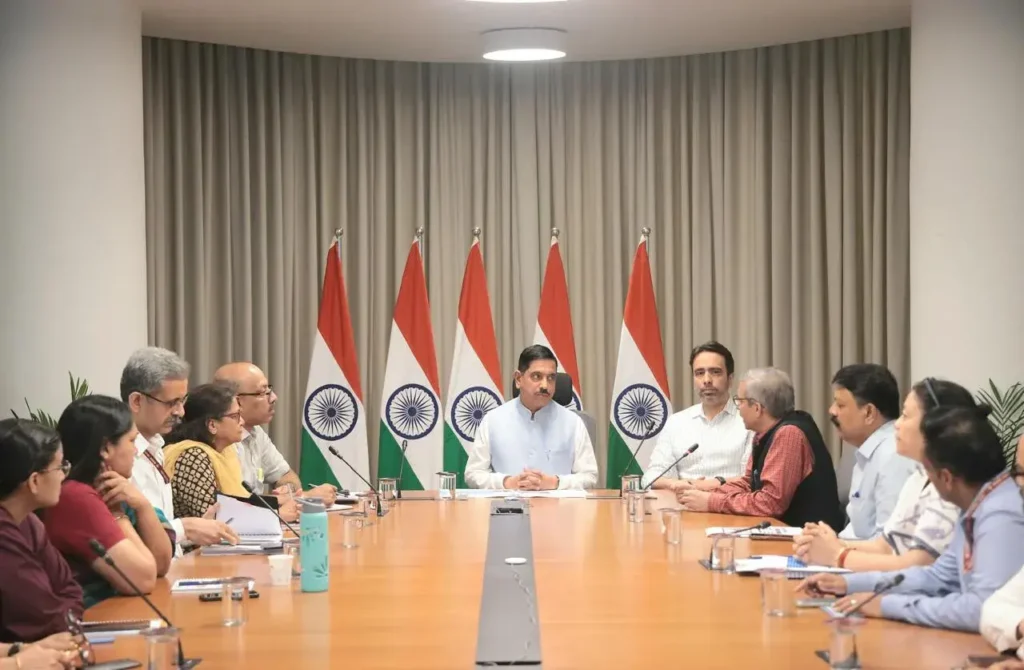
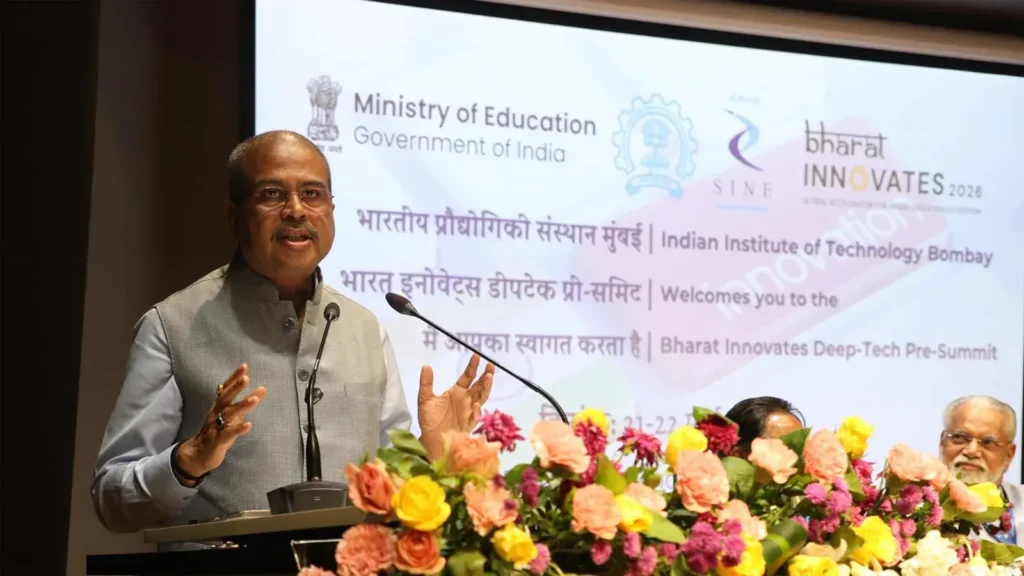
Union Education Minister Dharmendra Pradhan highlighted India’s growing stature as a global innovation hub while addressing the concluding session of the Bharat Innovates Deep-Tech Pre-Summit held at Indian Institute of Technology Bombay. During the event, the minister engaged in roundtable discussions with investors, industry leaders, and academic experts. He noted that the pre-summit serves as a precursor to Bharat Innovates 2026, scheduled to take place in Nice. The discussions focused on advancing deep-tech innovation, strengthening collaboration between academia and industry, and enhancing India’s startup ecosystem. Pradhan emphasised the importance of sustained funding for emerging ventures to help them scale, foster innovation, and promote research-driven entrepreneurship. He reiterated that Bharat Innovates aims to showcase India’s research and development capabilities on the global stage while facilitating international collaborations and unlocking investment opportunities. Underscoring India’s potential, he stated that the country is well-positioned to develop scalable and cost-effective solutions not only for domestic needs but also for the Global South. He described the initiative as a dynamic platform that brings together ideas, talent, and resources to accelerate innovation and deepen industry-academia partnerships. On the sidelines of the summit, Pradhan chaired a roundtable attended by around 175 investors and industry stakeholders. He also interacted with innovators working across key sectors such as energy, climate and sustainability, semiconductors, space and defence, healthcare, biotechnology, advanced computing, mobility, and smart cities. The pre-summit saw participation from 137 deep-tech startups selected from over 1,186 applications across the country. These startups showcased innovations in areas including artificial intelligence, advanced materials, clean technology, and next-generation manufacturing, drawing strong interest from investors. The event also enabled meaningful engagement between startups, venture capital firms, and industry representatives, paving the way for collaboration, commercialisation, and global expansion. Prominent dignitaries present included K. Radhakrishnan, Vineet Joshi, Abhay Karandikar, and Shireesh Kedare. Reaffirming the government’s commitment to innovation, Pradhan stressed the need to translate research ideas into market-ready solutions that create real-world impact. He expressed confidence that the innovations showcased at the pre-summit would significantly contribute to strengthening India’s position as a global leader in technology and entrepreneurship. The Bharat Innovates Deep-Tech Pre-Summit marks an important milestone in India’s innovation journey, with selected startups set to represent the country’s deep-tech ecosystem at the international event in France in 2026. Source: DD News 

India Emerging as Global Innovation Powerhouse, Says Dharmendra Pradhan at Bharat Innovates Pre-Summit Read More »

Parliament to Introduce Bill Creating a Single Higher Education Regulator to Replace UGC, AICTE, NCTE

Parliament is set to take up a landmark reform bill aimed at overhauling India’s higher education regulatory framework. The Higher Education Commission of India (HECI) Bill, scheduled for introduction in the winter session beginning December 1, proposes replacing key regulatory bodies—the University Grants Commission (UGC), the All India Council for Technical Education (AICTE), and the National Council for Teacher Education (NCTE)—with one unified authority. According to the Lok Sabha bulletin, HECI will act as the central regulator for higher education across the country, except for medical and legal education. The new body will focus on regulation, accreditation, and setting professional standards. Funding responsibilities, however, will continue to remain with the administrative ministry and not under HECI’s purview. The concept has been in discussion for years, with a draft bill first released in 2018 for public feedback, proposing the repeal of the UGC Act. Efforts to revive the plan gained momentum after Dharmendra Pradhan became the Union Education Minister in 2021. The National Education Policy (NEP) 2020 strongly advocates for such a unified regulator, noting that India’s higher education system requires a complete structural overhaul. The policy stresses that regulation, accreditation, funding, and academic standard-setting should function independently yet cohesively under empowered bodies to strengthen the sector. Source: Indian Express

Parliament to Introduce Bill Creating a Single Higher Education Regulator to Replace UGC, AICTE, NCTE Read More »

Govt to Introduce Skill-Based Learning in Class 11 & 12 Under NEP 2020: Pradhan

ardorcomm news

The government is preparing to integrate skill-based learning into the curriculum of Classes 11 and 12 in line with the National Education Policy (NEP) 2020, Union Education Minister Dharmendra Pradhan announced on Sunday. Speaking at the Dakshinapatha Summit 2025 hosted by IIT Madras, Pradhan emphasized the need for a major shift in teaching approaches to match the demands of the modern workforce. He noted that the earlier system focused heavily on degrees and certificates, while the new approach aims to build real-world competencies in students. “We are working to bring in skill-based subjects for Class 11 and 12 students. While qualifications are important, it is equally necessary to ensure that students are job-ready and capable,” the minister said. Pradhan also shared that his ministry is working to embed skill-based education from Class 6 onwards, making it a structured and compulsory part of schooling rather than an optional add-on. He reiterated that skill development forms a core pillar of NEP 2020, which envisions preparing learners for both higher studies and employability. Source: PTI

Govt to Introduce Skill-Based Learning in Class 11 & 12 Under NEP 2020: Pradhan Read More »

Pradhan discusses expansion of Indian schools in UAE, inaugurates Atal Incubation Centre at IIT Delhi-Abu Dhabi

ardorcomm news

Union Education Minister Dharmendra Pradhan, during his two-day official visit to the United Arab Emirates, met Sara Musallam, Chairperson of the Abu Dhabi Department of Education and Knowledge. The discussions centred on strengthening educational collaboration between the two countries, including the establishment of more Indian curriculum-based schools in the UAE to cater to the growing Indian community. Pradhan also visited the Abu Dhabi campus of IIT Delhi, where he inaugurated the Atal Incubation Centre (AIC)—the first such facility hosted by an Indian institution abroad. The AIC is envisioned to nurture joint start-ups and research-led enterprises involving innovators from both India and the UAE, with a focus on deep tech, artificial intelligence, clean energy, healthcare, and other areas of mutual interest. It will also provide Indian start-ups with a gateway to Middle Eastern markets. Highlighting the legacy of IIT Delhi, Pradhan noted that the Abu Dhabi campus has grown remarkably from a concept into a full-fledged institution, symbolising the India-UAE knowledge partnership. He also launched B.Tech and Ph.D programmes in Chemical Engineering and Energy & Sustainability at the campus, expressing confidence in the students’ potential to set new benchmarks in global innovation and prosperity. Pradhan shared insights on the success of Atal Tinkering Labs in India and discussed the possibility of introducing Atal Innovation Labs in Indian schools across the UAE. The talks also explored opportunities for two-way student exchanges starting from the school level, further strengthening academic and cultural ties. As part of his UAE visit, the minister is scheduled to inaugurate the Dubai campus of IIM Ahmedabad and hold meetings with leaders, policymakers, academicians, and institutional representatives from both nations to broaden cooperation in education, innovation, and skill development. Source: PTI Image Credit: x.com/iitdelhi

Pradhan discusses expansion of Indian schools in UAE, inaugurates Atal Incubation Centre at IIT Delhi-Abu Dhabi Read More »

India’s Literacy Rate Rises to 80.9% in 2023–24: Pradhan

ardorcomm news

India’s literacy rate has increased from 74% in 2011 to 80.9% in 2023–24, Union Education Minister Dharmendra Pradhan said on Monday during a virtual address on International Literacy Day 2025. Pradhan stressed that literacy is more than reading and writing, describing it as a path to dignity, empowerment, and self-reliance. He underlined that true progress would be achieved only when literacy becomes a lived reality for every citizen. Highlighting the government’s ULLAS–Nav Bharat Saaksharta Karyakram, the minister said over 3 crore learners and 42 lakh volunteers have joined the initiative. Around 1.83 crore learners have already taken foundational literacy and numeracy assessments, with a 90% success rate. The programme now offers study material in 26 Indian languages. Pradhan congratulated Ladakh, Mizoram, Goa, Tripura, and Himachal Pradesh for achieving full literacy, terming it a collective success of governments, society, and volunteers. Ladakh became the first Union Territory to be declared fully literate in June 2024, while Himachal Pradesh recently joined the list of fully literate states. The theme for this year’s International Literacy Day was “Promoting Literacy in the Digital Era.” Minister of State for Education Jayant Chaudhary noted that literacy in India has expanded to include digital literacy, crediting India’s digital public infrastructure for accelerating educational inclusion. “India has accomplished in a decade what could have taken fifty years, setting an example for the Global South,” Chaudhary said. Source: PTI

India’s Literacy Rate Rises to 80.9% in 2023–24: Pradhan Read More »

NCERT Must Build Competence, Knowledge for Nation-Building: Dharmendra Pradhan

On the 65th Foundation Day of NCERT, Union Education Minister Dharmendra Pradhan emphasized the council’s crucial role in shaping an empowered and knowledgeable society. He called upon NCERT to adopt global best practices while remaining rooted in India’s cultural and linguistic strengths. “NCERT’s responsibility is to make our people competent and raise knowledge levels. You are the true nation-builders,” Pradhan said, addressing the gathering. He stressed the need for children to gain proficiency in English while also achieving conceptual clarity through their mother tongues. Reflecting on past curriculum reforms, Pradhan referred to the National Curriculum Frameworks (NCF) of 2000 and 2005, noting that changes introduced earlier created confusion. He asserted that NCERT is now setting the framework in the right direction, free from what he termed a “slave mentality” that deprived the nation of self-reliance and pride. He further praised new NCERT modules, such as those on Operation Sindoor and Partition Horrors Remembrance Day. Former ISRO Chairman S. Somanath, also present at the event, credited NCERT textbooks for shaping his early academic foundation but noted their shortcomings. “Those books built my career, yet they missed highlighting India’s scientific heritage and achievements. I had to relearn many things later. Today, I see a transformation, with more focus on our own legacy,” he said. Somanath also stressed the importance of promoting learning in Indian languages, pointing out that reliance on foreign textbooks during higher education limited students’ connection with indigenous knowledge systems. “Rooting education in our own language is essential,” he remarked. Source: Indian Express

NCERT Must Build Competence, Knowledge for Nation-Building: Dharmendra Pradhan Read More »

Education Minister Urges IITs to Lead India’s ‘Atmanirbhar Bharat’ Mission

Union Education Minister Dharmendra Pradhan chaired the 56th meeting of the IIT Council at IIT Delhi, where key decisions were taken to strengthen IITs as drivers of self-reliance, innovation, and inclusive growth in line with the Prime Minister’s vision of “Atmanirbharta se Samriddha Bharat.” Mr. Pradhan called upon IITs to act as catalysts for transformative change rather than incremental progress. He urged the premier institutes to embrace regional languages alongside English to make education more inclusive, and to focus on producing job creators by solving real-world challenges through translational research in critical technologies. Highlighting their contribution to India’s innovation ecosystem, he noted that IITs have nurtured over 6,000 start-ups, 56 unicorns, and nearly 5,000 patents. He expressed confidence that IITs would not only boost employment and economic opportunities but also play a pivotal role in building a Samriddh and Viksit Bharat by 2047. Supported by initiatives such as the PM Research Fellowship, Centres of Excellence in AI, and research parks, IITs are emerging as engines of economic growth in tune with the Prime Minister’s call to “Reform, Perform, Transform.” Minister of State for Education & DoNER Dr. Sukanta Majumdar said IITs were not just centres of learning but engines of Innovation, Inclusion, and Transformation. With 23 IITs, growing international campuses, and a thriving startup culture, he emphasized that IITs are producing global leaders and innovators while ensuring India continues to RISE through Research, Innovation, Skills, and Entrepreneurship. The meeting, attended by senior policymakers, industry leaders, and academicians including Dr. K. Radhakrishnan (former ISRO Chairman), Sridhar Vembu (Zoho CEO), Prof. M. Jagadesh Kumar (former UGC Chairman), Prof. T.G. Sitharam (AICTE Chairman), and several IIT chairpersons, focused on: Reforming PhD education and improving global rankings  Strengthening research commercialisation and industry-academia linkages  Adapting curriculum to emerging technologies like AI  Promoting mental well-being of students and faculty  Enhancing alumni networks for mentorship and collaboration  Attracting international students and faculty  The Council also resolved to elevate the IIT R&D Fair into a global innovation platform and draft a policy within a month to accelerate translational research and product development for self-reliance under the IITs@2047 roadmap. Source: NDTV  

Education Minister Urges IITs to Lead India’s ‘Atmanirbhar Bharat’ Mission Read More »

Kendriya Vidyalayas See Sharpest Drop in Fresh Admissions in Five Years

Fresh admissions to Kendriya Vidyalayas (KVs) have dipped to a five-year low for the 2024–25 academic year, with only 1,39,660 new students enrolled, as per data presented by the Ministry of Education in the Lok Sabha. This marks a steady and concerning downward trend in both new enrolments and overall student numbers in India’s flagship network of centrally run schools. A Downward Spiral in Enrolments Responding to a question in Parliament, Union Education Minister Dharmendra Pradhan provided year-wise figures highlighting the consistent drop in KV enrolments. New admissions have declined from 1,95,081 in 2020–21 to 1,39,660 in 2024–25 — a fall of nearly 29%. Meanwhile, the total student strength across all KVs also saw a dip from 14,29,434 in 2021–22 to 13,50,518 in 2024–25. Academic Year Fresh Enrolments Total Student Strength 2020–21 1,95,081 13,87,763 2021–22 1,82,846 14,29,434 2022–23 1,57,914 14,24,147 2023–24 1,75,386 13,89,560 2024–25 1,39,660 13,50,518 Though there was a temporary recovery in enrolments during 2023–24, the overall trajectory has remained downward, with this year witnessing the most significant fall in both fresh admissions and total enrolment figures. Structural Strains in a National Network Established to cater primarily to children of Central Government employees — particularly those in transferable jobs within Defence, Paramilitary Forces, PSUs, and autonomous institutions — the KV system currently operates 1,280 schools across India. However, challenges such as inadequate infrastructure, teacher shortages, and admission bottlenecks, especially in urban and semi-urban areas, are beginning to strain the system. Expansion Despite Falling Numbers Despite the declining enrolment trend, the Central Government approved the setting up of 85 new Kendriya Vidyalayas in December 2024, aimed at boosting capacity in the Civil and Defence sectors. Additionally, a KV in Shivamogga, Karnataka, is being expanded by adding two new sections per class. The initiative carries a total budget of ₹5,872.08 crore — ₹2,862.71 crore allocated for capital projects (including construction) and ₹3,009.37 crore for recurring expenditures. However, actual implementation remains slow due to challenges such as: Delays in land transfer and legal ownership Approval processes for building designs and cost estimates Fund disbursal lags Administrative clearance delays at the local level These procedural hurdles often stall the timely launch of new schools or the expansion of existing ones. Decoding the Decline Experts attribute the drop in admissions to several key factors: Overcrowding: Many KVs have hit their capacity limits, especially in cities, making it harder for new students to secure seats. Construction delays: Several approved schools are yet to become operational due to incomplete infrastructure. Emerging competition: An increase in affordable, private CBSE schools in smaller towns may be attracting families away from KVs. Policy ambiguities: Unclear guidelines in certain regions are adding to confusion over eligibility and admissions. Rethinking the Road Ahead While the government continues to emphasize the ongoing expansion of the KV network, the sharp drop in enrolment calls for an urgent review of operational and policy priorities. Education experts suggest the need for swift action to improve school infrastructure, accelerate construction timelines, digitize admissions, and invest in teacher training. With public demand for affordable, quality education still high, the future of Kendriya Vidyalayas may well depend on how effectively these systemic issues are addressed. Source: TOI

Kendriya Vidyalayas See Sharpest Drop in Fresh Admissions in Five Years Read More »

Centre, NIOS, and NCERT Join Hands to Advance Inclusive Education for Children with Disabilities

In a significant move to promote inclusive education, the Department of Empowerment of Persons with Disabilities (DEPwD) has entered into a tripartite agreement with the National Institute of Open Schooling (NIOS) and the National Council of Educational Research and Training (NCERT). The agreement, signed in the presence of Union Ministers Virendra Kumar and Dharmendra Pradhan, aims to create an enabling educational environment for children with disabilities by aligning with the principles of the National Education Policy (NEP) 2020. This strategic collaboration will focus on revamping curriculum and learning materials to ensure they are accessible, inclusive, and tailored to the needs of learners with disabilities. NCERT will play a key role in modifying textbooks and curricular content to reflect these values. As part of the agreement, NIOS will grant recognition to special schools operated by NGOs under the Deendayal Disabled Rehabilitation Scheme (DDRS), designating them as Special Accredited Institutions for Education of the Disabled (SAIEDs). These institutions will offer a broad spectrum of academic and vocational education—from foundational levels to senior secondary—supported by NIOS in terms of admissions, exams, study materials, and necessary accommodations during assessments. Union Minister Virendra Kumar highlighted the initiative as a step toward realising Prime Minister Narendra Modi’s vision of inclusive growth, emphasizing that every child, regardless of ability, should have the opportunity to receive quality education. “This MoU affirms that inclusive education is not a luxury but a fundamental right,” he said. Education Minister Dharmendra Pradhan underscored the broader societal impact of inclusive education. “Creating a just and empathetic society begins with our schools. NEP 2020 is a progressive framework guiding us, and in the coming year, we are also prioritising infrastructure like accessible toilets to help reduce dropout rates,” he noted. DEPwD Secretary Rajesh Aggarwal reiterated the commitment to widen access for students with disabilities, including facilitating their entry into premier institutions such as IITs and IIMs. He also praised NIOS for its innovative step of introducing Indian Sign Language as a subject at the secondary level. Echoing the vision, Sanjay Kumar, Secretary of the Department of School Education and Literacy, stated that the ultimate mission is to ensure every child with a disability is able to complete their schooling and access equal opportunities in higher education and beyond. Source: PTI

Centre, NIOS, and NCERT Join Hands to Advance Inclusive Education for Children with Disabilities Read More »

University of Liverpool to Launch Bengaluru Campus, Admissions Begin August 2026

Ardorcomm news

In a significant step toward international academic collaboration, the University of Liverpool is all set to open its first Indian campus in Bengaluru, with classes scheduled to commence in August 2026. The development was confirmed by Union Education Minister Dharmendra Pradhan, who officially handed over the Letter of Intent to the university’s representatives. This marks the second UK university to receive the University Grants Commission’s (UGC) nod for setting up a campus in India, following the University of Southampton, which is slated to launch its academic programs in Gurugram by July 2025. Highlighting India’s growing prominence as a global education hub, Pradhan announced, “Delighted to hand over the Letter of Intent to University of Liverpool, one of UK’s premier academic institutions, for setting up a campus in India. Today’s development is another milestone in India’s journey of deepening academic partnerships with leading global universities,” adding that the initiative showcases India’s stature as a reliable partner in global higher education. As part of a broader effort to internationalize India’s academic ecosystem, the minister also shared that 15 foreign universities are expected to establish campuses in the country within the current academic year. The University of Liverpool’s Bengaluru campus will kick off by offering programmes in Business Management, Accounting and Finance, Computer Science, and Biomedical Sciences. In a pioneering move, it will also introduce a Game Design course—an uncommon offering among UK-based institutions operating in India. Expressing optimism about the potential of the new campus, Pradhan noted, “It will be a global campus that will push the boundaries of research and innovation and foster scientific temper for contributing to global welfare and prosperity.” The campus is also envisioned to facilitate dynamic exchange programmes, enabling students from the UK to pursue international study experiences in India. During the launch event, the university’s leadership entered into multiple memoranda of understanding (MoUs) with notable organisations such as the Royal College of Obstetricians and Gynaecologists (RCOG), AstraZeneca Pharma India, Wipro Limited, YouWeCan, and Dream11, to pave the way for future partnerships and collaborative projects. Tim Jones, Vice-Chancellor of the University of Liverpool, commented, “We are delighted to have received approval from the University Grants Commission to open Bengaluru’s first international campus. Opening a campus in the State of Karnataka and Bengaluru feels like the next natural step, building on the fantastic partnerships and collaborations we already enjoy there.” Jones further shared his aspirations for the new venture, saying, “We are also committed to embedding a strong research culture to the benefit of industry, the region and the wider world,” while promising to offer students a robust learning experience and enhanced employability opportunities. This announcement follows the UGC’s 2023 regulatory framework for setting up foreign university campuses in India. Australian universities Deakin and Wollongong have already launched campuses in Gujarat’s GIFT City. Meanwhile, Queen’s University Belfast and Coventry University have secured approvals for their own campuses at the same location. In addition, the Illinois Institute of Technology from Chicago is poised to become the first American university to establish an Indian campus, with operations beginning in Mumbai in 2026. Source: PTI  

University of Liverpool to Launch Bengaluru Campus, Admissions Begin August 2026 Read More »