ArdorComm Media Group

Monday, February 16, 2026 11:02 AM

digital governance

Mandatory Labelling of AI-Generated Content Likely Soon After Industry Consultations: IT Secretary

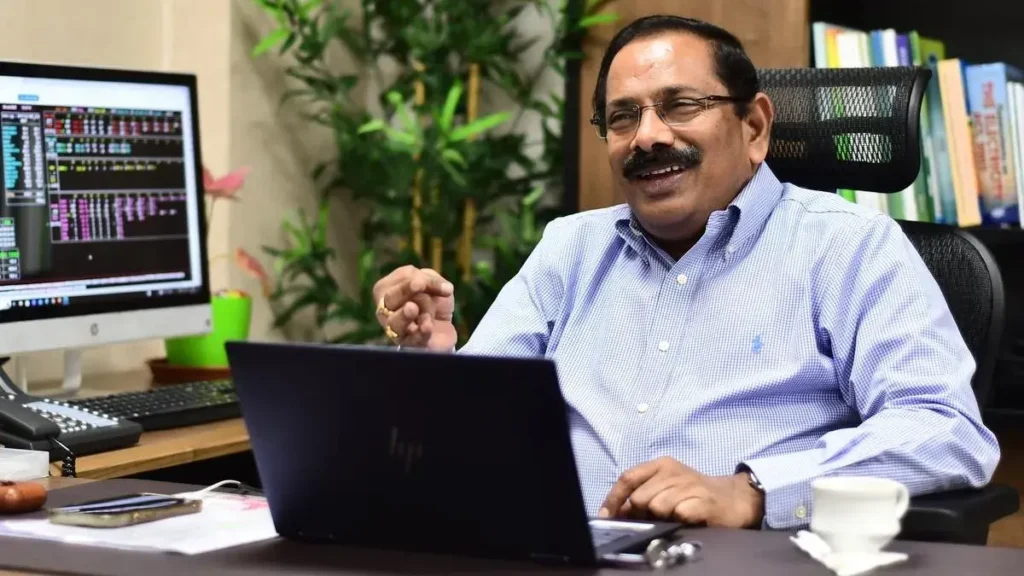
The government is set to notify new rules on mandatory labelling of AI-generated content after completing extensive consultations with industry stakeholders, IT Secretary S Krishnan has said. Speaking to PTI, Krishnan noted that the industry has largely shown a responsible approach and has not strongly opposed the proposed move, recognising the rationale behind content labelling. According to him, most industry feedback has focused on seeking clarity around what degree of AI intervention should trigger labelling—particularly the distinction between substantive, material changes made using AI and routine technical enhancements that do not alter meaning or facts. Inputs received are currently being reviewed in consultation with other government ministries, and the final rules are expected to be announced shortly. Krishnan emphasised that the proposal does not impose restrictions or require registration with third parties, but simply asks platforms to clearly label AI-generated or synthetically modified content. He underlined that citizens have a fundamental right to know whether content is authentic or AI-generated. He explained that even minimal AI-driven changes—such as altering a few words—can significantly change context and meaning, whereas routine enhancements like camera optimisation on smartphones may only improve quality without affecting substance. While the government is open to accommodating reasonable industry concerns, excluding all forms of modification could be problematic, as even small AI edits can have major real-world impacts. The proposed amendments to the IT Rules, first floated in October, aim to curb the spread of deepfakes and misinformation by requiring platforms such as Facebook and YouTube to take greater responsibility for identifying and flagging synthetic content. The draft rules seek mandatory labelling, metadata embedding, and visibility markers for AI-generated or modified media, including visual identifiers covering at least 10 per cent of the screen or the initial 10 per cent of an audio clip. The IT Ministry has warned that deepfake audio, video, and other synthetic media can be weaponised to mislead the public, harm reputations, influence elections, and facilitate fraud, making clear labelling and accountability essential in the age of generative AI. Source: PTI

Mandatory Labelling of AI-Generated Content Likely Soon After Industry Consultations: IT Secretary Read More »

PM Modi Releases 21st PM-KISAN Instalment, ₹18,000 Crore Disbursed to Farmers Nationwide

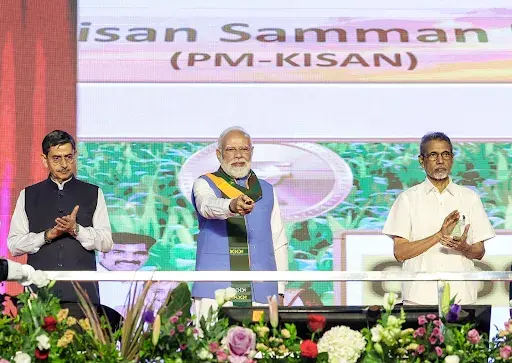
Prime Minister Narendra Modi on Wednesday disbursed the 21st instalment of the Pradhan Mantri Kisan Samman Nidhi (PM-KISAN) scheme during an event in Coimbatore, Tamil Nadu. With this release, ₹18,000 crore has been transferred directly to the bank accounts of nearly 9 crore farmers across India through the Direct Benefit Transfer (DBT) system. Launched on February 24, 2019, PM-KISAN provides ₹6,000 per year to every eligible landholding farmer family, delivered in three instalments of ₹2,000 each. The funds reach beneficiaries through Aadhaar-linked bank accounts, making it one of the largest DBT programmes globally. To date, over ₹3.70 lakh crore has been distributed to more than 11 crore farmer families, with women farmers making up over 25% of the beneficiaries. A robust digital ecosystem underpins the scheme, enabling strong transparency measures. Aadhaar-based e-KYC, digital verification of land records and the dedicated PM-KISAN portal ensure reliable beneficiary authentication. Farmers can self-register online, while payments are seamlessly processed via the Public Financial Management System (PFMS). Technological upgrades continue to make the scheme more accessible. The PM-KISAN mobile app, revamped in 2023 with face authentication, allows farmers to complete e-KYC remotely and track payments. The bilingual Kisan-eMitra AI chatbot, available in 11 regional languages, has helped resolve over 95 lakh farmer queries on eligibility, registration and payment issues. The Centre has also expanded beneficiary coverage through saturation drives. During the Viksit Bharat Sankalp Yatra in 2023, over one crore new eligible farmers were added. Another 25 lakh farmers were onboarded in the first 100 days of the new government in mid-2024. Uttar Pradesh recorded the highest number of beneficiaries in the 20th instalment, followed by Maharashtra. For India’s small and marginal farmers — over 85% of the farming population — PM-KISAN provides critical financial support, especially during sowing and harvesting seasons when inputs and labour costs rise. The scheme has also reduced dependence on informal moneylenders and increased financial stability during challenging times. Implementation is closely monitored by both Central and State governments. Beneficiary lists are displayed at the village level to ensure transparency and allow eligible farmers who were excluded to apply. States and Union Territories are required to recover funds paid to ineligible individuals — as of August 2025, ₹416 crore has been reclaimed. To improve delivery of welfare schemes further, the Ministry of Agriculture is developing a National Farmer Registry, which aims to create a unified digital database. This will help farmers access government benefits more easily without repeatedly submitting documentation. Source: DD News

PM Modi Releases 21st PM-KISAN Instalment, ₹18,000 Crore Disbursed to Farmers Nationwide Read More »

J&K Government Plans Single-Window Digital Platform to Streamline Recruitment Processes

The Jammu and Kashmir government is gearing up for a major digital reform aimed at transforming recruitment procedures across all departments through a unified online system, officials confirmed on Saturday. Satish Sharma, Minister for Administrative Reforms, Inspections (ARI) and Trainings, chaired a high-level meeting to review the proposal. He stressed the need for simplifying administrative operations to ensure efficiency, transparency, and timely decision-making within government departments. According to an official spokesperson, the proposed Single Window Digital System will centralize the process of drafting and amending recruitment rules, paving the way for uniform policy enforcement and faster execution. Commending the ARI & Training Department for conceptualizing the initiative, Sharma directed that the system’s design and rollout be expedited in coordination with the General Administration Department (GAD), Finance, Law, and the Jammu and Kashmir Public Service Commission (JKPSC). He highlighted that inter-departmental collaboration and accountability must be maintained throughout implementation. “This digital platform will eliminate administrative bottlenecks, ensure transparency, and bring consistency in recruitment practices across all departments,” Sharma said. “By integrating real-time monitoring and public access features, it will strengthen accountability and reinforce citizen trust in governance.” The minister instructed that the new system be linked with the existing E-Office framework, alongside capacity-building programs for departmental nodal officers to facilitate smooth adoption. The initiative envisions several benefits — including a uniform recruitment policy, reduced paperwork, quicker file processing, improved coordination between departments, and enhanced transparency through online tracking. As per the proposed model, the platform will feature secure departmental logins, digital templates for proposals, online routing among ARI & Training, Finance, Law, GAD, and JKPSC, and a centralized archive for all approved recruitment rules and amendments. It will also provide real-time SMS and email notifications, performance dashboards, escalation mechanisms for delays, and strong data protection protocols. Departments will be required to submit recruitment proposals within 30 days, followed by a 10-day processing window for each stakeholder department, ensuring final approval from the GAD within a fixed timeframe. The move, officials said, represents a decisive step towards a paperless, transparent, and efficient governance model in Jammu and Kashmir’s public administration. Source: PTI  

J&K Government Plans Single-Window Digital Platform to Streamline Recruitment Processes Read More »

State Govt Allocates ₹10 Crore for Advanced Media Monitoring Cell

The Maharashtra state government has approved a ₹10 crore budget to establish and operate a media monitoring cell under the Directorate General of Information and Public Relations (DGIPR). The initiative aims to systematically track, analyze, and report news across print, electronic, social, and digital media. A specialized agency will be appointed for a one-year term, with a potential extension of two years based on performance. This agency will manage a media monitoring centre, providing real-time data through dashboards and mobile applications to enhance the government’s responsiveness to media trends. According to the government resolution (GR), the cell will observe and categorize media content as positive or negative, enabling authorities to counter misinformation swiftly. The first phase will cover news websites, online apps, and traditional media. Future expansions will incorporate emerging media formats. The monitoring centre will operate from 8 AM to 10 PM, tracking content hourly and generating daily, weekly, and monthly reports on media trends, public sentiment, and policy reception. Additionally, it will issue alerts on misinformation, fake news, and misleading narratives to prevent disruptions in the state. Key Features of the Media Monitoring Cell: Real-time tracking of print, digital, and social media Categorization of news by topic, section, and event Hourly trend analysis on mood and tone Dashboards & mobile apps for seamless information access Misinformation detection to maintain public order This scientific approach to media monitoring will help the government assess public perception and respond to critical issues more efficiently. Source: TOI

State Govt Allocates ₹10 Crore for Advanced Media Monitoring Cell Read More »

ITI Limited Wins ₹167 Crore E-Governance Contract in Maharashtra

State-owned telecom equipment manufacturer ITI Limited has secured a ₹167 crore e-governance contract from Maharashtra’s Rural Development Department. The project involves setting up and operating Aaple Sarkar Seva Kendra (ASSK) centers in Gram Panchayats across Chatrapathi Sambhaji Nagar, Nagpur, and Amaravati regions. The contract includes system maintenance for one year and deployment of technical manpower at the ASSK centers. The initiative aims to enhance digital citizen services in rural areas, fostering transparency, efficiency, and accessibility in e-governance. Rajesh Rai, Chairman and Managing Director of ITI Limited, emphasized the project’s significance in strengthening the Panchayati Raj System. “This initiative will empower rural citizens with better access to digital governance and help bridge the urban-rural divide in Maharashtra,” Rai stated. ITI Limited, India’s first public sector undertaking (PSU) post-independence, has diversified beyond its telecom equipment manufacturing legacy. The company now operates in sectors such as defense, railways, solar equipment, and IT services, while managing a state-of-the-art data center in Bengaluru that caters to government institutions and banks. The ASSK project represents a significant milestone in Maharashtra’s grassroots digital governance initiatives, further cementing ITI Limited’s position as a key player in the e-governance sector. On the financial front, ITI Limited’s shares were trading at ₹352, marking a 3.94% decline, down by ₹14.45, on the NSE at 1:33 PM today. This contract underlines Maharashtra’s commitment to modernizing governance and ITI Limited’s capabilities in driving technological advancements in rural India.

ITI Limited Wins ₹167 Crore E-Governance Contract in Maharashtra Read More »

Andhra Pradesh to Launch WhatsApp Governance for Accessible Public Services

Andhra Pradesh Chief Secretary K. Vijayanand announced the upcoming launch of WhatsApp Governance, a platform aimed at making government services more accessible to the public. The initiative, spearheaded by Chief Minister N. Chandrababu Naidu, seeks to bridge the gap between the administration and citizens by leveraging digital technology. “WhatsApp Governance will be available in both English and Telugu to ensure inclusivity and ease of use for all citizens,” Vijayanand said on January 10, 2025 (Friday). During his visit to the Real-Time Governance Society (RTGS) centre at the Secretariat, the Chief Secretary reviewed the platform’s progress. RTGS CEO Dinesh Kumar provided a demonstration of the platform, confirming that development work has been completed. The RTGS plans to offer 150 types of public services through WhatsApp Governance. These services will include a feature for filing complaints directly via WhatsApp, ensuring swift grievance redressal. Highlighting the importance of technology in improving administrative efficiency, Vijayanand emphasized the need for collaboration between RTGS and various government departments. He urged the RTGS to provide technical support and share innovative technologies with departments to meet their specific needs effectively. The WhatsApp Governance initiative underscores the government’s commitment to making administration more transparent, citizen-friendly, and efficient, marking a significant step toward digital governance in Andhra Pradesh. Source: The Hindu Photo Credit: The Hindu

Andhra Pradesh to Launch WhatsApp Governance for Accessible Public Services Read More »

Maharashtra Launches ‘E-Cabinet’ System to Modernize Governance

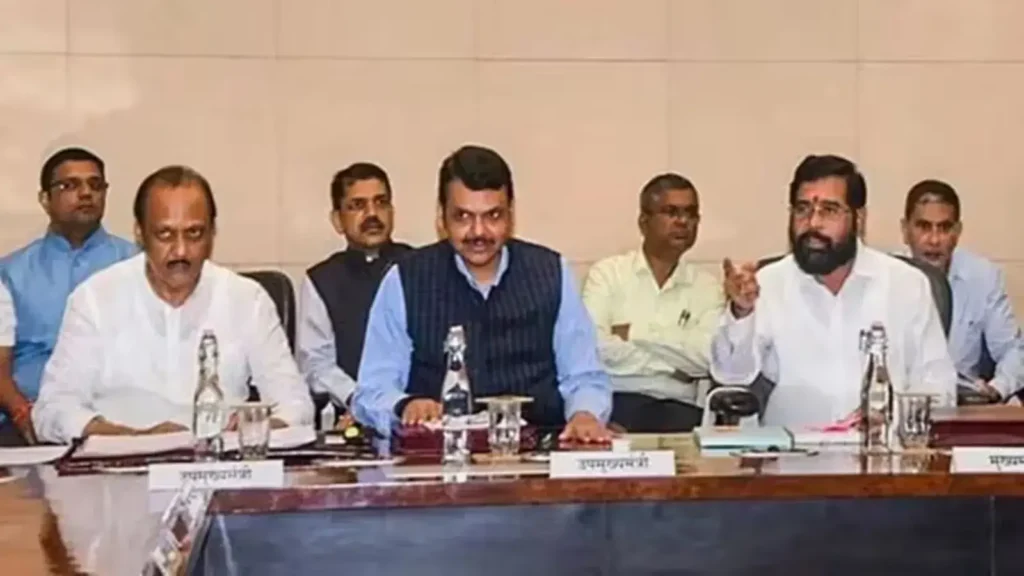
In a groundbreaking initiative, the Maharashtra government has introduced an ‘e-cabinet’ system aimed at revolutionizing governance by replacing traditional paperwork with smart tablets to document cabinet meetings. The system was launched by Chief Secretary Sujata Saunik on Tuesday as part of a broader strategy to enhance transparency and streamline administrative processes. Championed by Chief Minister Devendra Fadnavis, the e-cabinet is designed to improve efficiency and communication in government processes while promoting environmental sustainability. This digital platform will enable ministers to access a user-friendly dashboard that includes relevant references, action points, and the ability to monitor the implementation of decisions. The e-cabinet system eliminates the need for paper-based proposal presentations, discussions, and documentation, making it easier for officials to retrieve meeting records and past decisions. The initiative is expected to significantly reduce paper usage, saving time for cabinet members and officials, and ensuring quick communication of decisions to the public. Described as a green initiative, the e-cabinet underscores the Maharashtra government’s commitment to fostering good governance and promoting sustainable practices. The system is seen as a critical step toward improving the efficiency of governance and tackling public issues more effectively. Source: devdiscourse Photo Credit: devdiscourse

Maharashtra Launches ‘E-Cabinet’ System to Modernize Governance Read More »

Andhra Pradesh Government Partners with Meta to Drive Digital Governance

ArdorComm news

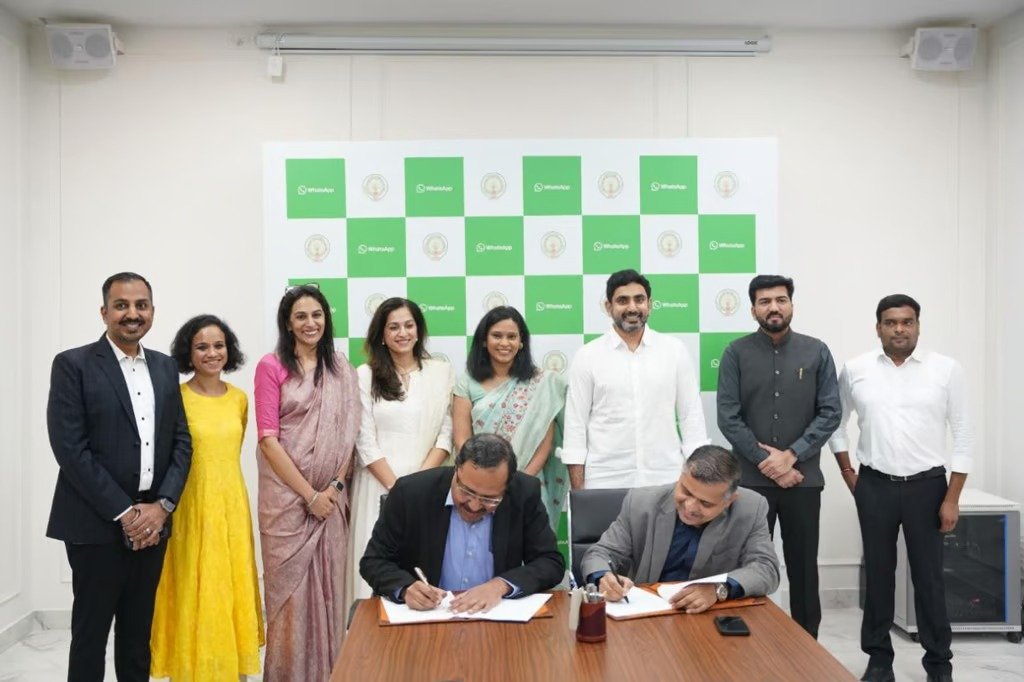
On October 22, 2024, the Andhra Pradesh government signed a Memorandum of Understanding (MoU) with Meta Platforms Inc. to advance digital governance. This collaboration aims to leverage Meta’s WhatsApp Business Solution and generative AI technologies, such as Llama, to enhance e-governance services across the state. The MoU was signed in New Delhi at 1, Janpath. The partnership seeks to improve citizen-centric services by enabling direct communication between the government and its citizens through WhatsApp. In addition to facilitating governance-related updates, Meta’s AI technologies will initially focus on education and skilling, with the potential to expand to other domains. “This partnership aligns with our vision of making governance easier and improving the quality of life for all citizens. With Meta’s innovative technology, we aim to enhance the efficiency of our public services and ensure that governance is just a click away,” said Andhra Pradesh IT Minister Nara Lokesh. Meta India Vice President Sandhya Devanathan highlighted the open access to AI models and the WhatsApp API, stating, “By making openly available AI models and WhatsApp API features accessible to all, we’re fostering innovation and democratizing access.” In a similar move, Meta also partnered with the Telangana government in September 2024 to enhance e-governance and citizen services through AI technologies, reflecting Meta’s growing role in India’s digital governance landscape.

Andhra Pradesh Government Partners with Meta to Drive Digital Governance Read More »