ArdorComm Media Group

Sunday, January 18, 2026 1:21 AM

Digital Streaming

Zee Entertainment Launches ‘KidZ’ on Zee5, Re-enters Children’s Entertainment Segment

Zee Entertainment Enterprises has made a fresh push into the children’s entertainment space with the launch of KidZ, a dedicated kids’ service on its digital platform Zee5. The new vertical brings together a blend of learning-focused and fun programming curated for young audiences. To expand its family-focused offerings, the company has teamed up with top content creators and aggregators from India and abroad, ensuring a safe, engaging and education-driven experience for kids. Accessible via a special profile on Zee5 across all devices, KidZ launches with over 140 titles in several languages, with new episodes and shows arriving every Friday. The line-up includes well-known favourites such as Boonie Bears, Vir, Chacha Bhatija and Inspector Chingum. Zee is also building an exclusive slate of premium original kids’ shows set to debut from December 2025, combining story-driven narratives with informative elements and established character IPs. Chandan Khandelwal, Business Head for the Kids Division at Zee5 India & Global, said the goal is to build a safe, immersive destination that inspires curiosity and joy. The initiative ties into the strategic roadmap highlighted in the company’s May 2025 investor update, which identified children’s content as a high-growth segment. With digital consumption among younger viewers continuing to surge, Zee aims to strengthen its content library and scale its reach across entertainment verticals. KidZ marks Zee’s renewed focus on the kids category, more than a decade after the company exited its earlier edutainment experiment with ZeeQ, launched in 2012 but later discontinued as part of a strategic shift. Source: Economic Times  

Zee Entertainment Launches ‘KidZ’ on Zee5, Re-enters Children’s Entertainment Segment Read More »

$100 Million Hopes Fade: FIFA and IOC Struggle to Attract Indian Broadcasters Amid Market Slowdown

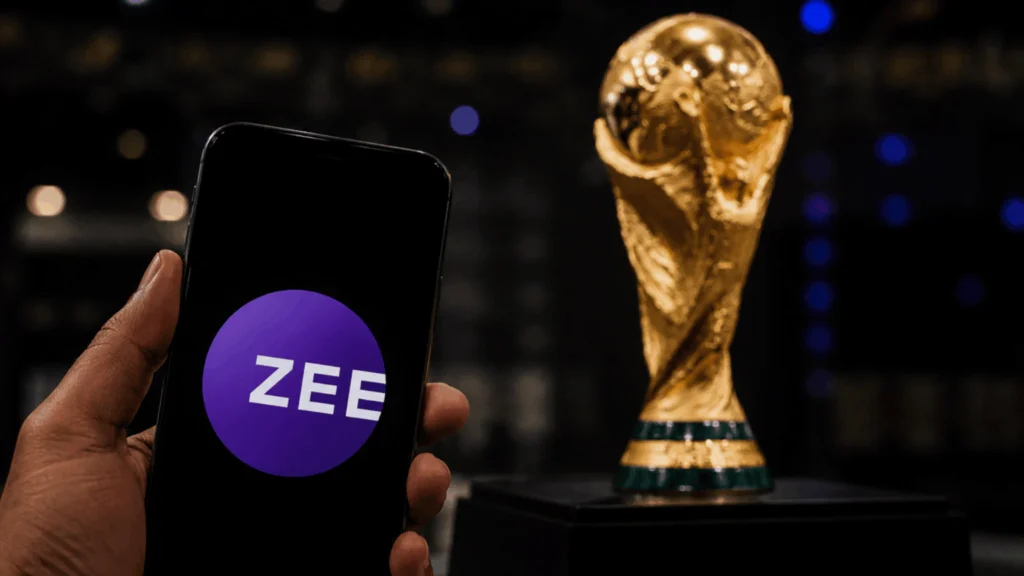
India’s once-booming sports broadcasting market is undergoing a sharp correction, weighed down by broadcaster consolidation, the ban on real-money gaming (RMG), and challenging time zones for upcoming global events. As a result, global sports bodies like FIFA and the International Olympic Committee (IOC) are finding it increasingly difficult to secure higher media rights deals from Indian broadcasters, industry insiders revealed. Both FIFA and the IOC are reportedly eyeing over $100 million each from the Indian market — nearly four times what local networks are prepared to offer. In comparison, India contributed around $61 million for the Qatar 2022 World Cup and $31 million for the Paris 2024 Olympics during the last rights cycle. FIFA floated its invitation to tender (ITT) in July for the 2026 and 2030 World Cups, while the IOC launched a similar tender for the 2026 Milano Cortina Winter Games and the 2028 Los Angeles Olympics. However, progress has been sluggish as Indian broadcasters balk at the steep asking prices. The market’s competitive edge has dulled significantly, with only two major contenders — JioStar and Sony — now dominating negotiations. JioStar, heavily invested in cricket, is reluctant to stretch further, while Sony remains conservative amid weak advertising prospects for non-cricket sports. The government’s ban on RMG platforms has also dealt a severe blow, wiping out an estimated ₹6,000–₹7,000 crore from the sports advertising ecosystem — a crucial source of funds for premium sports rights. Compounding the issue, both the 2026 FIFA World Cup in North America and the 2028 Olympics in Los Angeles will air during late-night hours in India, reducing live viewership potential and ad revenue. Industry veterans argue that global bodies are misreading the Indian market. The IOC, sources say, expects ICC-level valuations due to cricket’s inclusion in the LA28 Olympics, while FIFA is benchmarking against its record-breaking global contracts. “The era of irrational bidding is over,” said a senior media executive. “With broadcaster consolidation, the RMG ban, and inconvenient time zones, even top-tier events don’t offer viable returns. The mismatch between global expectations and Indian realities has never been greater.” Another executive added that while India’s growing Olympic ambitions — including its potential bid for the 2036 Games — could boost interest, time zone differences and the mandatory feed-sharing rule with Doordarshan under the Sports Broadcasting Signals Act continue to erode the commercial appeal of exclusive rights. Sources noted that JioStar had initially approached FIFA for a two-cycle rights deal, but the global football body opted for an open bidding process, anticipating higher offers. That strategy has backfired — JioStar has since pulled back, and Sony remains cautious. Viacom18, which merged with Star India to form JioStar, was the previous rights holder for both FIFA and IOC events. Despite structural challenges, both properties performed decently in their last outings. The Paris 2024 Olympics attracted over 170 million Indian viewers across JioCinema and Sports18, generating roughly ₹110 crore in ad revenues. Since then, JioCinema has merged with Disney+ Hotstar to form JioHotstar, while Sports18 has been absorbed under Star Sports. Source: Economic Times

$100 Million Hopes Fade: FIFA and IOC Struggle to Attract Indian Broadcasters Amid Market Slowdown Read More »

Mukesh Ambani: Disney Deal Ushers in New Era for India’s Entertainment Industry

Reliance Industries Chairman Mukesh Ambani hailed the merger of media assets between Reliance and Walt Disney as a transformative moment for India’s entertainment sector. Speaking at the Reliance AGM, Ambani emphasized that the partnership marks the start of a new era by blending content creation with digital streaming, much like Reliance’s success with Jio and Retail. The deal, approved by the Competition Commission of India (CCI), combines Reliance’s media holdings, including TV18 and the Colors brand, with Disney’s assets, creating India’s largest media empire valued at over Rs 70,000 crore. The joint venture will house two major OTT platforms, Disney Hotstar and Jio Cinema, along with 120 television channels. Ambani highlighted that the combined media business would be a crucial growth center for the Reliance ecosystem, promising to deliver world-class digital entertainment to cater to diverse consumer tastes at affordable prices. “Our digital-first approach will deliver unparalleled content,” he added, underlining the potential of this venture to redefine India’s media landscape. The merger will see Reliance and its affiliates hold a 63.16% stake in the combined entity, while Disney will hold the remaining 36.84%. Reliance has committed to investing nearly Rs 11,500 crore into the venture to enhance its competitive edge against rivals like Sony and Netflix. Nita Ambani, wife of Mukesh Ambani, will chair the new joint venture, with Uday Shankar serving as Vice Chairperson. The CCI’s clearance of the merger followed adjustments proposed by both parties to the original transaction structure. Source: Business Standard

Mukesh Ambani: Disney Deal Ushers in New Era for India’s Entertainment Industry Read More »

The Evolution of Streaming Services: From Cable TV to Digital Domination

Blog on MEA

The advent of the internet has transformed nearly every aspect of our lives, and the entertainment industry is no exception. Gone are the days when families gathered around the television to watch their favourite shows at a prescribed time. The rise of streaming services has ushered in a new era of entertainment consumption in India. In this blog, we will explore the evolution of streaming services in the Indian context, from the early days of cable TV to the current era of digital domination. The Cable TV Era For decades, cable television was the primary source of entertainment for Indian households. It brought a variety of channels into our homes, offering a mix of regional and international content. Cable TV allowed viewers to watch news, sports, movies, and TV shows, but it had its limitations. Viewers had to adhere to fixed schedules, missing out on shows if they weren’t home at the right time. Moreover, the content was limited, and viewers had little control over what they could watch. The Birth of DTH Services The introduction of Direct-to-Home (DTH) services in the early 2000s marked a significant shift. DTH providers offered a wider range of channels and improved picture quality. Viewers could now choose from various subscription packages, customizing their entertainment experience to some extent. However, the fundamental constraints of scheduled programming and limited content still prevailed. Also Read: Top 12 Reasons to Attend the ArdorComm ELSA Summit in Bengaluru on 22nd Sept 2023 The Streaming Revolution The real revolution began when streaming services entered the Indian market. Netflix, Amazon Prime Video, and Hotstar (now Disney+ Hotstar) were among the pioneers. These platforms allowed users to stream content over the internet, breaking free from the shackles of cable TV schedules. Netflix: Netflix made its debut in India in 2016, introducing a vast library of international and original content. Its ad-free, on-demand streaming model was a breath of fresh air for viewers tired of commercials interrupting their favourite shows. Amazon Prime Video: Amazon Prime Video followed suit, offering a mix of original series, movies, and a diverse catalogue. It also bundled its streaming service with its Prime membership, attracting a considerable audience. Hotstar (Disney+ Hotstar): Hotstar gained popularity for its sports content, including cricket matches and the Indian Premier League (IPL). The platform also featured a wide array of Bollywood and regional content. The Evolution of Regional Content One of the most significant advantages of streaming services was their focus on regional content. India is a diverse nation with multiple languages and cultures, and streaming platforms recognized the importance of catering to these differences. They began producing and showcasing regional content, including web series, movies, and documentaries, attracting a more extensive and diverse audience. Also Read: Eco-friendly Living for Better Health: How Sustainable Choices Improve Well-Being Original Content Boom Streaming platforms not only brought international content to Indian audiences but also invested heavily in producing original Indian content. Shows like “Sacred Games,” “Mirzapur,” and “Paatal Lok” became cultural phenomena. The quality of storytelling, production values, and the freedom to explore diverse themes set a new benchmark for Indian entertainment. Accessibility and Convenience One of the key reasons behind the digital domination of streaming services is their accessibility and convenience. Viewers can watch content on their smartphones, tablets, laptops, or smart TVs, anytime and anywhere. Mobile data becoming more affordable and widespread further facilitated this shift. The Rise of Competition As streaming services gained momentum, more players entered the Indian market. Disney+ Hotstar, Voot, ZEE5, SonyLIV, Jio Cinema and others offered a plethora of options. This competition not only led to a wider choice of content but also competitive pricing, benefitting consumers. Also Read: ArdorComm ‘New Normal – Education Leadership Summit & Awards 2023’ to be held at Bengaluru, Karnataka on 22nd September 2023 #ELSABengaluru #ELSAKarnataka Challenges and Future Prospects While streaming services have come a long way, they are not without challenges. The digital divide still exists in India, with rural areas lacking reliable internet access. Additionally, the rise of OTT (Over-The-Top) platforms has led to discussions about content regulation, which is an ongoing debate. In the future, we can expect further growth and innovation in the streaming industry. The integration of augmented reality (AR) and virtual reality (VR) into content consumption, interactive storytelling, and personalized recommendations will likely play a significant role. Regional content will continue to flourish, and more players may enter the market. Conclusion The evolution of streaming services in India represents a remarkable journey from the constraints of cable TV to the boundless freedom of digital streaming. The combination of accessibility, convenience, and a diverse content library has propelled streaming platforms to the zenith of entertainment in the Indian context. As technology continues to advance, we can only envision a future brimming with exciting possibilities for this ever-expanding industry. The story of streaming services is one of relentless innovation, expanding horizons, and a renaissance of storytelling, and it continues to captivate audiences across India. The author, Pratik Ghosh is associated with ArdorComm Media


The Evolution of Streaming Services: From Cable TV to Digital Domination Read More »