ArdorComm Media Group

Saturday, November 8, 2025 7:24 PM

ease of doing business

Andhra Pradesh Govt Approves 10-Hour Workday Amid Widespread Protests

Ardorcomm news

In a controversial move, the Andhra Pradesh government, led by the Telugu Desam Party (TDP), has given the green light to increase the standard workday from nine to ten hours across all private industries and factories. The decision, part of the state’s broader strategy to boost industrial growth and improve its Ease of Doing Business (EoDB) credentials, has sparked strong opposition from workers’ unions and political critics. Previously, the legal daily work limit in the state stood at eight hours before being increased to nine nearly a decade ago. The new amendment, which has been cleared by Chief Minister N. Chandrababu Naidu’s cabinet, now pushes that limit further, raising concerns about worker exploitation and fatigue. Information and Public Relations Minister K. Pardhasaradhi defended the move, stating that easing labour regulations would make Andhra Pradesh more attractive to investors and manufacturers. However, unions and opposition leaders have condemned the changes. V. Srinivasa Rao, State Secretary of the Communist Party of India (Marxist), criticized the decision, alleging that it was made under pressure from the central government to cater to corporate interests. “These amendments strip workers of their rights and reduce them to the status of modern-day slaves,” he said. Rao also highlighted the unfortunate timing of the decision, coming just weeks ahead of a nationwide labour strike on July 9 protesting such reforms. The Andhra Pradesh Factories Act previously restricted adult workers to a nine-hour day, with a mandatory 30-minute break after five hours of continuous work. Unions fear the new policy may allow factory management to unofficially stretch shifts beyond ten hours, possibly to 12 or more, under the guise of extended scheduling. Additional amendments include major changes to overtime and night shift regulations. Overtime eligibility has now been revised upward, from 75 to 144 hours, meaning workers will receive extra pay only after crossing this higher threshold. The government has also lifted restrictions on night shifts for women, with the provision of an extra paid holiday now left to the employer’s discretion rather than being a guaranteed benefit. Critics argue that these changes not only reduce worker protections but also jeopardize their health and wellbeing. “Pushing people to work beyond eight hours a day can have serious consequences on physical and mental health,” warned Dr. T. Seva Kumar, a general physician. As public backlash intensifies, the government’s attempt to court industrial investment is being met with growing resistance from labour organizations and civil society, who see the move as a step backward for workers’ rights. Source: Economic Times Photo Credit: HT

Andhra Pradesh Govt Approves 10-Hour Workday Amid Widespread Protests Read More »
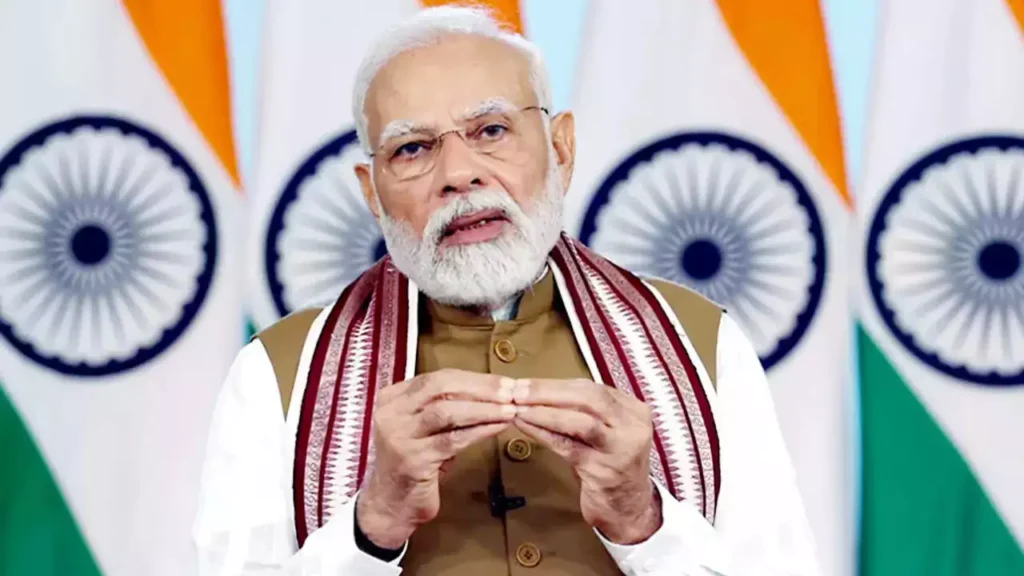
PM Modi Announces Deregulation Commission to Boost Ease of Doing Business

New Delhi, February 12: Prime Minister Narendra Modi has announced the establishment of a Deregulation Commission to reduce the role of the State in governance and further promote the Ease of Doing Business. Speaking at the ET Now Global Business Summit 2025, he emphasized that his government has replaced the “Fear of Business” with pro-business policies over the past decade. Key Highlights from PM Modi’s Address: 🔹 Deregulation Commission: Aims to eliminate bureaucratic hurdles and enhance governance efficiency. 🔹 Jan Vishwas 2.0: A revised version of the Jan Vishwas Act, 2023, designed to remove archaic laws and reduce compliance burdens. 🔹 Major Reforms: GST implementation, property rights reforms under Svamitva Yojana, unlocking ₹100 lakh crore worth of rural property value through drone surveys in 300,000 villages. 🔹 India’s Global Standing: Modi highlighted India’s rising economic influence, noting its key role in global discussions at events like the AI Summit in Paris. 🔹 Economic Growth: India is currently the world’s fifth-largest economy, and Modi reiterated his commitment to making India the third-largest economy in the coming years. Criticism of Previous Governments: The PM took a swipe at past Congress-led UPA governments, stating that they implemented reforms out of compulsion, whereas his administration pursues them out of conviction. Vision for ‘Viksit Bharat’ (Developed India): PM Modi thanked the people of Odisha, Maharashtra, Haryana, and New Delhi for supporting BJP and its allies, reinforcing their commitment to accelerated development. With reforms spanning legal, economic, and governance sectors, the government is driving structural changes to boost economic growth, attract global investments, and foster innovation. Source: Hindustan Times

PM Modi Announces Deregulation Commission to Boost Ease of Doing Business Read More »

Centre Raises Threshold for Merger and Acquisition Vetting by Competition Commission of India

The Corporate Affairs Ministry has announced revisions to the thresholds for mergers and acquisitions (M&As), altering the criteria for exemption from Competition Commission of India (CCI) approval. Under the new regulations, companies are not obligated to notify the CCI if the target entity’s assets, including subsidiaries, amount to less than Rs 450 crore, with a turnover below Rs 1,250 crore. This represents an increase from the previous thresholds of Rs 350 crore for assets and Rs 1,000 crore for turnover. The Ministry has concurrently revised the ‘de-minimis’ or small target exemption threshold, which absolves certain M&As from CCI scrutiny. This exemption now applies to transactions where the asset value in India does not exceed Rs 350 crore or the revenue from India does not exceed Rs 1,000 crore. Vaibhav Choukse, partner and head of competition law at JSA Advocates and Solicitors, hailed the move as a significant step towards facilitating M&As in India, aligning with the government’s agenda of promoting ease of doing business. He noted the 150% increase in the existing thresholds under Section 5 of the Competition Act and the adjustment of De Minimis thresholds. Amit Agarwal, partner at Nangia & Co LLP, echoed Choukse’s sentiments, emphasizing the positive impact of the revisions on the ease of doing business and the M&A landscape in India. However, analysts caution that raising exemption limits may present challenges, particularly for startups in their initial years, which may not meet the asset or revenue criteria but could contribute substantially to acquiring companies post-deal. The example of Facebook’s acquisition of WhatsApp in 2014, which escaped CCI scrutiny due to threshold limitations, highlights the potential implications for competition in relevant markets. While the revisions aim to streamline M&A processes and foster business growth, they also underscore the need for vigilant oversight to ensure healthy competition and market dynamics are preserved, particularly in the digital sphere where transformative deals can have far-reaching consequences.

Centre Raises Threshold for Merger and Acquisition Vetting by Competition Commission of India Read More »