

ArdorComm Media Group

Wednesday, August 19, 2026 5:22 AM

economic growth

BRICS Economies Emerging as Key Drivers of Global Growth: Sitharaman
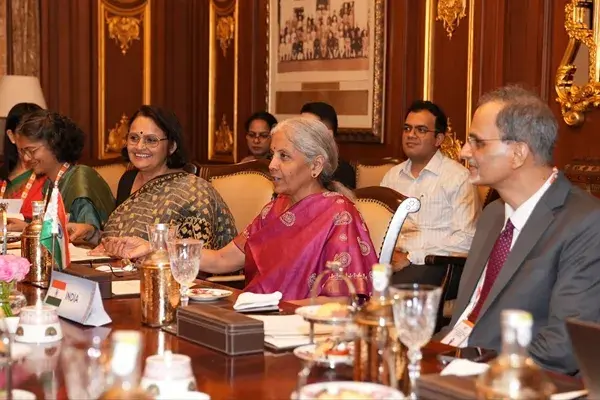
Union Finance Minister Nirmala Sitharaman has said that public investment should help unlock private investment rather than replace it, stressing the need for greater private capital participation across BRICS economies. Speaking at a seminar in Jaipur on the New Development Bank’s role in mobilising private investment in BRICS nations, Sitharaman said the grouping’s economies are among the key drivers of global economic growth. However, she noted that attracting private capital remains a significant challenge. The Finance Minister emphasised that access to capital alone is not enough. Building investor confidence, ensuring economic stability and maintaining a predictable, long-term policy environment are equally important to encourage investment. She also underlined the role of multilateral development banks in reducing investment risks, improving the financial viability of projects and boosting investor confidence, which can help attract private capital at scale. Highlighting India’s experience, Sitharaman said the government has expanded infrastructure development through sustained public capital expenditure and structural reforms. New Development Bank President Dilma Rousseff also spoke at the seminar. Earlier, Economic Affairs Secretary Anuradha Thakur said greater participation from private capital is increasingly important amid the evolving global economic environment. The seminar forms part of the BRICS Finance Ministers and Central Bank Governors’ meeting in Jaipur, being held under India’s BRICS Chairship 2026. The meeting aims to deepen cooperation among member countries on key global economic and financial matters. Source: News on AIR

BRICS Economies Emerging as Key Drivers of Global Growth: Sitharaman Read More »

Climate Change Could Wipe Out Thousands of Urban Jobs in India by 2050: World Bank

India’s major cities could face the loss of hundreds of thousands of jobs over the next few decades as extreme heat increasingly makes outdoor work unsafe, according to a new World Bank report. The findings highlight the growing economic impact of climate change on employment, productivity, and urban development. The report estimates that New Delhi could lose the equivalent of 266,000 full-time jobs by 2030, with the figure rising to 418,000 by 2050 due to unsafe working conditions caused by extreme heat. Kolkata is projected to lose 360,000 jobs by 2030 and 391,000 by 2050, while Mumbai could see losses increase from 204,000 to 255,000 during the same period. Chennai is expected to lose 141,000 jobs by 2030, rising slightly to 145,000 by 2050. South Asia Faces Growing Economic Risks Across South Asia, extreme heat is already responsible for the loss of an estimated 31 million full-time jobs annually. The World Bank warns that without stronger climate adaptation measures, the region’s economy could shrink by nearly 7% by 2050. With an additional 280 million people expected to join the working-age population by mid-century, rising temperatures pose a serious challenge to employment and long-term economic growth. Johannes Zutt, the World Bank’s Vice President for South Asia, said the region’s cities are vital to future economic progress, but increasing temperatures threaten jobs, livelihoods, and overall productivity. Heat Impact Extends Beyond Workplaces The report also highlights how rising temperatures could disrupt transportation and daily life. Indira Gandhi International Airport in New Delhi is among the few major airports worldwide projected to experience temperatures close to or above 50°C for several days each year by 2030, potentially forcing airlines to reduce passenger or cargo loads. In Delhi, around 38% of Metro commuters’ travel time is spent walking, exposing millions to dangerous heat levels. Other cities are also expected to see worsening conditions. Patna’s share of annual working hours deemed unsafe due to heat could increase from 2.4% in 2030 to 6.3% by 2080, while Jaipur’s losses are projected to rise from 1.5% to 2.9% over the same period. Heat Deaths May Be Underreported According to the World Bank, the official death toll linked to extreme heat is likely underestimated because fatalities are often recorded as resulting from heart or kidney failure rather than heat exposure. The report cites research suggesting that a single five-day heatwave in India may have contributed to approximately 30,000 excess deaths. Sustainable Cooling Presents a Major Opportunity Despite the risks, the report points to significant economic opportunities in climate adaptation. India’s sustainable cooling market could reach $1.6 trillion by 2040, driven by growing demand for energy-efficient cooling systems, green buildings, and climate-resilient infrastructure. The World Bank also found that investments in heat early warning systems offer substantial returns, generating an estimated $50 in benefits for every $1 invested, making them one of the most cost-effective climate resilience measures for Indian cities. Source: Economic Times

Climate Change Could Wipe Out Thousands of Urban Jobs in India by 2050: World Bank Read More »

Radisson Hotel Group Targets 500 Properties in India, Projects Up to 80,000 Jobs by 2030

Radisson Hotel Group has outlined an ambitious expansion strategy for India, projecting the creation of approximately 65,000–80,000 job opportunities as it aims to establish 500 properties across the country by 2030. Elie Younes, Executive Vice President and Global Chief Development Officer, described India as one of the group’s top three global markets. He noted that the planned growth—covering both operational and under-construction hotels—will not only expand the brand’s footprint but also open up significant employment and skill development opportunities. To support this growth, the hospitality major is investing in talent development through initiatives such as its Radisson Academy, alongside collaborations with the Tourism and Hospitality Skill Council, JobPlus, universities, and government bodies. The focus, Younes emphasized, is on building long-term careers while promoting local hiring. Currently operating over 200 properties in India, the group plans to drive expansion primarily through its upscale segment, with a strong presence across tier I, II, III, and IV cities, as well as resorts and spiritual destinations. Only about 15% of the planned portfolio will be five-star hotels, while nearly half will fall within the three- and four-star upscale categories, reflecting stronger investment viability in emerging markets. Geographically, around 55% of upcoming projects are expected in tier I cities, followed by 25% in tier II and III locations, with the remaining split between resorts and spiritual hubs. Addressing global uncertainties, Younes said operations in India remain stable despite the ongoing West Asia conflict, with cautious optimism for continued growth provided the situation does not escalate further. While some Gulf markets such as Dubai and Saudi Arabia have seen temporary dips in hotel occupancy, he expressed confidence in their recovery once conditions stabilize. The group also highlighted its preference for brownfield developments, citing faster market entry due to existing infrastructure, though greenfield projects remain attractive for their design flexibility. Source: PTI

Radisson Hotel Group Targets 500 Properties in India, Projects Up to 80,000 Jobs by 2030 Read More »

India and Canada Convene 7th Ministerial Dialogue to Deepen Trade and Investment Cooperation

India and Canada have reaffirmed their commitment to strengthening economic ties during the 7th Ministerial Dialogue on Trade and Investment (MDTI), held in New Delhi. The meeting was co-chaired by Union Minister of Commerce and Industry, Shri Piyush Goyal, and Maninder Sidhu, Canada’s Minister of Export Promotion, International Trade and Economic Development. This high-level dialogue marks a new chapter in bilateral engagement, following the Joint Statement of October 13, 2025, titled “Renewing Momentum towards a Stronger Partnership”, which emphasized trade as a key pillar of mutual economic growth and resilience. Both Ministers underlined the strong foundation of India–Canada relations, built on shared democratic principles, cultural diversity, and expanding economic complementarities. They acknowledged the critical role of the Indian diaspora in Canada, which includes around 2.9 million people and over 427,000 Indian students, as a living bridge that enhances mutual understanding, innovation, and cooperation. Bilateral trade in goods and services between the two countries reached USD 18.38 billion in 2023, reflecting steady progress despite global challenges. The Ministers appreciated the rise in two-way investments and reiterated their commitment to fostering an open, transparent, and predictable trade environment that encourages sustainable and inclusive economic development. The dialogue addressed a broad spectrum of issues, including nutritional security, supply chain resilience, healthcare collaboration, and investment facilitation. Both sides also discussed ways to improve market access, regulatory harmonization, and long-term trade resilience to ensure that economic ties remain future-ready and mutually beneficial. Concluding the discussions, the Ministers expressed a shared resolve to revitalize and advance the India–Canada economic partnership based on trust, respect, and collaboration. They emphasized the importance of turning the deliberations into concrete outcomes that drive shared prosperity and define the evolving strength of the bilateral relationship. Source: PIB Photo Credit: iStock

India and Canada Convene 7th Ministerial Dialogue to Deepen Trade and Investment Cooperation Read More »

Foreign Investment in India’s I&B Sector Slows Sharply in June Quarter Despite Strong Overall FDI Momentum

ardorcomm news

Foreign direct investment (FDI) inflows into India’s Information and Broadcasting (I&B) sector recorded a significant slowdown during the April–June 2025 quarter, even as the country’s broader FDI landscape remained steady. According to the latest data from the Department for Promotion of Industry and Internal Trade (DPIIT), cumulative FDI in the I&B sector stood at ₹76,143.29 crore by the end of June 2025 — up marginally from ₹75,590.84 crore in March 2025 and ₹74,369.17 crore in December 2024. This translates to just ₹552.45 crore in fresh FDI inflows during the first quarter of FY26, marking a steep 54.8% drop compared to ₹1,221.67 crore in the previous quarter. The figures, compiled from April 2000 onwards, indicate that investor sentiment in the I&B industry has cooled off after a relatively strong start to the year. While cyclical adjustments may partly explain the decline, analysts point out that the sector’s overall contribution to India’s total FDI remains small. High-growth areas such as Telecommunications, Automobiles, and Computer Software & Hardware continue to dominate, collectively accounting for over 25% of cumulative inflows. In contrast, the entire I&B segment—including print, broadcasting, and online media—makes up less than 1% of total FDI received since 2000. Despite the slowdown in the media sector, India’s overall FDI performance continues to demonstrate resilience. Cumulative inflows between April 2000 and June 2025 have surpassed ₹92 lakh crore. During the April–June 2025 quarter alone, total FDI (including equity, reinvested earnings, and other capital) amounted to ₹2,22,120 crore, with equity inflows contributing ₹1,59,428 crore. Experts suggest the current dip in I&B investments reflects a mix of regulatory uncertainties, industry consolidation, and fewer big-ticket deals. However, growing interest in digital media, OTT platforms, and sports broadcasting could spur renewed investor confidence later in the year—particularly as policymakers revisit FDI rules to align with the rapidly evolving digital ecosystem. With India’s media and entertainment sector undergoing rapid digital transformation, stakeholders are optimistic that upcoming reforms could help unlock new opportunities and make the I&B landscape more attractive to global investors. Source: Economic Times

Foreign Investment in India’s I&B Sector Slows Sharply in June Quarter Despite Strong Overall FDI Momentum Read More »

PwC India Unveils Vision 2030, to Add 20,000 Jobs and Triple Revenue in Five Years

PwC India has announced an ambitious expansion plan under its Vision 2030, aiming to grow its workforce to 50,000 employees within the next five years by creating 20,000 new jobs. The consulting major is targeting a threefold increase in revenue, committing over 5% of annual revenues to technology, innovation, and capability building. The company will sharpen its focus on areas such as digital transformation, sustainability, risk and regulatory compliance, cloud, and cybersecurity, positioning itself to help clients navigate rapid market disruptions. Chairperson Sanjeev Krishan emphasised the firm’s goal of building a “future-ready workforce,” with investments in upskilling, women in leadership, and inclusive career growth from entry-level to the boardroom. PwC India will allocate 1% of its revenues to learning initiatives while expanding its presence in Tier 2 and Tier 3 cities to support decentralised economic growth and align with the government’s vision of self-reliant local economies. Recruitment will focus on sector-specific and digital expertise, with growth anchored in six priority sectors: financial services, healthcare, industrial manufacturing, automotive, technology, media, and telecom. Additionally, the company will explore emerging “horizon sectors” to secure an early strategic foothold. Source: PTI

PwC India Unveils Vision 2030, to Add 20,000 Jobs and Triple Revenue in Five Years Read More »

UP’s 8-Year Journey: From BIMARU to Economic Powerhouse

Chief Minister Yogi Adityanath marked eight years of BJP governance in Uttar Pradesh by highlighting the state’s transformation into an economic powerhouse. Speaking at Lok Bhawan on Monday, he emphasized that the financial growth of UP was achieved without imposing new taxes. “Once considered a BIMARU state, UP is now the growth engine of the country,” he stated. A documentary titled Ek Jhalak, showcasing key achievements, was screened during the event, along with the release of a special booklet. The CM credited the success to Prime Minister Narendra Modi’s visionary leadership and the collective efforts of 25 crore citizens. To celebrate the milestone, the state will host a Vikas Utsav from March 25-27. CM Yogi highlighted job creation as a key achievement, with over 8 lakh government jobs and self-employment opportunities provided to more than 2 crore youth through schemes like One District One Product (ODOP) and CM Yuva Udyami Vikas Yojana. Fiscal discipline has also been a priority, with revenue leakages curbed, corruption tackled, and direct benefit transfers implemented to eliminate middlemen. As a result, UP is now a revenue-surplus state. The state’s GDP has more than doubled from ₹12.75 lakh crore in 2017 to ₹27.5 lakh crore, while per capita income has risen from ₹46,000 to ₹1.24 lakh. Foreign Direct Investment (FDI) has also surged from ₹3,300 crore (2000-2017) to ₹15,000 crore (2017-2024). Reflecting on the pre-2017 scenario, CM Yogi recalled widespread lawlessness, farmer suicides, and economic instability. “In just eight years, the double-engine government has changed this perception. Today, UP is at the forefront of the nation’s development,” he declared. He also highlighted advancements in healthcare, education, law and order, industrial development, infrastructure, tourism, and social welfare. The event was attended by key leaders, including Deputy CMs Keshav Prasad Maurya and Brajesh Pathak, UP BJP Chief Bhupendra Chaudhary, and several cabinet ministers. Source: TOI

UP’s 8-Year Journey: From BIMARU to Economic Powerhouse Read More »

Union Budget 2025: Major Tax Relief, Economic Growth Focus, and Policy Shifts

New Delhi, Feb 1 – Finance Minister Nirmala Sitharaman presented the Union Budget 2025-26, outlining significant tax relief and economic measures aimed at boosting growth. The budget proposes an expenditure of ₹50.65 lakh crore, marking a 7.4% increase over the previous fiscal year. A key highlight was the tax relief benefiting India’s middle class. Individuals earning up to ₹12 lakh annually will pay no income tax, saving ₹80,000, while those earning ₹24 lakh or more could save ₹1.10 lakh. Additionally, a new Income Tax Bill will be introduced next week to replace the 1961 Income Tax Act. Key Announcements Tax Reforms: No tax on income up to ₹12 lakh under the new regime. TDS Simplification: Measures to ease compliance burdens. Tariff Reduction: Customs duty on Harley-Davidson motorcycles cut ahead of PM Modi’s US visit. Intelligence Budget Cuts: Reduced allocations for NSCS and Intelligence Bureau. Manufacturing Incentives: Tax exemptions on EV and mobile phone battery components. Prime Minister Narendra Modi called the budget a “people’s budget,” emphasizing its role in increasing investments and citizen participation in development. However, opposition leaders, including Congress MP Shashi Tharoor and former Finance Minister P. Chidambaram, criticized it for being election-focused and lacking job creation measures. Meanwhile, social media users reacted with humor, flooding the internet with memes on Sitharaman’s speech. Source: NDTV

Union Budget 2025: Major Tax Relief, Economic Growth Focus, and Policy Shifts Read More »

Budget 2025: No Income Tax Up to ₹12 Lakh, Major Relief for Middle Class

In a landmark announcement, Finance Minister Nirmala Sitharaman declared in her Budget 2025 speech that individuals earning up to ₹12 lakh annually will pay no income tax under the new tax regime. The move has been welcomed as a major relief for India’s middle class. The Budget also introduced key financial reforms, including raising the Foreign Direct Investment (FDI) limit in the insurance sector and modifying cess and surcharge structures. Additionally, the government plans to simplify the Tax Deduction at Source (TDS) regime to ease compliance burdens. Sitharaman announced that a new, streamlined Income Tax Bill will be introduced next week, designed to be more concise and user-friendly. Other tax reforms include raising the Tax Collected at Source (TCS) limit on remittances under the RBI’s Liberalised Remittance Scheme from ₹7 lakh to ₹10 lakh. Further, in a push towards domestic manufacturing, the Budget provides tax exemptions on 35 goods used in EV battery production and 28 goods for mobile phone battery manufacturing. New Income Tax Slabs (New Regime) ₹4 – 8 lakh: 5% ₹8 – 12 lakh: 10% ₹12 – 16 lakh: 15% ₹16 – 20 lakh: 20% ₹20 – 24 lakh: 25% Above ₹24 lakh: 30% The Budget 2025-26 focuses on tax reforms, investment liberalization, and industry-friendly policies, signaling the government’s intent to support economic growth and ease financial burdens on taxpayers. Source: Financial Express

Budget 2025: No Income Tax Up to ₹12 Lakh, Major Relief for Middle Class Read More »

India’s M&A Activity Surges 14% in 2024’s First Nine Months, Led by Major Transactions

India’s mergers and acquisitions (M&A) market rebounded strongly in 2024, with transactions rising by 13.8% to reach $69.2 billion in the first nine months, up from $60.8 billion in the same period in 2023. A total of 2,301 deals were executed between January and September, marking a notable increase over the 1,855 deals recorded during the same time last year, as per Bloomberg data. Leading this surge was Bharti Airtel’s acquisition of a stake in the British telecom giant BT Group for $4.08 billion, marking the largest M&A transaction in India so far this year. Other major deals included a family settlement within the Godrej Group and Gujarat Gas’s $3 billion acquisition of Gujarat State Petronet. Bhavin Shah, Partner and Leader (Private Equity and Deals) at PwC India, attributes this uptick to India’s attractive growth potential and market resilience compared to developed regions such as North America and Europe. “High GDP growth and a strong stock market in India have driven valuations upward, appealing to both domestic and foreign investors,” he noted. Interest rate fluctuations and inflation have also influenced M&A activities, as shifting financing terms and equity stakes impact transaction structures and valuations. Additionally, variations in cross-border real exchange rates have shaped global dealmaking patterns. Vishal Agarwal, Partner at Grant Thornton Bharat, observed that investors are increasingly turning to the Middle East as it focuses on capital attraction, while Western investors appear cautious toward China. Meanwhile, India remains appealing, particularly for early-stage deals and full buyouts. Private equity has played a significant role in India’s M&A landscape, with PE funds involved in transactions totaling $24.2 billion so far, reflecting an 8.9% rise over the previous year. Investors are also increasingly eyeing IPOs for growth-stage deals, viewing them as more cost-effective than private equity funding. This sustained interest in the Indian market underscores its stability and potential as a global investment hub amid shifting economic dynamics. Source: Business Standard

India’s M&A Activity Surges 14% in 2024’s First Nine Months, Led by Major Transactions Read More »