ArdorComm Media Group

Sunday, September 20, 2026 3:10 PM

education

Over 1 Lakh Single-Teacher Schools Educate 33 Lakh Students Across India: Education Ministry

ardorcomm news

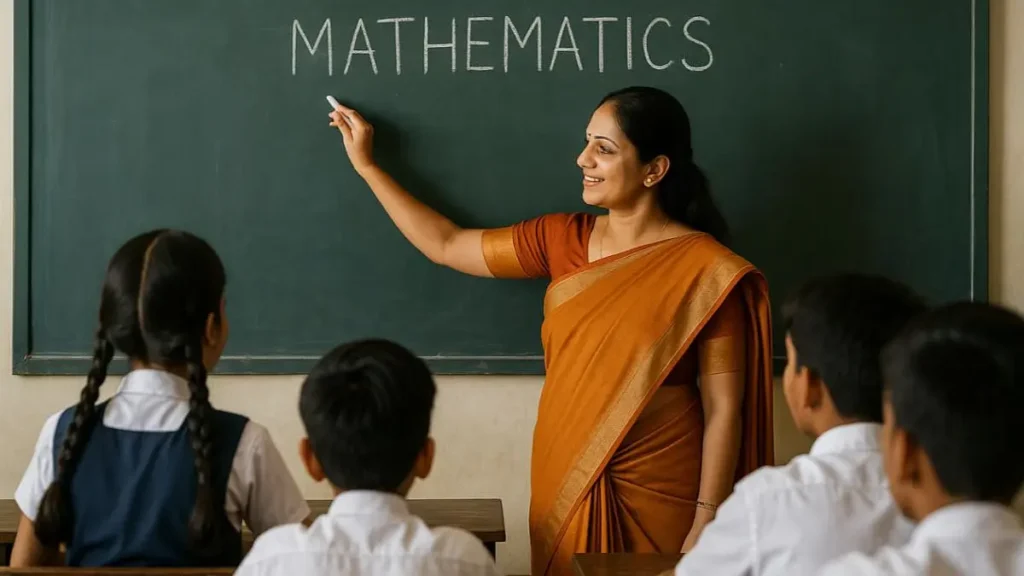
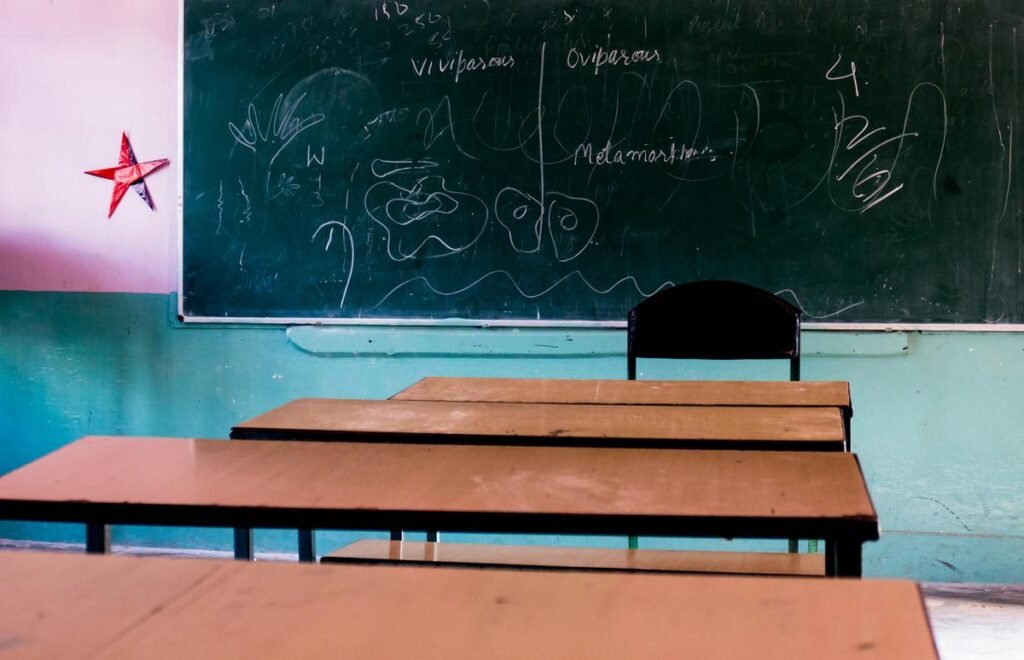
Over 33 lakh students in India are studying in more than one lakh schools run by a single teacher, according to the latest data from the Ministry of Education. Andhra Pradesh tops the list in terms of the number of such schools, while Uttar Pradesh records the highest student enrolment. As per statistics for the academic year 2024–25, India has 1,04,125 single-teacher schools catering to 33,76,769 students — averaging around 34 students per school. This figure highlights ongoing challenges in meeting the Right to Education (RTE) Act norms, which prescribe a pupil-teacher ratio (PTR) of 30:1 for primary grades (I–V) and 35:1 for upper primary levels (VI–VIII). Andhra Pradesh leads with 12,912 single-teacher schools, followed by Uttar Pradesh (9,508), Jharkhand (9,172), Maharashtra (8,152), Karnataka (7,349), and both Madhya Pradesh and Lakshadweep (7,217 each). States like West Bengal (6,482), Rajasthan (6,117), Chhattisgarh (5,973), and Telangana (5,001) also feature prominently on the list. In contrast, Delhi has only nine such schools, while Puducherry, Ladakh, Chandigarh, and Dadra & Nagar Haveli and Daman & Diu report none. The Andaman and Nicobar Islands have just four. In terms of student enrolment, Uttar Pradesh leads with 6,24,327 students studying in single-teacher schools, followed by Jharkhand (4,36,480), West Bengal (2,35,494), Madhya Pradesh (2,29,095), Karnataka (2,23,142), Andhra Pradesh (1,97,113), and Rajasthan (1,72,071). Interestingly, Delhi and Chandigarh, despite having very few such schools, record the highest average student strength per school — 808 and 1,222 respectively. On the other hand, regions like Ladakh (59), Mizoram (70), Meghalaya (73), and Himachal Pradesh (82) have some of the lowest averages. A senior official from the Ministry explained that the government is working to enhance learning outcomes and improve the efficiency of resource use by merging under-enrolled schools — a process known as “rationalisation.” “Single-teacher schools limit the scope of effective teaching and learning. The government is redeploying teachers from non-operational schools to ensure adequate staff availability in single-teacher schools,” the official said. The number of single-teacher schools has seen a steady decline, dropping from 1,18,190 in 2022–23 to 1,10,971 in 2023–24 — a reduction of nearly six percent. Source: PTI  

Over 1 Lakh Single-Teacher Schools Educate 33 Lakh Students Across India: Education Ministry Read More »

NCERT Must Build Competence, Knowledge for Nation-Building: Dharmendra Pradhan

On the 65th Foundation Day of NCERT, Union Education Minister Dharmendra Pradhan emphasized the council’s crucial role in shaping an empowered and knowledgeable society. He called upon NCERT to adopt global best practices while remaining rooted in India’s cultural and linguistic strengths. “NCERT’s responsibility is to make our people competent and raise knowledge levels. You are the true nation-builders,” Pradhan said, addressing the gathering. He stressed the need for children to gain proficiency in English while also achieving conceptual clarity through their mother tongues. Reflecting on past curriculum reforms, Pradhan referred to the National Curriculum Frameworks (NCF) of 2000 and 2005, noting that changes introduced earlier created confusion. He asserted that NCERT is now setting the framework in the right direction, free from what he termed a “slave mentality” that deprived the nation of self-reliance and pride. He further praised new NCERT modules, such as those on Operation Sindoor and Partition Horrors Remembrance Day. Former ISRO Chairman S. Somanath, also present at the event, credited NCERT textbooks for shaping his early academic foundation but noted their shortcomings. “Those books built my career, yet they missed highlighting India’s scientific heritage and achievements. I had to relearn many things later. Today, I see a transformation, with more focus on our own legacy,” he said. Somanath also stressed the importance of promoting learning in Indian languages, pointing out that reliance on foreign textbooks during higher education limited students’ connection with indigenous knowledge systems. “Rooting education in our own language is essential,” he remarked. Source: Indian Express

NCERT Must Build Competence, Knowledge for Nation-Building: Dharmendra Pradhan Read More »

CBSE to Roll Out Educational Podcasts, Invites Student Participation from Classes 9–12

The Central Board of Secondary Education (CBSE) has announced a new initiative to develop its own series of educational podcasts and digital content, covering both academic and counselling themes. The board stated that these resources are being designed to offer valuable insights, guidance, and awareness for students, parents, and schools alike. To ensure accessibility, the podcasts will also be released on public platforms such as YouTube. According to CBSE, the move is aimed at strengthening its existing academic and counselling support system by introducing a more flexible, digital-friendly format. The content will focus on topics like exam preparation, academics, mental well-being, and student welfare. Involving Students’ Voices To make the project more engaging, CBSE plans to integrate student perspectives into the podcasts. Students will be encouraged to contribute through short video or audio snippets, testimonials, and interactive discussions. These inputs will be featured on CBSE’s podcasts, social media platforms, and other digital communication channels, making the content more relatable and student-focused. How Schools Can Participate The board has directed affiliated schools to nominate students from Classes IX to XII who are confident, articulate, and interested in taking part. Participation is voluntary and requires written consent from both the students and their parents or guardians, submitted through the respective school. Schools have been asked to share names and brief profiles of nominated students through a Google form link provided by CBSE. The nominations must be submitted within 10 days of the notice being issued. The board emphasized that this is an optional opportunity meant to give students a platform to share their views while enhancing CBSE’s outreach and communication efforts. Source: Indian Express

CBSE to Roll Out Educational Podcasts, Invites Student Participation from Classes 9–12 Read More »

Odisha to Provide Free Civil Services Coaching for Aspirants in Kalahandi

Civil service aspirants in Odisha’s Kalahandi district will soon have access to free coaching under a new initiative called Mission Akankhya. The programme, launched on Independence Day, is being rolled out through a partnership between the Kalahandi district administration and Vision IAS, New Delhi. As part of the agreement, signed by Kalahandi Collector Sachin Pawar and Vision IAS Vice-President Deepali Chaturvedi, the district administration will provide infrastructure support, while Vision IAS will offer training to 60 selected candidates annually. Students will be chosen through a written examination and interview, with coaching available in both classroom and online formats. Registration for the entrance test will open on August 22, and the selection exam is scheduled for September 21. The training sessions are expected to begin in Bhawanipatna from the first week of October. Chaturvedi highlighted that Vision IAS has previously extended similar initiatives to aspirational districts in Madhya Pradesh, Uttar Pradesh, and Rajasthan. However, this marks the first such programme in Odisha, aimed at empowering youth from Kalahandi, one of the districts identified under NITI Aayog’s Aspirational Districts Programme (ADP). Source: PTI

Odisha to Provide Free Civil Services Coaching for Aspirants in Kalahandi Read More »

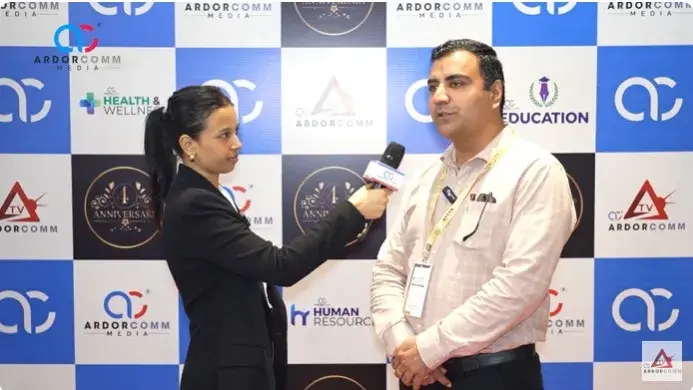
Prof. Himanshu Aeran, Vice Chancellor, Ras Bihari Bose Subharti University, Dehradun emphasizes on Industry-Academia Collaboration & Digital Empowerment at the ArdorComm Education Leadership Summit & Awards 2025 in Dehradun

Himanshu Aeran

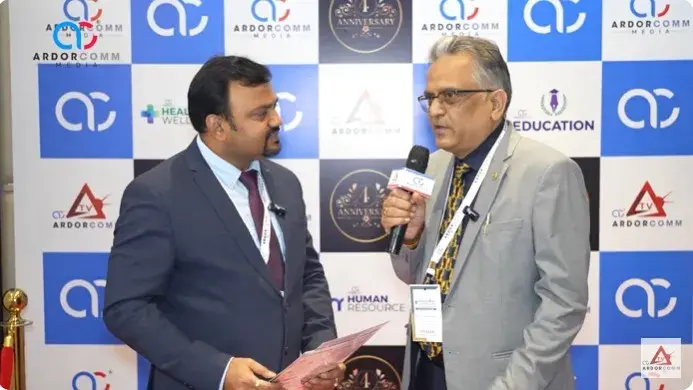
We are delighted to welcome Prof. (Dr.) Himanshu Aeran, Vice Chancellor of Ras Bihari Bose Subharti University, Dehradun, thank you for joining us today. Thank you. It’s my pleasure to be here. Could you please tell us more about your university? Yes, certainly. We have two campuses—one in Meerut, named Swami Vivekanand Subharti University, and another in Dehradun, called Ras Bihari Bose Subharti University. We offer a wide range of programs. While we are primarily focused on medical faculties, we also offer courses in fashion designing, fine arts, hotel management, MBBS, nursing, pharmacy, and naturopathy. On the non-medical side, we are launching courses in mass communication, computer applications, business management, arts, liberal sciences, and more. In today’s context, where do smart skills and smarter workplaces come in? Do you see a gap between academia and industry? And how is your university addressing it? Yes, there is definitely a gap between academia and industry. To address this, we’ve been working on multiple fronts. I recently attended the VIKAS 2025 event organised by UGC, where the focus was on integrating industry with academia through apprenticeships and skill-based programs. UGC is now allowing universities to award academic credits for industry training, and we are actively implementing that. Being a medical university, our students are trained in our own hospitals and pharmacy companies. We are emphasizing industrial training in all domains to ensure our students are workforce-ready. Are there any digital initiatives or use of technologies like AI that your university has implemented? Also, how are you training your faculty? Yes, we’ve developed our own indigenous ERP system and digitized our records and administrative processes. Students are being trained on digital platforms, and we conduct regular faculty development programs to make them digitally competent. In the age of AI and tech advancement, we believe both students and faculty must be equipped to meet new challenges. At ArdorComm, we’re trying to create a unified platform from KG to PG, including representation from school education, higher education, skilling, government, and corporate sectors. How do you see this helping society? This is a wonderful initiative. I’m seeing such a platform for the first time in Dehradun, bringing together technical experts, reputed universities, and government stakeholders. It’s a great opportunity for collaboration. I’ve already interacted with several people here and we’re exploring partnerships. This is a step forward for improving education in Uttarakhand, especially given the unique challenges of our hilly regions. I congratulate you for this effort—it’s meaningful and much needed. We’ve recently completed four years of ArdorComm Media. As a growing media organization, do you have any words of encouragement for us? You’ve achieved so much in just four years—what a remarkable journey. If this is what you’ve done as a four-year-old, I can only imagine how you’ll shine as you grow. My best wishes to ArdorComm. I hope we can collaborate to create stronger bridges between academia and industry. Together, we can contribute to building a Viksit Bharat, as envisioned by our Hon’ble Prime Minister Shri Narendra Modi. And I want to say “Ham Jagat Guru the aur Jagat Guru rahenge”, that translates to “We were the world’s guru, and we will remain the world’s guru.”  

Prof. Himanshu Aeran, Vice Chancellor, Ras Bihari Bose Subharti University, Dehradun emphasizes on Industry-Academia Collaboration & Digital Empowerment at the ArdorComm Education Leadership Summit & Awards 2025 in Dehradun Read More »

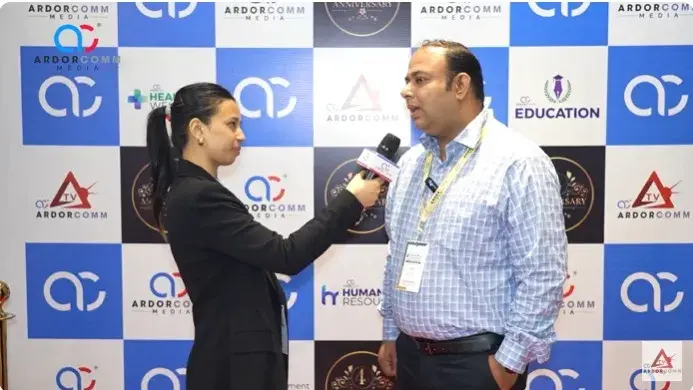
Arpan Kumar Sharma, Principal, Samar Study Hall Girls School, Kashipur speaks on the Impact of Collaborative Education Events at ArdorComm Education Leadership Summit & Awards 2025 in Dehradun

Arpan Kumar Sharma

We’re pleased to have with us Arpan Kumar Sharma, Principal of Samar Study Hall Girls School, Kashipur, could you please introduce yourself? I’m Arpan Kumar Sharma, Principal of Samar Study Hall Girls School, Kashipur. I would like to extend my heartfelt congratulations to the ArdorComm Media Group on completing its fourth anniversary. It’s a very well-organised event and an excellent platform for schools and universities. We get to interact with many stakeholders, vendors, and educators here. I truly want to thank you. How has your experience been so far to attend this event? It has been very good. I listened to all the panelists, and the discussions were extremely insightful. I learned a lot from the dialogues and perspectives shared. I sincerely hope such events continue in the future as well. ArdorComm Media celebrates its fourth anniversary, do you have any message or wishes for us? I see a very bright future for ArdorComm Media. I wish you all the best for your journey ahead. Please continue organising such impactful events and do invite us to be part of them again.

Arpan Kumar Sharma, Principal, Samar Study Hall Girls School, Kashipur speaks on the Impact of Collaborative Education Events at ArdorComm Education Leadership Summit & Awards 2025 in Dehradun Read More »

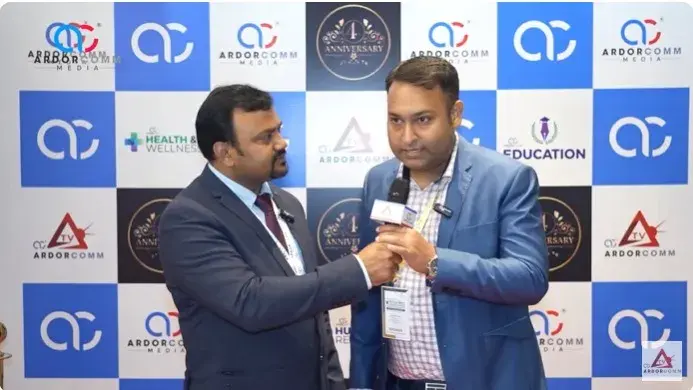
Anuj Bhatia, Principal, Samar Study Hall, Kashipur speaks on AI, Collaboration, and the Power of Knowledge Sharing at ArdorComm Education Leadership Summit & Awards 2025 in Dehradun

Anuj Bhatia

We’re glad to have with us Anuj Bhatia, the Principal of Samar Study Hall School, Kashipur, could you kindly introduce yourself? I am Anuj Bhatia from Samar Study Hall School, working as a Principal. I have 20 years of experience. How has your experience been so far at the ArdorComm Media event? Oh, it’s really wonderful. The speakers, the panelists—those who are speaking—they have lots of experience and knowledge. What they told us was full of insights and learning. They explained the importance of collaboration for students, the use of AI in education, it was really wonderful. ArdorComm Media is celebrating its fourth anniversary. Any message you’d like to share with us? I really want to thank ArdorComm for inviting us to this platform. And really, a big congratulations to them for achieving this 4-year milestone. I hope they’ll continue to flourish like this.  

Anuj Bhatia, Principal, Samar Study Hall, Kashipur speaks on AI, Collaboration, and the Power of Knowledge Sharing at ArdorComm Education Leadership Summit & Awards 2025 in Dehradun Read More »

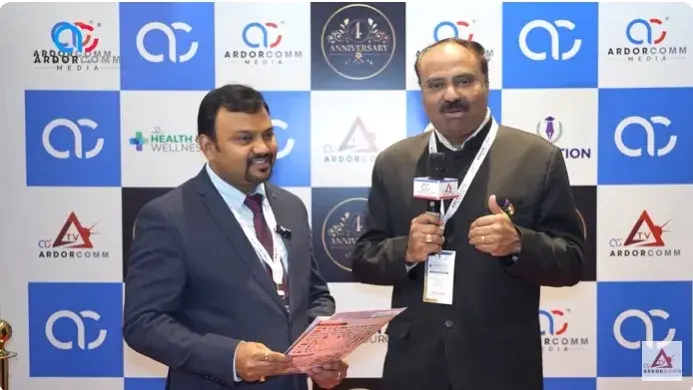
Prof. (Dr.) Shankar Ramamoorthy, Vice Chancellor, Jigyasa University, Dehradun Highlights Future-Ready Education at ArdorComm Education Leadership Summit & Awards 2025 in Dehradun

Prof. (Dr.) Shankar Ramamoorthy

We have a very senior academician with us, Prof. Dr. Shankar Ramamoorthy. He’s the Vice Chancellor of one of the finest universities of Uttarakhand, Jigyasa University, Dehradun. We welcome you to today’s event. Welcome and thank you very much. I think this has been a very wonderful journey, Mr. Anand, and I am pretty much honored to be part of the initiative that Mr. Anand has started—the ArdorComm Media. I think Ardor’s ensemble of putting all the people together in terms of industry and academia has been a very wonderful thing. We are enjoying this whole experience since morning. We’ve been hearing from all the educational leaders, we’ve been hearing from academicians, we’ve been hearing from industry experts—I think this has been a very wonderful journey. Personally, I must say that I feel that I’m a learner today. And after spending 35 years in the industry and academia, when I come back here, I say that what Mr. Anand is doing is very important because what we are teaching is something that is happening here. And we are going to factor the learnings from today and see that the curriculum is getting more and more enriched. I’ve been a very strong supporter of the job description model. In a job description model, I go to Naukri.com, I go to Shine, I go to Indeed, I see what are the job profiles. I tell my people to look at the job profiles, make curriculum, and make sure that you backfill all the knowledge that you have—from the industry to academia. Personally, spending in industry for 28 odd years in different cities like Bangalore, Mumbai, Pune—when I came back to academics, I really found that a lot has to be done here. And forums like this are a very, very enjoying experience. Thank you very much, Mr. Anand, for this.   Where do smart skills and a smarter workforce play a role? Do you really feel there is a gap here, and how should we overcome it? Absolutely. There is a lot of—a very big hiatus, a very big gap persists between the rubber and the ground. And the rubber has to hit the ground at the end of the day. So whatever rubber—or the students—we generate, they are working hard, but they’re not smart. They’re not industry-ready. They’re half-baked. And I think the moment has arrived that we have to make sure that we have industry-ready professionals. So it’s going to be a very different way of teaching them. It’s not going to be pedagogy—it has to be andragogy. It has to be more about micro-teaching, it has to be peer learning, it has to be activity-based learning. I think the formats—even of our benches in the classroom—have to undergo a sea change and a big overhaul. We need to have, you know, places where a conference-like setup is there, people think, people share, and people are able to give back to the class. Things like flipped learning, things like new forms of pedagogy have to come—and that’s the new normal future.   You very well said that the infrastructure of the school and university campuses also has to be changed. Do you feel there should be budget allocation or investment in infrastructure to be future-ready and digitalized? Exactly, I think when we start a school or a university or an education system, the most important thing they say is—like the six M’s of management—Men, Money, Material, Methods, Market, and Motivation. I think apart from having the right faculty (Men) and the Money, the most important thing is the Material. When I say material, I’m talking about infrastructure. I’m talking about digital infrastructure—right from smart classrooms, right from smart learning, right from everything. We need a good ERP, a good LMS, a good recruitment management system, faculty management system. I think we have to make sure that educational institutions’ workflow dynamics are becoming more optimized, more agile, and faster.   How is Jigyasa University growing, and what’s the vision of Jigyasa University? I am almost seven months old in Jigyasa University. I’m from Galgotias and Sharda before. So when I came to this university, I found that there’s a lot of things to be done. This university is trying to go up slowly in terms of its presence, visibility, and recognition. But the most important thing Jigyasa University has to do is—it has to make sure, apart from building a brand, it has to do the fundamental thing well: what happens in those 50 minutes of the class. I think that’s exactly where the lights, action, and the camera is. If you’re able to do that job well—the teaching and learning—I’ve told everyone, all will fall in place. That’s why I’m hiring the best faculty, I’m making sure that I have the best people, I pay the best possible remuneration to my faculty. And more important is—I’m developing a passion in the real teacher who has come to be an educator and not just for a job. So I’m telling them—I’m going to hire people who don’t want to do a job with us. And we really handpick students and faculty both for the same. I’m very pleased to share with you that we recently completed our fourth year of existence—this is our fourth anniversary as a media group. Any message or good wishes you’d like to give to ArdorComm Media Group? I think ArdorComm Media, in its last four years, has done a very wonderful job. I was going through your website before coming here and before I was selected to be a speaker here. I think in the last four years, you have been evolving continuously. And I have seen that the type of people you bring—right from the government, right from the policymakers, right from the academicians—I think the cast, ensemble, and the galaxy of people you bring is very perfect. And I wish all the best and good luck for the ArdorComm Media Group. Lots of


Prof. (Dr.) Shankar Ramamoorthy, Vice Chancellor, Jigyasa University, Dehradun Highlights Future-Ready Education at ArdorComm Education Leadership Summit & Awards 2025 in Dehradun Read More »

Arvind Mahajan, Chairman & MD, Spring Dales English School, Kathua shares insights on NEP, Innovation, and Global Collaboration in Schools, at ArdorComm Education Leadership Summit & Awards 2025 in Dehradun

Arvind Mahajan

We have an esteemed educationist with us, Mr. Arvind Mahajan. He’s the Chairman and MD of Spring Dales English School, Kathua. We welcome you to today’s event. Thank you so much. And at the outset, I would like to heartily congratulate you for organizing such a wonderful event which is a platform for networking for all of us. Not only networking, but we get to learn so much and we collaborate with other co-educators. It’s a wonderful initiative you have started, and kudos to you and hats off to you. You’re giving certificates of achievement here, but I think you deserve the best achievement award for organizing such a wonderful event. I’m pleased and honored to hear that from you, Arvind. We’d like to know more about your schools. What are the key highlights? So we started in 1991 and we’ve been ranked among the top 10 state board schools of the country for four years by Education Today. The school is known as Spring Dales English School. We have a strength of around 1,100 students, and we have an Atal Tinkering Lab by NITI Aayog. We’ve produced state board toppers, IIIT-JEE 99.99 percentile scorers, and the like. The school boasts of excellent academic results. Recently, we also had a collaboration with Woosong University, South Korea, wherein students have a chance to study for their degrees online in India with opportunities to go abroad—multiple pathways across the US, UK, Canada, Australia, South Korea, etc. In terms of NEP implementation, what are the initiatives you are taking in your school? So one initiative came even before NEP—we got the gift of the Atal Tinkering Lab where project work, collaboration, and brainstorming began. Our students started preparing projects. One of our students got selected in Toycathon as one of the top 10 finalists of J&K and received an award from the Lieutenant Governor for creating a state locator game. Then our students went to IIT Delhi after winning the Budding Scientist McMillan Program. We also had Bhumika representing the Atal Innovation Marathon—her project was on a smart shopping cart. There are many achievements—many of our students have started creating innovative projects in school, and they’re getting highlighted. They’re presenting at exhibitions like IIT Jammu, National Startup Festivals, and more. How do events like this, with representation from KG to PG and from both government and corporates, help the education sector? I think it is very insightful. For example, the Ministry of Skill Development’s IAS, C. Ravi Shankar sir was here and gave a great insight into what the outlook is for the coming years. Connecting with universities—like Sunil Sir shared his view that education shouldn’t just stay in the institutions but must reach the student. That struck a chord with me. When we connect with such eminent educationists and learned persons, we also get many ideas that we can take back and implement at our schools. So I think you are creating a platform where educators are not only sharing their knowledge but also learning from others—and going back to implement that learning. It’s a learning opportunity for all of us. Though I’ve come here as a panel speaker, I treat it as a learning opportunity. I’m getting so many ideas and so much exposure to take back and implement for our students. ArdorComm Media recently completed its fourth year of existence. It’s our fourth anniversary. Any message or good wishes for the ArdorComm Media Group? I think you are doing a great job. Keep doing what you are doing. Your team is excellent—I’ve seen regular follow-ups from your team, educating me and guiding me. I think you guys are doing a brilliant job. Keep doing it. My best wishes are with you, and I hope to see you growing big—maybe at the international stage, going abroad and expanding. I wish you all the best for that.

Arvind Mahajan, Chairman & MD, Spring Dales English School, Kathua shares insights on NEP, Innovation, and Global Collaboration in Schools, at ArdorComm Education Leadership Summit & Awards 2025 in Dehradun Read More »

Govt Forms Panel to Probe Coaching Dependency and Fairness of Entrance Exams

The Ministry of Education has constituted a nine-member committee to investigate the growing dependence of students on coaching centres, the phenomenon of ‘dummy schools,’ and the integrity and fairness of competitive entrance exams like JEE and NEET, officials confirmed. Chaired by Higher Education Secretary Vineet Joshi, the committee will delve into systemic shortcomings within the school education framework that push students towards coaching hubs. The panel will examine the limited emphasis on critical thinking, analytical reasoning, innovation, and conceptual understanding in traditional schooling — factors that fuel rote learning and, in turn, coaching culture. One major concern to be addressed is the rise of ‘dummy schools’ — institutions where students enroll merely for board exam eligibility while devoting their full attention to intensive coaching. These setups allow aspirants to bypass classroom learning altogether, focusing solely on entrance exam preparation. Many also exploit state domicile criteria through such enrollments to gain regional admission advantages, such as eligibility for the Delhi state quota in medical colleges. “The committee will study how dummy schools undermine formal education and promote exclusive dependence on coaching. It will recommend ways to address this growing issue,” a senior ministry official said. The panel will also scrutinize the current model of entrance exams to assess their fairness and relevance in the context of mainstream schooling. It will investigate whether the absence of formative assessments and a weak focus on concept clarity in school systems are inadvertently supporting the proliferation of coaching institutes. Another key focus area is the imbalance between the rising demand for quality higher education and the limited seats available in top institutions — a gap that often drives students toward costly and stressful coaching environments. The panel’s mandate also includes evaluating students’ and parents’ awareness of diverse career opportunities beyond elite engineering and medical colleges. It aims to assess the status of career counselling mechanisms in schools and recommend strategies to enhance career guidance systems nationwide. Alongside Vineet Joshi, the committee comprises the CBSE chairperson, joint secretaries from the school and higher education ministries, representatives from IIT Madras, IIT Kanpur, NIT Trichy, NCERT, and principals from Kendriya Vidyalaya, Navodaya Vidyalaya, and a private school. This initiative follows increasing concerns over the coaching industry’s practices, including rising student suicides, fire hazards, inadequate infrastructure, and questionable teaching methods. The government hopes the panel’s findings will lead to more balanced, student-centric reforms in education and examination systems. Source: PTI

Govt Forms Panel to Probe Coaching Dependency and Fairness of Entrance Exams Read More »