ArdorComm Media Group

Monday, March 9, 2026 11:53 PM

Emmanuel Macron

India, France Inaugurate Indo-French Centre for AI in Health at AIIMS Delhi
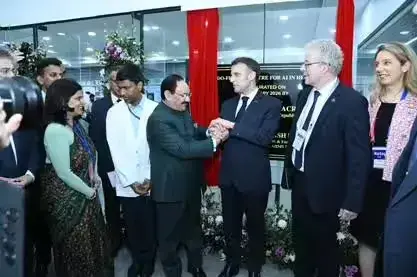
In a major step to deepen bilateral cooperation in healthcare and emerging technologies, Union Health Minister JP Nadda and French President Emmanuel Macron jointly inaugurated the Indo-French Centre for AI in Health (IFCAIH) at All India Institute of Medical Sciences (AIIMS), New Delhi. The newly launched centre is envisioned as a pioneering platform to accelerate AI-driven research, strengthen medical education, and promote clinical innovation. According to official sources, the IFCAIH aims to tackle complex healthcare challenges while fostering interdisciplinary collaboration between Indian and French institutions. Addressing the gathering, President Macron underlined the importance of developing sovereign AI capabilities. He stressed that India and France must build their own computing capacity and skilled talent to create trusted AI systems, rather than relying entirely on technologies developed elsewhere. He added that artificial intelligence must serve humanity, with strong safeguards for children, algorithmic transparency to reduce bias, and a commitment to preserving linguistic and cultural diversity. The launch of the centre coincided with the Rencontres Universitaires et Scientifiques de Haut Niveau (RUSH) 2026, a high-level academic and scientific forum organised at AIIMS on February 18 and 19 by the French Embassy. A key session titled “Indo-French Forum: AI in Brain Health and Global Healthcare” brought together scientists, clinicians, policymakers, and academic leaders from both nations to explore collaborative solutions in global health. The IFCAIH has been established under a joint Memorandum of Understanding between AIIMS, Sorbonne University, and Paris Brain Institute, with additional collaboration from Indian Institute of Technology Delhi and other leading French institutions. The initiative builds upon ongoing India-France cooperation in priority areas such as digital health, antimicrobial resistance, human resources for health, and the responsible use of health data. As part of the RUSH 2026 programme, President Macron engaged with young Indian innovators, including Priyanka Das Rajkakati and Manan Suri, during an interactive session moderated by Clara Chappaz, spotlighting youth-led innovation and cross-border AI collaboration. The event also featured a special segment at the Jawaharlal Auditorium highlighting major scientific and academic cooperation milestones between France and India. Moderated by Prof. Vijay Raghavan and Dr. Thierry Coulhon, Chairmen of RUSH, the session showcased expanding partnerships in higher education, research, and innovation. Union Minister JP Nadda reaffirmed India’s commitment to strengthening AI-enabled healthcare collaboration with France, noting that the new centre will serve as a catalyst for innovation, capacity building, and global knowledge exchange. President Macron later posted on X that France and India are mobilising AI for research, training, and innovation for the common good, reinforcing the shared vision of ethical, inclusive, and globally beneficial AI in healthcare. Source: ANI

India, France Inaugurate Indo-French Centre for AI in Health at AIIMS Delhi Read More »
India Hosts AI Impact Summit in New Delhi, Welcomes Global Leaders and Tech Titans

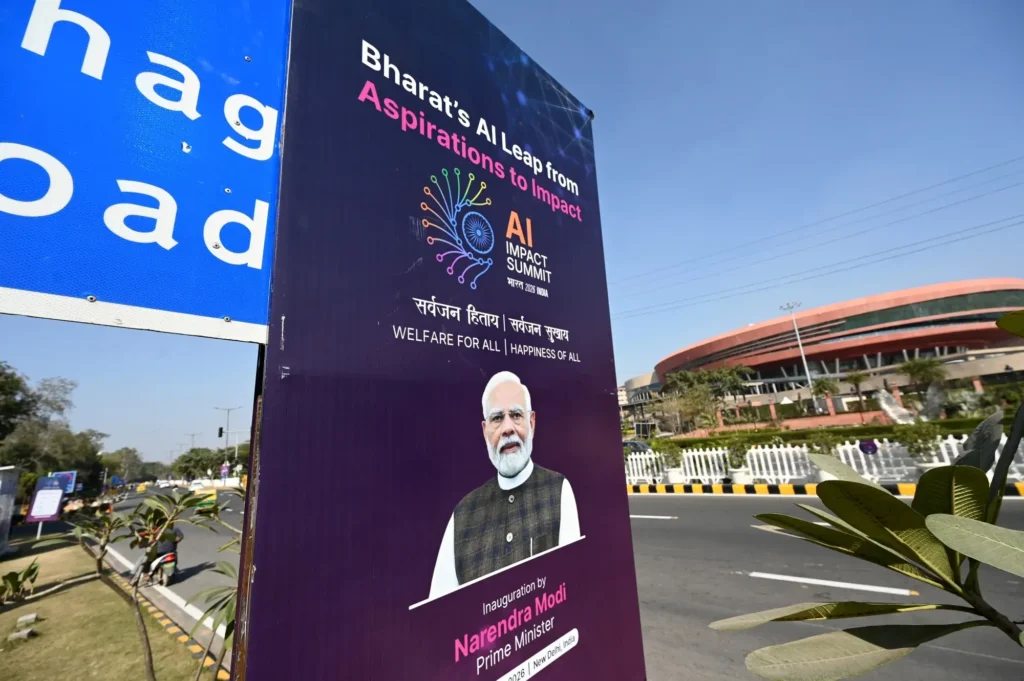
India has kicked off the five-day AI Impact Summit in New Delhi, bringing together world leaders, policymakers and top technology executives to deliberate on pressing issues such as job displacement, child safety, regulation and the future of artificial intelligence. Prime Minister Narendra Modi inaugurated the summit, describing it as a milestone in India’s rapid progress in science and technology. In a post on X, he said the event highlights both the nation’s technological advancement and the potential of its youth. The summit aims to chart a “shared roadmap for global AI governance and collaboration.” Organisers have billed this as the largest edition of the summit so far, with an expected 250,000 participants, including 20 heads of state and 45 ministerial delegations. Among the prominent leaders expected to attend are French President Emmanuel Macron and Brazilian President Luiz Inácio Lula da Silva. The event has also drawn major figures from the global technology industry, including Sundar Pichai of Google, Sam Altman of OpenAI, Cristiano Amon of Qualcomm, Brad Smith of Microsoft, and Yann LeCun, Executive Chairman of AMI Labs. However, the opening day was marred by criticism as attendees reported overcrowding, long queues and organisational confusion. According to delegates quoted by Reuters, unclear instructions and sudden security clearances ahead of high-level arrivals left many scrambling to retrieve belongings. Poor signage and limited seating further compounded the disarray, while some speakers reportedly awaited confirmation of their sessions. Despite early logistical challenges, the summit arrives at a pivotal moment for AI governance. As generative AI tools and advanced systems reshape industries from healthcare to defence and climate modelling, governments worldwide are grappling with how to balance innovation with safety and regulation. Previously hosted in France, the United Kingdom and South Korea, the summit has expanded from a narrowly focused safety forum into a broad-based platform addressing economic growth, ethics, sustainability and international cooperation. India, the world’s most populous country and one of the fastest-growing digital markets, sees the summit as an opportunity to position itself as a bridge between advanced economies and the Global South. Officials point to India’s experience in building large-scale digital public infrastructure—such as digital identity and payment systems—as a model for scaling AI solutions affordably and inclusively. Union Minister for Electronics and Information Technology Ashwini Vaishnaw said the vision is to ensure AI serves “inclusive growth and a sustainable future.” The summit revolves around three broad themes — “people, progress, planet” — and is expected to conclude with a nonbinding declaration outlining shared goals for AI development rather than a formal political agreement. Source: Aljazeera

India Hosts AI Impact Summit in New Delhi, Welcomes Global Leaders and Tech Titans Read More »

Macron Calls for Inclusive Governance in Syria as New Leadership Seeks Global Support

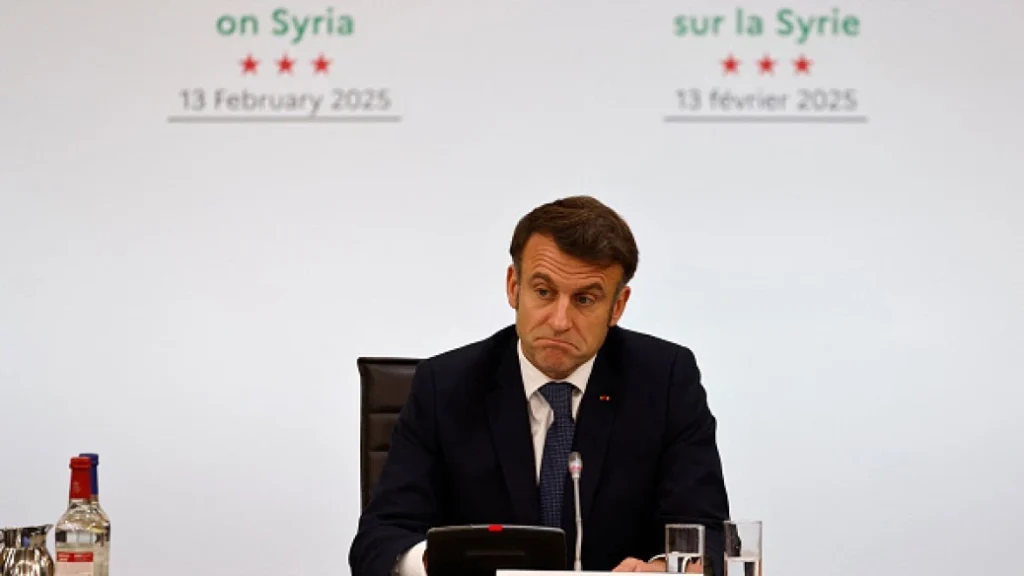
French President Emmanuel Macron has urged Syria’s new leadership to ensure governance that is representative and respectful of all communities, emphasizing the need for stability and inclusivity in the war-torn nation. Speaking at an international conference on Syria’s transition, Macron addressed the new authorities led by interim leader Ahmed al-Sharaa, stating that the responsibility they bear is immense. The event was attended by Syria’s Foreign Minister Asaad al-Shibani along with global stakeholders, including representatives from the United States, Germany, Britain, the European Union, and the United Nations. Syria’s New Leadership Seeks Legitimacy Following the fall of Bashar al-Assad’s regime in December after a swift offensive by Islamist-led rebels, Syria’s interim government has worked to reassure the international community of its break with the past. The new administration has been lobbying the West to ease long-standing sanctions against Assad’s regime, arguing that economic relief is essential for rebuilding the country after nearly 14 years of civil war. Macron emphasized that the new government’s commitment to respecting all communities would be a key factor in ensuring long-term stability and enabling the return of millions of displaced Syrians. The Fight Against IS: A Priority While addressing the political transition, Macron also underscored the importance of continuing the fight against the Islamic State (IS), calling it an absolute priority for Syria’s new leadership. Despite the defeat of IS’s so-called caliphate in 2019 by Kurdish-led Syrian fighters backed by the US-led coalition, some IS cells remain active in Syria’s desert regions. Macron urged Damascus to actively participate in counterterrorism efforts. Western Nations Move to Ease Sanctions In a significant shift, France’s Foreign Minister Jean-Noel Barrot confirmed that the European Union is working towards a rapid lifting of sanctions on Syria, starting with key economic sectors like energy. Britain also announced a relaxation of restrictions on Syria’s energy, transport, and finance sectors, while the United States has already eased punitive measures, allowing fuel and electricity donations for six months. Challenges Ahead: Women’s Rights, Kurdish Inclusion, and Ceasefire Western governments have raised concerns about the direction of Syria’s new leadership, particularly regarding: Religious freedom Women’s rights The status of the Kurdish minority German Foreign Minister Annalena Baerbock emphasized the importance of women’s representation in Syria’s future government, while also calling for all actors in Syria to be included in the political process. The conference also addressed the need for a global ceasefire, particularly in the north and northeast, where Turkish-backed factions continue to attack Kurdish-held areas. A New Era for Syria? With international support gradually shifting, Syria’s interim government is set to form a new administration next month. Foreign Minister Shibani assured the global community that it would represent all Syrians in their diversity. As Macron prepares to host Sharaa in Paris soon, the coming months will determine whether Syria’s new leadership can deliver on its promises and rebuild a unified, sovereign, and stable nation. Source: The New Arab

Macron Calls for Inclusive Governance in Syria as New Leadership Seeks Global Support Read More »

Paris 2024 Welcomes the World in Groundbreaking Opening Ceremony on the Seine

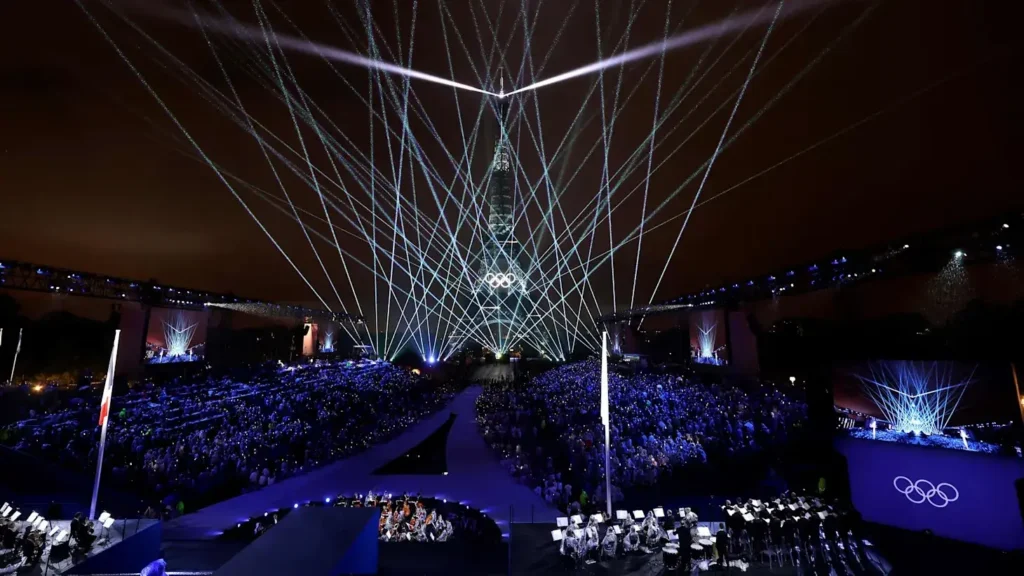
Paris has witnessed numerous memorable moments in history, and the Paris 2024 Opening Ceremony added another unforgettable event to the list. On Friday, July 26, the City of Lights transformed into a sports stadium as the River Seine hosted an extraordinary display of athleticism and artistry. In a historic first, the Opening Ceremony took place outside a traditional stadium setting. The Seine became the track, the quays transformed into spectator stands, and the city’s iconic landmarks stood as silent witnesses to the celebration. The event featured 85 boats carrying 6,800 athletes from 205 National Olympic Committees (NOCs), sailing towards the Eiffel Tower. The ceremony culminated with the Olympic flame ascending into the sky in a cauldron attached to a hot air balloon. Artistic director Thomas Jolly orchestrated the four-hour extravaganza, which was filled with flags, feathers, and raindrops. Despite the pouring rain, athletes danced on boat decks, spectators lined the quays and bridges, ballet dancers performed on rooftops, and Parisians cheered from their balconies. The river parade and artistic performances journeyed through the heart of Paris towards the Trocadero, where French President Emmanuel Macron officially declared the Paris Olympic Games open. “Some may say, we in the Olympic world, we are dreamers. But we are not the only ones,” said International Olympic Committee President Thomas Bach. “And our dream is coming true tonight: a reality for everyone to see. Olympians from all around the globe, showing us what greatness we humans are capable of. So I invite everybody: dream with us. Like the Olympic athletes, be inspired with the joy that only sport can give us. Let us celebrate this Olympic spirit of living life in peace, as the one and only humankind, united in all our diversity.” The Paris 2024 Opening Ceremony was not only a celebration of sports but also a testament to the city’s ability to bring people together in unity and diversity, setting the stage for an unforgettable Olympic Games.

Paris 2024 Welcomes the World in Groundbreaking Opening Ceremony on the Seine Read More »