


ArdorComm Media Group

Wednesday, March 11, 2026 3:59 PM

health equity

WHO Report Finds Less Than 5% of Disease-Focused Genomic Studies Conducted in Low- and Middle-Income Countries

A recent global analysis by the World Health Organization (WHO) has revealed a sharp imbalance in disease-focused genomic research, with low- and middle-income countries (LMICs) accounting for less than five per cent of such studies worldwide. According to the WHO, more than 6,500 genomic clinical studies were registered globally between 1990 and 2024 through its International Clinical Trials Registry Platform. The number of studies rose sharply after 2010, driven by rapid advancements in genome sequencing technologies, reduced costs, and expanding clinical applications. Despite this growth, over 80 per cent of genomic research remains concentrated in high-income countries. China emerged as the leading country in terms of the total number of registered genomic clinical studies over the past three decades, followed by the United States and Italy. India ranked among the top 20 countries globally. However, the report noted that LMICs are rarely in leadership roles within such research. India participated in 235 studies, while Egypt, South Africa, and Nigeria featured in 38, 17, and 14 studies respectively—mostly as part of multi-country collaborations rather than as lead partners. The analysis, titled “Human genomics technologies in clinical studies: the research landscape,” highlighted that cancer, rare diseases, and metabolic disorders together account for more than 75 per cent of all genomic studies globally. While these areas were early adopters of genomic approaches, the report flagged a major gap in research on infectious diseases. Communicable diseases such as tuberculosis, HIV, and malaria represented just three per cent of all genomic studies, despite their significant contribution to the global disease burden—particularly in low-resource settings. The authors described this as a missed opportunity to use genomics to better understand disease susceptibility, treatment response, and host–pathogen interactions. The WHO study also pointed to demographic gaps in genomic research. Over three-quarters of studies focused on adults aged 18 to 64, while only 4.6 per cent targeted children and just 3.3 per cent involved older adults. Calling for urgent action, the WHO urged more inclusive, geographically balanced, and locally relevant genomic research. Recommendations included greater investment in genomic infrastructure and research capacity in underrepresented regions, stronger leadership from LMIC-based institutions, better alignment of research priorities with local disease burdens, and increased inclusion of children, older adults, and other underrepresented populations. Source: PTI

WHO Report Finds Less Than 5% of Disease-Focused Genomic Studies Conducted in Low- and Middle-Income Countries Read More »

WHO Urges Boost in TB Research and Innovation to Tackle High Burden in South-East Asia

The World Health Organization (WHO) has issued an urgent call to enhance research, innovation, and regional cooperation to eliminate tuberculosis (TB) in the South-East Asia region — a region that continues to carry nearly half of the global TB burden. Speaking at the launch of a three-day virtual workshop focused on advancing TB research and innovation, Dr. Catharina Boehme, Officer-in-Charge for WHO South-East Asia, emphasized that in 2023 alone, the region saw nearly 5 million new TB cases and around 600,000 related deaths. The workshop brings together national TB programme leaders, scientists, civil society members, and global partners to push forward efforts aligned with the WHO’s End TB Strategy. The Need for Urgency and Collaboration Dr. Boehme highlighted that ending TB demands the rapid adoption of new tools, diagnostics, and treatments — and, more importantly, equitable and timely access to these innovations. “Collaboration is key to scaling up impact and ensuring that no one is left behind,” she stated. Despite a post-COVID-19 rebound in TB case detection in 2023, current progress is falling short of the End TB Strategy’s 2030 goals: a 90% drop in TB-related deaths and an 80% decline in incidence compared to 2015. Alarmingly, TB has returned as the world’s leading cause of death from a single infectious disease, with its effects disproportionately hitting the poorest and most vulnerable communities. In South-East Asia, between 30% and 80% of TB-affected households experience catastrophic healthcare expenses, pointing to the urgent need for inclusive, people-first approaches and stronger social protection systems. Signs of Progress Amidst Challenges Still, there are signs of advancement. In 2023, the region recorded 3.8 million new or relapsed TB cases, with an 89% treatment success rate among those who began treatment in 2022. The number of undiagnosed cases was significantly reduced — down to 22% from 44% in 2020. Countries are increasingly adopting technology-driven solutions such as artificial intelligence for detecting TB, digital adherence tools to monitor treatment, and direct benefit transfers to ease patients’ financial burdens. These innovations are being powered by strong political will and national commitment. Several countries have also expanded research efforts. Bangladesh has concluded a national patient cost survey, while India’s RATIONS study provided valuable insights on the role of nutrition in TB prevention and recovery. Nepal’s “TB-Free Pallika” initiative and Myanmar’s multisectoral coordination model are examples of community-led innovations that prioritize vulnerable populations. According to WHO, over 3,000 TB-related research papers were published by South-East Asian countries in the past six years, with 60% being original research. However, the challenge lies in transforming these findings into action, as knowledge gaps and lack of collaborative platforms hinder broader impact. Strengthening Regional and Global Coordination The workshop will also focus on building stronger South-South collaboration, vaccine readiness, use of digital tools for patient care, and tackling vaccine hesitancy. Discussions will revolve around aligning regulatory frameworks, improving knowledge-sharing platforms, and setting research priorities that address underlying drivers of TB — such as malnutrition and climate-related risks. Dr. Boehme noted the growing threat posed by drug-resistant TB and emphasized the importance of ensuring that scientific progress benefits everyone equally. “Access to new vaccines, medicines, and diagnostics must be equitable. Reaching underserved communities through proactive case-finding and offering socio-economic support is essential in mitigating the financial toll of TB,” she concluded. Source: PTI Photo Credit: Getty Images

WHO Urges Boost in TB Research and Innovation to Tackle High Burden in South-East Asia Read More »

WHO and FIND Join Forces to Accelerate Diagnostic Innovation and Access
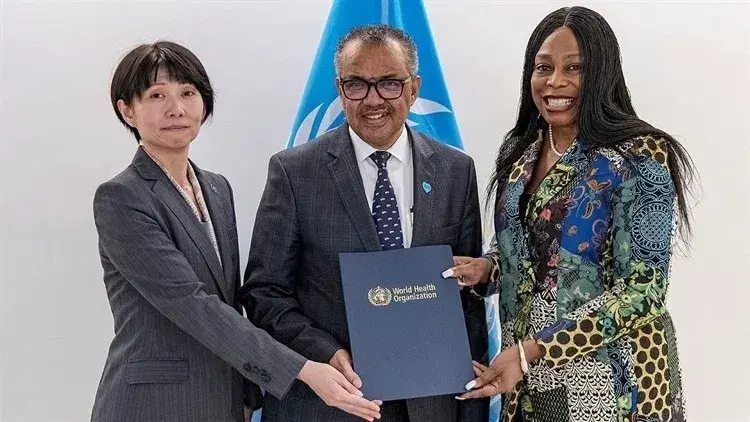
FIND and the World Health Organization (WHO) have signed a new Memorandum of Understanding (MoU) that lays the foundation for accelerating innovation and achieving equitable access to quality diagnostics for people globally. One year on from the historic resolution to strengthen diagnostics, and with FIND as co-lead of the Access to COVID-19 Tools (ACT) Accelerator diagnostics pillar, this new agreement marks a step change in a strengthened partnership between WHO and FIND to speed up both innovation and access to diagnostics, supporting countries to implement the World Health Assembly (WHA) Resolution on diagnostics. “We are proud to be signing this MoU with WHO, as quality and accessible diagnostic testing is the backbone of health systems, primary healthcare and health security,” said Dr. Ayoade Alakija, Board Chair of FIND. “At a time when there have been three cases of H5N1 avian flu spillover events from cows to humans in the last month and an outbreak of mpox in the Democratic Republic of the Congo, the importance of diagnostic testing to identify outbreaks and quash them before they become major epidemics or even pandemics has never been more critical.” This new agreement establishes FIND as the key strategic partner for diagnostics, working with WHO and others to address a number of priority areas including antimicrobial resistance, infectious diseases like HIV, malaria and tuberculosis, and noncommunicable diseases like hypertension, heart disease, cervical cancer and diabetes. Signed on 1 June 2024 at a ceremony attended by Dr. Tedros Adhanom Ghebreyesus, Dr. Yukiko Nakatani (Assistant Director-General), and Dr. Ayoade Alakija (Board Chair of FIND), the MoU will also see the two organizations building new avenues to share knowledge and scale up critical activities to accelerate access to life-saving diagnostics. The signing of this MoU formalizes a long-standing partnership between WHO and FIND and marks a major milestone in the journey towards better health and well-being across the world. By leveraging the strengths and expertise of both WHO and FIND, this partnership promises to drive innovation on diagnostic tests and also improve access to the tests to reduce health inequalities, ultimately leading to a healthier future for people everywhere.  

WHO and FIND Join Forces to Accelerate Diagnostic Innovation and Access Read More »

Closing the Women’s Health Gap: A $1 Trillion Opportunity for Global Well-being

Blog on Health

In a study by the McKinsey Health Institute in collaboration with the World Economic Forum (WEF), the report titled “Closing the women’s health gap: A $1 trillion opportunity to improve lives and economies” sheds light on the profound impact of gender disparities in healthcare on both individual well-being and global economic prosperity. The study, focused on addressing the health gap between men and women, reveals startling statistics that demand urgent attention and action. Key Findings: Unraveling the Women’s Health Gap The report brings to light the alarming fact that while women tend to live longer than men, they spend 25 percent more of their lives grappling with poor health. This health disparity translates into a staggering 75 million years of life lost annually due to illnesses or premature death among women. The study identifies key areas contributing to the women’s health gap: Health Conditions Affecting Both Genders: 95 percent of the health burden on women is attributed to conditions affecting both men and women, such as sexual and reproductive health, maternal and child health, and endometriosis. Prevalence of Conditions in Women: 56 percent of the health burden on women arises from conditions that are either more prevalent or manifest differently in women. The Case of India: A $22 Billion Opportunity In the context of India, the study highlights that closing the gender gap in healthcare could lead to a substantial economic boost. The report estimates that India’s GDP could rise by at least $22 billion by addressing the health disparities between men and women. The top health conditions contributing to this potential GDP impact include premenstrual syndrome, gynecological diseases, migraine, depressive disorders, and anxiety disorders. Global Root Causes: Science, Care Delivery, Investment, and Data The report identifies four primary global root causes contributing to the women’s health gap: Science: Historically, the study of human biology has predominantly focused on the male body, leading to less effective treatments for women. Over 50 percent of interventions with sex-disaggregated research are found to be less effective for women than men. Care Delivery: Women often face barriers to care, diagnostic delays, and suboptimal treatment due to healthcare systems designed and run predominantly by men. Investment: There has been lower investment in women’s health conditions relative to their prevalence, perpetuating limited scientific understanding and data on women’s bodies. Data: Health burdens for women are systematically underestimated, with incomplete datasets that exclude or undervalue crucial conditions affecting women. Closing the Gap: A Trillion-Dollar Opportunity The report emphasizes the potential economic and societal benefits of addressing the women’s health gap: Economic Growth: For every $1 invested in women’s health, the projection is nearly $3 in economic growth. Global Impact: Closing the health gap could add 7 more days of healthy living for each woman annually, contribute at least $1 trillion to the global economy by 2040, and generate an impact equivalent to 137 million women accessing full-time positions. Reduced Health Burden: Addressing the gaps in women’s health could reduce the time women spend in poor health by almost two-thirds, positively impacting 3.9 billion women. Strategies for Change To achieve health equity and foster economic growth, the report suggests a comprehensive strategy involving various stakeholders: Invest in Research: Prioritize women-centric research to fill knowledge and data gaps in women-specific conditions. Data Collection: Systematically collect and analyze sex-, ethnicity-, and gender-specific data for accurate representation of women’s health burden. Enhance Access: Improve access to gender-specific care, from prevention to diagnosis and treatment. Financing Models: Incentivize new financing models to support women’s health initiatives. Business Policies: Establish business policies that actively support women’s health. Raise Awareness: Promote awareness and advocacy to draw attention to the women’s health gap. By prioritizing women’s health in research, care, and investment, societies can unlock immense economic potential while ensuring a healthier

Closing the Women’s Health Gap: A $1 Trillion Opportunity for Global Well-being Read More »