ArdorComm Media Group

Monday, February 9, 2026 5:33 AM

IIMs

Govt Launches Adi Karmayogi Student Chapters; IIT Delhi Named Nodal Hub
ardorcomm news

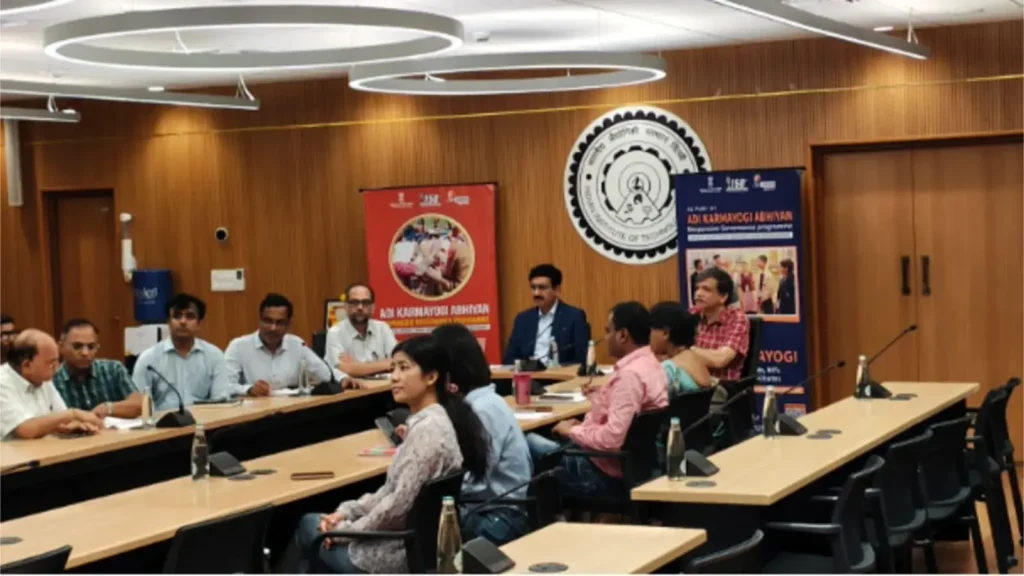
The Ministry of Tribal Affairs has rolled out Adi Karmayogi Student Chapters across India’s leading higher education institutions, including IITs, IIMs, AIIMS, NITs, and central universities, in a bid to empower tribal youth as leaders, innovators, and entrepreneurs. IIT Delhi’s Bhagwan Birsa Munda Cell will serve as the central coordinating hub for the initiative. According to IIT Delhi, the launch reflects a key milestone under the Adi Karmayogi Abhiyan—described as the world’s largest tribal leadership movement—unveiled by Prime Minister Narendra Modi on September 17 as part of Janjatiya Gaurav Varsh (2024–25). At the launch event, Tribal Affairs Secretary Vibhu Nayar said the chapters would act as a “bridge between premier institutions and tribal communities,” nurturing young changemakers to shape India’s educational, entrepreneurial, and social development. IIT Delhi Director Prof. Rangan Banerjee added that the initiative offers a platform for students to “mentor, innovate, and create meaningful impact in tribal regions.” In the first phase, the chapters will be established across a wide network of institutions. These include IITs such as Delhi, Kharagpur, Dharwad, and Hyderabad; IIMs at Sirmaur and Nagpur; AIIMS campuses in Nagpur, Gorakhpur, and Bhatinda; VMMC and Safdarjung Hospital; IISER Mohali; IIST Trivandrum; SVNIRTAR; and others. NITs in Delhi, Patna, Raipur, Puducherry, and Meghalaya, as well as IIITDM Kurnool, BIT Mesra, NERIST Arunachal Pradesh, DTU Delhi, and RGNUL Patiala, are also on board. Additionally, hotel management institutes such as IHM Kufri, IHM Tharamani, IHM Pusa, IHM Bhopal, and IHM Bhubaneswar are part of the launch phase. The Adi Karmayogi Student Chapters will engage in: Mentorship & Education: Linking students from top institutes with EMRS and Ashram schools to enhance learning. Entrepreneurship: Supporting tribal-led startups through a ₹50 crore venture capital fund. Innovation: Organizing hackathons and workshops to develop tech-based solutions for tribal communities. Village Development: Designing Vision 2030 plans, SWOT analyses, and sustainable models. Skill Development: Training in frontier areas such as semiconductors and emerging technologies, in collaboration with IISc Bangalore.  The programme will also facilitate internships with the Ministry of Tribal Affairs and state departments, alongside recognition and awards for outstanding student leaders and mentors. With strong backing from directors and leaders of IITs, IIMs, AIIMS, and IIST Trivandrum, the initiative aims to build a cadre of empowered tribal youth contributing to the vision of Viksit Bharat @2047. Source: Indian Express

Govt Launches Adi Karmayogi Student Chapters; IIT Delhi Named Nodal Hub Read More »
Concerns Rise as Centre Slashes Education Budget in Interim Budget; UGC Funding Takes a Hit

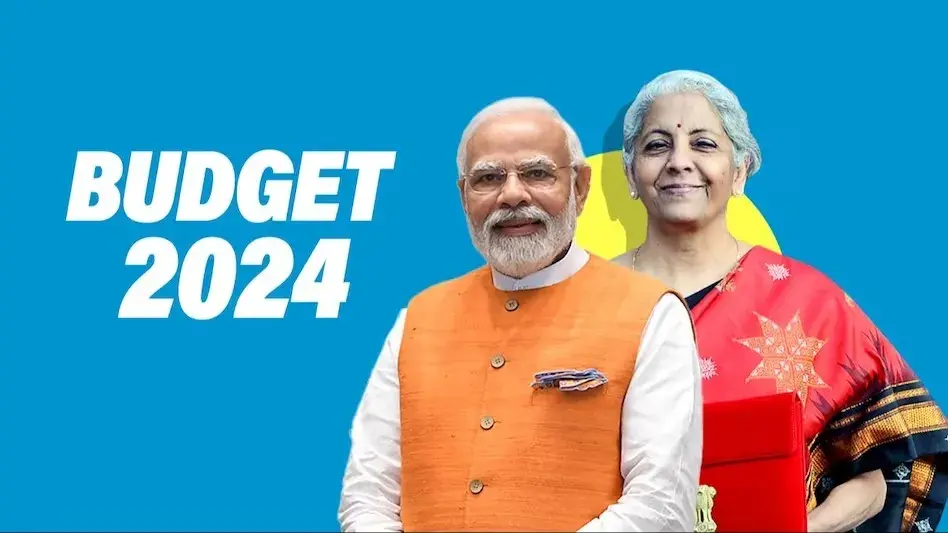
The interim budget for education in India has sparked concerns as the government announced a 7% reduction in allocations, significantly impacting higher education funding. The University Grants Commission (UGC) faced the largest-ever cut of 61% in the last five years, raising apprehensions about the potential repercussions on universities and students. The budget for schools experienced a marginal dip, while central universities witnessed a 28% increase in grants. However, support for Indian Institutes of Management (IIMs) was trimmed for the second consecutive year. The interim budget, presented on Thursday, allocated ₹1.2 lakh crore for education, reflecting a 7% decrease compared to the revised estimate for 2023-24. The UGC, responsible for higher education, bore the brunt of funding cuts, with its allocation reduced from ₹6,409 crore in 2023-24 to ₹2,500 crore in 2024-25. Despite the challenges, Union Finance Minister Nirmala Sitharaman emphasized the government’s commitment to transforming education through the National Education Policy (NEP) 2020. The focus is on empowering the youth during the “Amrit Kaal,” the 25 years leading to 2047. Experts raised concerns over the impact of the drastic UGC budget cut, fearing it might encourage universities to rely on self-financing courses, burdening students and increasing dependence on loans. UGC Chairperson M Jagadesh Kumar reassured a commitment to quality higher education and efficient fund utilization. While the budget for central universities saw a notable increase of 28%, support for IIMs faced a reduction for the second consecutive year, dropping from ₹608.23 crore in 2022-23 to ₹212.21 crore in 2024-25. Union Education Minister Dharmendra Pradhan hailed the budget as a stepping stone towards a “Viksit Bharat” (developed India) and highlighted the “Jai Anusandhan” scheme with a ₹1 lakh crore corpus fund as a significant announcement.

Concerns Rise as Centre Slashes Education Budget in Interim Budget; UGC Funding Takes a Hit Read More »

Union Education Minister Promotes Multidisciplinary Focus for IITs and IIMs at Odisha Research Centre Inauguration

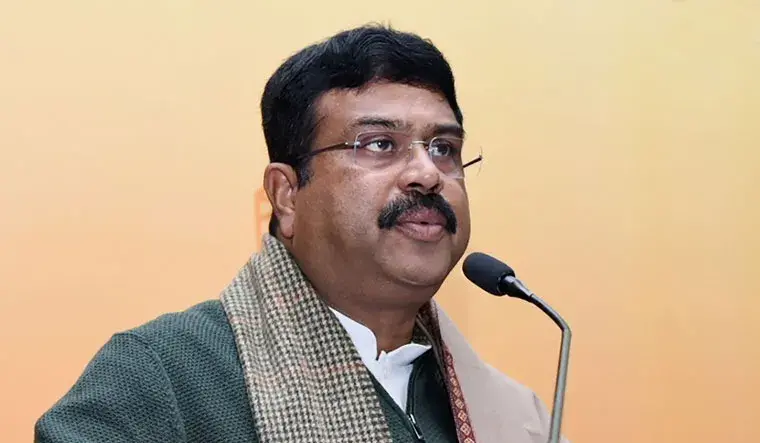
Union Education Minister Dharmendra Pradhan revealed that the Centre has advised the IITs and IIMs to take a multi-disciplinary approach, expanding their scope beyond their specialized domains. Speaking at the inauguration of the Odisha Research Centre on November 26, Pradhan emphasized that the National Education Policy, 2020 prioritizes providing multidisciplinary education, and that premier institutions such as IITs and IIMs will follow suit. The Odisha Research Centre was jointly inaugurated during the event by Odisha Governor Raghubar Das, Chhattisgarh counterpart Biswa Bhusan Harichandan, and Minister Pradhan. The research agenda of the center includes art, culture, archaeology, tradition, literature, sociology, political processes, agriculture, commerce, business, industry, contemporary Odisha development trends, science, technology, healthcare, and future technologies. It will also address issues concerning smart cities, climate change, environmental protection, sustainable development, semiconductors, rare earths, and advanced minerals. Minister Pradhan emphasized the significance of the Odisha Research Centre in shaping the region’s future. He stated that the center, which was established in collaboration with the Indian Council of Social Science Research (ICSSR), the Indian Knowledge Systems Division, the Ministry of Education, IIM Sambalpur, IIT Kharagpur, and IIT Bhubaneswar, aims to develop innovative epistemological frameworks. These frameworks will delve into various facets of Odisha’s history, culture, economy, and society. Pradhan concluded with a forward-looking statement, saying, “In 2036, when Odisha will celebrate the centenary of its formation, and in 2047, when the country will celebrate the centenary of India’s independence, the ORC will prepare a roadmap for the development of Odisha and Odia language.” This highlights the critical role that the Odisha Research Centre will play in charting the course for Odisha’s development and promoting the Odia language.

Union Education Minister Promotes Multidisciplinary Focus for IITs and IIMs at Odisha Research Centre Inauguration Read More »