ArdorComm Media Group

Thursday, April 30, 2026 2:38 PM

India education policy

Rajnath Singh Unveils 100 New Sainik Schools, Boosts NCC Strength to 20 Lakh Cadets

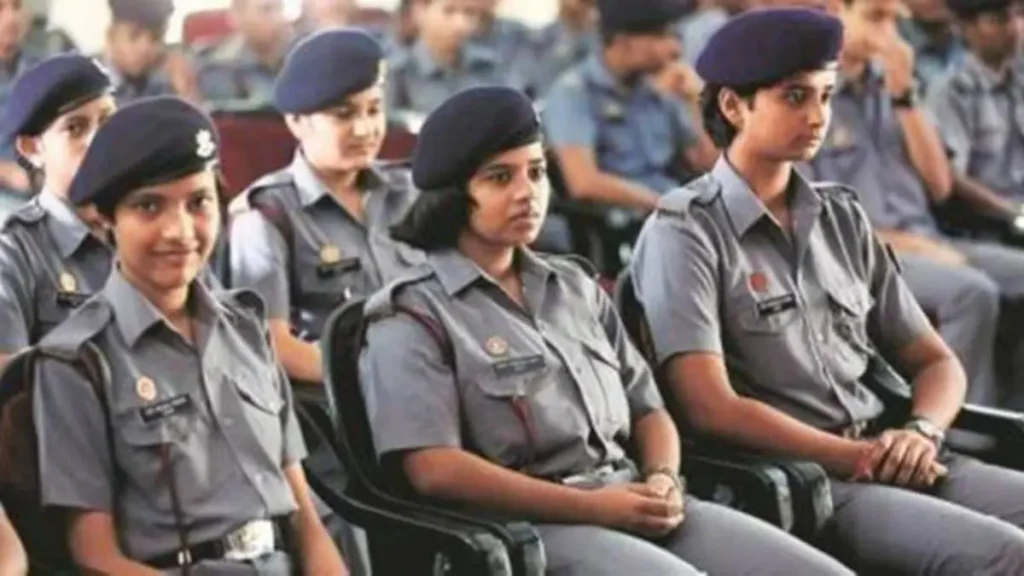
Rajnath Singh has announced a major expansion of India’s military-style education ecosystem, revealing plans to establish 100 new Sainik Schools under a public-private partnership (PPP) model. The announcement was made during the Diamond Jubilee celebrations of Sainik School Ghorakhal. In a parallel move, the Defence Minister also confirmed that the strength of the National Cadet Corps (NCC) will be increased from 17 lakh to 20 lakh cadets. This expansion aims to bring an additional three lakh युवाओं into a structured framework that emphasizes discipline, leadership, and civic responsibility. Highlighting the vision behind the decision, Singh noted that the expansion is not merely about numbers but about shaping future citizens equipped with strong values essential for nation-building. He further emphasized that Sainik Schools are not limited to preparing students for armed forces careers. Instead, they play a broader role in nurturing leadership qualities, resilience, and a sense of responsibility that can benefit multiple sectors. A key highlight of his address was the growing inclusion of girls in Sainik Schools. Singh praised the performance of girl cadets, stating that their achievements have effectively dispelled any doubts about their capabilities. Reinforcing the message of gender equality, he asserted that daughters are excelling alongside sons across all fields. The announcements reflect a continued push by the government to strengthen youth development initiatives while fostering leadership and inclusivity at the grassroots level. Source: PTI  

Rajnath Singh Unveils 100 New Sainik Schools, Boosts NCC Strength to 20 Lakh Cadets Read More »

Cabinet clears Phase 3 of medical college upgradation scheme, set to create 10,000+ new MBBS & PG seats

ardorcomm news

The Union Cabinet has approved the launch of Phase 3 of the centrally sponsored scheme aimed at expanding medical education infrastructure. Over the next three years, the scheme will add 5,023 undergraduate (MBBS) seats and 5,000 postgraduate (PG) seats in government medical colleges and institutes, with a budgetary outlay of ₹15,034 crore. This move is part of the government’s larger vision of creating 75,000 new medical seats within five years, as announced by Finance Minister Nirmala Sitharaman in the Union Budget. In earlier phases, the Centre supported the addition of 4,977 MBBS seats across 83 colleges at a cost of ₹5,972 crore, and 4,058 PG seats in 72 colleges with an allocation of ₹1,498 crore. Phase 2 provided ₹4,478 crore to increase 4,000 seats in 65 institutions. Currently, India has around 1.2 lakh MBBS seats and 74,306 PG seats — a sharp rise from 2014 levels of 51,328 MBBS and 31,185 PG seats. With over 20 lakh aspirants appearing annually for NEET, the demand for medical education remains extremely high. The expansion also aims to encourage students to pursue studies in India instead of seeking education abroad, an issue highlighted during disruptions caused by the pandemic in China, course recognition issues in the Philippines, and the ongoing war in Ukraine. However, the rapid increase has also brought challenges. A shortage of qualified faculty has persisted across many institutions. To address this, the National Medical Commission (NMC) introduced measures like Aadhaar-based biometric attendance, live CCTV monitoring, and permitted Diplomate of National Board (DNB) doctors to serve as faculty. Additionally, the age limit for teachers’ appointments was raised. Another concern has been the surge of new seats in private colleges where fees are often prohibitively expensive. Although NMC tried to regulate private medical college fees in 2022, implementation has been limited so far. Source: Indian Express

Cabinet clears Phase 3 of medical college upgradation scheme, set to create 10,000+ new MBBS & PG seats Read More »

UGC Introduces Flexible Timelines for Undergraduate Degrees

The University Grants Commission (UGC) has announced new regulations allowing undergraduate students to complete their degrees at an accelerated pace or over an extended timeline. The initiative, unveiled by UGC Chief M. Jagadesh Kumar, marks a pivotal move toward a student-centric education model, aligning with the National Education Policy (NEP) 2020. Outlined in the newly published Compendium of UGC Regulations, the policy introduces two pathways: the Accelerated Degree Programme (ADP) and the Extended Degree Programme (EDP). The ADP enables high-achieving students or those earning additional credits to graduate faster, while the EDP supports students needing extra time due to personal, financial, or academic challenges, without penalties. “Degrees completed earlier or later will hold the same value as standard-duration degrees,” Kumar affirmed, ensuring parity for employment and further studies. The framework provides flexibility for students pursuing interdisciplinary or professional courses or those balancing education with work or other responsibilities. Institutions will establish eligibility committees to oversee implementation, ensuring the same credit requirements are met as in traditional programs. This initiative aligns with global trends promoting adaptive learning paths and the NEP 2020’s emphasis on skill development and inclusive education. Institutions will have the autonomy to adopt these measures based on their infrastructure and resources. Experts and educators view the move as a step toward modernising India’s higher education system. It is expected to empower students to tailor their academic journeys to their unique goals and circumstances, fostering greater inclusivity while upholding academic standards. Source: Business Standard Photo Credit: Business Standard

UGC Introduces Flexible Timelines for Undergraduate Degrees Read More »