ArdorComm Media Group

Tuesday, November 24, 2026 7:37 PM

India growth

Ashwini Vaishnaw Says India’s Growth Anchored in Infrastructure, Inclusion and Manufacturing
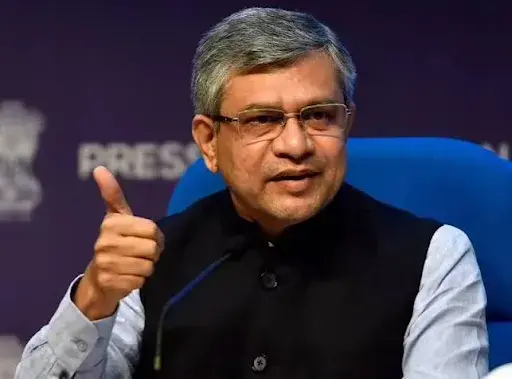
Information and Broadcasting Minister Ashwini Vaishnaw has said India’s economic growth is gaining global recognition, with the country maintaining a growth rate in the range of 6 to 8 per cent. He attributed the momentum to four key areas — investment in social, digital and physical infrastructure, inclusive development and a strong manufacturing push. Addressing the Uttar Pradesh-Japan Investment Summit 2026 in New Delhi, Vaishnaw said investment remains central to India’s development journey. He noted that annual public investment, which was once relatively limited, has now reached around $130 billion. Highlighting the expansion of infrastructure, the minister said 99.6 per cent of India’s railway network has been electrified. Around 38,000 kilometres of railway lines have been added over the past decade, while 162 semi-high-speed trains have also been introduced. Vaishnaw further said India now has the world’s second-largest road network, with nearly 65,000 kilometres of highways added over the last decade. The number of airports in the country has also doubled during this period, he added. Uttar Pradesh Chief Minister Yogi Adityanath said the India-Japan partnership is built around shared growth, technological cooperation and prosperity. He highlighted Uttar Pradesh’s emergence as one of India’s three largest state economies and described it as an important engine of the country’s growth. Adityanath said the state’s budget and per capita income have nearly tripled over the past nine years, with the government focusing on security, stability and faster development. He added that more than 96 lakh MSME units, over 35,000 large industries and more than 22,000 startups are contributing to the state’s economic expansion. Union Agriculture and Farmers’ Welfare Minister Shivraj Singh Chouhan said the government is working to accelerate India’s development while placing particular emphasis on farmers and the agriculture sector. Chouhan said increasing agricultural production and positioning India as the world’s food basket are among the government’s key objectives. He stressed that greater farm mechanisation will be important for lowering agricultural production costs and improving farmers’ productivity. The minister also underlined the need to ensure that research and technological innovations reach farmers directly, helping them adopt modern agricultural practices. Calling Uttar Pradesh a state with significant investment potential, Chouhan said it has increasingly emerged as a hub for global investment. He also described India-Japan ties as a relationship that extends beyond government-to-government cooperation, calling it a convergence of two civilisations. Source: News on AIR  
Ashwini Vaishnaw Says India’s Growth Anchored in Infrastructure, Inclusion and Manufacturing Read More »

AI Could Hit Global Jobs Like a ‘Tsunami’, Warns IMF Chief

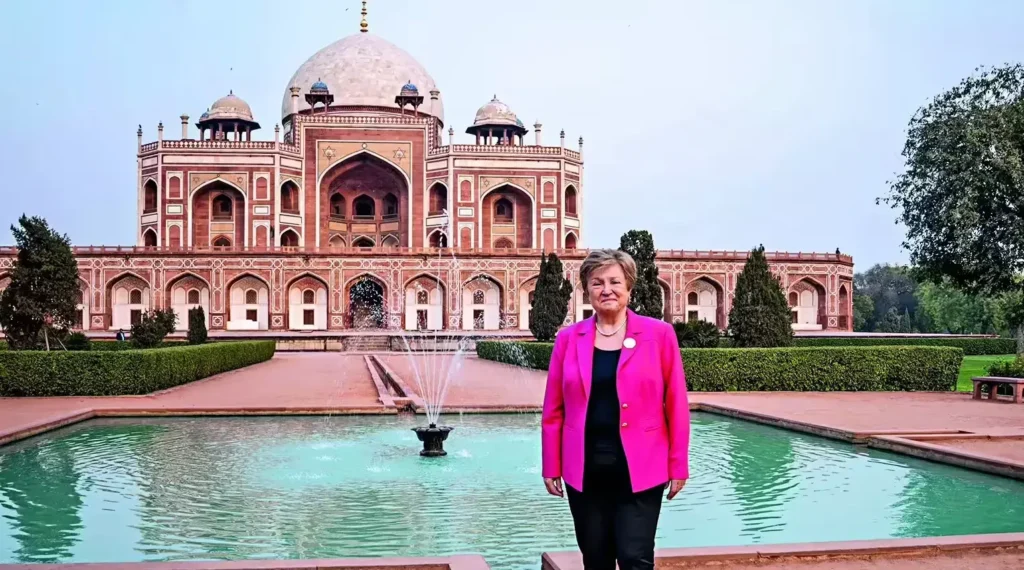
Artificial intelligence could reshape the global labour market with the force of a “tsunami”, potentially disrupting millions of jobs and rattling financial systems, cautioned Kristalina Georgieva, Managing Director of the International Monetary Fund (IMF). According to IMF estimates, nearly 40 per cent of jobs in emerging economies and about 60 per cent in advanced economies could be affected by AI. While the technology is expected to eliminate certain roles, it will also enhance and create others. However, Georgieva acknowledged that policymakers still lack clear strategies to help workers transition smoothly into the evolving AI-driven economy. She warned that AI could exacerbate inequality within and across nations, favouring countries and individuals with advanced technological capabilities while leaving others behind. Unchecked expansion of AI, she said, may also create instability in financial markets. Despite the concerns, Georgieva highlighted AI’s significant growth potential. The technology could lift global output by nearly 0.8 percentage points, pushing economic growth beyond pre-pandemic levels and opening new avenues for employment. For India, she noted, such momentum could support its ambition of becoming a developed nation under the “Viksit Bharat” vision. The IMF chief emphasised that countries investing in digital infrastructure, skill-building, and AI adoption will be better positioned to benefit. She outlined three key risks: widening inequality between technological “haves” and “have-nots,” threats to financial stability, and large-scale job displacement. The IMF has earlier cautioned that rapid AI-related investments, particularly in the US, could risk forming a speculative bubble reminiscent of the early 2000s dot-com crash. Source: TNN

AI Could Hit Global Jobs Like a ‘Tsunami’, Warns IMF Chief Read More »

Government Sets Up Live Events Development Cell to Power India’s Rapidly Growing Concert Economy

The Union Ministry of Information and Broadcasting has launched a Live Events Development Cell (LEDC) to provide a structured push to India’s fast-growing live entertainment and concert ecosystem, according to an official statement. Envisioned as a single-window facilitation platform, the LEDC will help simplify regulatory processes, coordinate with states and industry stakeholders, and create an enabling environment for large-scale live events. The broader objective is to position India as one of the world’s leading live entertainment destinations by 2030. The move comes at a time when the organised live events industry is witnessing strong momentum. Valued at ₹20,861 crore in 2024, the sector is expanding at nearly 15% annually and is projected to grow at a CAGR of 18%, outperforming several traditional media segments. Constituted in July 2025 under the direction of Union I&B Minister Ashwini Vaishnaw, the LEDC brings together representatives from central and state governments, industry associations, and major event management companies to drive coordinated policy support and sectoral growth. The initiative follows Prime Minister Narendra Modi’s remarks at the WAVES Summit in May 2025, where he underscored the live entertainment industry’s untapped potential to boost investment, tourism, and India’s global cultural footprint. Currently, the sector supports over 10 million jobs, with each large-format event generating more than 15,000 direct and indirect employment opportunities. Growth is no longer limited to metros, as Tier-2 and Tier-3 cities emerge as new demand centres. Data cited from a BookMyShow 2025 report highlights a 490% surge in live event footfalls in Visakhapatnam, while Shillong and Guwahati recorded growth of 213% and 188%, respectively. Overall consumption across music concerts, sports, and theatre rose by 17%. Industry experts note that the increasing presence of global performers alongside extensive domestic tours signals a maturing and globally competitive market. To bridge infrastructure gaps and improve ease of doing business, the ministry has also set up a Joint Working Group with private sector players, including District by Zomato. Through these measures, the LEDC aims to double the size of the live events industry, create 15–20 million jobs, and place India among the top five global live entertainment hubs. Source: Economic Times

Government Sets Up Live Events Development Cell to Power India’s Rapidly Growing Concert Economy Read More »