

ArdorComm Media Group

Sunday, October 11, 2026 11:02 AM

India Japan Relations

Ashwini Vaishnaw Says India’s Growth Anchored in Infrastructure, Inclusion and Manufacturing
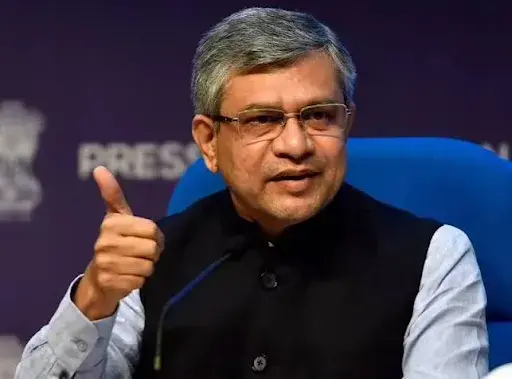
Information and Broadcasting Minister Ashwini Vaishnaw has said India’s economic growth is gaining global recognition, with the country maintaining a growth rate in the range of 6 to 8 per cent. He attributed the momentum to four key areas — investment in social, digital and physical infrastructure, inclusive development and a strong manufacturing push. Addressing the Uttar Pradesh-Japan Investment Summit 2026 in New Delhi, Vaishnaw said investment remains central to India’s development journey. He noted that annual public investment, which was once relatively limited, has now reached around $130 billion. Highlighting the expansion of infrastructure, the minister said 99.6 per cent of India’s railway network has been electrified. Around 38,000 kilometres of railway lines have been added over the past decade, while 162 semi-high-speed trains have also been introduced. Vaishnaw further said India now has the world’s second-largest road network, with nearly 65,000 kilometres of highways added over the last decade. The number of airports in the country has also doubled during this period, he added. Uttar Pradesh Chief Minister Yogi Adityanath said the India-Japan partnership is built around shared growth, technological cooperation and prosperity. He highlighted Uttar Pradesh’s emergence as one of India’s three largest state economies and described it as an important engine of the country’s growth. Adityanath said the state’s budget and per capita income have nearly tripled over the past nine years, with the government focusing on security, stability and faster development. He added that more than 96 lakh MSME units, over 35,000 large industries and more than 22,000 startups are contributing to the state’s economic expansion. Union Agriculture and Farmers’ Welfare Minister Shivraj Singh Chouhan said the government is working to accelerate India’s development while placing particular emphasis on farmers and the agriculture sector. Chouhan said increasing agricultural production and positioning India as the world’s food basket are among the government’s key objectives. He stressed that greater farm mechanisation will be important for lowering agricultural production costs and improving farmers’ productivity. The minister also underlined the need to ensure that research and technological innovations reach farmers directly, helping them adopt modern agricultural practices. Calling Uttar Pradesh a state with significant investment potential, Chouhan said it has increasingly emerged as a hub for global investment. He also described India-Japan ties as a relationship that extends beyond government-to-government cooperation, calling it a convergence of two civilisations. Source: News on AIR  
Ashwini Vaishnaw Says India’s Growth Anchored in Infrastructure, Inclusion and Manufacturing Read More »

India-Japan Partnership Enters New Era as PM Modi Highlights Strong Economic Ties, AI & Defence Cooperation

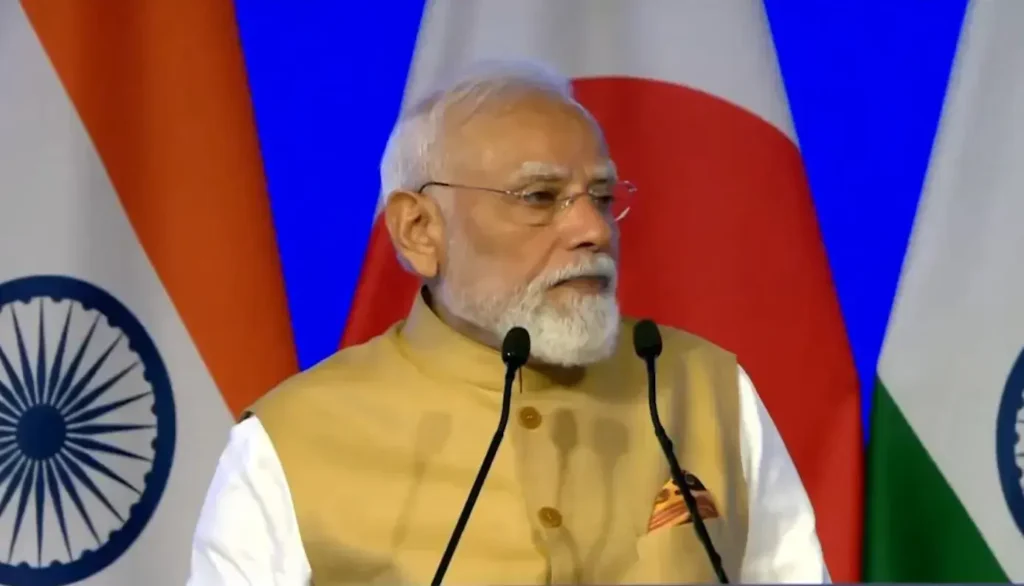
Prime Minister Narendra Modi reaffirmed the strength of India-Japan relations, describing the bilateral partnership as “truly special” while emphasizing its growing impact on the global economy. Speaking at the India-Japan Joint Economic Forum held in New Delhi, PM Modi highlighted that the collaboration between Japan’s technological expertise and investment capabilities, combined with India’s rapid growth and large-scale opportunities, creates significant benefits for the world economy. He noted that both nations have agreed to deepen cooperation across several strategic sectors, including artificial intelligence, economic security, defence, and healthcare, paving the way for a future-ready partnership. Addressing global economic challenges such as supply chain disruptions, trade uncertainties, and slowing international demand, PM Modi underscored India’s position as the world’s fastest-growing major economy, recording a GDP growth of 7.7 percent in the previous financial year. The Prime Minister further stated that over the last twelve years, India has adopted the philosophy of Kaizen to transform its economic framework, alongside implementing next-generation reforms in taxation, governance, and ease of doing business. He added that the government continues to open new sectors for private participation while introducing incentives aimed at accelerating economic growth, reinforcing India’s position as a highly attractive destination for Japanese investments. Surveys conducted by Japan Bank for International Cooperation have consistently ranked India as the most promising destination for Japanese businesses for four consecutive years. Japanese Prime Minister Sanae Takaichi, in her address, highlighted energy security as a crucial pillar of India-Japan cooperation. She referenced the recent G7 Summit, where Japan proposed measures to strengthen global energy security through transparent energy trade, strategic stockpiling, and stronger collaboration between energy-producing and consuming nations. She also emphasized Japan’s commitment to implementing these goals through its Power Asia Initiative. On the occasion, both leaders jointly inaugurated the fourth vehicle manufacturing facility of Maruti Suzuki at Kharkhoda, Haryana, marking another milestone in industrial collaboration between India and Japan. Source: News on AIR

India-Japan Partnership Enters New Era as PM Modi Highlights Strong Economic Ties, AI & Defence Cooperation Read More »

India, Japan Strengthen Healthcare Partnership at High-Level Delhi Meeting

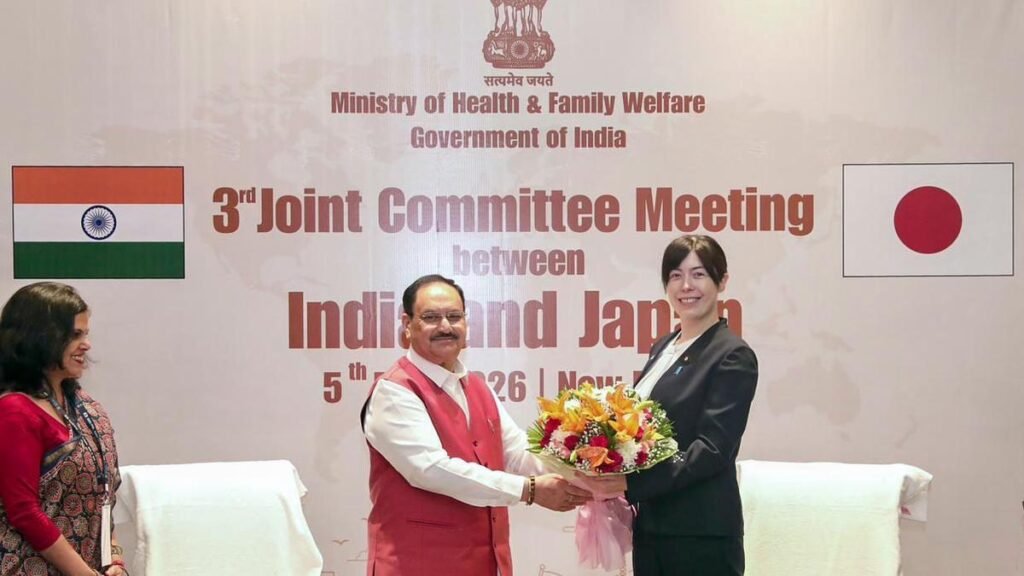
India and Japan on Tuesday reaffirmed their commitment to expanding cooperation in the healthcare sector during the third Joint Committee Meeting (JCM) on Healthcare held at Bharat Mandapam. The meeting was co-chaired by Union Health Minister J. P. Nadda and Japan’s Minister in charge of Healthcare Policy Kimi Onoda. Nadda said the partnership is driven by a common vision of stronger health systems, better access to healthcare, and innovation-led progress. Welcoming the Japanese delegation, Health Secretary Punya Salila Srivastava highlighted that the Joint Committee Meeting, conducted under the India-Japan Memorandum of Cooperation, has become an important platform for regular dialogue and deeper collaboration. During the discussions, both countries focused on several priority areas including prevention and management of non-communicable diseases (NCDs), resilient healthcare supply chains, digital health, and human resource development. India underlined the growing burden of NCDs and shared its strategy centred on early screening, continuous care, and long-term health promotion aligned with Sustainable Development Goals. Japan presented its work in cancer screening, early diagnosis, and treatment systems through technical cooperation. On supply chain resilience, India emphasised the capabilities of its pharmaceutical and medical devices industries, along with efforts to boost local manufacturing and affordable healthcare access. Japan outlined its public-private partnership model to ensure availability of high-quality medical products. India also showcased its digital public health infrastructure through the Ayushman Bharat Digital Mission, while Japan shared expertise in system integration, AI-enabled healthcare technologies, and collaborative research. Concluding the meeting, Nadda said the discussions have given fresh momentum to the India-Japan healthcare partnership and laid a roadmap for building more inclusive and resilient health systems. Source: PTI

India, Japan Strengthen Healthcare Partnership at High-Level Delhi Meeting Read More »