


ArdorComm Media Group

Sunday, October 25, 2026 7:47 AM

India-Pakistan tensions

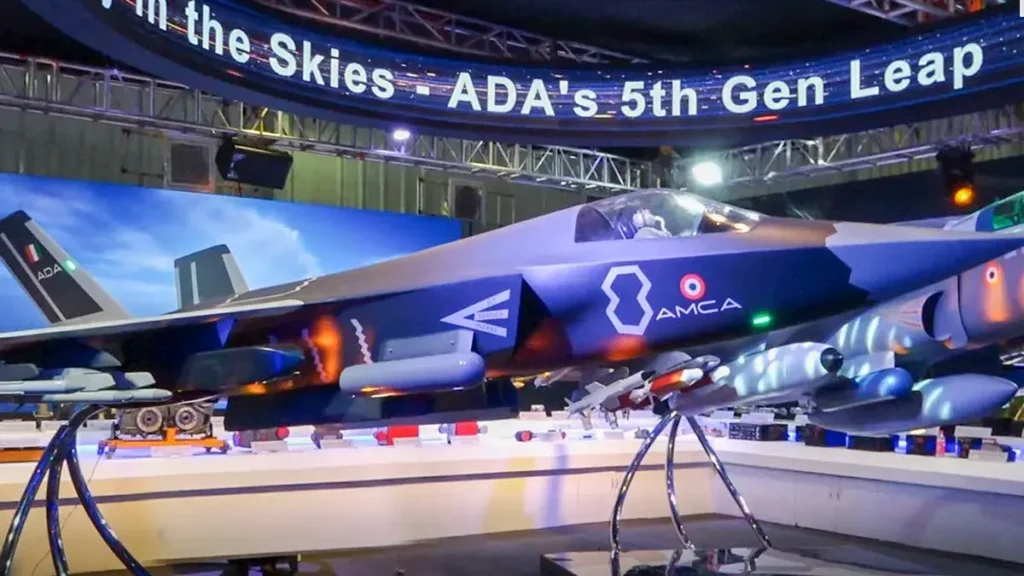
India Clears Indigenous Fifth-Generation Fighter Jet Project AMCA, DRDO to Spearhead Development
Ardorcomm news

India has formally given the green light to its ambitious fifth-generation fighter aircraft programme—the Advanced Medium Combat Aircraft (AMCA). This move marks a major stride in strengthening the country’s self-reliance in defence manufacturing and aerospace innovation. The Ministry of Defence (MoD) announced on Tuesday that Defence Minister Rajnath Singh has approved the execution model for the AMCA programme, which will be led by the Aeronautical Development Agency (ADA), a key arm of the Defence Research and Development Organisation (DRDO). The decision follows the Cabinet Committee on Security’s (CCS) prior approval of the project in March 2024. “In a significant push towards enhancing India’s indigenous defence capabilities and fostering a robust domestic aerospace industrial ecosystem, Raksha Mantri Shri Rajnath Singh has approved the Advanced Medium Combat Aircraft (AMCA) Programme Execution Model. The Aeronautical Development Agency (ADA) is set to execute the programme through Industry partnership,” the MoD said in a statement. The ministry also confirmed that the ADA is expected to soon release an Expression of Interest (EoI) to kick-start the development phase of the AMCA. This step will pave the way for creating the aircraft’s prototype. While no official timeline has been specified in the recent announcement, earlier reports suggested a prototype might be ready within three years of the go-ahead, with a maiden flight potentially occurring within a year to 18 months after that. The AMCA is expected to feature advanced stealth technology, positioning India among an elite group of nations—such as the United States, Russia, and China—that have developed fifth-generation fighter jets. However, past delays and budgetary constraints have raised concerns about the project’s viability and timelines. The green signal for AMCA comes at a crucial moment for the Indian Air Force (IAF), which is grappling with a significant shortfall in its fighter squadron strength. The IAF currently operates around 29 squadrons—well below the sanctioned strength of 41. This shortfall has raised alarms, particularly given India’s increasingly tense security environment, with mounting threats from both Pakistan and China. The slow pace of aircraft procurement and challenges in domestic defence development have further exacerbated these concerns among military planners. The AMCA project is seen as a key initiative to not only bolster the IAF’s capabilities but also to catalyse the growth of India’s aerospace sector through industry partnerships and indigenous innovation. Source: Firstpost  

India Clears Indigenous Fifth-Generation Fighter Jet Project AMCA, DRDO to Spearhead Development Read More »

Schools Reopen in Jammu and Kashmir Border Areas as Tensions Ease Between India and Pakistan

In a welcome move towards normalcy, the Directorate of School Education, Jammu, has announced the reopening of schools in several border regions of Jammu and Kashmir from May 15. The decision follows a period of heightened tension between India and Pakistan, which had led to the temporary closure of educational institutions for safety reasons. Students across districts like Jammu, Samba, Kathua, Rajouri, and Poonch are returning to classrooms after nearly a week-long suspension of academic activities. Zones in Jammu such as Chowki Choura, Bhalwal, Dansal, Gandhi Nagar, and Jammu are reopening their schools. In Samba, classes have resumed in the Vijaypur zone. Kathua district has also restarted educational operations in Barnoti, Lakhanpur, Sallan, and Ghagwal. In Rajouri, the affected zones of Peeri, Kalakote, Thanamandi, Moghla, Kotranka, Khawas, Lower Hathal, and Darhal have reopened schools. Similarly, in Poonch, educational institutions in Surankote and Buffliaz have resumed functioning. The move is a significant step towards restoring daily life and ensuring continuity in students’ education in these sensitive regions. The recent truce between India and Pakistan, marked by a halt in cross-border hostilities, has paved the way for this reopening. In Udhampur and parts of Kathua district—specifically Bani, Basholi, Mahanpur, Bhaddu, Malhar, and Billawar—government and private schools are also now operational. Morning visuals from Udhampur captured children enthusiastically returning to school in uniform, signaling a collective sigh of relief among families. This return to routine follows a tense period that began after the Pahalgam terror attack, which resulted in the loss of 26 lives. India responded with targeted strikes on terrorist camps in Pakistan and Pakistan-occupied Jammu and Kashmir under Operation Sindoor, reportedly neutralizing over 100 militants. The situation escalated briefly with retaliatory moves from Pakistan, but Indian Armed Forces swiftly countered the aggression. De-escalation efforts gained momentum after the Pakistani Director General of Military Operations (DGMO) reached out to his Indian counterpart, resulting in an understanding to cease further military actions. As classrooms once again fill with students and communities resume their daily rhythms, the reopening of schools stands as a hopeful indicator of peace returning to the border regions. Source: ANI Imagine credit: iStock    

Schools Reopen in Jammu and Kashmir Border Areas as Tensions Ease Between India and Pakistan Read More »