


ArdorComm Media Group

Wednesday, October 7, 2026 5:48 PM

India UK relations

India-UK CETA to Boost Farmers, MSMEs and Skilled Professionals, Says PM Modi
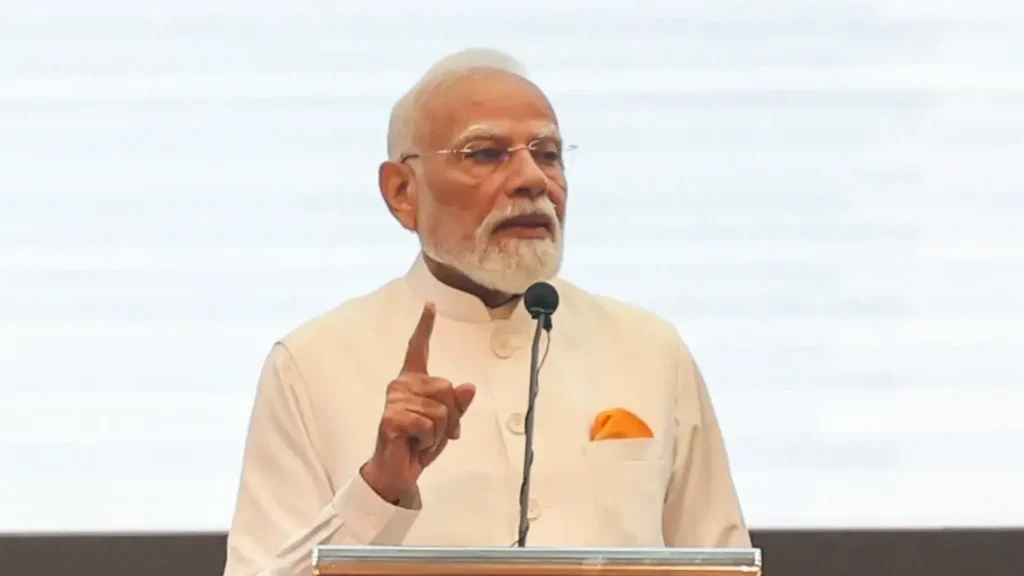
Prime Minister Narendra Modi has described the implementation of the India-UK Comprehensive Economic and Trade Agreement (CETA) and the Agreement on Social Security as a landmark step in strengthening bilateral ties between the two countries. Sharing a social media post by Union Commerce and Industry Minister Piyush Goyal, the Prime Minister said the agreements, which came into force today, mark a significant milestone in the India-UK partnership. According to Mr. Modi, the CETA will provide fresh growth opportunities for farmers, entrepreneurs, and micro, small and medium enterprises (MSMEs) by expanding their access to the UK market. He added that the trade pact is expected to benefit several key sectors while strengthening cooperation in technology, professional services, and innovation. The Prime Minister also highlighted that the agreement will facilitate greater mobility for skilled Indian professionals, enabling them to explore more employment and business opportunities in the UK. Referring to the Agreement on Social Security, Mr. Modi said it will offer important support to Indian professionals working in the UK on temporary assignments. He noted that the pact will enhance the competitiveness of Indian businesses by reducing social security-related burdens for eligible workers. Emphasizing the broader significance of the agreements, the Prime Minister said they reflect the deep trust between the two democracies and their shared commitment to building a future-focused partnership anchored in trade, technology, investment, and innovation. He reaffirmed that India and the United Kingdom will continue to work together to promote shared economic growth and prosperity. Source: News on AIR

India-UK CETA to Boost Farmers, MSMEs and Skilled Professionals, Says PM Modi Read More »
India Emerges as Cornerstone of UK’s £40-Billion Global Education Push

India has been identified as a priority market in the United Kingdom’s newly unveiled International Education Strategy, which sets out an ambition to grow Britain’s education exports to £40 billion a year by 2030. The strategy signals a clear shift in focus—from chasing international student numbers within the UK to expanding the global footprint of British education overseas. Under the plan, the UK government has constituted a new Education Sector Action Group that will work alongside the International Education Champion, higher education institutions, colleges and schools. The group’s mandate is to ease regulatory and trade barriers and help UK education providers scale up their presence in fast-growing international markets. At the same time, the Department for Education (DfE) has announced stricter compliance norms for institutions recruiting overseas students. These include tighter checks to ensure that those arriving in the UK are genuine students, along with the possibility of recruitment caps or even licence withdrawals for universities that fail to meet the new standards. Officials stressed that the revised approach removes numerical targets for international students in the UK and instead prioritises exporting UK education through overseas campuses, partnerships and transnational programmes. India features prominently among the UK’s focus countries, alongside Indonesia, Nigeria, Saudi Arabia and Vietnam. Emerging economies such as Brazil, Mexico and Pakistan have also been added to the strategy to widen the reach of British education globally. The International Education Champion, Professor Sir Steve Smith, will continue efforts to deepen academic and skills partnerships across these regions. UK Education Secretary Bridget Phillipson said the overseas expansion of British universities and colleges would help institutions diversify income streams, build long-term global partnerships and extend access to UK-quality education without students needing to travel abroad, while still supporting economic growth at home. The policy document highlights the University of Southampton’s Gurugram campus—the first foreign university campus established in India under the country’s revised UGC regulations—as a landmark development. It also references the joint announcement by Prime Ministers Narendra Modi and Keir Starmer in October 2025 regarding plans for nine additional UK university campuses in India. UK Trade Minister Chris Bryant described education exports as one of Britain’s strongest global success stories, driven by digital delivery, artificial intelligence and a growing focus on future-ready skills. Beyond commercial objectives, the strategy also underscores education’s role in enhancing the UK’s global influence, noting that British universities count more than 50 serving world leaders among their alumni. Government estimates suggest international students already contribute economic benefits worth around £560 per UK citizen. The strategy aims to build on this by working closely with the UK’s diplomatic network and the British Council to strengthen education systems worldwide. Officials reiterated that international student recruitment would continue to operate within the UK’s migration and visa framework, with firm enforcement to safeguard the integrity of the Graduate Route post-study work visa. Source: PTI

India Emerges as Cornerstone of UK’s £40-Billion Global Education Push Read More »