ArdorComm Media Group

Saturday, October 24, 2026 10:02 PM

Indian Air Force

Defence Ministry Signs ₹810 Crore Contract with BDL for 160 SAT-SAAW Systems

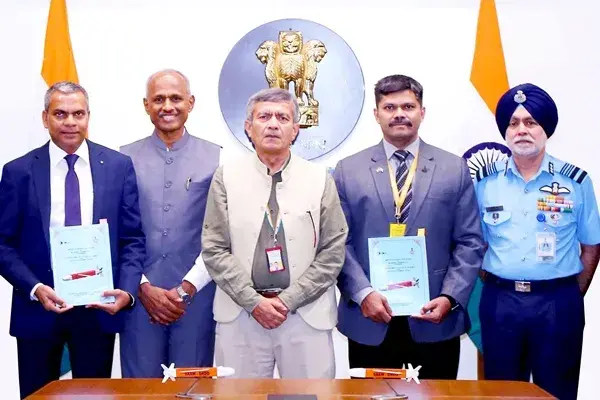
The Ministry of Defence has signed a contract worth more than ₹810 crore with Bharat Dynamics Limited (BDL) for the procurement of 160 Satellite Smart Anti-Airfield Weapons (SAT-SAAW) and associated equipment for the Indian Air Force (IAF). The agreement was signed in New Delhi in the presence of Defence Secretary Rajesh Kumar Singh. Deliveries of the systems are scheduled to take place during 2027-28 and 2028-29. SAT-SAAW is an indigenously designed air-to-ground precision-guided glide weapon developed by the Defence Research and Development Organisation (DRDO). It can be deployed from aircraft platforms including the Jaguar, Hawk and Su-30 MKI and is designed to engage enemy airfield targets from extended stand-off ranges. The system will have an indigenous content of 60 per cent, reflecting the government’s focus on strengthening domestic defence manufacturing and reducing dependence on imported systems. The procurement will also involve the indigenisation of key subsystems, including the Initial Measurement Unit, Long Impact Delay Fuse and Twin Store Carrier. According to the Defence Ministry, these efforts are expected to further strengthen indigenous capabilities in the development and production of advanced defence systems. The ministry said the induction of SAT-SAAW systems will enhance the Indian Air Force’s operational capabilities and support uninterrupted operations while contributing to the country’s overall defence preparedness. Source: News on AIR

Defence Ministry Signs ₹810 Crore Contract with BDL for 160 SAT-SAAW Systems Read More »

DAC Clears Defence Acquisition Proposals Worth Over ₹1.10 Lakh Crore

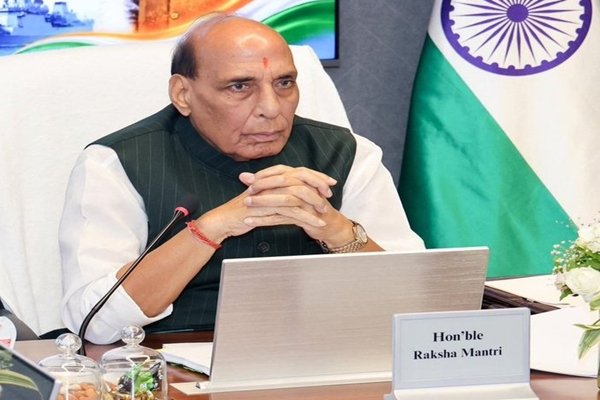
The Defence Acquisition Council (DAC), chaired by Defence Minister Rajnath Singh, has approved capital acquisition proposals worth more than ₹1.10 lakh crore for the Indian Armed Forces, with around 98 per cent of the procurements expected to be sourced from Indian industry. For the Indian Army, the approvals include Chemical, Biological, Radiological and Nuclear (CBRN) Recce Vehicles, High Mobility Vehicles (HMVs), Self-Propelled Mechanical Mine Layers (MMLs), Advanced Light Helicopters (ALHs), Trawl Tanks and the Sarvatra Bridge System. The CBRN Recce Vehicles will help detect, identify, monitor and mark areas contaminated by hazardous CBRN agents. HMVs are expected to strengthen troop mobility, logistics and operational support in difficult terrain, while MMLs will enable rapid and responsive mine-laying operations. The ALHs will support complex missions across diverse terrains and operational conditions. Trawl Tanks and the Sarvatra Bridge System will provide fighting formations with essential crossing capabilities during military operations across varied terrain. For the Indian Navy, the DAC granted Acceptance of Necessity for the acquisition of Arudhra Radars and for the design, development and subsequent procurement of Marine Gas Turbines (MGTs). The Arudhra systems will replace existing Air Route Surveillance Radars at various naval air stations. The indigenous development of MGTs, which are used for warship propulsion, is also aimed at reducing dependence on foreign suppliers. For the Indian Air Force, the Council cleared several proposals aimed at strengthening the operational capabilities of fighter aircraft, transport platforms and helicopters. Approval was also given for Ground-Based Multi-Purpose Jammers (GBMPJs) and the Defence Forces Secure Access Card (DEFSAC) system. The GBMPJ is designed to disrupt and jam adversary radar systems, while DEFSAC will replace paper-based identity cards, passes and permits with interoperable smart cards based on Radio Frequency Identification (RFID) technology. The latest approvals underline the government’s push towards greater self-reliance in defence manufacturing, with the overwhelming majority of the proposed acquisitions expected to benefit domestic defence companies and strengthen India’s indigenous military-industrial capabilities. Source: News on AIR

DAC Clears Defence Acquisition Proposals Worth Over ₹1.10 Lakh Crore Read More »

IAF to Airlift NEET-UG 2026 Retest Question Papers Ahead of June 21 Examination

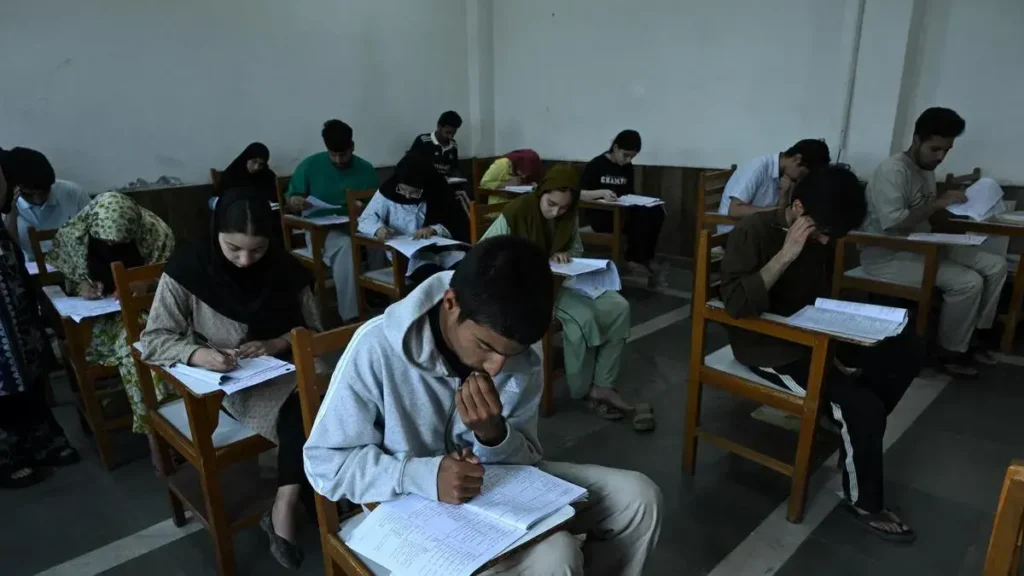
The Indian Air Force (IAF) will play a key role in the conduct of the NEET-UG 2026 retest by transporting question papers to 18 locations across the country ahead of the examination scheduled for June 21, 2026. According to sources in the Ministry of Defence, the papers will be airlifted to designated hubs before being securely distributed to examination centres nationwide. The enhanced security arrangements come amid heightened scrutiny following the cancellation of the original NEET-UG 2026 examination, which was conducted on May 3. The test was annulled on May 12 after allegations of a question paper leak surfaced, prompting an investigation by the Central Bureau of Investigation (CBI). Meanwhile, the National Testing Agency (NTA) has rejected claims circulating on social media regarding an alleged leak or sale of the retest question paper. On June 6, the agency described such reports as false and misleading, warning that strict action would be taken against individuals responsible for spreading misinformation. The June 21 retest is being conducted under strengthened security protocols to ensure the integrity and transparency of the country’s largest medical entrance examination. Source: The Hindu

IAF to Airlift NEET-UG 2026 Retest Question Papers Ahead of June 21 Examination Read More »

IAF to Transport NEET 2026 Question Papers as Telangana Prepares for Re-Exam Across 208 Centres

Around 73,000 candidates are set to appear for the NEET 2026 re-examination in Telangana on June 21, with authorities implementing extensive measures to ensure a smooth and secure conduct of the test. The examination will be held across 208 centres located in 24 cities throughout the state. During a high-level review meeting chaired by Telangana Chief Secretary K. Ramakrishna Rao, National Testing Agency (NTA) Director General Abhishek Singh announced that the Indian Air Force (IAF) will, for the first time, be involved in transporting NEET question papers. The move is aimed at strengthening security and safeguarding the integrity of the examination process. The Chief Secretary directed district administrations and relevant departments to coordinate closely and ensure seamless arrangements for candidates, including infrastructure, transportation, power supply, drinking water, and other essential facilities at examination venues. Telangana Principal Secretary (Health), Christina Z. Chongthu, stated that all necessary preparations are underway to facilitate the large-scale examination across the state. Emphasizing security, Director General of Police (Law and Order) Mahesh Bhagwat instructed police authorities to maintain strict vigilance at examination centres and work in coordination with local administrations. He also urged officials to actively monitor social media platforms to counter rumours and misinformation that could disrupt the examination process. With enhanced security protocols and comprehensive logistical planning, authorities are aiming to provide a hassle-free and fair examination environment for all NEET aspirants. Source: PTI  

IAF to Transport NEET 2026 Question Papers as Telangana Prepares for Re-Exam Across 208 Centres Read More »

DRDO Successfully Concludes Dual Flight-Tests of Indigenous ‘Pralay’ Missile

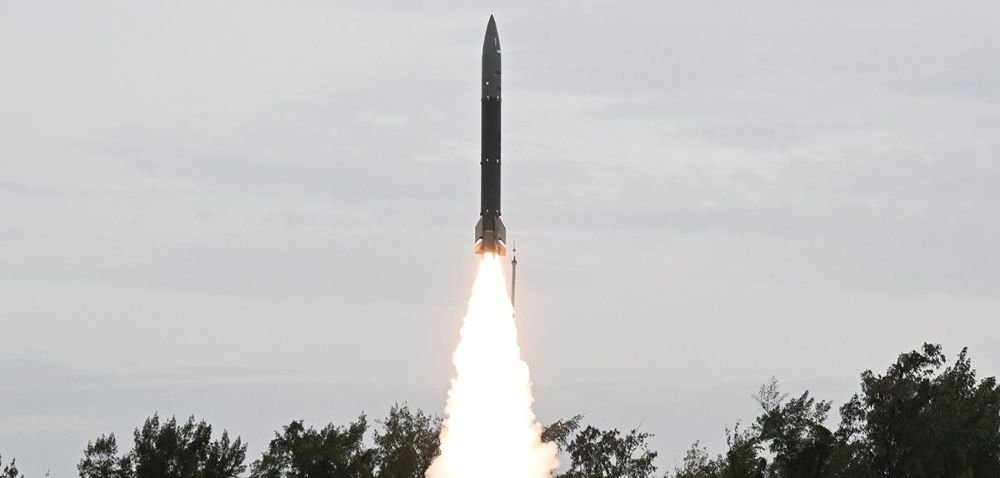
The Defence Research and Development Organisation (DRDO) has successfully conducted two back-to-back flight-tests of its homegrown ‘Pralay’ missile on July 28 and 29, 2025, from Dr APJ Abdul Kalam Island, located off the coast of Odisha. These tests were part of the User Evaluation Trials designed to validate both the upper and lower range capabilities of the missile system. In both trials, the Pralay missile demonstrated exceptional performance by accurately following the designated trajectory and hitting the intended targets with high precision. All onboard subsystems functioned flawlessly, with their performance verified through real-time tracking data gathered by various sensors deployed by the Integrated Test Range (ITR), including those stationed on ships near the target area. The Pralay missile, powered by solid propellant, is a quasi-ballistic weapon featuring cutting-edge guidance and navigation systems. It is designed to deliver multiple types of warheads with remarkable accuracy against a range of targets. The development of the missile was spearheaded by the Research Centre Imarat (RCI) in collaboration with several DRDO laboratories such as the Defence Research & Development Laboratory (DRDL), Advanced Systems Laboratory (ASL), Armament Research & Development Establishment (ARDE), High Energy Materials Research Laboratory (HEMRL), Defence Metallurgical Research Laboratory (DMRL), Terminal Ballistics Research Laboratory (TBRL), Research & Development Establishment (Engineers), and the Integrated Test Range. Key industry partners included Bharat Dynamics Limited (BDL), Bharat Electronics Limited (BEL), as well as several other industrial units and MSMEs. The flight-tests were closely observed by senior DRDO scientists, officials from the Indian Army and Air Force, and representatives from the participating industries. Defence Minister Rajnath Singh congratulated DRDO, the Armed Forces, and the industrial partners on the successful tests, highlighting that the integration of such modern technologies significantly enhances India’s defence capabilities. DRDO Chairman and Secretary of the Department of Defence R&D, Dr Samir V Kamat, also lauded the team for the achievement, noting that the successful conclusion of these Phase-1 trials marks a significant step toward the missile’s formal induction into the Armed Forces. Source: Economic Times

DRDO Successfully Concludes Dual Flight-Tests of Indigenous ‘Pralay’ Missile Read More »

Shubhanshu Shukla Becomes Second Indian in Space, 41 Years After Rakesh Sharma

India has once again etched its name into the stars. Group Captain Shubhanshu Shukla of the Indian Air Force launched into space, becoming only the second Indian to do so — and the first to reach the International Space Station (ISS). His milestone flight comes 41 years after the legendary Rakesh Sharma’s 1984 mission aboard the Soviet Soyuz T-11. Launched from NASA’s Kennedy Space Center in Florida aboard SpaceX’s Dragon spacecraft, Shukla joins the Ax-4 mission of Axiom Space, marking a new era in India’s space journey. The crew, a mix of global astronauts, will live and work aboard the ISS for 14 days, conducting crucial scientific experiments. A Launch Worth the Wait The road to space was anything but smooth. Originally set for May 29, the launch faced seven delays due to technical issues, weather concerns, and complications aboard the ISS. SpaceX, NASA, ISRO, and Axiom Space worked tirelessly to resolve these, all while the crew remained quarantined and mission-critical biological samples were replenished. Despite the setbacks, the launch was a flawless spectacle. The Falcon-9 rocket’s engines thundered into life, lifting the Dragon capsule toward Low Earth Orbit. The first stage of the rocket returned to Earth successfully, while the second stage propelled Dragon into its planned path to the ISS. An Astronaut with a Purpose Shukla, born in 1985 — a year after Sharma’s flight — has long dreamed of reaching space. A decorated test pilot with experience flying aircraft like the MiG-21, Sukhoi-30 MKI, and Dornier, he now serves as the mission pilot. Although the Dragon is designed for autonomous docking, Shukla is responsible for monitoring flight systems and standing by for manual intervention if needed. His family watched the liftoff with pride from the viewing gallery, marking a moment not only of personal achievement but of national significance. International Crew, Shared Vision The Ax-4 crew reflects a spirit of global collaboration. Commanding the mission is Dr. Peggy Whitson — a legendary American astronaut and the most experienced spacefarer from the U.S., with over 675 days in orbit. Joining her are Poland’s Sawosz Uznanski, a CERN physicist and engineer representing the European Space Agency, and Hungary’s Tibor Kapu, a polymer technology expert involved in the HUNOR space program. Science in Orbit During the mission, Shukla will conduct seven India-designed experiments. These range from growing traditional Indian crops like moong and methi in microgravity to studying the behavior of microbes, muscle degeneration, the effects of prolonged screen exposure on mental health, and cellular ageing. One experiment will even explore algae as a sustainable space food source. The findings aim to inform future deep-space missions to the Moon and Mars. He will also connect with Indian students from orbit, inspiring the next generation of scientists and dreamers. Strategic Leap for Gaganyaan Shukla’s role in the Ax-4 mission is also a dress rehearsal for India’s upcoming Gaganyaan human spaceflight program, in which he is one of the four shortlisted astronauts. The operational knowledge — from international collaboration and pre-launch protocols to microgravity adaptation and scientific procedures — will feed directly into Gaganyaan’s readiness. This mission is not just about scientific progress; it strengthens India’s growing capabilities in human spaceflight, setting the stage for self-reliant space exploration. As Shubhanshu Shukla orbits Earth, he carries not only instruments and experiments — but the collective hopes of 1.4 billion Indians. His voyage is a testament to India’s rising stature in global space exploration and a symbol that the stars are indeed within reach. Source: India Today Photo Credit: SpaceX


Shubhanshu Shukla Becomes Second Indian in Space, 41 Years After Rakesh Sharma Read More »

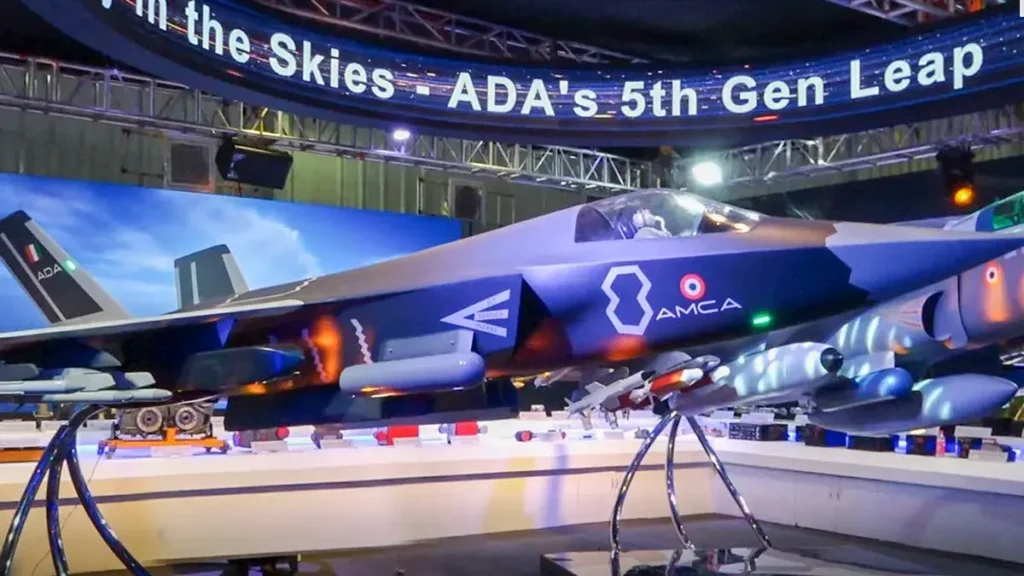
India Clears Indigenous Fifth-Generation Fighter Jet Project AMCA, DRDO to Spearhead Development

Ardorcomm news

India has formally given the green light to its ambitious fifth-generation fighter aircraft programme—the Advanced Medium Combat Aircraft (AMCA). This move marks a major stride in strengthening the country’s self-reliance in defence manufacturing and aerospace innovation. The Ministry of Defence (MoD) announced on Tuesday that Defence Minister Rajnath Singh has approved the execution model for the AMCA programme, which will be led by the Aeronautical Development Agency (ADA), a key arm of the Defence Research and Development Organisation (DRDO). The decision follows the Cabinet Committee on Security’s (CCS) prior approval of the project in March 2024. “In a significant push towards enhancing India’s indigenous defence capabilities and fostering a robust domestic aerospace industrial ecosystem, Raksha Mantri Shri Rajnath Singh has approved the Advanced Medium Combat Aircraft (AMCA) Programme Execution Model. The Aeronautical Development Agency (ADA) is set to execute the programme through Industry partnership,” the MoD said in a statement. The ministry also confirmed that the ADA is expected to soon release an Expression of Interest (EoI) to kick-start the development phase of the AMCA. This step will pave the way for creating the aircraft’s prototype. While no official timeline has been specified in the recent announcement, earlier reports suggested a prototype might be ready within three years of the go-ahead, with a maiden flight potentially occurring within a year to 18 months after that. The AMCA is expected to feature advanced stealth technology, positioning India among an elite group of nations—such as the United States, Russia, and China—that have developed fifth-generation fighter jets. However, past delays and budgetary constraints have raised concerns about the project’s viability and timelines. The green signal for AMCA comes at a crucial moment for the Indian Air Force (IAF), which is grappling with a significant shortfall in its fighter squadron strength. The IAF currently operates around 29 squadrons—well below the sanctioned strength of 41. This shortfall has raised alarms, particularly given India’s increasingly tense security environment, with mounting threats from both Pakistan and China. The slow pace of aircraft procurement and challenges in domestic defence development have further exacerbated these concerns among military planners. The AMCA project is seen as a key initiative to not only bolster the IAF’s capabilities but also to catalyse the growth of India’s aerospace sector through industry partnerships and indigenous innovation. Source: Firstpost  

India Clears Indigenous Fifth-Generation Fighter Jet Project AMCA, DRDO to Spearhead Development Read More »